
Growing Kohlrabi in a Greenhouse
Greenhouse growing guide
Kohlrabi is a useful greenhouse crop during cool weather: it develops a harvestable swollen stem in a relatively short season, and a small, planned bed can supply several meals. The greenhouse advantage is timing, not constant warmth. A productive plan chooses a spring or fall window, gives each stem room, keeps moisture steady, and sows only as many batches as can mature before heat or low light slows growth.

Why a greenhouse can extend kohlrabi’s cool-season window
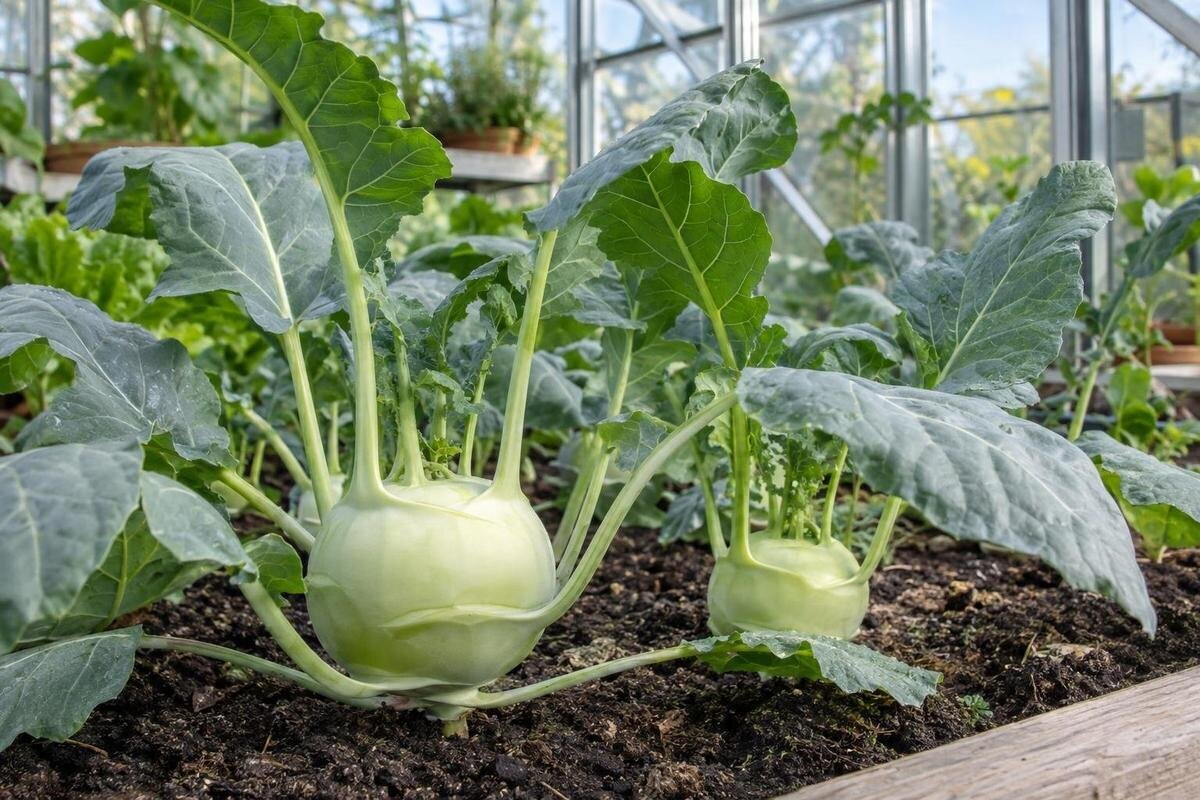
Kohlrabi is a cool-season brassica grown for its enlarged stem, which swells above the soil and is often called a bulb; it is not a root crop. Leaves grow from that stem, so the plant needs room for both its foliage and the swelling base. The Royal Horticultural Society describes baby harvests in as little as six weeks and full-size harvests around twelve weeks. Those are broad growing estimates, not a greenhouse timetable: cultivar, sowing method, light, and temperature affect progress. A greenhouse can make this crop available earlier or later than an outdoor bed when conditions inside remain suitable.
Under glass, kohlrabi is most useful in the cooler parts of the growing year. A spring sowing may get going while outdoor beds are still cold or wet, while a fall sowing can continue after outdoor conditions begin to deteriorate. The structure buffers wind and rain, but it does not guarantee a frost-free night. An unheated greenhouse can approach the outdoor low overnight, then warm sharply in afternoon sun. Treat it as a season extender, not a year-round climate system, and use actual readings at bed height to decide whether plants can continue growing.
Set sowing dates by greenhouse temperatures
Use local frost dates as reference points, then base sowing on conditions in the greenhouse and bed. In spring, sow or transplant when the soil is workable and not waterlogged, and when coming nights are unlikely to repeatedly stall young plants. A cool greenhouse may make an earlier start possible, but cold soil slows germination and growth; planting weeks before the outdoor date does not guarantee a faster crop. Record morning lows and afternoon highs at leaf level for several days, because the space can warm quickly in sun. Allow extra time if spring light is limited.
For a fall crop, count backward from when declining light and cold weather will slow useful growth, not just from the first frost. Sow while daytime greenhouse temperatures have eased from summer heat and enough growing time remains for the variety. In hot regions, the house may stay too warm even after outdoor sowing conditions improve; in cold regions, an unheated structure may extend the season only modestly. The Pyramid-type greenhouse listing gives options from 60 to 203 square feet, but compare the selected footprint with usable beds, aisles, and access rather than assuming its total area is all growing space.
Choose a variety for maturity and stem size
Compare packet information on days to maturity, target stem size, spacing, and season before ordering. Early-maturing types can suit a brief spring window; varieties intended to produce larger stems may need more room and a longer cool spell. Catalogs may describe green or purple skin, but color alone does not tell you whether a variety stays tender at a larger size. Choose one whose expected harvest period fits the temperature window you can provide. For a fall crop, check that its stated maturity leaves time for growth before cold and shorter days slow development.
Translate the variety’s spacing and mature size into a realistic plant count before buying seed. For example, a row containing eight plants spaced 6 inches apart needs 42 inches between the first and last plant, plus clearance at both ends. Repeat that calculation using the spacing recommended for your variety, then allow for the distance between rows. The Bloomcabin Prestige Greenhouse listing presents area options from 40.6 to 302 square feet. Compare the selected configuration with the number of rows you actually need, including space reserved for other crops. A smaller variety does not necessarily mature sooner, so check both spacing and maturity information.
Direct sowing and transplanting
Direct sowing in a prepared greenhouse bed is simple when the soil is workable and temperatures suit the crop. Follow the packet’s planting depth; the RHS guide uses about half an inch. Cover the seed so it stays in contact with moist soil. Sow a short row rather than the whole bed at once, then thin seedlings after they establish so the remaining plants have room to grow. Water gently while seeds germinate; a hard stream can uncover shallow seed or leave it in clumps. Label each sowing with its variety and date so you can compare timing and plan the next batch.
For an earlier start, raise seedlings in small cells and transplant them while they are still young and easy to handle. Avoid holding them until roots circle the cell or growth becomes crowded. Set each transplant at about the same depth it grew in its plug: the swollen stem develops above the soil, so burying the base deeply can make it harder to assess and harvest. Let indoor-grown seedlings adjust gradually to the greenhouse’s brighter light and changing temperatures. If trays and crop beds must share space, the Lean-To Greenhouse listing includes floor-area options from 40 to 154 square feet; check the chosen plan before counting tray space as planting space.

Space plants for well-formed stems
For many standard varieties, a practical starting point is about 6 inches between plants and 12 inches between rows, matching the spacing in the RHS guide. Follow the packet when it specifies a different distance, particularly for varieties bred to produce larger stems. Each stem swells above the soil, and its leaves spread outward; close planting can restrict growth and make it harder to inspect or harvest individual plants. Leave enough clearance to reach the bed without stepping on nearby foliage or brushing developing stems. Use the final spacing when calculating capacity, not the number of seedlings that fit in a tray.
Draw the layout at mature spacing before sowing, including paths and access to doors or vents. A bed that looks open at transplanting can become crowded once neighboring leaves expand. Arrange rows so you can reach individual stems for thinning and harvest without stepping into the bed. If a bed is accessible from only one side, its farthest row still needs to be within comfortable reach. The T-Model Greenhouse Orangery has listed area options from 178 to 323 square feet. Compare the chosen version’s dimensions with your proposed bed widths and paths; a larger footprint is useful only if the planted rows remain accessible.
Keep greenhouse temperatures cool and light bright
Kohlrabi grows best in cool to mild conditions, but the supplied crop guidance does not establish a precise greenhouse temperature range. Watch for persistent afternoon heat and whether plants continue growing steadily rather than treating one thermometer reading as a universal cutoff. Warm, dry conditions can reduce stem quality, especially when soil moisture is irregular. Cold is not automatically helpful either: cold exposure can encourage premature flowering, or bolting, so an unusually early planting is not always an advantage. Choose a variety suited to the intended season and avoid abrupt temperature changes when moving seedlings. A thermometer at crop height gives more useful information than a reading near the roof.
Give plants bright light, especially in spring when days are short, and avoid placing them where taller crops will shade them heavily. Ventilation helps release trapped heat and moist air; check how openings work for the exact greenhouse rather than assuming the model name or frame material tells you. The aluminum Classic greenhouse is one product listing to review alongside its specific configuration and opening details. Whatever structure you compare, plan to monitor warm afternoons: greenhouse temperatures can climb quickly even when outside air still feels cool.
Keep soil moisture even as stems enlarge
Prepare a fertile, well-drained bed and work in mature compost if the soil needs organic matter. Kohlrabi grows poorly in ground that remains saturated, but it also suffers when the root zone repeatedly dries out. Check the soil rather than relying on a fixed watering calendar; greenhouse beds can dry faster than expected, particularly near warm walls or under strong sun. As the stems begin to swell, aim for consistent moisture. Long dry spells followed by heavy watering can stress plants and contribute to uneven growth, so steady, thorough watering is more useful than frequent light sprinkling.
Base fertilizer choices on the soil’s condition rather than on leaf size alone. Where possible, use a soil test and its recommendations; adding fertilizer will not correct crowding, excessive heat, or an irregular water supply. Container-grown plants need a suitable potting mix, drainage, and enough rooting space, with closer attention to watering because pots can dry out faster than beds. Keep fertilizer and potting supplies separate from harvested produce, and leave room to carry watering equipment past the crop. A greenhouse with built-in storage is one configuration to compare. Check the selected layout for the storage area’s location and access rather than assuming the listed total area is entirely available for cultivation.
Use succession sowing to spread the harvest
Kohlrabi plants in one sowing tend to reach useful size within a relatively short period, so planting the whole season’s supply at once can leave you with more stems ready than you want to harvest. During a cool growing window, sow several small batches at intervals rather than filling every row together. Keep each batch modest enough to fit the bed at mature spacing and supply an amount you can use while tender. Note sowing and harvest dates, and use the first batch to adjust later sowings: cool weather or low light may make the interval to maturity longer than the packet estimate.
Succession planting is seasonal, not continuous. Sow an early batch in spring, pause if the greenhouse becomes too hot, and start again for fall when temperatures moderate and enough growing time remains. Give each batch a labeled row or block so you can distinguish plants nearing harvest from younger seedlings. Reserve space for the next batch rather than waiting until every older plant has been removed. The Large backyard greenhouse has listed area options from 506 to 753 square feet. If comparing that range for a mixed-crop plan, identify which portion you would actually assign to kohlrabi; additional space does not justify sowing more than you can harvest and use.

Manage pests and rotate brassica crops
A greenhouse is not pest-proof. Inspect leaves regularly, including their undersides, for insects, eggs, and feeding damage. Cabbage butterfly caterpillars can attack brassicas, while slugs and snails may damage young kohlrabi in damp conditions. Check transplants before bringing them inside, remove weeds around the crop, and clear plant debris after harvest. Insect-proof mesh can help exclude cabbage butterflies, but plants still need inspection. Good spacing makes problems easier to spot, without replacing regular monitoring. If damage appears, identify the pest before choosing a response; a hole in a leaf alone is not enough for a reliable diagnosis.
Kohlrabi belongs to the same crop group as cabbage, broccoli, kale, and other brassicas, so count those crops when planning rotation. Moving kohlrabi into a bed that just held broccoli is not a change of crop family. Keep a record of each bed’s crops and leave room for non-brassica plantings in future seasons. If disease recurs, seek a diagnosis before assuming rotation alone will solve it. When comparing the Aluminum Limited Edition greenhouse, which lists area options from 40.6 to 302 square feet, consider whether the selected layout accommodates separate beds or containers for your broader crop plan. Dividing a greenhouse into beds helps organize rotation, but it does not prevent disease from spreading between them.
Harvest while stems are firm and tender
Check the swollen stem above the soil instead of relying on leaf size alone. For many standard varieties, a diameter of about 2 to 3 inches is a useful tender-harvest target; some varieties are bred to reach larger sizes, so follow their packet guidance. Harvest when the stem is firm and has reached the variety’s intended size, rather than waiting for the biggest possible bulb. Cut the plant just above soil level with a clean knife. With a staggered sowing, check each batch separately because plants do not always mature on the same day.
Oversized or long-standing kohlrabi can become fibrous or woody, and prolonged heat or uneven moisture can make quality harder to maintain. If stems stay small, review the spacing, light, water, and temperature before adding more fertilizer. If plants begin flowering, their useful harvest window may be closing; harvest any usable stems and review whether cold exposure, heat, or drying soil affected that batch. Adjust the next sowing to avoid the conditions you observed rather than simply planting earlier. Remove spent plants and debris after harvest so the bed is ready for the next crop. A well-timed harvest gives you tender stems and frees greenhouse space for another suitable planting.
Frequently asked questions
Can I grow kohlrabi in an unheated greenhouse?
Yes, during a suitable cool-season window. An unheated greenhouse can shelter plants from wind and extend spring or fall growing time, but it does not guarantee warm nights or protect crops from every hard freeze. Watch temperatures at plant level, and do not expect good growth if the greenhouse stays hot through the day.
How far apart should greenhouse kohlrabi be planted?
For many standard varieties, allow about 6 inches between plants and 12 inches between rows, as recommended in the RHS guide. Follow the seed packet if it calls for a different distance, especially for varieties bred to produce larger stems. Include access space when calculating how many plants a bed can hold.
How often should I sow succession crops?
Sow small batches at intervals during a suitable cool period, adjusting the timing to how quickly your first batch develops and how much you can use at harvest. Pause when the greenhouse is likely to stay too warm for good growth. Resume only when enough suitable growing time remains before cold and low light slow the crop.
How long does greenhouse kohlrabi take to mature?
The RHS guide describes baby kohlrabi harvests in as little as six weeks and full-size harvests around twelve weeks. These are broad estimates, not a promise for your greenhouse. Cultivar, light, temperature, and sowing method affect timing. Check the packet’s maturity information and harvest-size guidance, then inspect the swelling stems rather than relying on the calendar alone.
Why are my kohlrabi stems woody or small?
Plants may become coarse or miss their expected size if they stay in the bed too long, face sustained heat, dry out, or compete for space. Check that the variety has room to mature, keep soil moisture even, and harvest at the size recommended for that cultivar rather than waiting for the largest possible stem.
A reliable greenhouse kohlrabi crop depends on a short, cool-season schedule, room for each stem to swell, and consistent moisture. Let local temperatures and the variety guide sowing dates, then harvest when stems are firm and still within their intended size range. Small, well-timed batches make better use of greenhouse space than trying to keep the crop growing through unsuitable heat or cold.
