
Growing Okra in a Greenhouse
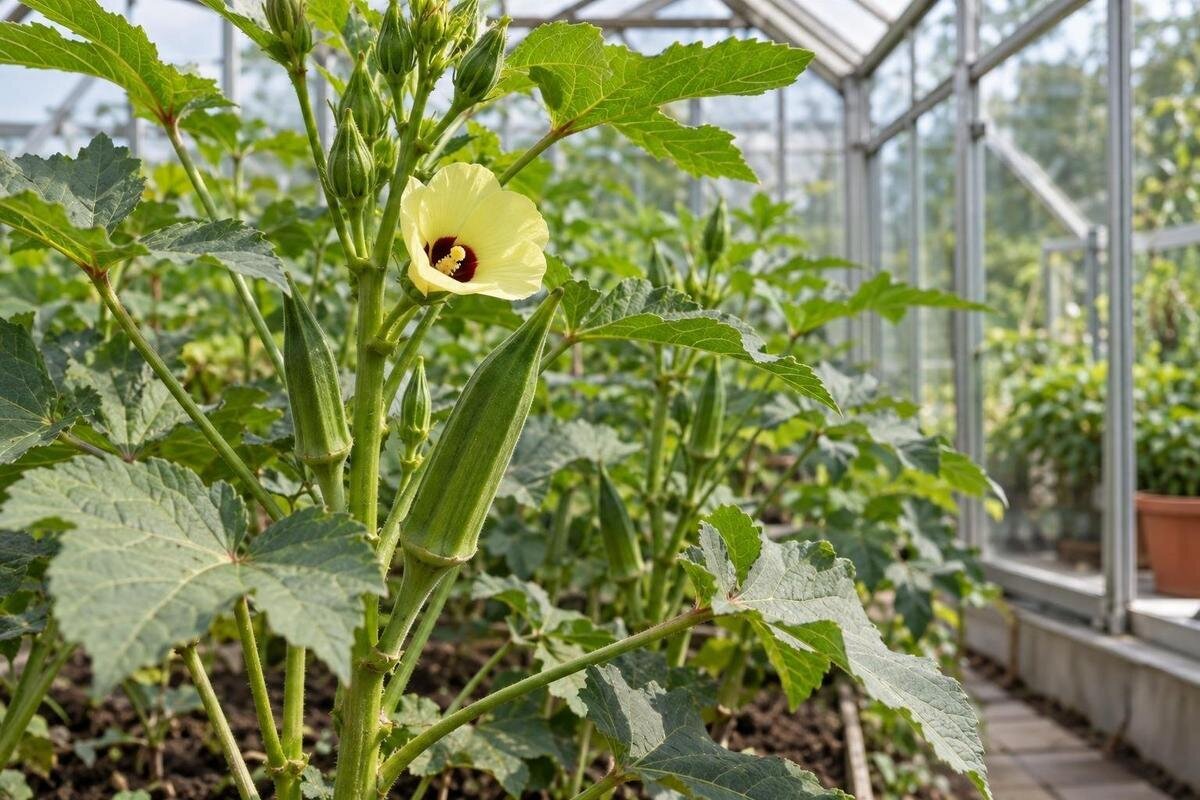
Greenhouse-grown okra
Okra needs sustained warmth, direct sun, and a long enough frost-free season to produce a useful crop. A greenhouse can advance planting or extend picking, but an unheated structure is not a guarantee of warm nights; it may cool sharply after sunset. In a hot, long-summer climate, growing outdoors may be simpler. In a cooler climate, heating may extend the usable season, but it adds running costs and requires monitoring. The decision comes down to measured overnight temperatures, the variety’s maturity time, usable space, and how much of the season you are willing to heat.

Before choosing a greenhouse 1
Is greenhouse-grown okra worthwhile in your climate?
Okra is a heat-loving, frost-sensitive warm-season vegetable. In a long, hot summer it can grow outdoors, so a greenhouse may add little beyond shelter or a slightly earlier start. In a cooler area, the structure’s value is the extra warmth at the beginning or end of the season. That benefit is conditional: sunlight warms a greenhouse by day, but an unheated structure can cool substantially overnight. If nights stay cool or the site is shaded, plants may survive without growing fast enough to mature pods. Think of the greenhouse as a way to manage a marginal season, not as a tropical climate in any weather. A few hot afternoons do not make the season warm enough.
Estimate the usable warm window before choosing a structure. Mark local last-spring and first-fall frost dates, then count only the part when soil and night temperatures are likely to suit okra; allow extra time beyond the seed packet’s days-to-maturity estimate for slow germination or cool spells. The Classic aluminum greenhouse options list floor-area choices from 40.6 to 302.3 sq ft. Use the exact dimensions of any model you consider to sketch beds, aisles, doors, and other crops. Think about headroom as well as floor space, especially if tall plants will share the greenhouse. Floor area does not tell you how much heat the structure retains or whether its site gets enough direct sun.
How warm does okra need to stay?
Warmth matters at sowing as well as during fruiting. The Royal Horticultural Society recommends keeping indoor-sown okra seeds above 60°F during germination, then keeping seedlings warm and in good light. That propagation guidance is not a minimum nighttime temperature guaranteed to produce a successful crop. Okra needs plenty of heat and sunshine through its growing season, not just warmth around the seed tray. Check the seed supplier’s directions for your variety before sowing or transplanting. If the greenhouse bed remains cold while the air warms briefly each afternoon, keep young plants in their warm, bright growing space until planting conditions improve.
Use a soil thermometer at sowing depth and a min/max air thermometer near plant height, rather than relying on an outdoor forecast or a sunny afternoon reading. Record several nights, including cloudy ones, because conditions can vary inside a greenhouse. When planning a Lean-To Greenhouse, whose listed sizes range from 40 to 154 sq ft, identify the actual planting position before taking readings. A thermometer beside the doorway may not represent conditions in a bed farther inside. Measure where seedlings will grow, and use those readings to decide whether to wait or consider heat. Don’t transplant a tender seedling into cold soil just because the calendar says it is time.
Before choosing a greenhouse 2
When does heating make sense?
Supplemental heat is most defensible when it adds a defined part of the season, such as enough warm nights to establish plants earlier or finish pods before fall cold. It is less compelling if local conditions stay too cool or too dim for long periods. Decide whether you need heat for establishment, a few extra fall weeks, or a much longer production period; the last requires a longer commitment. Compare those weeks with how much okra you want and whether a summer crop without heating would be enough. For a few plants, planting when natural warm weather arrives may be a simpler option than maintaining heat for an extended period.
An estimate depends on the chosen heating target, outdoor weather, runtime, the structure’s size and heat loss, and local energy rates. Use specifications for the exact greenhouse rather than infer performance from its name or floor area, and compare expected harvest time with total seasonal operating cost. The Limited Edition greenhouse options list areas from 40.6 to 302 sq ft; that range helps compare footprint but cannot answer heat demand. For heater selection and work involving electrical or fuel systems, follow manufacturer guidance and consult a qualified professional where needed. Don’t improvise with equipment that is not intended for greenhouse use.
Timing sowing and transplanting
Use frost dates as planning boundaries, not as the actual okra planting signal. In spring, wait for warm soil and nights; a greenhouse can provide earlier daytime warmth, but persistently low overnight temperatures can set plants back. In fall, count backward from the point when nights regularly cool. The crop needs enough remaining warmth not merely to flower, but to develop harvestable pods. Local calendars vary with elevation, exposure, and year-to-year weather, so check conditions at the greenhouse rather than relying on a fixed date. If the warm window is tight, include time for slow emergence and any transplant setback.
Read the seed packet for days to maturity and how it counts that interval; use the estimate to compare varieties, not as a promised first harvest date. For an indoor start, sow in individual pots and move seedlings into larger pots as they grow. The RHS recommends moving young plants to their final position when they are about 4–6 inches tall, provided conditions are suitable. Handle the root ball carefully and water after planting. The T-Model Greenhouse Orangery range is listed at 178 to 323 sq ft. Reserve a planting area before raising seedlings so established crops or benches do not occupy the space when the okra is ready.

Before choosing a greenhouse 3
Plan space for tall plants and daily access
Okra grows upright, but its mature height and width vary by cultivar. Check the packet’s dimensions and spacing before planting. The RHS gives a broad in-ground spacing range of 1–3 feet, depending on variety, so a single close spacing is not appropriate for every okra plant. Crowding makes it harder to reach pods, inspect leaves, and keep air moving. Place tall okra where it will not shade shorter crops or block a door, vent, or main aisle. Check usable height above the proposed planting position, especially near sloping roof edges, rather than relying only on the greenhouse’s maximum height. Allow room for canes if the plants need support.
Draw the interior plan using real measurements: bed edges, container widths, plant centers, door access, paths, and room to reach both sides of a row. Gross floor area is not the same as planting area. The Pyramid-type greenhouse options list models from 60 to 203 sq ft; if comparing a footprint, lay out the okra and neighboring crops before deciding. Leave room to harvest without stepping into beds or brushing against every plant. If okra is only one of several crops, calculate its share of the greenhouse instead of planning as though every square foot will be planted with okra.
Choose a bed or container with room for roots
Okra needs fertile, well-drained soil. Enrich a greenhouse bed with mature compost or well-rotted manure before planting, and avoid compacted spots where water stands after irrigation. If an existing bed has performed poorly, a soil test can help you decide whether it needs amendments rather than adding products at random. Inspect the bed’s condition as well as its temperature: a greenhouse roof does not make a cold, wet planting site suitable. Prepare the growing area before seedlings are ready to move, leaving enough room to plant without disturbing neighboring crops. Keep a record of amendments so later feeding decisions account for what is already in the soil.
Containers are useful when a suitable bed is unavailable, but choose a roomy, deep pot sized for the variety rather than squeezing several plants into small containers. Use potting mix intended for containers, provide drainage, and keep each plant accessible for watering and picking. Pots can dry sooner than a greenhouse bed, so check their moisture regularly. If storage is part of the design, the greenhouses with built-in storage list areas from 59.4 to 302 sq ft. Set aside the storage footprint when planning beds and pots; the total listed area is not all growing space if part of the interior is used for other purposes.
Before choosing a greenhouse 4
Balance sunlight, ventilation, and summer heat
Okra needs plenty of direct sunshine, but a greenhouse does not automatically provide a bright growing position. Nearby trees and walls, dirty glazing, framing, shade cloth, and neighboring crops can all reduce the light reaching its leaves. Check the proposed position at different times of day and consider how seasonal changes affect it. A bed that is sunny in midsummer may receive much less direct sun during the weeks you hope to gain by heating in spring or fall. Give okra the brightest practical location, and account for neighboring plants at their mature size. Heating a shaded greenhouse does not replace the sunlight this crop needs.
Air inside a sunny greenhouse can heat quickly, so keep ventilation routes unobstructed and ventilate before heat builds. Watch a thermometer as well as the plants: a sealed structure can become excessively hot, while stagnant, humid air makes crop care harder. Okra handles summer warmth, but that is not a reason to ignore extreme peaks or let the root zone dry out. Use shade only when it is warranted, since heavy shading takes away light the crop needs. The Prestige greenhouse options list sizes from 40.6 to 302 sq ft. Check the exact model’s openings and internal layout; its listed floor area does not show how air moves through the space.
Water consistently and feed according to growing conditions
Keep the root zone evenly moist, particularly while plants establish, flower, and set pods. Greenhouse roofs exclude rain, so a bed can dry faster than expected on sunny days; containers often need even closer attention because they hold less water. Water at the soil rather than repeatedly wetting foliage, and avoid both severe dry-outs and waterlogged roots. If water stands in a bed or pot, address drainage before increasing irrigation. There is no universal watering schedule: check soil near the roots and adjust for weather, plant size, and whether you are growing in a bed or a container.
Base feeding on the growing medium rather than treating every plant alike. The RHS advises that okra in enriched ground should not need additional feeding, while container plants can benefit from a high-potassium liquid fertilizer once flowering begins. Follow the product’s dilution and application instructions; do not apply garden-bed quantities to a small pot. The large backyard greenhouse range lists floor areas from 506 to 753 sq ft. In a mixed-crop layout, group beds and pots so you can check and water them separately. A large okra plant and newly planted seedlings may need different amounts of water; sharing a greenhouse does not mean they should receive identical irrigation.

Before choosing a greenhouse 5
Monitor flowering and check for pests
Once flowers appear, watch for the young pods that follow them rather than judging progress from plant height alone. Keep a simple record of flowering and pod development alongside temperature and watering notes. If plants flower but produce few harvestable pods, review the warmth, sunlight, and steady moisture available to them. Those are important growing conditions, but a dropped flower by itself does not establish the cause of a problem. Avoid immediately adding fertilizer or trying a treatment without a clearer explanation. For persistent problems, ask a local extension service for help and provide the variety, planting date, recent conditions, and a description of what you have observed.
Inspect leaves and new growth regularly for aphids, whiteflies, spider mites, and chewing damage. In a protected space, pests can build up on a few plants before they are obvious, so check leaf undersides as well as stem tips. Keep weeds and fallen plant material from hiding problems, and identify the cause before choosing a control; curled or marked leaves can have more than one explanation. Maintain reasonable spacing and airflow. If you use a treatment on an edible crop, check that its instructions fit the crop and situation, and follow them carefully.
Pick pods young and review the season
Harvest for tenderness rather than maximum size. Many okra varieties are best picked when pods are about 2–4 inches long, though the seed packet may give a different target. In warm conditions, pods can lengthen quickly and become fibrous as they mature, so check plants every day or two once production begins. Use clean snips to cut each pod from the stem instead of pulling hard on a branch. Fine hairs on some varieties can irritate skin; gloves and long sleeves can make picking more comfortable. Regular picking also makes it easier to notice new pods among the leaves.
Frequent harvest cannot compensate for a season that was too short or cold, but it helps you judge what the greenhouse achieved. Note the sowing date, first flower, first pod, and how long picking continues. Those observations can show whether an earlier start, a different cultivar, or more growing room would matter most next season. When cool nights or frost end growth, compare the actual harvest with the time and energy devoted to the crop. That record gives a practical basis for repeating the project, relying on an unheated season, or deciding that extra heat is not worthwhile.
Frequently asked questions
Can I grow okra in an unheated greenhouse?
Yes, if the greenhouse provides enough sustained warmth and sunshine for pods to develop before the season ends. Measure nighttime lows and check the soil rather than relying on sunny afternoon air temperatures. In a cool climate, an unheated structure may provide too short a warm season for a useful harvest, even if plants survive.
What temperature do okra seeds need to germinate?
The Royal Horticultural Society recommends keeping indoor-sown seeds above 60°F during germination. Check your seed supplier’s directions as well. This is propagation guidance, not a guarantee that a greenhouse with nights near that temperature will support productive plants throughout the season. Seedlings also need warmth and good light after emergence.
When should I start okra seeds?
Work backward from when your greenhouse is likely to provide sustained warmth, using the seed packet’s sowing and maturity guidance. For an indoor start, sow in individual pots and keep seedlings warm and well lit. Move them into larger pots as needed rather than holding them in cramped seed trays while waiting for the greenhouse to warm.
How much space does an okra plant need?
Follow the variety’s spacing and mature-size guidance. The RHS gives an in-ground spacing range of 1–3 feet, depending on variety. Leave additional access space for picking and inspecting leaves, and keep doors and ventilation openings clear. For containers, allow room for both the pot and the mature plant above it.
When and how often should I harvest okra?
Check plants every day or two once pods begin forming. Many varieties are tender when pods are about 2–4 inches long, but the seed packet’s guidance takes precedence. Pick before pods become fibrous and keep harvesting while warm conditions continue.
Greenhouse-grown okra is most practical when the structure extends an otherwise suitable warm season, rather than trying to overcome a climate that stays cold and dim. Warm soil, warm nights, direct sun, a cultivar with enough time to mature, and room to pick are the essentials. Record minimum temperatures and first harvest dates for a season. Compare the resulting harvest with any heating costs to decide whether an unheated crop meets your needs or a modest season extension is worth the expense.
