
Growing Pak Choi in a Greenhouse
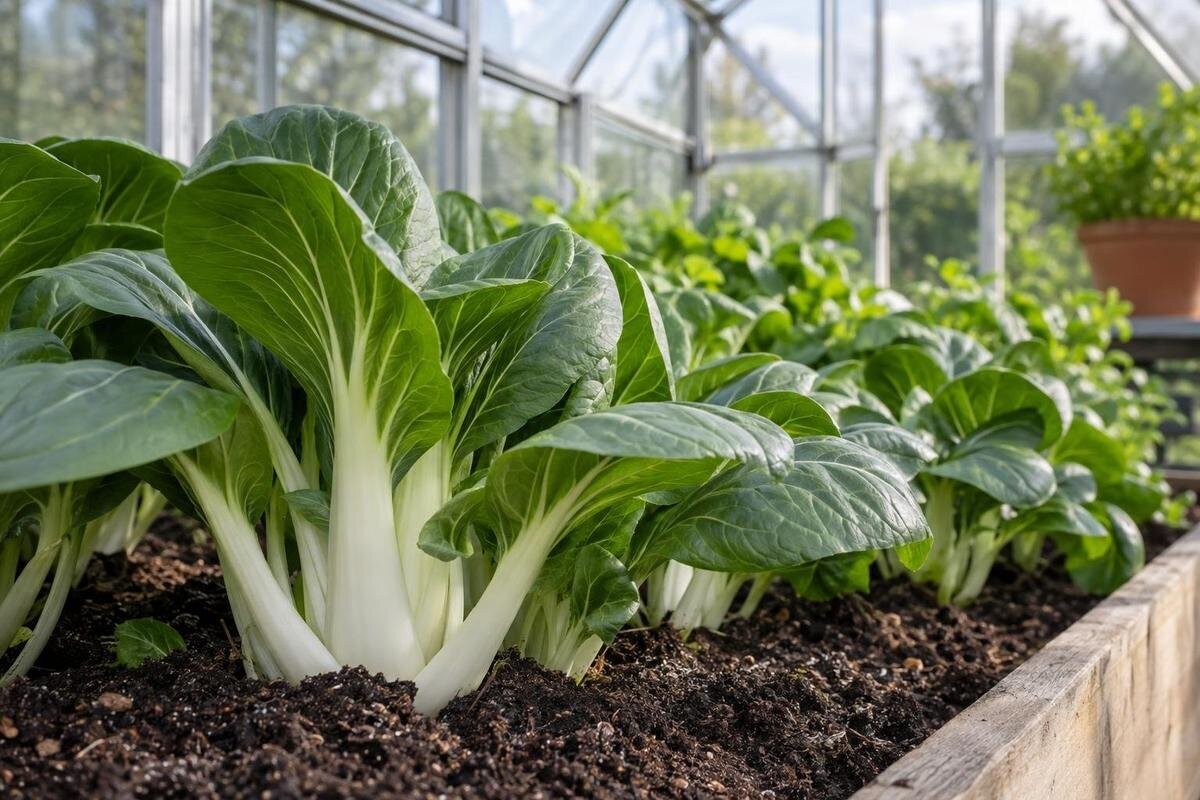
Cool-season growing guide
Pak choi, also called bok choy, is a quick-growing brassica that performs best in mild weather. A greenhouse can protect a spring or fall sowing and make conditions easier to monitor, but it may also heat up quickly on a sunny day; it does not guarantee frost protection or prevent bolting. Plan around local night temperatures and daylight, choose a slow-bolting cultivar, keep soil consistently moist, ventilate before heat builds, and harvest promptly. Because greenhouse conditions vary with climate, site, and structure, measured temperatures are more useful than a single national calendar.

Pak choi is a cool-season greenhouse crop
Pak choi, often sold as bok choy, is a leafy brassica grown for its crisp stalks and tender leaves. It reaches harvest size relatively quickly in mild weather, making it useful between warm-season plantings or in a bed that would otherwise sit unused. A protected bed can shield young plants from hard wind and driving rain and make a short crop easier to monitor. Pak choi does not need a hot greenhouse: prolonged warmth can reduce leaf quality and encourage flowering before the plant reaches the size you want. Treat it as a cool-season crop, not as a summer vegetable that benefits from maximum indoor heat.
Greenhouse protection is most useful when it moderates exposure rather than raising temperatures substantially. An unheated structure may be cold overnight, then hotter than outdoors on a clear afternoon. Keep a minimum-maximum thermometer close to the plants, out of direct sun, and note readings before choosing a sowing date. Pak choi can also grow outdoors when weather suits, so use greenhouse space to extend a workable window, not because the crop requires enclosure. Limited Edition aluminum greenhouse options are listed from 40.6 to 302 sq ft; compare the selected footprint with your bed, aisle, and other crops.
Set spring and fall dates from local conditions
Pak choi has no single useful sowing date for the United States: an unheated house in a cold inland area and one in a mild coastal area can have very different nights and spring heat. For a spring crop, time sowing so young plants are less likely to face an extended cold spell, but do not delay until rising temperatures make bolting more likely. Use your greenhouse’s minimum readings alongside the seed packet and local forecast; an average last-frost date alone does not describe conditions under cover. Aim for a stretch of mild weather long enough for plants to grow steadily to harvest size. Your state university Extension service may also have locally relevant guidance for pak choi or Asian greens.
Fall offers another growing opportunity as summer heat fades, but shortening days and colder weather can leave late seedlings growing too slowly. Count back from the variety’s stated days to maturity, leaving extra time for cool, dim weather; the packet figure is a guide, not a promise. Sow while there is still enough warmth and light for seedlings to establish, rather than waiting for the first serious cold spell. Small batches one or two weeks apart can spread harvests while conditions remain favorable. T-Model greenhouse options are listed from 178 to 323 sq ft; map beds, paths, and succession rows against the chosen size, and keep notes on sowing dates and temperatures.
Understand what makes pak choi bolt
Bolting is premature flowering: the center of the plant pushes up a flower stalk before you have harvested the leaves and stalks at the desired stage. Variety and growing conditions both matter. The Royal Horticultural Society’s pak choi guide identifies overly hot or cold temperatures and dry conditions as triggers, especially when plants are grown to full size. A greenhouse does not remove those risks: seedlings can experience cold nights, while sunny afternoons can become too hot. There is no single temperature threshold that guarantees every variety will remain leafy, so look at the conditions throughout the growing period rather than relying on one favorable reading.
Choose seed described as slow-bolting or suited to spring sowing, then time it for steady growth rather than extremes. Avoid holding seedlings for weeks in tiny cells, letting the bed dry repeatedly, or leaving a closed greenhouse to overheat. These conditions can weaken growth, even though they are not the only reasons a flower stalk may appear. Good moisture management cannot override a plant’s variety and seasonal cues. If the central stalk starts to form, harvest usable leaves promptly: removing the stalk will not turn an older plant back into a compact leafy one. Note the sowing date and weather, then adjust the next batch instead of waiting for the plant to recover.
Choose a variety and sow with minimal root disturbance
Varieties differ in size, shape, maturity, and tendency to bolt. Choose one suited to your planting season, and decide whether you want baby plants for a quick harvest or larger, more substantial stalks; a full-size type needs more room and more time. Check the seed packet for a maturity estimate and sowing guidance rather than choosing by the name bok choy alone, which covers many cultivar forms. A slow-bolting label is useful, but it is not immunity to cold, heat, or dry conditions. Keep the packet or a photo of it with your growing notes so you can compare actual harvest results with the variety’s guidance.
Direct sowing into prepared greenhouse soil avoids transplanting and its disturbance to roots. Sow at the packet’s recommended depth, keep the surface evenly damp during germination, and thin seedlings to final spacing before they crowd. If cell trays help you make use of a short spring window, transplant young seedlings with the root ball intact and avoid letting the roots become tightly bound. When seed trays, labels, and tools will compete with planted beds, review the aluminum greenhouse with built-in storage listing and confirm its specific layout and usable growing area; the title alone does not show how much bench space remains.

Measure temperatures and ventilate on sunny days
A greenhouse can gain heat quickly even when the morning feels cool. Put a minimum-maximum thermometer near leaf height, shaded from direct sun, and record readings for several days before and after sowing. A reading just under the roof or beside a vent may not represent the bed. On sunny days, open available vents and doors before heat accumulates instead of waiting for leaves to wilt; ventilation is more dependable than watering as a way to manage hot air. Check again around midday, since temperature can climb quickly once the sun reaches the glazing. Air movement also helps foliage dry after watering.
Ventilation varies by structure and by its setup. When comparing models, review the Prestige greenhouse product details and other candidates’ published openings, vent locations, and operating requirements; a model name does not indicate how much air can move through it. Limited ventilation makes temperature management harder, even for a spring or fall crop. Pay close attention to bright spells after cold nights, when the greenhouse may warm rapidly. At night or during a cold snap, use minimum readings rather than assuming a closed greenhouse will stay warm enough. If you use shade during hot spells, remember that it also reduces light when days are short.
Give plants room for air, access, and full-size leaves
Space plants according to the variety and the size you plan to harvest. The Royal Horticultural Society recommends about 10–12 inches between plants grown to maturity, with rows at least 12 inches apart; follow the seed packet if it specifies a different arrangement for your variety. Baby-leaf crops can be closer, but overcrowded full-size plants are harder to reach and inspect, and air moves less freely around their leaves. Thin seedlings early rather than waiting until neighboring plants are intertwined. Leave access to cut mature plants cleanly and check the soil and leaf undersides without stepping through the bed.
Total greenhouse floor area is not the same as planted area. Subtract paths, staging space, and beds reserved for other crops before estimating how many plants will fit. For a mixed-crop layout, Large backyard greenhouse listings span 506 to 753 sq ft; use the selected product’s published dimensions to sketch beds, aisles, and non-growing zones. Dividing total area by a plant-spacing figure alone can overstate capacity, since beds need reachable edges and paths take up space. Plan succession rows so a finished crop can be removed without disturbing its neighbors.
Prepare a well-drained bed and water steadily
Prepare a fertile bed with soil that holds moisture but drains freely. Add mature compost if the existing soil needs more organic matter, loosen compacted areas before planting, and remove weeds that can compete with seedlings. A soil test can help guide amendments if you are unsure what the bed needs. Greenhouse beds receive less direct rain than outdoor soil, so their moisture depends on your watering routine. Surface color alone can be misleading: soil may look dark while drying out below, or remain too wet if drainage is poor. In containers, use pots with drainage and a growing medium intended for vegetables.
Keep the root zone evenly moist while plants establish and grow. Check soil before watering and give it a thorough drink when it begins to dry, then let excess water drain; repeated wet-dry swings can stress a quick-growing leafy crop. Containers often need more frequent checks than in-ground beds, especially when greenhouse air warms. Water the soil rather than routinely soaking the leaves, and avoid treating every slow-growth or yellowing problem as a need for fertilizer. Classic aluminum greenhouse listings span 40.6 to 302.3 sq ft; use the chosen footprint to map the beds and a reachable water route so distant rows do not dry unnoticed.
Keep beds bright, reachable, and easy to inspect
Pak choi needs good light for compact leafy growth, but a bright greenhouse can also overheat. Notice where shadows from frames, shelving, taller crops, and nearby trees fall throughout the day. Place the bed where it receives usable light without becoming an inaccessible hot corner. In warm weather, temporary shade may reduce heat, but permanent heavy shade can slow growth, especially when winter days are already short. Recheck the bed as the sun angle changes from early spring to fall; one location may suit one sowing and be less suitable for another.
Protected growing does not mean pest-free. Flea beetles can damage young leaves, aphids may gather on tender growth, and cabbage worms or slugs can arrive on seedlings or through openings. Inspect leaf undersides and plant centers at each watering, remove affected foliage, and clear weeds or old brassica debris that can shelter pests. If using insect netting, make sure it does not prevent ventilation or routine inspection. Pyramid-type greenhouse listings range from 60 to 203 sq ft; compare the selected floor plan with aisle and bed access so every plant remains reachable for checks.

Harvest at the size you want and sow in small batches
Use the seed packet’s days-to-maturity estimate as a planning cue, then judge plants by their size and condition. Cool greenhouse weather can slow growth, while a warm spell can speed it up. Baby pak choi can be cut earlier for tender leaves and small stalks. For full-size plants, harvest the rosette when it reaches the size you want, cutting near soil level with a clean knife. You can also take outer leaves from some plants as needed, but avoid stripping so heavily that growth stalls. Pick before a flower stalk stretches the center and stems become less tender.
Small succession sowings are often more useful than one large planting when household demand is modest. Repeat every week or two only while forecast and measured greenhouse conditions still suit the crop; a batch sown as summer heat arrives may bolt, while a very late fall planting may not get enough light to size up. As each row finishes, remove old plant material and clear the bed so the next batch has room. Record sowing and harvest dates, plant size, and when bolting began. Comparing those notes helps refine timing for your own greenhouse, rather than relying on a schedule from a different climate.
Know the limits of an unheated greenhouse
An unheated greenhouse is a shelter, not a heated room. Sunlight can raise daytime temperatures, but heat is lost overnight; cloudy weather and a long cold spell can leave the crop close to outdoor conditions. Pak choi’s tolerance of cool weather does not make young plants immune to prolonged chilling or severe freezing. Check minimum temperatures at bed level, not just a daytime reading, and follow the forecast for your location. If the interior stays cold, growth may pause; if a sunny afternoon runs hot, bolting risk can rise. Both limits can occur in the same week.
In mild climates, an unheated structure may be enough to bring a spring or fall harvest forward or extend it. In colder climates, winter sowing may stall unless light and temperature are actively managed; heating a short-cycle leafy crop is a site-specific choice, not a requirement. Lean-To Greenhouse options are listed from 40 to 154 sq ft, but floor area alone says nothing about overnight temperatures. Review the selected model’s specifications alongside your site conditions. If considering greenhouse heat, weigh the cost against the short harvest window and consult a qualified professional about equipment selection or installation rather than improvising.
Frequently asked questions
Can pak choi grow in an unheated greenhouse?
Yes, when the measured conditions suit the crop. An unheated greenhouse may extend a mild spring or fall growing window, but it can still get cold at night and hot on a sunny day. Track minimum and maximum temperatures instead of relying on the enclosure alone.
When should I sow pak choi in a greenhouse?
There is no single sowing date for the United States. Use local night temperatures, expected spring heat, daylight, and the seed packet’s maturity estimate. Fall often brings shorter days and easing heat, but sow early enough for plants to grow before low light and cold slow them down.
What makes pak choi bolt?
Variety and growing conditions both matter. Overly hot or cold temperatures and dry conditions can trigger premature flowering, especially when growing plants to full size. Greenhouse protection can moderate some exposure, but cold nights and hot afternoons can still occur under cover.
How can I reduce the risk of bolting?
Choose a slow-bolting variety, sow during a mild part of the season, keep moisture steady, ventilate before the greenhouse overheats, and harvest at the size you want. These steps reduce avoidable stress, but they cannot eliminate the effect of variety and seasonal conditions.
How far apart should I plant pak choi?
For plants grown to maturity, about 10–12 inches between plants, with rows at least 12 inches apart, is a useful starting point. Follow the seed packet if it gives different spacing for your variety. Baby-leaf crops can be closer, but leave enough access to inspect and harvest the plants.
A successful greenhouse pak choi crop is mostly a matter of timing and observation. Choose a slow-bolting variety, sow while conditions are mild, keep moisture even, and ventilate when sunny weather raises the temperature. Record sowing dates, harvest size, and greenhouse highs and lows. Those notes will show whether the next batch should be earlier or later—and whether your greenhouse is extending the season under the conditions at your site.
