
Heated Propagator or Heated Greenhouse for Starting Seeds?
Seed-starting guide
Seed-starting heat sounds like a single equipment choice, but a heated propagator and a heated greenhouse warm different amounts of space. A propagator focuses heat near a tray or its growing medium; greenhouse heating is intended to affect a much larger air volume and the plants inside it. That difference changes how many batches you can support, what equipment must run and be monitored, and where seedlings go after germination. The right setup depends on the crops, your peak number of trays, the temperatures where those trays sit, and how long you need a protected growing area—not simply on which product is labeled “heated.”

How propagators and greenhouse heaters supply heat
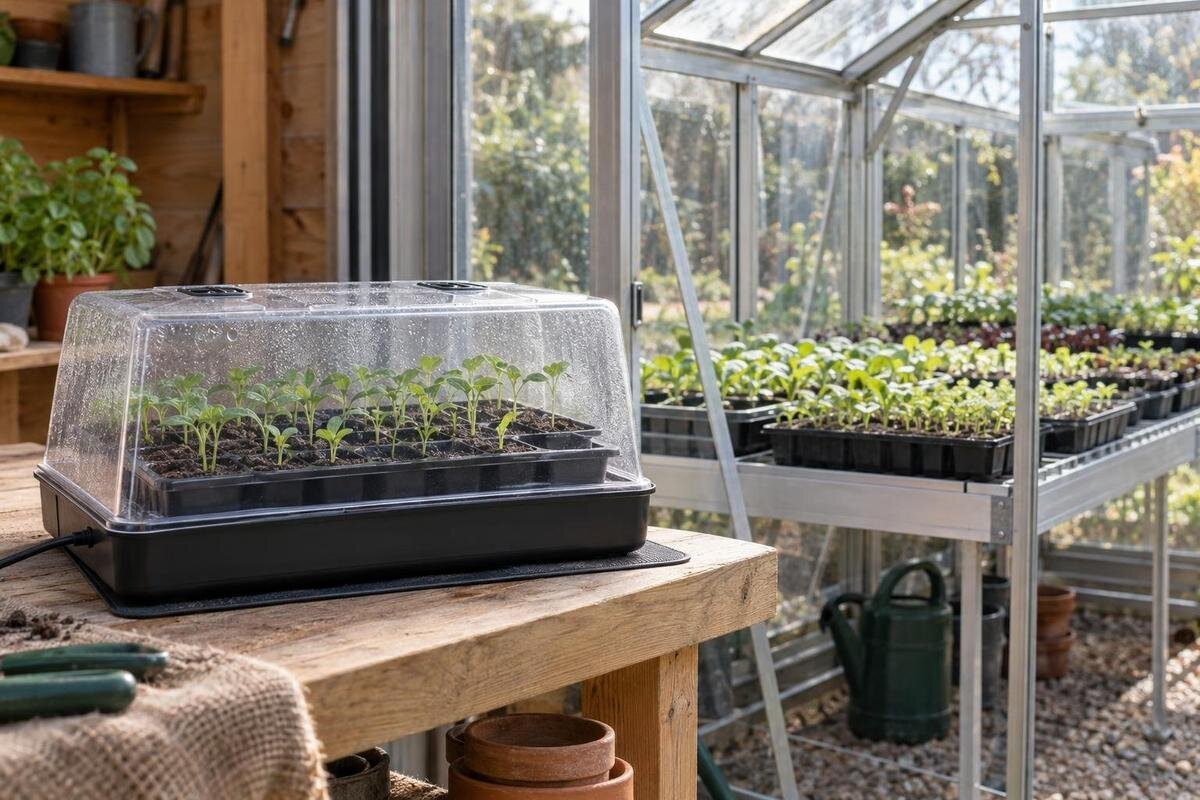
A heated propagator generally warms a compact area under or around seed trays. Depending on the design, it may have a heated base, a clear cover, a thermostat, or a combination; not every unit includes all of these. Its main role is to create a warmer zone for seed-starting mix without warming the entire room. A cover also affects humidity and moisture loss, so treat the unit as a small growing environment, not simply a hot surface. A heat mat may warm containers without providing a cover or humidity control, so compare functions rather than labels. Check the instructions for what the unit controls and which tray sizes it accepts.
Heating a greenhouse is a different task. A heater intended for the greenhouse affects a much larger space, primarily by warming the air; benches, pots and trays respond according to their position and surrounding conditions. The temperature at a seed tray may not match the thermostat reading. A propagator can create a localized warm zone inside an otherwise cool greenhouse, while whole-space heating can support activity beyond the trays. Neither approach is automatically more precise: control depends on the equipment, sensor location, enclosure, weather and how consistently you monitor conditions where seeds sit.
When a heated propagator is the better fit
A propagator is often the better fit when you sow a limited number of trays and only certain batches need warmer germination conditions. You focus heat at the tray rather than trying to make a whole greenhouse warmer for a handful of seeds. That can be practical if the greenhouse is otherwise unheated, used seasonally or kept at a different temperature for established plants. It also gives early sowings a defined place, making observation and watering easier. The trade-off is finite capacity: tray dimensions, access to controls and room to add or remove covers can limit how many batches you start together. If batches need different conditions, you may need to separate them or stagger their timing.
Before choosing, list the varieties you intend to sow and check their seed packets or reliable crop-specific guidance. If one batch needs a different germination temperature from another, putting them under one control may not meet both needs. Check the propagator’s usable tray dimensions, controller details and placement; a stated capacity may refer to a particular tray arrangement rather than any collection of pots. If seedlings will move into a greenhouse afterward, treat that as a separate capacity and temperature question. Listed sizes for lean-to greenhouse options range from 40 to 154 sq ft; compare a specific model’s dimensions with the bench and access space you need, not just its total footprint.
When heating the greenhouse is worth considering
Whole-greenhouse heating makes more sense when there are enough trays to justify warming the wider space, when you are raising seedlings in several stages, or when the greenhouse already needs heat for other crops or work. It can provide a place to continue growing after germination, as long as the conditions suit the seedlings and the greenhouse’s other occupants. If sowings have different temperature needs, one thermostat setting may be a poor compromise. Heating a larger volume also brings more of the enclosure into the heat demand; cold weather, drafts, air leakage and glazing all affect how much heat is lost.
Think about frequency and duration, not only the first germination week. A greenhouse kept suitable for repeated batches has a different use pattern from one warmed briefly for a single tray. For scale, the limited-edition aluminum greenhouse range is listed in sizes from 40.6 to 302 sq ft. When comparing the two approaches, separate the initial equipment budget from recurring expenses. Include controls, monitoring equipment and any lighting needed for the growing area, rather than comparing only the purchase price of a propagator with that of a greenhouse heater. Also identify which equipment you already own and which purchases would serve other crops after seed-starting season.
Equipment and power requirements are different
For a propagator, check the usable tray area and the clearance beneath any cover, not just the unit's exterior dimensions. Confirm whether temperature control is built in or purchased separately, whether the setting is adjustable, and what temperature range the manufacturer specifies. Units that share one control cannot necessarily give separate batches different conditions. Check how the instructions say to position the sensor and whether the display shows a measured temperature or only the selected setting. Note the rated power input for your operating-cost comparison. Finally, confirm that the manufacturer approves the intended location, including its moisture exposure and expected ambient temperatures.
Whole-greenhouse heating brings a different set of requirements: a suitable heater, controls for the space and equipment rated for the greenhouse environment. Do not choose a heater from floor area alone; enclosure construction, outdoor conditions and desired growing conditions also matter. Use manufacturer guidance and, where the electrical or heating setup needs assessment, a qualified professional rather than improvising an installation. The T-model greenhouse range is listed from 178 to 323 sq ft, but that product-area information is not a heater specification. Check the exact structure and intended use before estimating equipment needs or operating costs.

Germination and seedling growth need different conditions
Seeds do not share one ideal germination temperature. Use instructions for each species or variety to identify which batches actually need supplemental warmth and which can germinate in the conditions already available. Group sowings by compatible requirements rather than putting every tray on heat because space is available. Some seed instructions also specify light or darkness during germination, so a clear cover and a warm base do not necessarily meet every requirement. Where guidance refers to the temperature of the growing medium, an air reading is not a substitute. Use monitoring equipment appropriate for that measurement and follow its instructions without disturbing newly sown cells unnecessarily.
Germination is not the same as growing a sturdy seedling. Once shoots appear, maintaining the warmest possible root zone is not automatically beneficial; appropriate conditions depend on the crop and its stage. Some batches can stay in a propagator if its instructions and crop needs support that, while others need a cooler or more open environment after emergence. Read guidance for both stages and decide whether seedlings will remain in place, move to an unheated greenhouse or join plants in a heated one. That sequence often determines whether localized warmth is enough.
After emergence, warmth is only one part of care
Light is a separate requirement that heat cannot supply. If natural light at the chosen bench is weak or inconsistent, seedlings may become stretched while the propagator still feels warm. Check daylight at the actual location and during the season when you plan to grow. Consider a grow light only if the crop and site need one, and follow the light manufacturer’s directions for placement and operation. Do not assume greenhouse glazing provides the same conditions in every month or at every bench. A warm tray is not evidence that the whole seedling environment is suitable.
Water, airflow and room to grow matter too. A covered unit may retain moisture around a tray, so monitor the seed-starting mix rather than watering by calendar; as seedlings emerge, adjust covers or ventilation according to crop and equipment instructions. Greenhouse air can move and dry plants differently from a sheltered propagator, while crowded conditions can be harder to manage. When comparing greenhouse footprints, allow for benches, paths and any lighting equipment, then verify the exact interior dimensions. The Pyramid-type greenhouse options are listed from 60 to 203 sq ft; overall area alone does not show how many trays a particular layout will hold.
Plan the move from propagator to greenhouse
A common weak point in a propagator-based plan is the handoff. A tray that germinated in a warm, covered space may face cooler air, more variable temperatures or stronger light when moved to a greenhouse. Check conditions at the intended destination, including nighttime lows and exposure to direct sun, before relocating a batch. Crop-specific guidance and seedling development should determine the timing; there is no universal day on which every tray should leave its cover or heated base. If you use both systems, treat them as two stages with a deliberate transition, not interchangeable boxes.
Decide where trays can wait if greenhouse temperatures or outdoor conditions are unsuitable on the planned move date. Having that next area ready reduces the temptation to leave seedlings in a propagator simply because no bench is available. Plan access to watering supplies, labels and tools without filling the seedling work area with items you rarely use. If integrated storage matters, greenhouses with built-in storage are one category to compare; listed sizes run from 59.4 to 302 sq ft. Check the exact model’s layout and storage dimensions, since its name and overall area do not establish how much bench space remains.
A greenhouse does not guarantee stable temperatures
A greenhouse is a useful protected growing space, but the structure alone does not guarantee steady seed-starting temperatures. Sunlight can warm the interior during the day, while temperatures may fall after sunset; ventilation and changing weather also affect conditions. An unheated greenhouse may shelter seedlings without meeting their germination needs, and a heated greenhouse can still have uneven conditions from one position to another. Monitor at the tray or bench area and respond to actual readings rather than relying on outside weather or a single central thermostat display.
Consider footprint and heating performance separately. The Prestige greenhouse range includes sizes from 40.6 to 302 sq ft, but those figures do not describe heat loss or temperature stability. Give the heater supplier the exact enclosure specifications and intended growing conditions so the assessment addresses the structure you would actually use. Within the greenhouse, choose monitoring locations that represent occupied benches rather than an empty central spot. Readings near a sunny edge and in a shaded area can reveal differences worth investigating. Include daytime ventilation in the plan: a heating system cannot by itself prevent overheating when sunlight raises the temperature.

Compare peak batch demand and time in use
Base the comparison on the busiest part of your seed-starting season. Count the trays likely to be germinating at the same time, plus those that have emerged but are not ready to move; a single batch can understate the capacity you need. Then separate the question of warm germination space from the question of nursery space for growing on. A propagator may have enough capacity for the first stage while the greenhouse needs to hold seedlings for longer. If several crops require different conditions, they may also need separate zones even when the total floor area looks generous.
Use a sowing schedule alongside records from previous batches, if available. Record when each batch entered the heated area, when it emerged and when it left; these dates show whether the propagator stayed occupied longer than expected. Note delayed moves as well as successful ones, since a cold spell can extend the time seedlings need protected space. The large backyard greenhouse options are listed from 506 to 753 sq ft, illustrating a much larger enclosure scale rather than a necessary seed-starting purchase. Before considering that scale, ask whether staggered sowings or a separate area for emerged seedlings would resolve the actual capacity shortage.
Comparing equipment and operating costs
Before buying, make a comparison for your crops: germination guidance, number and size of trays, expected sowing dates, time from emergence to the next growing space, and the temperature where each stage will sit. If only a few trays need warmth and the surrounding room can support emerging seedlings, a propagator may cover the specific gap. If you need the greenhouse to remain suitable for repeated sowings and later growth, assess whole-space heating while allowing for other plants that may prefer different conditions. Some growers may use both: localized warmth inside a greenhouse maintained for another purpose.
For either system, distinguish hours available for use from hours actually drawing heating power. A thermostat-controlled heater may cycle on and off, so rated input multiplied by the entire season's operating window is not a measured consumption figure. Where available, use recorded energy consumption and your utility rate; otherwise, make an estimate with clearly stated assumptions about heating time. Compare costs for the same sowing schedule and growing conditions. The Classic aluminum greenhouse models are listed from 40.6 to 302.3 sq ft, allowing you to compare enclosure sizes alongside the equipment budget. Account separately for lighting and other powered equipment, especially if those costs apply to both approaches.
Frequently asked questions
Can I use a heated propagator inside an unheated greenhouse?
Often, if the unit's instructions allow that location and the expected ambient temperatures. A propagator can provide localized warmth around trays, but it does not control the surrounding greenhouse air or guarantee protection from cold. Monitor conditions around the seedlings and plan where they will go once they need more space.
Does a heated propagator use less electricity than heating a greenhouse?
There is no universal answer. A propagator warms a smaller area, but electricity use depends on its power input and the time it actually draws power. Greenhouse heating also depends on weather, the enclosure and the desired conditions. Compare measured consumption where available, or estimates based on equipment ratings and heating time, for the same growing schedule.
Do all seeds need a heated propagator?
No. Germination requirements vary by crop and variety. Check the seed packet or reliable crop-specific guidance first; a heated propagator is useful when its controlled warm area helps meet those requirements. If the seeds do not need extra warmth, the unit may not solve a real problem.
Should I turn off the propagator after seeds sprout?
That depends on the crop and its next stage of growth. Some seedlings may no longer need the same warmth, and light, airflow and room to grow become important after emergence. Follow crop and equipment guidance, and monitor conditions rather than leaving the heat on or switching it off automatically.
Can a heated greenhouse replace a propagator?
It can if the conditions around the trays consistently suit the seeds. Greenhouse air temperature may differ from the temperature in the seed-starting mix, and conditions can change through the day and night. Monitor at tray level; a propagator can still provide a separate warm zone if needed.
Think of seed starting as two linked environments: the conditions needed for germination and the conditions seedlings need afterward. A propagator can serve the first stage without warming an entire greenhouse; whole-space heating can support a larger working and growing area when that is genuinely needed. Either way, measurements at tray level and a plan for light, airflow and space after emergence make the choice more reliable than the word “heated” on a product label.
