
Insect Screens on Greenhouse Vents: Pest Control vs. Airflow
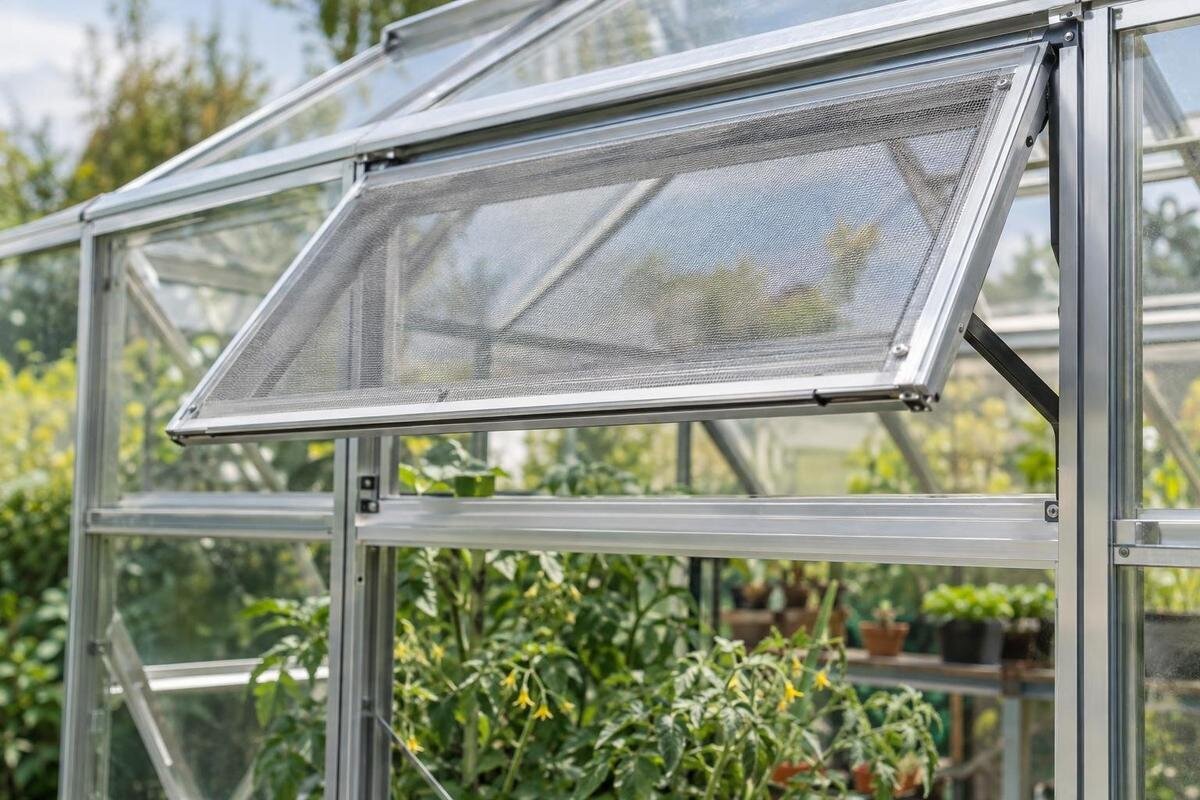
Greenhouse ventilation
Adding insect mesh to greenhouse vents can reduce pest entry, but the screen also changes how air moves through the opening. The useful choice is not automatically the finest mesh available: it depends on the pest you need to exclude, the mesh’s documented aperture, the ventilation your greenhouse can provide, and whether the screen fits the exact vent without interfering with its movement. Manuals, comparable temperature and humidity logs, and photographs of the actual openings help you judge that trade-off before retrofitting.

Before choosing a screen 1
How a screen changes vent airflow
An insect screen is not an airflow-neutral cover. As air passes through mesh, strands and openings create resistance; the usable flow depends on the aperture, weave, vent’s open area, and the pressure moving air through it. A sash that appears fully open can therefore pass less air with a screen than without one. Labels such as fine mesh or a thread count alone do not tell you how restrictive the installed screen will be: two meshes with similar counts can have different clear openings and strand thicknesses. Ask for the actual aperture and any airflow information the screen maker provides. If the maker has no data for the intended combination, treat the restriction as unknown rather than assuming it is negligible.
The effect also depends on the full air path, not just the screened sash. Air needs routes in and out, and a screen at an intake adds resistance to the flow through the structure. Gaps may allow more air through but undermine pest exclusion, so they are not a reliable substitute for enough screened capacity. With multiple vents, location and usable opening area matter as well as the number of openings. If you are considering the T-Model Greenhouse Orangery, request the vent layout for the configuration you plan to buy. Use that layout to identify where air would enter and leave, then ask which screen arrangements the manufacturer supports.
Choose mesh for the pest you need to exclude
Start with a target pest, not a mesh label. Identify what is actually present by looking at affected plants and, where useful, using a hand lens or a sticky card to collect flying adults. Whiteflies, thrips, aphids, and larger flying insects are not interchangeable targets, and a screen cannot be assumed to stop every pest. The relevant mesh specification is the clear aperture—the opening between strands—not just the number of threads per inch. Leaf damage alone may not identify the insect, since different pests can leave similar symptoms. Compare the aperture with guidance for the identified pest from the screen supplier or a local horticulture professional; body shape and life stage can affect whether an insect can pass through.
Select the least restrictive mesh documented to exclude your target rather than defaulting to the finest option. Smaller apertures can increase airflow resistance, but strand thickness and weave also matter; aperture alone does not establish how two screens compare. If identification is uncertain, ask a local extension service or qualified pest professional before selecting a specification. When evaluating a Pyramid-type greenhouse, include the target pest in your screen inquiry so the supplier can address exclusion as well as fit. Keep the mesh specification with your purchase records, including the stated aperture and any documented target pests, so a later replacement can be assessed against the same requirements.
Before choosing a screen 2
Estimate the ventilation capacity you have
Do not treat floor area or the number of vents as a direct measure of ventilation. What matters is the available opening when each vent is in its normal operating position, how much of that opening mesh covers, and how air can travel through the structure. A small vent opened fully and a larger vent opened partly are not interchangeable just because both are called open. With automatic controls, note whether vents are actually reaching full travel rather than recording only a target setting. Review the greenhouse manual for vent locations, operating limits, and any ventilation guidance; ask the maker or installer how an added screen affects the usable opening. Avoid applying a single mesh-area multiplier unless it comes from the screen or greenhouse manufacturer for that combination.
Map the openings you rely on: roof or side vents, doors used for routine ventilation, and mechanical intake or exhaust openings. Note which are screened, which remain open, and whether an unscreened route would let pests bypass the barrier. If a fan is involved, check its manual before covering an intake or exhaust; rated airflow without added resistance does not establish airflow through a screen. For the aluminum greenhouse with built-in storage, request a drawing of the configuration you are considering. Use it to distinguish the growing space from other enclosed areas and identify which openings actually serve that space, rather than estimating ventilation from the total footprint.
Establish a baseline before changing screens
Build a baseline before installing mesh. On several representative days, note the date, time, outdoor conditions, sunlight or cloud cover, and which vents, doors, and fans are open or operating. Log temperature and relative humidity in consistent locations inside the greenhouse, and record the sensor position so later readings can be compared. Keep outdoor readings alongside the indoor log when available. Place sensors out of direct sun and away from wet foliage so the record reflects the greenhouse air rather than a local surface or sun-warmed sensor. The point is not to set a universal target: it is to learn how your own structure behaves when its current openings are unobstructed. A single hot afternoon or humidity reading cannot distinguish a screen effect from a change in weather, watering, crop cover, or vent position.
Take photographs that show the open vent, frame edges, operator, nearby obstructions, and the proposed screen area. Photographing the inside and outside can help show how the opening is built; include a scale only when measuring is safe and does not require reaching across moving parts. Keep images from the same angle, and note any visible gap, damage, or dirt. After fitting a compatible screen, repeat the log under conditions as similar as practical, using the same sensor locations and vent settings. For an inquiry about Bloomcabin Prestige Greenhouse, attach those photographs and the configuration details to your observations. This gives support a record of the actual opening and its operation rather than just a report that the greenhouse feels warmer.

Before choosing a screen 3
Check fit against the exact vent and operator
Check the screen against the vent, not the greenhouse’s overall width or floor plan. Use the dimensions in the maker’s diagram for the specific opening and attachment method. Frame shape, lips or flanges, hinge position, seals, latch points, and the clearance needed for a sash to move can all affect whether a screen fits without leaving a gap or obstructing the opening. Two vents that look alike may still differ in how a screen attaches. Do not estimate dimensions from a product photograph. If dimensions or attachment details are missing, ask the greenhouse manufacturer or screen supplier for the matching drawing before ordering.
Include the vent operator in the fit check. A manual arm, chain, spring mechanism, or automatic opener needs its designed range of movement; mesh, edging, or fasteners must not obstruct it or hold a sash partly open. Ask how the proposed screen is removed for cleaning and whether that requires disturbing the operator or its settings. For the large backyard greenhouse, request matching screen and vent drawings for the selected configuration before ordering. Compare the attachment points and moving-part clearances shown in those drawings, not just the panel dimensions. Follow the applicable installation instructions, and have a qualified installer resolve uncertain attachment or moving-part questions.
Screen every route if exclusion is the goal
A screen across one vent only excludes insects at that vent. If the goal is to keep a particular pest out of the greenhouse, review all the routes it can use: other vents, fan openings, doors, damaged screen edges, frame joints, and gaps around pipes or cables. A barrier with an open bypass may still reduce entry at one opening, but it cannot provide whole-structure exclusion. Decide whether the goal is reducing entry through a high-risk vent or protecting the whole growing space; those are different specifications. Door openings deserve attention because access can leave an unscreened route open temporarily.
Walk around the greenhouse with its usual ventilation arrangement in mind. Check that a proposed screen closes to the intended frame and does not cover drainage paths, interfere with the vent, or leave a gap as the sash moves; rely on the manufacturer’s design details rather than improvising a seal. When ordering screens for an aluminum Classic greenhouse, make an opening-by-opening list showing what each proposed item covers. Include any door you routinely leave open for cooling, since vent screens cannot prevent entry through it. Ask about compatible ways to protect necessary access openings without obstructing normal use. Plants, pots, and tools brought inside also warrant inspection because vent mesh cannot exclude pests carried on them.
Before choosing a screen 4
Distinguish screen restriction from other causes
After installation, compare patterns rather than reacting to one reading. A warmer peak on a sunny day, slower temperature decline after vents open, or higher humidity at a similar time may be consistent with reduced air exchange, but none proves the screen caused it. Outside weather, crop growth, watering, fan operation, and a vent that did not open fully can change the result. Compare records made at similar times and conditions, then look for the same difference on more than one occasion. Check temperature and humidity at the same locations and note outdoor readings when available; differences between one sunny sensor position and another can be misleading.
If a difference appears only after screening, inspect the mesh for debris, verify that vents still reach their intended open positions, and confirm that fans and operators run as their manuals specify. Change one factor at a time. If the screen is designed to be removable, a brief comparison without it may help when conditions are comparable and pest risk is acceptable; follow the maker’s instructions and restore the barrier afterward. When discussing the Lean-To Greenhouse with support, include photographs of the adjoining wall, nearby obstacles, and vent positions along with your logs. That context can help distinguish a screen-related change from an existing obstruction or a change in how the openings are used.
Plan for seasonal ventilation demand
Ventilation demand changes with weather, sunlight, crop size, and how the greenhouse is used. A screen that seems workable during mild conditions may reveal a shortage when the greenhouse receives stronger sun or the vents are needed for longer periods. Think about the periods when openings are most important, not only the day you measure the frame. Consider whether the greenhouse depends on a small number of vents, whether a door is normally shut, and whether nearby structures or plants restrict an opening. The goal is to evaluate expected airflow with the screen in place, rather than rely on a mesh specification in isolation.
Where mechanical ventilation or an approved shade system is part of the setup, consider the complete plan and check compatibility; shade can reduce solar gain but does not replace air exchange. Do not assume screen resistance can be offset by changing a fan, widening an opening, or adding equipment without checking design limits. When researching the aluminum Limited Edition Greenhouse, ask about supported ventilation and shading options for the configuration you want, without assuming either is included. Explain whether your existing records cover mild weather or the hottest conditions you expect. If ventilation is already marginal before screening, have the supplier or a qualified ventilation professional review the proposed combination before purchase.

Before choosing a screen 5
Keep mesh clean and intact
Mesh condition affects performance over time. Dust, pollen, leaves, and other debris can cover part of the opening, while tears, stretched edges, loose corners, or detached fastening points can reduce exclusion. Inspect the full screen, especially corners and moving edges, not only the central panel. Check it at a frequency suited to what actually accumulates around the greenhouse and after work that may disturb the frame. A partly blocked screen may continue to look intact from a distance while its airflow and barrier performance have changed.
Use the screen maker’s cleaning and repair instructions. Aggressive scrubbing, unsuitable cleaners, or pulling on a tensioned panel may damage the mesh or its attachment; do not guess at a cleaning method. Replace damaged material with a product whose documented aperture and compatibility match the original purpose, rather than choosing by color or mesh count alone. After maintenance, confirm that the vent moves freely and compare readings if a marked change in airflow matters to your setup. Keep a note of the date, condition, and any replacement so later observations are not mistaken for a seasonal or equipment change.
Decide whether screening is a workable trade-off
Screening is a reasonable choice when you can name the pest to exclude, find a mesh specification appropriate to it, confirm fit for the exact vent, and retain adequate ventilation for the conditions you face. It is a poor shortcut when the pest is unidentified, the opening cannot be screened without gaps or operator interference, or the greenhouse already struggles to exchange air. In those cases, choosing finer mesh to feel safer can increase restriction without addressing entry through other openings. The answer may be targeted screening at selected openings, a different approved screen, or advice on the broader ventilation arrangement—not an improvised retrofit.
Make the trade-off explicit before purchase: which pest matters, what aperture is documented to exclude it, which vents must stay screened, and what evidence supports the expected airflow. Request dimensions and compatible attachment details for the model, plus any relevant ventilation information from the manufacturers. If those answers are unavailable, pause and ask a greenhouse supplier, screen maker, or qualified ventilation professional to review the exact configuration. A good choice is the one that meets the pest-control aim without assuming an unverified mesh, vent, or fan performance.
Frequently asked questions
Is the finest mesh always the best choice?
No. Smaller apertures may exclude smaller insects, but airflow resistance also depends on strand thickness, weave, and the installed screen area. Choose a mesh documented for the pest you have identified, then check whether the screened vents can still meet the greenhouse’s ventilation needs.
Is mesh count enough to compare screens?
No. Mesh count does not by itself tell you the clear aperture, strand thickness, or airflow restriction. Ask for the opening size between strands and any performance information for the screen in its intended use.
Will vent screens keep all insects out?
Not necessarily. A screen can block some pests at a covered opening, but insects may enter through other vents, doors, damaged mesh, or gaps around a frame. The result depends on the target pest, screen fit, and how consistently all entry routes are protected.
Can I use a universal screen on any greenhouse vent?
Only if its dimensions, attachment method, and clearance are compatible with that exact opening. Check the greenhouse documentation and screen supplier’s fit information; a similar-looking vent or greenhouse family name does not confirm a match.
How can I tell whether a screen is reducing ventilation?
Compare temperature and relative-humidity logs from similar conditions, with the same sensor locations and vent settings. Note weather, sunlight, doors, and fan operation too. A single reading cannot establish the cause; repeat patterns and a check of the screen and vent movement provide better clues.
A vent screen is a trade-off between a defined pest barrier and the airflow your greenhouse can still deliver. Base the decision on an identified target pest, the mesh’s documented aperture, the exact vent and operator details, and temperature and humidity logs made under comparable conditions. If no one can confirm how the screen performs on that opening, do not assume that finer mesh is automatically the safer choice. A compatible, maintainable screen that preserves adequate ventilation is more useful than an unverified specification.
