
What Can an Unheated Greenhouse Protect During a Late Frost?
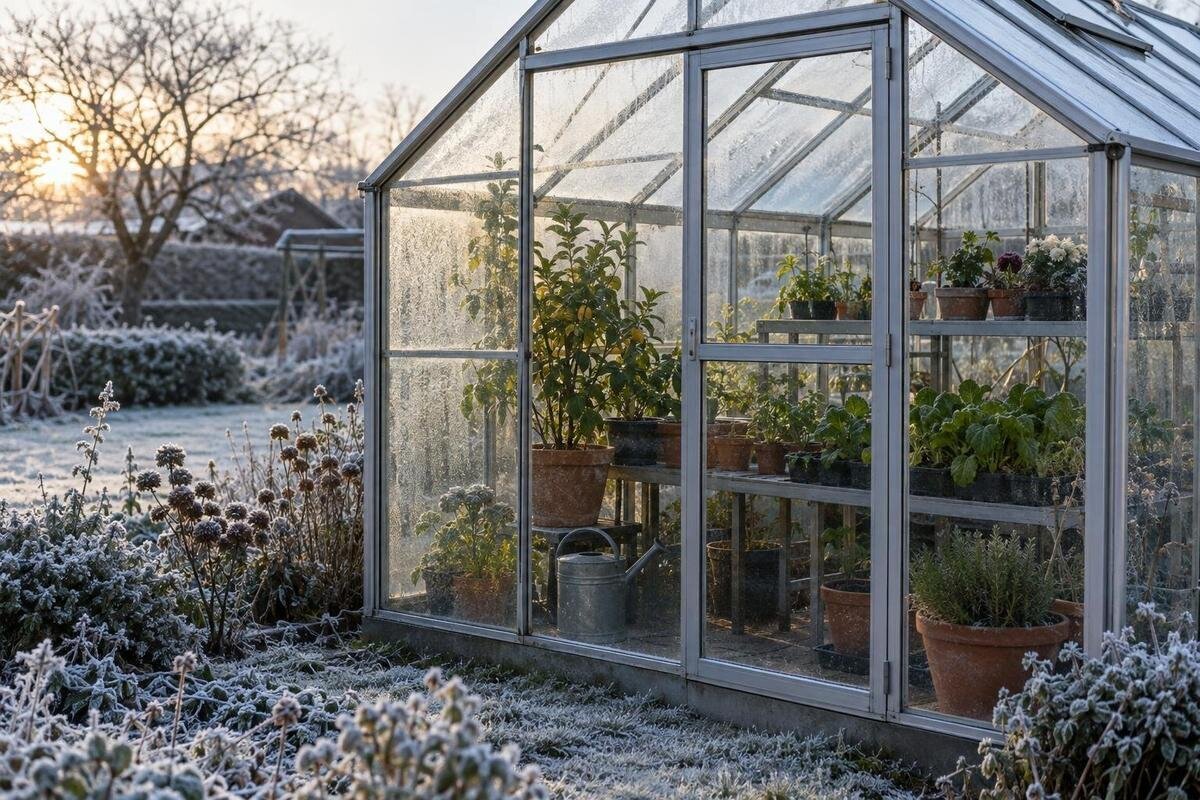
Greenhouse frost protection
An unheated greenhouse is a buffer, not a frost-proof room. It can shelter plants from wind and precipitation, and its enclosure may slow cooling for a while, but the air and plant tissue inside can still reach damaging temperatures. A late frost therefore calls for triage: identify crops least able to take the cold, decide whether an inner cover is worthwhile, and move especially vulnerable pots when the forecast is beyond what the structure can handle. This guide focuses on practical protection, useful temperature records, and the limits of a greenhouse without a heater.

What an unheated greenhouse can protect against
Think of the structure as changing exposure more reliably than it changes the night's minimum. It blocks much of the wind and rain, and it places a barrier between foliage and the open sky; sunlight can also warm its contents during the day. Some warmth may linger after sunset, but it escapes through the enclosure, gaps, doorways, and vents. With no heat source, the greenhouse cannot maintain a set temperature, and a clear cold night can still chill leaves, pots, and growing areas enough to injure plants. Foliage in the most exposed spot can still be damaged, even when plants elsewhere look fine.
How much protection you get depends on the weather, the greenhouse's construction and openings, what is inside, and where plants sit. A brief clear, calm frost and a prolonged windy cold spell pose different challenges: exposed surfaces can lose heat on a calm night, while persistent wind increases heat loss and drives cold air through gaps. The large backyard greenhouse listing covers 506 to 753 sq ft, but that published range is not a minimum-temperature rating. A larger enclosure does not necessarily keep crops warmer. Use overnight readings to learn how your structure performs, including the hours before dawn; a comfortable evening temperature can conceal a much colder overnight minimum.
Which plants need attention first
Start with plant condition, not the date on the calendar. Tender, warm-season starts—such as young tomatoes, peppers, and basil—often need attention before established cool-season crops. Recently emerged seedlings and plants set out shortly before the cold spell have had less time to acclimate; fresh new growth, buds, and blossoms can be more vulnerable than older foliage. Tropical and frost-sensitive ornamentals, especially valuable specimens, also belong near the top of the list. A mature cool-season plant may cope better than a soft new transplant of the same species. These are priorities, not universal temperature rules: variety, growth stage, previous exposure, and the length of the cold spell can change the outcome.
Make a short triage list while there is still daylight. Mark each plant as move, cover in place, or leave under observation; include containers, because their roots are exposed on more sides than roots in garden soil. Give priority to plants that cannot be replaced easily, not only those with the most visible foliage. Check seed packets, nursery labels, or reliable crop-specific references for cold tolerance, but do not treat a general species description as a guarantee for tender new growth. Note which plants are flowering or carrying fruit: a blossom can be lost even if the whole plant survives. If time runs short, protect the most vulnerable group first instead of spreading one thin cover over everything.
Use the forecast and your own readings together
Use the local forecast to decide when to prepare, but read it as a risk signal, not a reading from inside your greenhouse. A forecast low describes a nearby reporting area, not the temperature at a leaf, potting mix, or sheltered corner in your yard. Check the hourly trend and how long the cold is expected to last, along with wind and cloud conditions; a brief dip and a long overnight freeze are not equivalent. The forecast can miss a colder pocket on your site. If a tender plant is near the edge of its known cold tolerance, plan protection before evening rather than waiting for visible frost.
Put a minimum/maximum thermometer or logger near the crop canopy, shielded from direct daytime sun and not touching glass, leaves, or a cold surface; follow the instrument's instructions. Compare more than one growing zone if possible, and keep an outdoor reading for context. When considering the T-Model Greenhouse Orangery, check its layout and internal dimensions so you can plan accessible monitoring points near the crops you intend to grow. Keep sensor positions consistent between cold nights. Record the minimum temperature, date, door and vent positions, and covers used, then photograph the setup. Humidity readings add moisture information, but they cannot establish whether plants stayed warm enough. Label each sensor location so you can match readings to particular groups of plants.
Add a temporary cover inside the greenhouse
An indoor layer of frost cloth or row cover can shelter a bed or a few pots inside the greenhouse. Use material labeled for plant covering, support it above foliage when its instructions call for clearance, and secure the edges without crushing stems or blocking a needed opening. The still air held around the plant is the buffer; the cloth does not create heat. Its effect varies with fabric, fit, and conditions, so do not turn an advertised degree of protection into a guaranteed greenhouse temperature without matching test details. Put covers in place before the coldest part of the night. Check that clips and hoops cannot tip onto plants or obstruct a walkway.
Small cloches can help with a few seedlings, but uncover or vent them when daytime sun returns; an enclosure can warm quickly even in cool spring weather. Keep plastic off leaves and use stable supports for a clear outer layer. For a particular greenhouse, size covers by actual bed and bench measurements. If you are considering the Pyramid-type greenhouse, request internal dimensions and check where a freestanding cover support could fit without touching the enclosure. Allow enough material to clear the canopy and reach the intended fastening points. A cover that fits neatly over short seedlings may need adjustment as they grow. Do not assume shade cloth or a decorative screen serves the same purpose as a labeled frost cover.

Arrange plants so they are easier to protect
Put the most sensitive plants where monitoring shows less cold exposure; do not assume the center is automatically safest. Doorways, vents, cold glazing, and gaps can create local differences, and conditions may change when a door is opened. If you have not measured before, place vulnerable plants away from obvious drafts while keeping them accessible, then test those locations. Grouping pots makes them faster to cover and can reduce the exposed perimeter, but leave room to inspect foliage and keep air moving. Keep routes to doors and vents clear so a cover does not turn a quick task into an obstruction. Check readings before placing plants right beside glazing.
Draw a rough floor plan with beds, staging, door swing, vents, and the plants that need extra care. The Limited Edition aluminum greenhouse is listed from 40.6 to 302 sq ft; compare that footprint with the usable space left after paths, benches, and access are accounted for. Set aside an accessible area for pots that you may need to move or cover together. Measure height as well as width: a cover that spans the bed may still be too short to clear taller starts. Check whether you can reach its fastenings without leaning over delicate plants. Planning these zones before frost makes it easier to protect selected crops and remove material promptly the next morning.
Give container plants a separate plan
Containers deserve separate attention because the root ball is surrounded by pot walls and exposed air, unlike roots buffered by garden soil. Cluster pots together for easier coverage, and consider wrapping the outside of pots with dry insulating material while keeping drainage holes clear. Do not pack wet material against stems or seal the soil surface; the aim is to limit exposure, not trap water. For a small collection of valuable, tender plants, moving them to a reliably frost-free indoor place is often more dependable than adding layers inside an unheated house. Avoid a sudden move into harsh direct sun or a hot, dry spot, and check for pests before bringing plants indoors.
Store row covers, clips, hoops, and labels somewhere dry and reachable before a cold night; test supports in daylight rather than improvising over fragile growth. If built-in storage is a buying consideration, the Aluminum Greenhouse with Built-In Storage listing identifies that feature, but the product name does not tell you the compartment's size or whether it can hold bulky cloth and frames. Check published dimensions and access details before counting on that space. A labeled bin or separate shelf can work just as well if it keeps materials clean and prevents a last-minute search. Keep the materials you use most for tender pots together so they are easy to find.
Manage doors and vents overnight and the next day
Before dusk, check that doors and vents can be positioned as intended. Closing openings for the coldest hours may reduce direct cold-air entry and preserve some daytime warmth, but it does not turn an unheated greenhouse into an insulated room. Follow the greenhouse and opener manuals; do not force a mechanism, jam an automatic vent, or block an opening with a cover as a workaround. On the following day, remove inner covers and ventilate as conditions allow, since sun can raise greenhouse temperatures quickly even when outdoor air stays cool. The overnight plan and the morning plan belong together; decide how each opening will be managed before nightfall.
When comparing models, verify the number and location of vents, how each opening is operated, and which accessories are compatible with the exact configuration. For the Classic aluminum greenhouse, consult current product documentation rather than assuming a particular opener is included. Check whether controls remain accessible with benches and temporary covers in place. If an automatic device's behavior is uncertain, observe its operation and consult its manual or supplier; do not disable or adjust it by guesswork during a cold night. Make sure anyone responsible for morning care knows how to open the structure and release the covers. Permanently sealing openings would interfere with daytime ventilation, so it is not a dependable frost solution.
Move plants when the cold exceeds the greenhouse's limits
If the forecast points to an extended or severe cold spell, or your highest-priority plants are known to be very frost-sensitive, move portable specimens to a frost-free location before nightfall. A temporary cover can improve immediate shelter, but neither cover nor greenhouse guarantees survival through a long freeze. For plants rooted in beds, use plant-covering material according to its label and make sure it is supported and secured; check the actual minimum the next morning. If the crop's required protection is beyond what you can safely provide, accept that some plants may be lost rather than improvising a heater or an unsafe enclosure. A second cold night can also matter when plants have not recovered from the first.
A structure beside a house can have a different exposure from one standing alone, yet an adjoining wall should not be treated as a dependable heat source. When considering the Lean-To Greenhouse, check the proposed site's exposure and access as well as the product dimensions. A nearby indoor destination may make moving pots easier, but only if the route is clear and the receiving space is suitable for the plants. Plan the move in daylight, with trays or carriers ready for small pots. For crops that will remain inside, compare readings near the wall with those nearer the glazing. Use those observations to choose positions rather than assuming every part of a lean-to offers equal protection.

Check plants after the frost
At dawn, remove or open temporary covers when the immediate frost risk has passed and the greenhouse begins warming; do not leave cloches sealed through a sunny day. Check leaves, buds, and stems after they thaw. Damage may appear water-soaked, dark, limp, or later shriveled, and some symptoms take time to become clear. A plant that droops at first light is not necessarily beyond recovery, so avoid cutting it back before you can distinguish damaged tissue from living growth. Check root-zone moisture and resume ordinary care rather than flooding a wilted plant in an attempt to reverse frost injury. A quick spray of water is not a reliable substitute for a cover or a suitable frost plan.
Write down the lowest reading, where the sensor sat, how long cold conditions lasted, and which plants were covered or moved. Photograph the growing areas, cover supports, door and vent positions, and any damaged plants. These records can help you identify patterns worth investigating, though a photograph alone cannot establish whether a gap caused injury. Compare protected and uncovered plants of the same type where possible, while noting differences in size or condition. Keep images dated and take follow-up close-ups as symptoms develop. Review the daytime readings too, especially if covers remained in place after sunrise. Use the results to make a specific change next time, such as relocating one vulnerable group or adjusting its cover.
What to verify when choosing a greenhouse
Choose an unheated greenhouse as a protected growing space with limits, not as a substitute for a heated structure. For early- or late-season crops, examine the documented glazing and frame details, door fit, and installation requirements. Ask how seals and closures are maintained and whether damaged components can be replaced. These details matter to keeping the enclosure in its intended condition; they do not establish a frost-free temperature. If a seller states a temperature benefit, ask what weather, equipment, and configuration the claim assumes. Without those details, it is not a useful basis for deciding whether tender crops can stay overnight. Also check that temporary cover supports can be used without drilling into or loading parts of the greenhouse contrary to its instructions.
Use the Bloomcabin Prestige Greenhouse product page to compare documented features with your crop plan, then ask about any missing details before buying. Separate overnight protection needs from daytime shading needs. A shade accessory is intended to manage sunlight; do not count it as frost insulation unless its documentation explicitly supports that use. Check compatibility with the exact greenhouse and whether the accessory would interfere with a temporary inner cover or moving vents. Your purchase plan should account for both the tender crops you hope to grow and the conditions in which you would move them elsewhere. This makes the greenhouse's role clear without relying on its name or appearance as evidence of cold protection.
Frequently asked questions
Will an unheated greenhouse stay above freezing during a late frost?
Not reliably. An unheated greenhouse may hold some daytime warmth and reduce exposure, but it can still become cold enough to injure plants. Conditions can vary across the structure, too. Check a minimum temperature near your crops; if plants are close to their cold tolerance, add a suitable cover or move portable pots rather than trusting the enclosure alone.
Which plants should I protect first?
Prioritize tender seedlings, warm-season transplants, tropical plants, and plants with vulnerable new growth, buds, or blossoms. Recently moved plants may be less acclimated than established crops. Include valuable container plants in your plan because their root balls are exposed on more sides. Plant variety, growth stage, and how long the cold lasts all affect risk.
Does a cover inside the greenhouse help?
A frost cloth or row cover can create a second sheltered layer around plants, but it does not generate heat. Follow the material's instructions, support it as directed, and secure it without crushing plants or blocking vents. Remove or open covers when conditions warm, since a greenhouse can heat quickly in daytime sun.
Does a larger or lean-to greenhouse provide more frost protection?
Neither its footprint nor its format guarantees a safe minimum temperature. Construction, gaps, openings, weather, and where plants sit all matter. An adjoining wall may change exposure, but it is not a dependable heat source. Check the published specifications and use a thermometer near the plants to understand conditions at your site.
When should I remove covers and assess plants?
Open or remove temporary covers once the immediate frost risk has passed and the greenhouse begins to warm. Check plants after they thaw, but do not rush to prune tissue that may still be viable. Record the minimum temperature and photograph the setup and any damage. Those notes can help you improve your plan for the next cold night.
Treat an unheated greenhouse as one layer of protection, not the final word on a cold night. Use the forecast to prepare, but let crop-height readings and each plant's tolerance guide your choices. A supported inner cover may help during a brief frost; moving the most vulnerable pots is more dependable when colder conditions are expected. Afterward, record what happened. That evidence will make the next late-frost decision more precise than relying on the greenhouse's name, size, or a reassuring forecast alone.
