
Misshapen Greenhouse Strawberries: Pollination or Stress?
Greenhouse crop troubleshooting
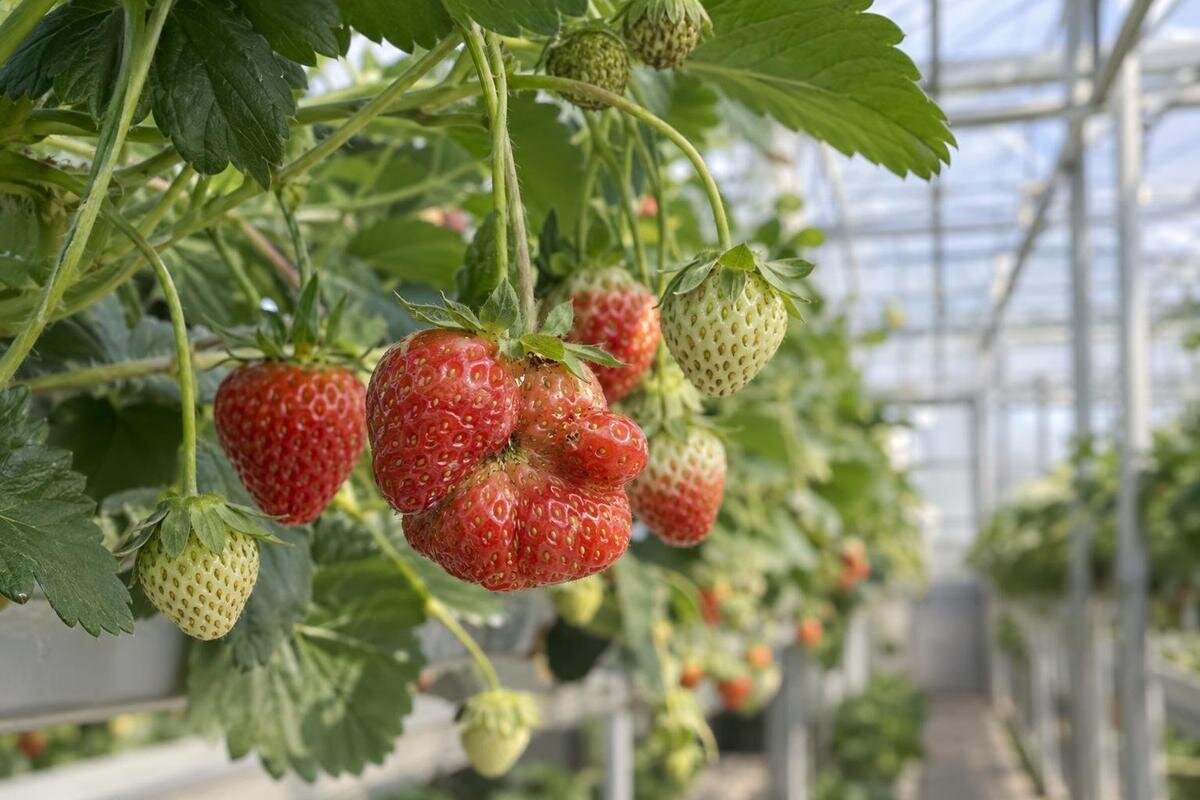
An oddly shaped strawberry is a record of what happened earlier in the flower, not necessarily a sign that the whole plant is unhealthy. In a greenhouse, limited pollen movement is one possibility, but temperature swings, root-zone stress, insect feeding, cultivar traits, and flower injury can leave overlapping clues. The most useful first question is where the berry failed to fill out—and whether the achenes in that area developed normally. Compare fruit from the same flowering period, then connect it to notes about flower condition, temperature, moisture, and greenhouse position. Shape alone cannot identify the cause.

How incomplete fertilization affects strawberry shape
Strawberry flesh is the enlarged receptacle of the flower. The small, seed-like dots on its surface are achenes; each develops from a separate ovary and contains a seed. For that local part of the receptacle to expand normally, the ovule associated with it must be fertilized. A single flower therefore depends on many small reproductive events, not one all-or-nothing pollination event. If some ovaries develop and others do not, the ripe berry can be lopsided, pinched, flattened, or deeply grooved while the rest of the plant looks healthy. Its outline is a delayed record of flower development, not just conditions on harvest day.
Pollination means pollen reaches a receptive stigma; fertilization is the next reproductive step. Those steps are connected but not identical: pollen may be transferred unevenly, or conditions during bloom may interfere with pollen function or later development. Areas linked to underdeveloped achenes often expand less, making incomplete pollination or fertilization a plausible explanation for localized gaps. It is not proof that a lack of bees was the cause. Temperature injury, pests, and plant stress can overlap, and more than one factor may affect flowers during the same period. By the time the fruit ripens, the flower may be long gone, so notes made during bloom are more useful than trying to reconstruct conditions from memory.
What fruit shape can tell you
Describe the defect before naming a cause. Is the berry lopsided, flat at the tip, pinched at the middle, unusually pointed, or uniformly small? Note whether one part failed to expand or is merely scarred. One underfilled side with otherwise normal growth raises a flower-level question; many small berries across a plant or flowering flush suggest conditions affecting more than one flower. These are tendencies, not rules. Cultivars differ naturally in outline, and a developing berry can look uneven before it reaches its mature shape. Compare fruit at similar ripeness and from similar positions in the flower cluster.
A single odd berry is weak evidence; compare several from the same cultivar and flowering period with fruit that developed normally. Photograph the stem end and tip, and note whether the same pattern repeats in one part of the greenhouse. Include a wider photograph showing the fruit on the plant, so the close-up remains connected to its location. Separate your description from your interpretation: “one side is narrow” records an observation, while “poor pollination” names a possible cause. If you are also planning a growing space, the T-Model greenhouse orangery listing shows 178–323 sq ft. That range can help scale an initial paper plan, but product dimensions do not diagnose crop problems. For this investigation, label the affected plants on your existing layout and keep observations tied to those locations.
Check the achenes and the flower center
Look closely at the surface of a mature, misshapen berry and compare it with a normal one of similar age. Are the achenes beside the depressed or narrow area noticeably smaller, less developed, or more uneven than those on the fuller side? That pattern supports incomplete fertilization of some parts of the flower, but it is not conclusive. Achenes may vary as fruit develops, so avoid comparing a partly ripe berry with a fully mature one. A close photograph, taken from the same angle for both berries, can make the difference easier to judge than memory alone.
If symptoms recur, also inspect a recently spent flower or a young berry from an affected cluster. Note damage, discoloration, or mold around the flower center; these clues can point to injury or disease that a ripe berry no longer shows clearly. Photograph the entire flower as well as the marked area, and record its plant and cluster so you can follow the same fruit as it develops. Keep observations from different stages separate rather than treating a damaged flower and an unrelated ripe berry as a matched pair. For a separate layout comparison, the Pyramid-type greenhouse listing shows 60–203 sq ft. On your own bed map, give each observed plant a simple label. This lets you connect successive photographs to the right plant without relying on the changing appearance of its flowers and fruit.
Check pollen movement while flowers are open
Cultivated strawberries are self-fertile, but pollen still has to move to the many stigmas within each flower. In an open garden, insects and air movement can help; a greenhouse may change both, and pollinator access varies from one setup to another. Do not assume that a greenhouse has no pollinators, or that seeing one insect guarantees every part of a flower was pollinated. Watch several flowers while they are open and note actual visits, movement, and whether the affected plants are grouped in a particular area.
The timing matters: look at open flowers and newly faded flowers, not just ripe fruit weeks later. If few insects visit, investigate pollen movement alongside flower condition. Record when you watched, which flowers were open, and whether doors or vents were open at that time. A brief observation describes that visit to the greenhouse, not the entire flowering period; repeat it before treating an apparent lack of activity as a consistent pattern. Keep plants easy to reach so you can inspect flowers without overlooking those behind other crops. When comparing possible layouts, the aluminum greenhouse with built-in storage listing shows 59.4–302 sq ft. Sketch crop positions and inspection routes separately from storage space, and assess access to the flowers in the actual setup. The useful question is whether you can observe comparable flowers throughout the growing area.

Look for heat or cold injury at bloom
Temperature can affect flower tissue, pollen function, and early fruit development. A cold event or a period of excessive heat during flowering may affect one cluster or flush while later flowers develop normally. Conditions at bloom and early fruit set are more relevant than the weather when a ripe berry is picked. There is no single temperature threshold that diagnoses misshapen fruit across every cultivar and growing setup, so avoid drawing a conclusion from one reading or a general rule of thumb.
Use a min-max thermometer or data logger at plant height, out of direct sun, and record readings alongside flowering dates. If possible, compare readings from the growing areas where affected and normal fruit developed; a measurement near a wall or roof may not represent the flower zone. Label each sensor location on your bed map and note when a sensor is moved, so readings from different positions are not mistaken for a change over time. Also distinguish a recorded temperature event from a suspected one: a misshapen berry cannot supply the missing reading. A darkened flower center can support a suspicion of cold injury, but it is not unique to frost. If you are comparing growing-space sizes, the Bloomcabin Prestige Greenhouse listing covers 40.6–302 sq ft. Include intended monitoring locations in the layout rather than assuming one measurement will describe every bed.
Separate root-zone stress from a pollination problem
Dry or waterlogged growing medium, uneven water delivery, and root damage can all affect plant and fruit growth. These problems are more likely to appear with broader signs, such as weak growth, wilting, or many small berries, than as one isolated underfilled patch. That distinction is only a clue: root stress can occur at the same time as a pollination problem, and it can make the whole crop less uniform. A berry’s shape alone is not a reliable reason to add water, fertilizer, or another treatment.
Check moisture at root depth and compare the actual beds or containers served by different watering zones. Surface dryness alone can mislead, so note what the growing medium is like where roots are active and whether symptoms follow a particular line or area. Record which plants you checked and whether the check was before or after watering; otherwise, differences in timing can obscure the comparison. Keep watering and feeding records before changing either practice. If one group has both small fruit and weak growth while another has only an occasional lopsided berry, describe those as separate patterns rather than assigning both to the same cause. For a larger layout comparison, the Bloomcabin Orangerie listing shows 506–753 sq ft. Mark beds, containers, and watering zones individually on your plan so crop observations can be traced to the area actually receiving water.
Check for insect feeding and disease
Insects can damage flowers or very young fruit before the distortion becomes obvious. Tarnished plant bugs, also called Lygus bugs, are one possible cause of catfacing or other misshapen strawberries. Inspect blossoms and small fruit closely for insects, pits, corky patches, or feeding scars. These marks may look different from a smooth area that simply failed to expand, but appearance alone does not identify a pest. Photograph the affected surface and, if possible, the flower or young fruit from the same plant.
Soft brown tissue, mold, or clear lesions on flowers and fruit suggest a separate disease or injury question rather than a pollination signature. Compare affected and normal plants for other changes, but do not assume every symptom has the same cause. Record whether a mark was already present on young fruit or appeared later; that distinction helps keep early distortion separate from subsequent damage. If you see a possible pest, photograph it as well as the affected tissue and seek an identification before choosing a response. Avoid naming an insect solely from the shape of the berry. When comparing structures, the Classic aluminum greenhouse listing shows 40.6–302.3 sq ft. Plan room to inspect blossoms and young fruit from more than one side of the crop, rather than checking only the berries visible from the doorway.
Track fruit by plant, date, and greenhouse position
A simple record can reveal whether misshapen fruit appeared on one plant, one flower cluster, or across a wider area. Note the cultivar, plant or row, flower date, fruit position in the cluster, and when you first saw the distortion. Add photos of open or recently faded flowers when possible, since those stages may show injury that disappears by harvest. Record whether the same plant also has weak growth, damaged leaves, or small fruit; this helps distinguish a localized fruit clue from a broader plant problem.
Map affected plants against the real layout: beds, walls, doors, vents, and any differences in shade or watering that you can observe. Repeated symptoms in one area may direct attention to a local condition, while fruit affected across several locations may fit a crop-wide event. Neither pattern proves a cause, but both help narrow the checks. Mark normal fruit on the map too; a record containing only damaged berries can make a scattered problem look more concentrated than it is. Use the same location labels in your photographs, temperature notes, and watering records so those observations can be compared. For a layout reference, the Lean-To Greenhouse page lists 40–154 sq ft. On your working map, identify the wall side and access side, then record observed differences rather than assigning conditions to either side in advance.

Compare one change during the next flowering period
If the problem repeats, change one plausible factor at a time and compare similar flowers. For example, if pollen movement seems limited, mark several open flowers on comparable plants and leave a matched group untreated. Keep cultivar, flowering date, and location as similar as possible. If you also alter watering, temperature management, and feeding, an improved crop will not tell you which change mattered. A comparison across multiple flowers is more informative than judging one berry, and even a repeated difference remains evidence rather than absolute proof.
A gentle hand-pollination trial can test whether added pollen movement helps: use a clean, soft brush on a set of open flowers, mark them, and compare their later fruit with untreated flowers. Avoid brushing hard enough to damage the flower. Record which flowers received the treatment before fruit develops, and photograph the eventual berries at comparable ripeness. Describe the result in the same terms for both groups, such as whether one side remained underfilled, instead of selecting only the best treated berry and the worst untreated one. If a future layout is being planned, the limited-edition aluminum greenhouse listing shows 40.6–302 sq ft. Allow access to both comparison groups in the sketch. The trial is easier to interpret when you can follow the marked flowers consistently, and an improvement should still be considered alongside any differences in location, bloom date, or flower condition.
When to investigate beyond pollination and stress
If only a few berries are unusual and the rest of the plants and fruit look normal, continue comparing flowers and harvests before making a broad diagnosis. A recurring pattern, a sudden change across many plants, visible feeding damage, or symptoms on leaves and growing points calls for closer investigation. Also consider whether the fruit is truly malformed or simply a cultivar’s normal shape. Looking at several development stages can separate a recurring problem from an isolated variation more reliably than reacting to the most unusual berry.
For persistent or widespread symptoms, a local Cooperative Extension office or a qualified crop diagnostician may help identify pests, disease, or a regional growing issue. Provide clear photographs of the whole plant, flowers, young fruit, and mature berries, along with cultivar, dates, greenhouse location, and temperature or watering notes. A representative sample can be more useful than one close-up. The goal is to connect visible symptoms with the conditions during flowering, not to force every misshapen berry into a single explanation.
Frequently asked questions
Do greenhouse strawberries need bees to pollinate?
Cultivated strawberries are self-fertile, so a bee visit is not essential for every flower to set fruit. Pollen still has to reach the flower’s many stigmas, though, and insects can help move it. Observe whether pollinators visit rather than assuming they are absent or that a visit guarantees complete pollination.
Do small achenes prove incomplete pollination?
No. Achenes that are less developed beside an underfilled part of a berry support that possibility, but they do not prove it. Compare several similarly mature berries and consider flower injury, pests, and other growing conditions as well.
Can a temperature swing cause misshapen strawberries?
Yes. Cold or excessive heat during flowering can affect flower tissue, pollen, or fruit set. The fruit’s shape alone cannot identify a temperature problem, so compare its bloom date with temperature records and look for other signs of flower injury.
Can irregular watering make one side of a berry stay small?
Root-zone stress can interfere with fruit growth, but it more often appears alongside broader symptoms such as weak growth or many small berries. A localized underfilled patch may point more toward flower-level injury, incomplete fertilization, or feeding damage. Causes can overlap.
Should I hand-pollinate the next flowers?
You can use it as a small comparison, not as proof of the cause. Mark similar open flowers, gently move pollen with a clean, soft brush on some, and leave others untreated. Compare multiple flowers under the same conditions; a single result may be misleading.
Think backward from the fruit: locate the underfilled area, compare its achenes, and look back to the flowers and conditions that produced that crop. Repeated local underdevelopment alongside less-developed achenes supports incomplete fertilization; small fruit across many plants, flower injury, feeding marks, or plant-wide decline point toward other checks. Because causes can overlap, patterns across several flowers and dates are more useful than any single misshapen berry.
