
Glass Roof with Polycarbonate Sides: Can Materials Be Mixed?
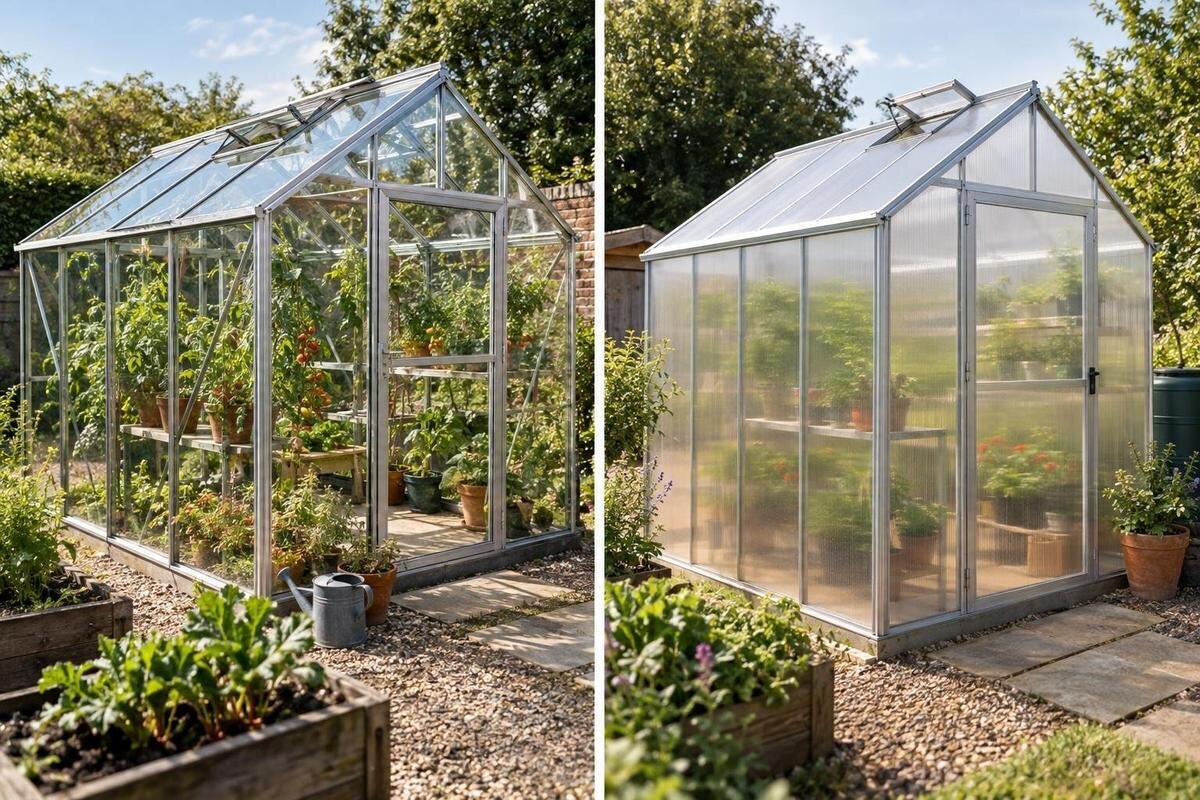
Greenhouse glazing guide
Yes, a greenhouse can have a glass roof and polycarbonate sides—but only if the manufacturer offers that combination for the exact model and configuration. Panels are not interchangeable simply because they cover the same opening: glass and polycarbonate differ in thickness, edge treatment, movement, weight, and retention requirements. A mixed specification has to coordinate the glazing bars, seals, joints, and frame. Before comparing appearance or expected growing conditions, confirm the materials in a model-specific drawing or written specification. If an approved combination is not documented, do not treat a panel swap as a standard option.

What to verify before buying 1
When a glass roof and polycarbonate sides are compatible
Yes, the combination is technically possible, but only as a manufacturer-designed option for a specific greenhouse. Some designs may be offered with one glazing material throughout; a mixed package should be treated as a separate, model-specific configuration. Confirmation needs to cover the exact frame series and size, not merely say that the maker sells both glass and polycarbonate. It should identify glass on the roof and polycarbonate on the intended side walls, including any differences at the ends, doors, vents, or lower panels. The approval should apply to those exact areas, not just fixed wall infill. Approval for a related model or an earlier frame version does not automatically transfer.
That distinction matters because panels are part of a system. Their thickness, edges, weight, and movement determine how they meet the frame and stay in position; the glazing bars, retainers, seals, and drainage details are designed around those properties. A sheet that fits an opening may still be incompatible with the way the panel is supported or weather-sealed. Treat the model-specific drawing or written glazing schedule as evidence of approval. If it does not list the combination, do not assume you can substitute materials after purchase; select a documented package or ask for written confirmation before ordering or altering parts. The schedule can also help identify compatible replacement panels later.
Why gardeners consider mixed glazing
Buyers consider a mixed package when their priorities for the roof and walls are not identical. A glass roof may be preferred for its familiar appearance or clear view overhead, while a particular polycarbonate side panel may offer a different weight, handling, privacy, impact, or light-diffusion profile. These are properties to compare in the actual products, not guarantees supplied by the words glass and polycarbonate. Glass varies by type, thickness, and coatings; polycarbonate may be solid or multiwall, clear or diffusing, and treated in different ways. A clear roof and translucent walls can also look different than expected in changing daylight, especially as the frame grid and surrounding shade become visible.
Write down what you want the split to accomplish before comparing models. Is the main aim a clear view, easier panel handling, a different degree of diffusion, or a chosen appearance? Rank those priorities so you can tell whether a mixed package offers something useful over a listed single-material option. For a model with a separate functional feature, such as the Limited Edition greenhouse with built-in storage, distinguish your questions about the growing area from those about the storage area. Ask which surfaces each glazing option covers. That keeps a discussion about roof and wall materials focused on the parts of the greenhouse where the proposed benefit actually matters.
What to verify before buying 2
How mixed glazing can affect plant light
Light reaches plants through the whole enclosure, so changing only the sides can still affect the growing environment. The roof receives much of the overhead daylight, but side exposure, orientation, roof pitch, frame members, nearby shade, glass coatings, and panel tint or texture all influence how much light arrives and how it is distributed. A clear glass pane and a diffusing polycarbonate panel may create different views and shadows; two products sold under the same material name may also differ. The direction and time of direct sun matter, so a single transmission figure cannot describe every planting position. A shaded side wall may contribute little at one time and more as the sun angle changes.
Ask for light-transmission or diffusion data for the exact products, if the manufacturer provides it, and compare options in the same frame and panel layout. Consider where tall plants, seed trays, and workbenches will sit: a side wall can matter more for plants near it than for those under the center of the roof. If the proposed mix is intended to soften direct sunlight, find out what that specified panel does rather than assuming it will. For the Bloomcabin Prestige Greenhouse, request data for each glazing package you are comparing, with the roof and wall products identified separately. Check whether the figures use the same measurement method; a transmission percentage and a description of diffusion answer different questions.
The glazing system must fit both materials
Each infill must match the opening and its retention system. A greenhouse may use glazing bars, channels, clips, gaskets, and cover strips designed for a particular thickness and edge profile; glass and polycarbonate do not necessarily use the same combination. Multiwall polycarbonate also has internal channels, so orientation and closure details can be part of its approved installation. At a roof-to-wall junction, the meeting edges need details that work with both materials. The relevant question is not simply whether a panel can be held in place, but whether the manufacturer has specified compatible panels, retaining parts, and junctions for that exact configuration. Check whether the schedule also covers glazing in roof vents or other operable sections.
Substituting a panel can leave unsupported edges, gaps, or retainers that do not engage correctly, even when the overall dimensions look right. Do not cut panels, alter bars, drill new holes, or reuse parts to make an unlisted combination work unless the manufacturer explicitly allows that change for the model. When reviewing the Classic aluminum greenhouse, use its glazing schedule and parts list to check whether the proposed package includes different components for roof and wall panels. Pay particular attention to doors and vents: their moving frames may use different glazing details from fixed walls. The documentation should identify those components clearly enough that an installer does not have to improvise at a material change.

What to verify before buying 3
Movement, seals, and condensation at material changes
Glass and polycarbonate respond differently to temperature changes, and the frame has to accommodate their movement while keeping each panel supported. The amount of movement and required clearances depend on the panel product, its dimensions, and the approved fixing method; there is no safe universal gap to copy from another greenhouse. Seals, gaskets, and retaining strips must also suit the materials and system. Roof-to-wall joints, panel ends, corners, doors, and vents are places where the documented details matter, because an unsuitable junction can affect fit and water management. Ask which seals and accessories belong with the mixed configuration rather than assuming standard parts will work.
Condensation is not solved simply by putting polycarbonate on the sides. Moist air can condense on cooler surfaces, and water management depends on greenhouse conditions as well as the frame, seals, and panel design. For a proposed mixed package on the Limited Edition aluminum greenhouse, ask how water is managed where roof and wall panels meet and whether the specified polycarbonate needs particular edge closures or orientation. Also distinguish moisture on a panel's surface from moisture inside a multiwall panel; these are different observations to discuss with the supplier. Ventilation belongs in that discussion because it affects indoor moisture. Do not block drainage paths or seal panel channels based on guesswork; use the instructions for the specified system.
Structural ratings apply to a defined configuration
Structural suitability belongs to the complete greenhouse, not to a single glazing material. The design has to account for the selected roof panels, walls, framing, connections, and the loads for which the specific configuration is rated. Glass on a roof affects the assembly differently from a lighter panel, but polycarbonate sides do not by themselves prove that the structure is stronger or that a different load rating applies. A change in infill can mean the assembled configuration differs from the one covered by a published rating. Check ratings and limitations for the exact model, size, and glazing package; do not transfer figures from another version or treat a material label as a capacity statement.
Local exposure matters as well. Wind, snow, nearby shelter, and the foundation arrangement can affect what is suitable at a particular site; a rating may apply only under defined conditions. When considering the Bloomcabin Orangerie large backyard greenhouse, include the selected size and glazing package in your request for structural documentation. Ask what assumptions accompany any published figures and whether the documents cover the entire ordered configuration, including its connections and foundation requirements. A qualified local professional can review the specification where site conditions or applicable requirements are uncertain. Keep that review separate from a comparison of panel weight: choosing a lighter wall material is not a substitute for establishing the suitability of the complete structure.
What to verify before buying 4
Compare panel specifications side by side
Compare complete, approved choices on a like-for-like basis: the same greenhouse model and size, the same roof and side positions, and the exact glass and polycarbonate products under consideration. Ask for the glass type and thickness, any specified safety treatment, and the polycarbonate construction and thickness. Find out whether either panel has coatings, tint, or a UV-treated face that must be oriented in a particular way. Request performance data relevant to your goal, such as light transmission or thermal performance, if available. Do not use a generic figure for one material to stand in for the actual model's specification.
Also compare ownership details. Read the maker's cleaning instructions for each surface and note any restrictions on cleaners, tools, or treatment of coatings. Different materials may require different care, so one routine may not suit both. For the Bloomcabin Oasis pyramid greenhouse, compare only packages listed for the size you are considering, using the same panel locations and included components in each comparison. If price matters, request written quotes that distinguish the glazing package from other options and installation services. That helps you identify what accounts for a difference in the total rather than attributing it all to glass or polycarbonate. Keep missing specifications visible in your comparison instead of filling them with generic material data.
What the manufacturer's drawing should show
A useful drawing should mark the glazing on the roof, each side and end wall, doors, vents, and any lower infill that differs. Ask for the exact model and size, the glass product, the polycarbonate type and thickness, and all relevant accessories to be named. It should show the roof-to-side junction and clarify how panels are retained and sealed at edges. If different walls use different materials, the schedule should distinguish those locations rather than grouping them under one broad label. Make sure the document matches the frame version and ordered configuration, not just a brochure illustration or a drawing for a different size.
The written order should agree with the drawing. For the Garden View T-Greenhouse, identify the selected size and configuration on both documents, then check that each roof and wall material appears in the same location. Ask the supplier to resolve conflicting descriptions before accepting the specification; a broad phrase such as mixed glazing is not enough to identify the panels being supplied. The confirmation should also explain whether the package changes assembly guidance, applicable ratings, maintenance instructions, or warranty terms. Keep the final document revision with the quote and order confirmation. If a later substitution is proposed, have the revised materials and any associated component changes recorded rather than relying on the earlier drawing.

What to verify before buying 5
When not to mix glazing materials
Do not mix materials just because you have leftover panels, can find a sheet with similar measurements, or have seen a photo of a greenhouse with glass overhead and plastic walls. None of those establishes that the edge support, retainers, seals, panel movement, or structural design is appropriate. Even a panel that appears to fit may not restore the specified system. An alteration after purchase can also affect roof-to-wall joints, vents, and how the greenhouse handles weather. If the manufacturer does not list the combination for the exact model, avoid treating a panel swap as a simple repair or customization.
If the mixed option is unavailable, compare complete listed packages against your original priorities. For example, a request about the aluminum Lean-To Greenhouse should distinguish a preference for translucent walls from a need for a particular thermal specification; those are not interchangeable requirements. You may find that a documented package addresses the more important goal without the proposed material split. If it does not, consider another model with suitable listed options rather than adapting an incompatible frame. A custom alternative needs an actual design assessment by the manufacturer and a qualified greenhouse professional, not simply permission to buy different panels. Neither mixed nor single-material glazing is universally better; the useful choice is the supported package that meets your needs.
Plan for future panel replacement
A mixed greenhouse needs a clear way to identify replacement panels. Before ordering, ask how the supplier distinguishes roof panes, fixed wall panels, door glazing, and vent glazing in its parts records. Keep a copy of the glazing schedule that connects each location to a product description or part number. For polycarbonate, the record should identify the specified construction, thickness, color or tint, and any required orientation; for glass, it should identify the specified type and thickness. Dimensions alone are not a complete replacement specification. Ask how to request a replacement if a part number changes, and whether the supplier can confirm compatibility with your original frame version.
Replacement planning also involves access and service, especially for the glass roof. Ask who can perform the work, what information they will need, and whether replacing a panel requires new seals, retainers, or other model-specific components. Do not assume that a wall-panel replacement and a roof-pane replacement involve the same handling or access arrangements. Have the installer explain those requirements without attempting overhead work yourself. Store the care instructions and assembly documents with the panel records, and record any approved replacements so the specification stays current. This gives a future supplier or installer a reliable description of the greenhouse as it exists, rather than leaving them to identify materials from photographs or measurements.
Frequently asked questions
Can I replace only the side panels with polycarbonate?
Only if the manufacturer approves that panel for your exact greenhouse model and configuration. Matching the opening dimensions is not enough: the panel must suit the frame, retainers, seals, and any relevant structural specification. Check before ordering or altering parts.
Will polycarbonate sides make a greenhouse warmer?
Not automatically. Polycarbonate products differ in construction and thickness, and greenhouse conditions also depend on the roof, seals, ventilation, and site. Ask for performance information on the specific panel and compare it with the complete glazing options for that model.
Does a glass roof always let in more light?
There is no universal answer based on material names alone. Glass type, coatings, panel texture, polycarbonate construction, framing, orientation, and shade can all affect light. Compare data for the exact products and consider where plants will sit.
Is mixed glazing suitable for a windy or snowy location?
It may be suitable if the manufacturer has specified and rated the exact assembled configuration for the relevant conditions. Do not assume that polycarbonate sides change a roof rating. Ask which model, size, and glazing package any published figures cover, and consult a qualified local professional if needed.
What if my greenhouse model does not list mixed glazing?
Do not treat a panel swap as an approved option. Ask the manufacturer for written confirmation and a model-specific drawing, or choose a complete listed glazing package. If considering a designed alternative, have the manufacturer and a qualified greenhouse professional assess it first.
A glass roof with polycarbonate sides is not inherently better or worse than an all-glass or all-polycarbonate greenhouse. It is a system-specific choice. Decide what each material is meant to do, then compare the exact panel types, frame and junction details, performance information, structural ratings, care guidance, and replacement parts for the selected model. The decisive evidence is a written specification or drawing that names both materials in the intended positions and confirms the configuration is approved. If that documentation is missing, choose a listed glazing package rather than relying on a visual match or an improvised change.
