
Should You Move Your Greenhouse to a New Home?
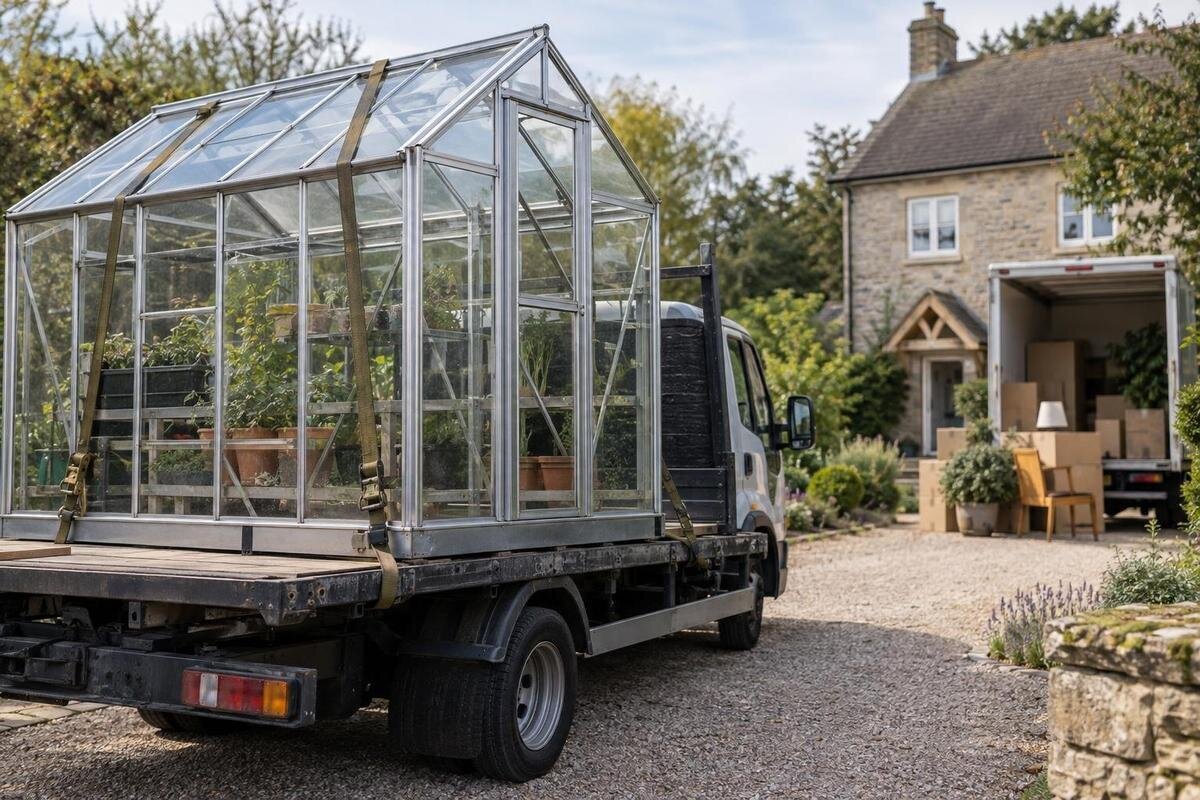
GREENHOUSE MOVING DECISION
Moving to a new home does not automatically mean moving your greenhouse. The structure may be valuable but poorly suited to the next yard, or it may look reusable while specialist handling, reassembly, and new site work make relocation uneconomical. The decision turns on more than whether the frame can be moved: consider how you use it, its condition, the destination, the risks of dismantling, and a complete comparison with leaving or replacing it. This guide covers that decision, not the physical dismantling process.

Three tests for deciding whether to move
Treat the decision as three separate tests: does the greenhouse still suit the way you garden, can this particular structure be relocated and returned to usable condition, and does moving it offer better value than leaving it or buying again? Passing one test does not settle the others. A sound greenhouse may be wrong for a shaded or cramped new yard, while one you use every week may still be a poor relocation candidate if important parts are damaged or reassembly is uncertain. Keep usefulness, feasibility, and cost in separate notes; affection for the old setup is not a substitute for evidence. This is a decision guide, not a general dismantling plan.
Start from actual use, not hypothetical future gardening. List what you grow, which activities happen inside, how often you go in, what benches or storage you rely on, and what greenhouse work you want to continue at the new home. Separate essentials from conveniences and note which features were added after purchase, are fixed in place, or belong to a particular model. Record who tends the space and how often, too, so the new arrangement works for the household that will use it. This record becomes the brief for a new-site check and like-for-like quotes; it can also reveal whether a smaller or differently arranged greenhouse meets the same need. If your plans are changing, avoid paying to recreate a setup you no longer want.
Settle ownership and permission first
Before you ask anyone to move it, establish who owns the structure and what the current property agreement says about it. If you rent, share ownership, or are selling, do not assume a greenhouse is treated like movable household contents. It may be expressly included in a sale, excluded, or subject to a separate understanding with the property owner or buyer. Check the signed paperwork and get any change agreed in writing through the appropriate parties. A buyer who expects it to stay and a seller who schedules its removal can create an avoidable dispute; sorting out expectations early prevents you from pricing work you may not be allowed to do. Clarify who pays for any agreed removal and when it must happen.
At the destination, confirm that the greenhouse is acceptable under the arrangement for that property and that the proposed spot is acceptable to its owner or manager. Ask your mover whether a greenhouse falls within its service and damage terms; the company may exclude specialist structures, glazing, oversized items, storage, or assembly work. Ask a greenhouse installer or specialist mover whether it can inspect, dismantle, transport, and reassemble this particular model, or whether those jobs require separate contractors. If a homeowners association, property manager, local planning office, or utility provider may be relevant, verify the specific requirements before committing. Do not infer permission from seeing a similar structure nearby.
Match the greenhouse to how you garden
An exterior footprint is only one measure of whether the greenhouse will remain useful. Compare the interior layout you depend on: growing area, walking route, door access, work surface, storage, and room to reach plants without disrupting them. Think about what equipment and routines are inside now, and whether a different size would force you to give up the crops or tasks that justify the structure. At the new home, check the dimensions of the proposed space and how people will reach the greenhouse from the house, garden, and water source. A greenhouse that fits between two fences can still leave an awkward entrance or no practical room to work. Judge usability by your actual weekly tasks, not the picture in a catalog.
Use the same requirement list if you compare replacement options: decide the minimum growing area and the features you would keep before browsing. The Lean-To Greenhouse listing shows sizes from 40 to 154 sq ft, providing one range to compare with your needs. For a lean-to option, also ask a qualified installer to assess the proposed wall and confirm the requirements for that exact configuration. Do not count a space beside the house as usable until those questions are settled. If a smaller greenhouse would displace storage or a workbench, decide where those functions would go and include any additional purchases in your comparison.
Test the new site, not just the available space
Site readiness is different from having enough open ground. Check likely shade during the day and across seasons, drainage after rain, exposure to wind, nearby trees and overhead branches, access for delivery, and whether water or power is available where you actually need it. A site may look clear during one visit yet be shaded at another time or difficult to reach with equipment. Record when you visited and what you observed; photographs taken at different times can help distinguish an observation from an assumption. Do not carry over the old site's conditions: sunlight, drainage, and neighboring structures are specific to the new property. If a concern could affect installation or structural suitability, ask a qualified local professional.
Existing supports and services deserve a separate check. Do not assume an old base, path, wiring, water line, or accessory can be reused or transferred; its condition and suitability depend on the destination. Have the appropriate qualified installer or trade professional assess the proposed support and any electrical or plumbing work before you commit. If replacement remains an option, the limited-edition aluminum greenhouse range is listed from 40.6 to 302 sq ft. Request the exact exterior dimensions and required installation clearances for the configuration you are considering. A published area alone will not tell you whether the entrance, surrounding paths, and maintenance access fit the available space.

Judge the structure's present condition
Record the greenhouse's condition before you price it as a reusable asset. Note visible cracks or missing panes, damaged or cloudy panels, leaks, corrosion, loose or altered joints, bent frame members, doors that stick, vents that do not operate, and repairs already made. Check the base and connections without taking the structure apart just to inspect it. Photographs, receipts, and purchase paperwork can help a manufacturer or installer identify the model and explain what they are seeing. The goal is not to grade it yourself; it is to give professionals an accurate description and avoid comparing a serviceable greenhouse with a repair project as though they were equivalent.
Age alone cannot tell you whether a greenhouse is worth moving, and an attractive exterior cannot confirm that its joints or glazing will tolerate reassembly. Ask the manufacturer or an experienced greenhouse installer which defects are cosmetic, which require repair, and which could prevent reuse. Confirm whether compatible parts are available and keep necessary repairs separate from upgrades you would simply like to make. For a replacement comparison, you could request a quote for a configuration from the Classic aluminum greenhouse range. Compare that quote with the cost of returning your existing greenhouse to usable condition, not with a relocation estimate that leaves its known defects unresolved.
Ask what dismantling and reassembly would risk
Moving risk depends on the exact frame, glazing or panels, connections, current condition, earlier modifications, and whether the manufacturer's design supports disassembly and reassembly. Handling can crack glass or panels, damage seals, strip or lose fasteners, or leave a frame misaligned; a part that looks replaceable may be difficult to source for an older or discontinued model. These are possibilities, not outcomes you should assume, so seek model-specific advice. Transporting the greenhouse intact has separate size, route, and handling limits. Treating it like an ordinary garden shed can hide risks that materially change the decision, especially when the structure has been customized or repaired.
Look for model-specific written guidance and a professional assessment before assigning a move price. Ask what can be confirmed while the greenhouse is standing and what may remain unknown until dismantling begins. Agree on how additional damage or unusable parts would be reported, who would authorize extra spending, and what would happen if reassembly became impractical. Missing instructions, improvised repairs, or uncertain parts availability deserve a contingency rather than a best-case assumption. If that uncertainty makes replacement worth exploring, the T-Model Greenhouse Orangery listing shows sizes from 178 to 323 sq ft. Keep the replacement comparison tied to the growing and working space you need rather than automatically choosing a larger structure.
Get a realistic transport scope
A transport quote is useful only if it describes the whole job. Give the mover the model and condition information, the origin and destination, access constraints, whether the service is expected to carry a complete structure or components, and who will handle removal and rebuilding. Ask for a site visit or equivalent assessment when the contractor says photos are not enough. Clarify route and vehicle limits, protective packing, storage if the move is split, loading and unloading responsibilities, any damage terms, and whether third-party contractors are included. Compare equivalent scopes: a low quote that excludes specialist handling or reassembly is not the same service as a complete relocation. Keep all exclusions alongside the total.
Distance is not the only factor. Tight gates, stairs, uneven access, a long gap between removal and installation, or a destination that is not ready may change the services needed. Record those conditions openly instead of assuming a standard household move covers them. Replacement still requires a delivery plan: ask how the supplier would get the ordered components to the installation area and what access it expects you to provide. If you are considering the Pyramid-type greenhouse listing, which shows sizes from 60 to 203 sq ft, request delivery details for the exact configuration. This lets you compare the access and handling costs of both options instead of assuming a new purchase avoids them.
Compare the full cost of moving and replacing
Build two itemized budgets on the same basis. For relocation, include inspection, specialist labor, packing or handling, transport, storage, reassembly, site preparation, repairs, replacement parts, work by other trades, and any removal or disposal cost if the move fails. For replacement, include a comparable new structure, delivery, assembly, site preparation, accessories needed to match your current setup, removal of the old greenhouse, and any period when neither structure is usable. Ask each supplier what is excluded and whether estimates depend on an on-site assessment. Do not compare an all-in replacement quote with a transport-only move quote; request missing costs until both options have comparable scope.
Use current quotes and real offers, not the original purchase price or a made-up resale value. The amount already paid is not a new expense. If you have an actual offer for the existing greenhouse, record the net amount after any removal or selling costs; otherwise, leave resale proceeds unconfirmed. Storage also belongs in the comparison if it is essential to your setup. The aluminum greenhouse with built-in storage is one option to investigate, but ask how much growing and storage space the quoted configuration provides. Compare those functions separately with your current arrangement so that an apparently similar total area does not conceal a loss of usable growing space.

Include timing, labor, and growing downtime
Relocation has a calendar and a workload as well as a bill. List the remaining decisions and the person responsible for each: the seller or landlord agreement, the manufacturer's answer, the new-site check, contractor visits, quotes, scheduling, any support or utility work, reassembly, and cleanup. Keep an honest task log as work progresses: date, task, who did it, elapsed time, waiting time, and extra trips. Use your own record rather than a generic estimate or an invented success story. It will show whether the move depends on several contractors in sequence and whether your household has enough time to manage the coordination. Include time spent arranging the work, not only hands-on labor.
Plan for the period when the greenhouse will be unavailable and how that affects your actual gardening. If seedlings, crops, equipment, or stored supplies are tied to a particular window, decide how you would handle the gap; do not assume every item can simply wait or be moved. A replacement schedule should include more than a delivery date: identify when site work, assembly, and any other required work would be completed. If your requirements lead you to compare the large backyard greenhouse range, listed from 506 to 753 sq ft, obtain a schedule for the exact configuration. Keep confirmed dates separate from provisional ones, and decide which gardening plans can change if completion slips.
Decide whether to move, replace, or leave it
Choose to move when the existing structure still meets your needs, the destination has been checked, the maker or a qualified installer supports the reassembly plan, and full written quotes put the risk and workload within your budget. Choose replacement when the old layout no longer fits, condition or parts make relocation uncertain, or the move requires work you would rather put toward a different setup. Choose to leave, sell, or dispose of it only after clarifying ownership and any property agreement. There is no universal percentage at which moving becomes worthwhile; compare practical benefit, complete cost, and risk in your circumstances.
Write down the condition that would change your mind—for example, an installer cannot confirm reuse, the new location cannot be approved or prepared, or the complete cost exceeds your chosen limit. That keeps sunk costs and moving-day pressure from deciding for you. If the Prestige Greenhouse listing is on your replacement shortlist, record the exact configuration quoted and why it meets your requirements. Then summarize the preferred option in one sentence, including its main trade-off: keeping a familiar layout, accepting relocation risk, changing the growing area, or postponing greenhouse use. A clear reason is more useful than a tentative choice that depends on every unknown turning out favorably.
Frequently asked questions
Can every greenhouse be taken apart and moved?
Not necessarily. The answer depends on the specific design, its condition, any modifications, the original instructions, and whether suitable parts are available. Ask the manufacturer or a qualified greenhouse installer to assess your model. Do not assume that a structure assembled once is intended to be dismantled and reassembled.
Is moving a greenhouse always cheaper than replacing it?
No. Compare itemized quotes for inspection, specialist labor, transport, reassembly, site preparation, repairs, and any storage with the full cost of a comparable replacement. A transport-only estimate is not comparable with a replacement quote that includes delivery and assembly. The answer depends on your structure, destination, and actual quotes.
Can moving a greenhouse damage it or shorten its useful life?
It can cause damage, but the outcome is not automatic. Handling and reassembly may affect glazing, panels, seals, fasteners, or frame alignment. The risk depends on the model and its condition. Ask a manufacturer or qualified installer what can be reused and what they can verify before pricing the move.
Should I leave the greenhouse for the person buying my home?
That depends on who owns it, what the sale agreement says, and whether the buyer wants it. Do not assume both parties have the same expectations. Confirm any decision with the relevant parties in writing, including who arranges and pays for removal if it is not staying.
When should I decide whether to move it?
Make the decision early enough to check ownership, contact the manufacturer or installer, assess the new site, and get comparable quotes before committing to moving arrangements. Contractor schedules and site readiness can affect the plan. If an important fact is still unknown, get that answer before treating relocation as settled.
Put the decision on one page: your actual gardening needs, the greenhouse's condition, the new site's readiness, professional guidance on reassembly, itemized costs, and the time the work will require. Move it only when those facts support relocation. If a key answer is still unknown, get it before making a commitment rather than relying on the best-case scenario. Leaving the structure behind or choosing a replacement can be sensible outcomes; the aim is to carry forward a setup you will use, not simply the one you already own.
