
Overwintering Geraniums in a Greenhouse
GREENHOUSE GARDENING
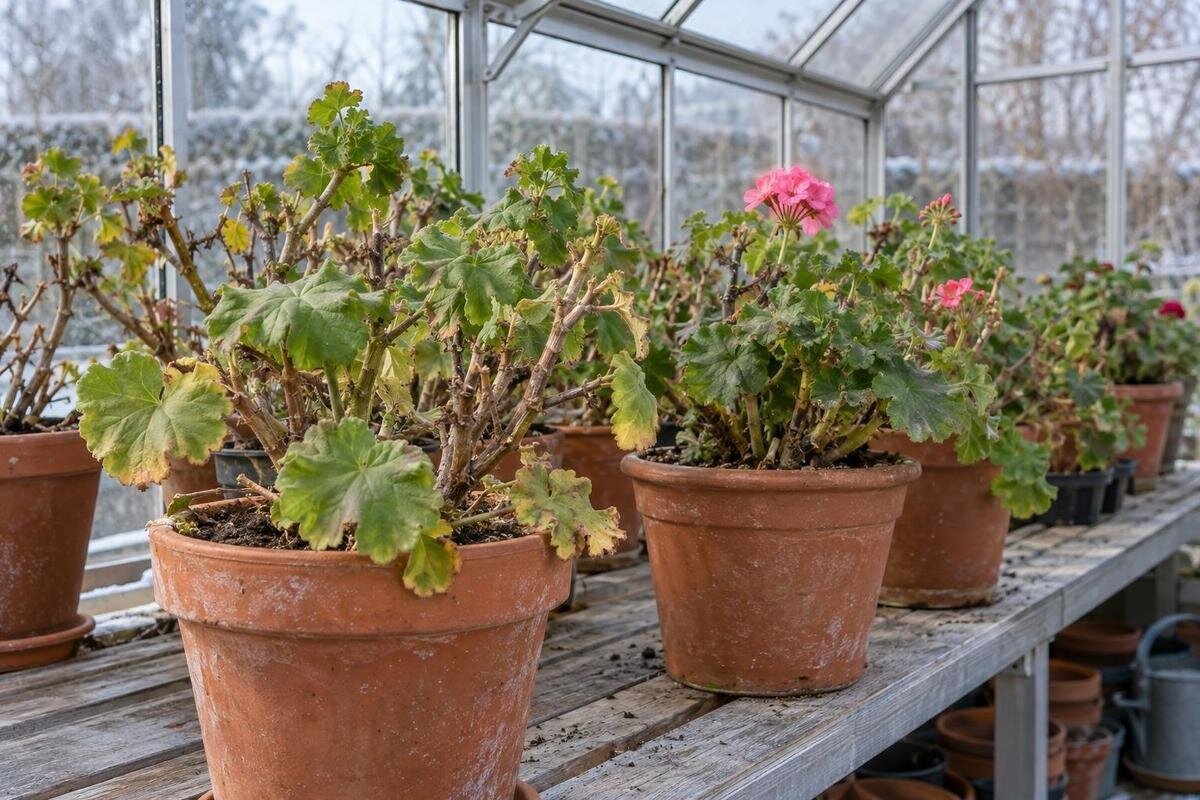
Common garden “geraniums” are usually Pelargoniums, tender plants that need a deliberate winter plan. A greenhouse can keep them growing or shelter them during a cool rest, but watering and space requirements differ between the two approaches. The right choice depends on plant type and condition, the structure’s actual overnight lows, and how much winter light reaches the leaves.

What to check in a greenhouse 1
Confirm that the plant is a Pelargonium
Among plants sold as “geraniums,” familiar bedding and container varieties are usually Pelargoniums; hardy Geraniums are cranesbills, a different genus. The distinction matters because common Pelargoniums are frost-tender, while many hardy cranesbills are grown outdoors and can overwinter in the ground when suited to local conditions. Retail labels sometimes use the common name loosely, so check the plant tag, cultivar name, or nursery record before choosing a storage method. If the label is gone, compare several features—growth habit, leaves, and flowers—with a reliable plant reference. One leaf shape or flower color alone is not enough for a confident identification.
This guide covers familiar zonal, ivy-leaf, regal, and scented-leaf Pelargoniums, rather than assuming every plant sold as a geranium needs identical treatment. The Royal Horticultural Society’s growing guide distinguishes several useful characteristics: soft-stemmed zonal types are more reliably carried over as rooted cuttings than as semi-dormant plants, while regal cultivars prefer partial shade during cultivation. Ivy-leaf types trail and need room beyond the pot rim; scented-leaf types vary in habit, so retain the cultivar label. These differences help determine propagation, placement, and space, but they do not establish separate safe winter minimums for each group. Named-species or cultivar guidance should take precedence over a general storage plan.
Choose between a cool rest and active growth
Pelargoniums do not have to flower throughout winter. You can keep plants leafy and growing under bright light, or slow their growth in a cool, frost-free place. Gardeners often call the second approach dormant storage, although a potted Pelargonium may retain leaves and be only semi-dormant. Active care suits plants you want to display or use for cuttings; cutting plants back for a rest reduces their space and watering needs. Both potted approaches need a light location—the resting method is not a reason to put pots in a dark corner. Decide whether winter flowers, a few favorite cultivars, or spring stock matters most, then choose the approach your available conditions can support.
Choose a method for each group instead of trying to keep the same pot warm while watering it as if it were asleep. Warmth with weak light encourages stretched growth; cool conditions slow drying, so frequent watering can leave resting roots wet. If you are estimating space for mixed groups, count the path and working room as well as pots. The Classic aluminum greenhouse is listed in sizes from 40.6 to 302.3 sq ft; compare the selected footprint with your usable bench plan rather than judging capacity by pot count alone.
What to check in a greenhouse 2
Set a winter temperature range and monitor it
Frost is the first boundary: a greenhouse is a cover, not automatically a frost-free room. The Royal Horticultural Society reports that many Pelargoniums continue flowering at 45–50°F (7–10°C), providing a documented example of cool conditions that can support continued flowering. This is not a survival threshold or a separate prescription for every zonal, ivy-leaf, regal, or scented-leaf cultivar. For potted overwintering, its guidance calls for a light, airy, frost-free position, with barely any water for cut-back plants and regular moisture checks for those still growing. It does not assign distinct winter temperature ranges to those groups. Use the flowering range as a planning reference, then seek more specific guidance for an unusual species or named cultivar.
Record both overnight lows and sunny-day highs with a minimum-maximum thermometer near the plants, not only by the greenhouse door. A noon reading can hide a night drop, while pots close to cold glazing or the ground may experience different conditions from a center bench. The Prestige greenhouse listing covers sizes from 40.6 to 302 sq ft, but floor area is not a temperature rating. Check the specifications of the configuration under consideration and compare them with measured lows at your site. If the structure cannot stay above freezing, make a reliable backup plan rather than relying on a warm afternoon.
Give actively growing plants the brightest usable light
Actively maintained geraniums need good winter light, but placement should also reflect their type. The Royal Horticultural Society recommends full light for greenhouse Pelargoniums with protection from scorching midday sun, and notes that regal cultivars prefer partial shade. Do not interpret that preference as permission to keep regals in a dim storage corner. Check whether framing, hanging baskets, shelves, or a nearby wall casts prolonged shade across the leaves. If shoots become long, thin, or pale, low light relative to warmth is a common cause. Reassess placement and temperature before adding fertilizer. Keep foliage away from cold panes, and turn containers occasionally if you can do so without crowding or breaking stems.
Cut-back plants take up less room, but potted Pelargoniums should still overwinter in a light position. Bare-root storage is a separate method, not a reason to place leafy pots in darkness. Arrange active plants where they receive useful daylight, and check that taller resting plants do not shade smaller specimens. When comparing greenhouse layouts, the Pyramid greenhouse range includes footprints from 60 to 203 sq ft. Map the winter shadows across the proposed bench area before deciding how much of that footprint is useful for growing plants. Shelves and stored supplies can obstruct light even when there is enough floor space; floor area alone does not show how much light reaches the leaves.

What to check in a greenhouse 3
Inspect and clean plants before bringing them in
Before moving geraniums into the winter greenhouse, inspect stems, leaf undersides, buds, pot rims, and drainage holes. Look for aphids, whiteflies, spider mites, mealybugs, webbing, sticky residue, and soft or blackened tissue. Remove yellow leaves, spent flowers, and debris from the pot surface; these can hide pests and stay damp. Keep newly purchased or recently outdoor plants apart from the overwintering group and repeat inspections over the first few weeks, since pests may be easy to miss at first. If a plant has severe rot or a persistent infestation, do not tuck it among clean stock and hope winter conditions will resolve it; deal with it separately using suitable plant-care guidance.
Clean reusable pots and tools before use, and label cultivars before leaves fall or stems are shortened. Trim dead or damaged material, but avoid a drastic cut on a plant already stressed by drought, pests, or cold. Healthy tip cuttings can be saved separately if maintaining a cultivar matters more than carrying a large parent plant; keep those cuttings in the brighter active-care area and label each one. A separate place for clean pots, tags, and tools can reduce bench clutter. The greenhouse with built-in storage is one option to compare; check the selected layout to see how its growing and storage areas fit your routine.
Keep dormant plants cool and lightly watered
For potted plants, remove dead foliage and flowers, then let the potting mix dry more between waterings as temperatures and growth fall. Store pots in a cool, frost-free place; bright light is less important if a plant has stopped growing, though leafy plants should not be forced into darkness. Do not feed plants that are resting. A cool, dry atmosphere slows growth, while a constantly wet root ball causes problems when evaporation is slow. Pot size matters: a small container can dry faster than a large one, so check plants individually instead of watering an entire bench at the same time. Avoid leaving pots in standing water.
Check the root ball periodically rather than watering by a fixed weekly schedule. If the mix is still damp below the surface, wait; if it is nearly dry throughout, add a modest amount of water and let excess drain. The aim is neither lush growth nor shriveled roots. Bare-root storage is a different option: the Royal Horticultural Society describes it as the least reliable method and suitable only for varieties with tough, woody stems. Do not assume a soft-stemmed zonal plant is a good candidate simply because it is large. The Lean-To greenhouse sizes range from 40 to 154 sq ft; compare the actual layout with your pots, path, and access needs before assigning a winter-storage zone.
What to check in a greenhouse 4
Water and feed actively growing plants with care
An actively growing Pelargonium uses water more steadily than a dormant one, but winter demand still changes with light, temperature, pot size, and new growth. Check the mix rather than following a calendar: feel below the surface and lift the pot if needed to judge how much moisture remains. A dry surface does not always mean the root ball is dry, especially in a larger container. Water enough to moisten the root zone, then allow drainage; do not keep the mix continuously saturated or leave a saucer full. A cool, cloudy week can slow drying, so a summer watering interval is not a useful winter rule.
Give active plants bright light and moderate temperatures, then pinch or trim only enough to keep them compact and remove weak growth. Feed only when new growth is steady and according to the product label; resting plants do not need routine fertilizer, and fertilizer cannot compensate for dim light. Keep space around the canopy so air can move and leaves do not press against cold panes. The T-Model greenhouse options are listed from 178 to 323 sq ft; when comparing any footprint, account for bench clearance, plant height, and working access rather than fitting pots edge to edge.
Balance winter airflow and moisture
Cold-season watering and airflow work together. Water held on foliage and a crowded, humid canopy dry slowly; a greenhouse with little air exchange can favor gray mold and decay on damaged or dead tissue. Space pots so leaves do not overlap heavily, remove fallen petals promptly, and water the potting mix rather than routinely wetting foliage. Condensation on glazing is a cue to check moisture and airflow, not proof that a plant is diseased. Do not set a vent schedule by the calendar: weather and actual greenhouse readings determine when extra air exchange is needed.
On mild, sunny days, ventilation can release excess heat and moisture, but avoid leaving openings that let temperatures collapse before night. Reduce ventilation in time to protect the winter temperature you have chosen, then confirm conditions with the thermometer. If a structure’s configuration is part of your purchase decision, the Limited Edition greenhouse is listed in sizes from 40.6 to 302 sq ft; check the specific option’s vent locations and opening details. Area and model name alone do not show how effectively a particular setup exchanges air.

What to check in a greenhouse 5
Plan space for pots, benches, and access
Make an inventory before choosing benches or a greenhouse size: count the pots, note which plants will remain active, and measure the broadest canopy, not just the pot rim. Include walking room to reach rear plants, open the door, inspect leaves, and water without knocking containers over. Active plants need more usable light and air around their foliage than tightly packed dormant pots. The large backyard greenhouse range is listed at 506–753 sq ft, a broad footprint comparison rather than a recommendation; calculate the plant, bench, and path area your collection truly needs before choosing a size.
Check vertical clearance too. Standards and tall upright plants need room above their final bench position, while trailing varieties need space to extend without covering neighboring leaves. Note where vents, doors, shelves, and shade from nearby structures will affect the places you can actually set plants; verify dimensions and openings for the selected greenhouse rather than inferring them from its model name. A simple paper plan showing bench depth, path width, and each group’s position helps separate cool resting pots from brighter active plants and keeps every container reachable for routine checks.
Watch plants through winter and restart growth gradually
Keep short notes of minimum temperature, watering, and visible changes through winter. A soft base, blackening, leaf drop, or sudden shriveling calls for checking the root ball and stem rather than adding water automatically; both excessive wetness and severe dryness can make a plant decline. Check under leaves for pests as growth changes and remove fallen material promptly. If an active plant becomes lanky, reassess light and temperature together. If a resting plant starts producing pale shoots, it may be too warm for the light it receives. Notes by cultivar can reveal that varieties on the same bench need different attention.
As days lengthen, bring dormant Pelargoniums toward brighter conditions gradually; increase watering only as new growth and drying rate increase. Resume feeding after active growth begins, and repot a crowded plant into a clean, suitable container if needed. Before taking greenhouse plants outdoors, wait until local frost risk has passed and acclimate them gradually to brighter sun and outdoor air. A sudden move from a sheltered greenhouse to stronger light and wind can scorch or stress leaves even when nights are mild. Let the plant’s response, not a fixed date, guide the pace.
Frequently asked questions
Can geraniums stay in an unheated greenhouse over winter?
Only if the greenhouse stays safely above freezing where the plants are placed. An unheated structure can approach outdoor temperatures overnight, even after a warm day. Track the actual lows at plant level; if frost is possible, move Pelargoniums to a reliably protected space rather than assuming the glazing will keep them warm.
Do resting geraniums still need light?
Yes. Keep potted Pelargoniums in a light, airy, frost-free position, even when they have been cut back and need very little water. A cool rest is not the same as dark storage. Bare-root storage is a separate, less reliable method suitable only for varieties with tough, woody stems.
How often should I water resting geraniums?
Use the potting mix and pot weight, not a fixed calendar. When the root ball is nearly dry, add a modest amount of water and let excess drain. Do not leave the mix soggy or let the roots become completely desiccated. Small pots and warmer conditions may need closer checks.
Can Pelargoniums keep blooming in a greenhouse all winter?
They may continue growing and sometimes flower with bright winter light and moderate temperatures, but flowering depends on the variety and conditions. Do not raise the temperature without enough light; if shoots become lanky, reassess light and warmth before adding fertilizer.
When can I move overwintered geraniums outdoors?
Wait until local frost risk has passed, then acclimate plants gradually to outdoor light and air over about two weeks. Begin in a sheltered, bright spot rather than putting them straight into strong sun. Check the forecast before leaving tender Pelargoniums outside overnight, and slow the transition if conditions turn cold or windy.
Overwintering works best when the plan matches what the greenhouse actually provides: a cool, frost-free rest for plants you want to hold, or bright, moderate conditions for those kept active. Let resting root balls become nearly dry between light waterings, without allowing them to dry out completely, and give growing plants room and light. Check each group separately; temperature and watering notes through the coldest weeks show whether the chosen method is working before spring growth begins.
