
Peat-Free Growing Media for Greenhouse Crops
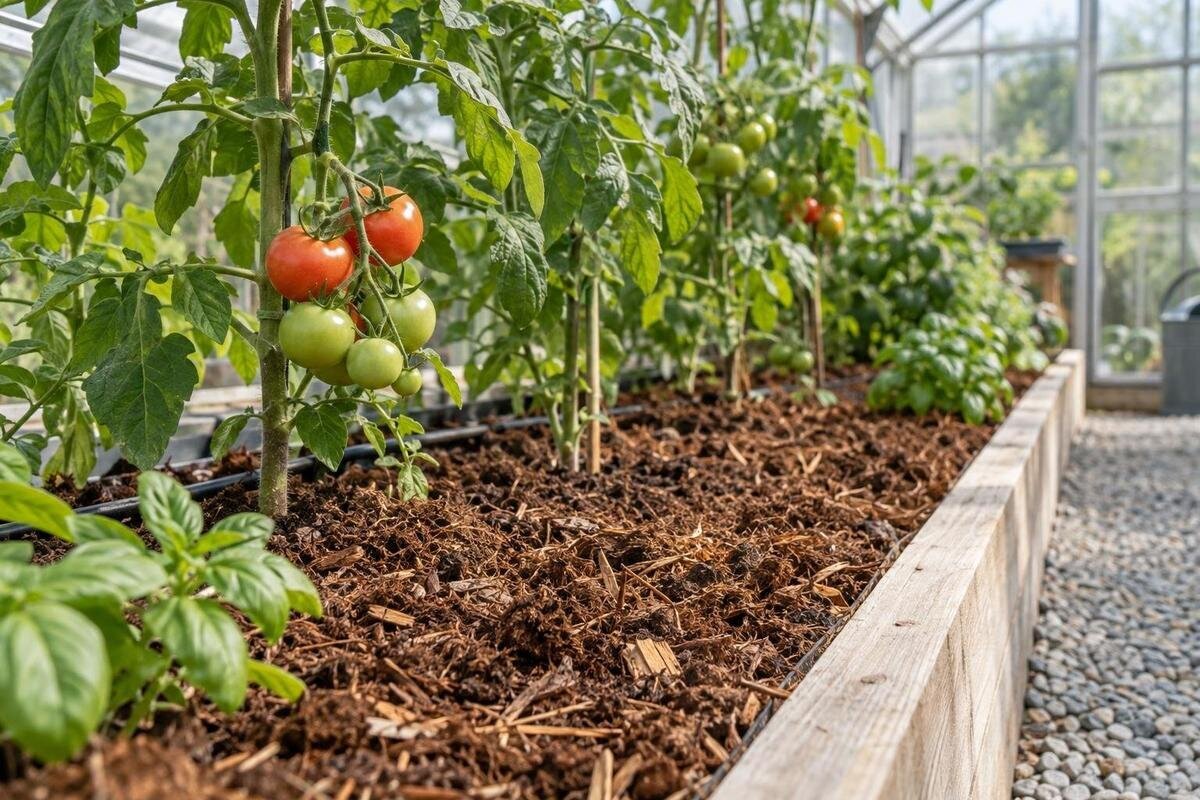
Greenhouse growing guide
Switching to peat-free growing media can change water retention, drainage, and nutrient availability in a greenhouse—but “peat-free” does not name one standard recipe. A coir-rich mix, a bark-based blend, and a compost-containing medium can behave differently even when all are sold for container growing. The reliable choice is the mix whose stated use, structure, pH, and nutrient charge match your crop and growing system. Compare the label, plan watering around the actual mix, and try it on a small group before making it the greenhouse standard.
What the peat-free label tells you
Peat-free means the medium is made without peat; it does not guarantee a particular texture, nutrient content, or watering interval. Manufacturers may use coir, composted bark, wood fiber, compost, or other components in different proportions. Some products are blended for seed starting, others for containers or general potting. Two bags that share “peat-free” on the front can therefore differ in particle size, drainage, pH, and preloaded fertilizer. Treat the term as an ingredient boundary, not a performance rating, and read the product’s stated crop use and directions before deciding where it fits.
Distinguish an ingredient list from measured properties. Knowing that a product contains bark or coir does not tell you how much water the finished blend holds after drainage. Technical information may describe water-holding capacity and air-filled porosity, meaning the proportion of the medium occupied by air after excess water drains. Compare those figures only when the test conditions and methods are comparable. For a home greenhouse, clearly stated uses and practical handling directions may be more accessible than laboratory data. Either way, the useful question is how the finished blend behaves in your growing system.
Match the mix to the crop and growing method
Begin with what you are growing and at what stage. Fine, uniform mixes sold for seed starting are generally intended for small seeds and young roots; they are not automatically the best choice for long-season fruiting plants in large pots. Transplants, leafy greens, herbs, tomatoes, and peppers differ in rooting volume and moisture demand. Small seed cells also leave less room for coarse particles than larger containers. Consider how long the crop will occupy the medium: a brief propagation stage and a full growing season place different demands on its structure. Match the labeled use to that stage rather than choosing solely by crop name.
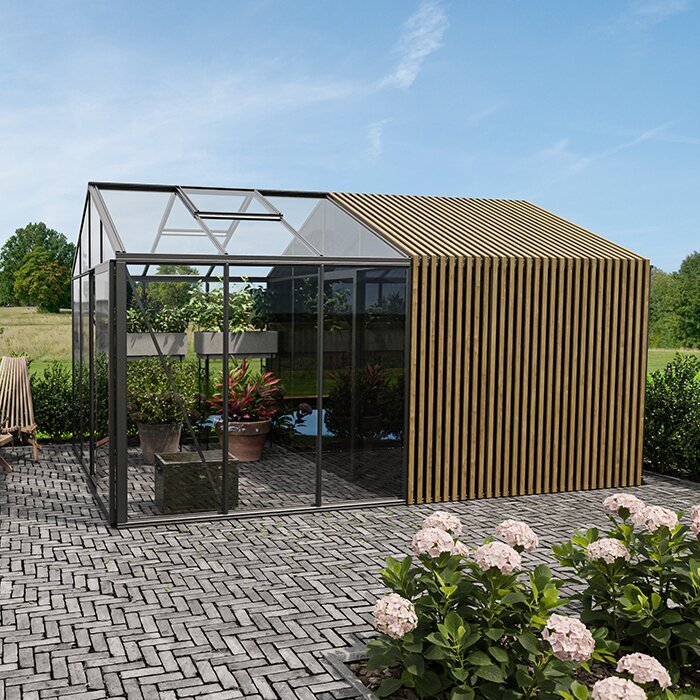
Then map the system: in-ground beds, raised beds, individual pots, or grow bags. These need different quantities and may call for different structures, even when the crop is the same. For floor planning, the T-Model Greenhouse Orangery listing includes options from 178 to 323 ft². Use that total-area range as a first screen, then draw the beds, containers, paths, and working access for the selected configuration. Include the mature crop, not just its pot: spreading foliage and supports can affect access for watering. This plan connects your growing method to the space without confusing greenhouse footprint with media volume.
What common peat-free ingredients can—and cannot—tell you
Ingredient names can help explain a mix, but they cannot predict its performance on their own. Coir is used as a fibrous component that can hold water while contributing structure; processing, particle size, and the rest of the blend affect how it behaves. Composted bark and wood-based fibers can add larger particles and air space, but the finished product depends on how those materials are prepared and balanced. Compost can contribute organic matter and nutrients, yet its composition varies. No single ingredient makes a mix suitable for every crop, so consider the complete product rather than relying on one component’s reputation.
Read the full ingredient list alongside the directions and any technical data. A bark-based mix may still contain fine material; a coir blend may also include compost, mineral components, or fertilizer. If several crops genuinely need different media, plan clearly identified groups rather than scattering similar-looking pots throughout the greenhouse. When reviewing the Pyramid-type greenhouse, use the selected configuration’s dimensions to map those groups and their access routes. Keep a record of which blend goes into each group. That organization makes it easier to compare ingredient differences with actual watering behavior instead of losing track once the bags are empty.
Balance water retention with air space around the roots
Roots need access to both moisture and oxygen. In a container, small particles and settled fine material generally leave less air-filled space after watering than a stable, coarser structure; very open mixes can drain quickly and need closer moisture checks. These are tendencies, not guarantees. Particle distribution, compression, container shape, and how evenly the medium wets all matter. A bag that looks loose when dry can settle after watering. Rather than judging it by squeezing a dry handful, inspect a small sample while damp and see whether water spreads through it and excess can drain from the container you intend to use.
Match the mix to the container and the way it will be handled. Shallow pots, small cells, large containers, and beds do not hold the same moisture reserve, so one irrigation interval cannot suit them all. Fill containers consistently without heavily packing the medium, and keep drainage openings unobstructed. Avoid adding sand, compost, or another amendment by habit; changing the blend can alter its drainage and nutrient behavior. If you are considering the greenhouse with built-in storage, plan growing space and supply storage separately. Keep unused media in its labeled packaging, protected from contamination, and follow the supplier’s storage directions.
Adjust watering to the mix and greenhouse conditions
Peat-free mixes do not automatically require more frequent watering. Some formulations dry faster at the surface, while others retain moisture well; performance also shifts with pot size, root growth, greenhouse heat, air movement, and crop demand. Watering on a fixed calendar can leave one group saturated while another dries down. Check more than the top layer: feel the medium at root depth where practical, notice container weight, and observe how long it remains evenly moist. Learn each crop group’s pattern after watering, then reassess when the weather, growth stage, or container size changes.
When a dry medium resists wetting, apply water gradually so it has time to absorb rather than running down a gap at the edge. For a new mix, moisten a small quantity evenly before planting if the label recommends it; do not assume every product needs the same preparation. After irrigation, check whether moisture has reached the root zone rather than judging success from water leaving the pot. When planning a Bloomcabin Prestige Greenhouse layout, leave room to reach representative containers in each crop group. An accessible pot can be lifted or inspected; a hidden one may stay too wet or dry without being noticed.
Check nutrient charge and pH before feeding
Check the bag before adding fertilizer. Some mixes contain a starter charge, while others provide little or no nutrition; the stated duration and directions matter more than the peat-free label. Adding a complete fertilizer automatically to a charged mix can create unnecessary salt buildup, while withholding nutrients from an uncharged mix can limit growth. Follow the product’s directions for the crop and growth stage. pH also affects nutrient availability, so use the product’s information and crop guidance rather than trying to adjust it by guesswork. Weak growth or leaf-color changes can have several causes, including watering and root conditions.
Where crops have different needs or planting dates, label pots or beds and record the mix, planting date, and feeding changes by group. Seedlings and established fruiting plants may not share the same schedule. Soluble-salt measurements, often reported as electrical conductivity or EC, can help assess the root zone, but readings depend on the sampling method and need crop-specific interpretation. Seek horticultural guidance before changing fertilizer rates based on an unfamiliar reading. For a larger setup such as the large backyard greenhouse, organize records by crop group so one measurement or feeding decision is not mistakenly applied to every bed.
Buy by product information, not ingredient names alone
Look for a supplier that identifies the intended use and provides more than a broad ingredient claim. Useful details include the component list, pH range, soluble-salt or EC information where available, particle grade, fertilizer charge, and directions for crops or containers. Ask whether technical or batch information is available if the label leaves an important question open. A peat-free claim alone does not establish how ingredients were sourced, whether batches are consistent, or whether a product is intended for edible crops. Prefer clear, crop-relevant information to vague “premium” language, and compare products on the same basis.
Before committing to a supplier, ask whether you can obtain the same formulation for later plantings and how changes are identified. Keep the product name, batch details when provided, and a photograph of the label; these help explain differences between deliveries. Check packaging for damage and follow storage directions rather than assuming leftover material will remain unchanged indefinitely. Alongside planning a classic aluminum greenhouse, establish how you will receive, store, and move the media to its growing area. Compare suppliers by usable package volume and relevant product information, not by bag weight or a broad claim of superior growth.
Calculate bed and container volume before ordering
Measure before you order. For a rectangular bed, multiply its inside length by its inside width and intended fill depth, using the same units. A bed measuring 4 feet by 8 feet with a 1-foot fill depth needs 32 cubic feet of medium before any product-specific settling allowance. Measure an irregular bed in smaller sections and add those volumes. For pots, total their stated capacities. When laying out a Lean-To Greenhouse, measure only the planned growing areas; paths and working space do not belong in the media calculation. Existing soil or medium that will remain also reduces the amount of new material needed.
Use the supplier’s directions when deciding how much to order. A bed may settle after watering, but the amount depends on the material and its starting condition; a blanket allowance is not reliable for every mix. Bag sizes may be listed by volume or weight, and weight cannot be converted to volume without product-specific bulk-density information. If you are comparing bulk and bagged products, confirm the amount supplied, whether the material is loose or compressed, and how much usable medium it yields. Keep the estimate in one unit system, then convert only when you place the order.
Test a new mix before using it throughout the greenhouse
Before changing the media in every bed or container, run a small trial with the intended crop. Use the same container size, planting stage, and greenhouse position where possible; otherwise, differences in shade or airflow can look like a substrate effect. Note how readily the test batch wets, how it drains, how quickly it dries between checks, and how roots develop. Record watering and feeding rather than relying on memory. A short trial will not prove performance in every season, but it can reveal a mismatch early and show whether you need to change the mix, container, or routine.
Include your familiar mix as a comparison if one is available, and use more than one container per treatment when practical. A single struggling plant may reflect transplant damage or an uneven watering spot rather than the medium. In a planned limited-edition aluminum greenhouse layout, reserve comparable positions for the new and familiar mixes instead of putting one group in shade and the other in stronger sun. Start with similar plants, then record any watering adjustments each mix requires. The aim is not to force identical watering, but to learn whether each product can support the crop with a routine you can maintain.
Use a potting mix only for its stated growing system
A container potting mix and a greenhouse-bed amendment are not interchangeable just because both are organic or peat-free. Potting media are blended for a particular use; mixing a container product into native soil or using it to fill a whole bed can change texture, drainage, and nutrient levels in ways the label may not address. Follow the product’s stated purpose. For in-ground beds, assess the existing soil and choose an amendment intended for that use. For raised beds or containers, use a medium specified for the system and crop. If directions are unclear about full-bed use, do not assume the product is suitable.
Make transitions deliberately. Keep each new batch identified, use it for the crop and system described, and carry watering observations forward to the next planting rather than treating all peat-free mixes as interchangeable. When changing an established greenhouse bed, distinguish a small top-up from replacing the root-zone medium; assess what is already present and whether drainage, nutrient, or disease concerns call for help from a local horticulture professional. There is no need to change every bed simply because peat-free options exist. The practical goal is a repeatable mix-and-management combination that suits the crops you grow.
Frequently asked questions
Can I use one peat-free mix for every greenhouse crop?
A broadly labeled mix may suit several crops, but one formula is not automatically right for seed trays, young transplants, and long-season plants in large containers. Compare the product’s stated use, structure, and nutrient charge with each crop’s stage and growing system. Use separate mixes only when the differences justify the extra work.
Will peat-free mix need more frequent watering?
Not by definition. The ingredients, container size, root growth, greenhouse conditions, and how evenly the mix wets all affect the interval. Check moisture below the surface and notice how container weight changes as the mix dries. Adjust for each crop group rather than changing your routine solely because the bag says peat-free.
Should I add fertilizer when I plant?
First check whether the mix contains starter nutrients and how long the label says they are intended to last. Adding fertilizer automatically can raise soluble salts; withholding it from an uncharged product can leave crops short. Follow directions for the crop and growth stage, and do not diagnose a nutrient problem from leaf color alone.
Can I use garden compost instead of potting mix?
A garden compost pile and a formulated growing medium are not interchangeable. Compost can vary in texture, maturity, nutrient concentration, and salt content, while containers need a structure suited to drainage and aeration. Use compost only where the product directions or relevant horticultural guidance support that use; do not assume an unknown material is suitable for seed cells or pots.
How do I compare two peat-free products?
Compare the intended use first, then the ingredient list, particle structure, pH information, available soluble-salt data, nutrient charge, and directions. Test the product in the crop and container you actually use. Keep notes on wetting, watering, and growth; an ingredient name or a front-label claim about water retention is not enough to predict performance.
Peat-free growing works best when you treat the medium as a specific crop input, not as a label that dictates a watering schedule. Choose a blend for the crop and growing system, confirm what it contains and how it is charged, size the purchase from measured bed or container volume, and observe a limited trial in greenhouse conditions. Those records give you a practical basis for watering and feeding adjustments. Over time, keep the mixes that produce a manageable moisture pattern and steady root growth in your setup; the label is the beginning of the decision, not the whole result.
