
Growing Under a Rain Shelter or in a Greenhouse?
Growing guide
A rain shelter and a greenhouse both keep some weather off crops, but they do not create the same growing conditions. A roof over an open bed can reduce direct rainfall while leaving plants exposed to outdoor air. A greenhouse surrounds the growing area, giving you more control over rain, wind exposure, and the growing environment—but it also makes ventilation and watering your responsibility. The right choice depends on whether rain itself is the problem or whether you need a more enclosed place for seedlings and crops over a longer part of the season.

Before choosing 1
The main difference is how much weather reaches the crops
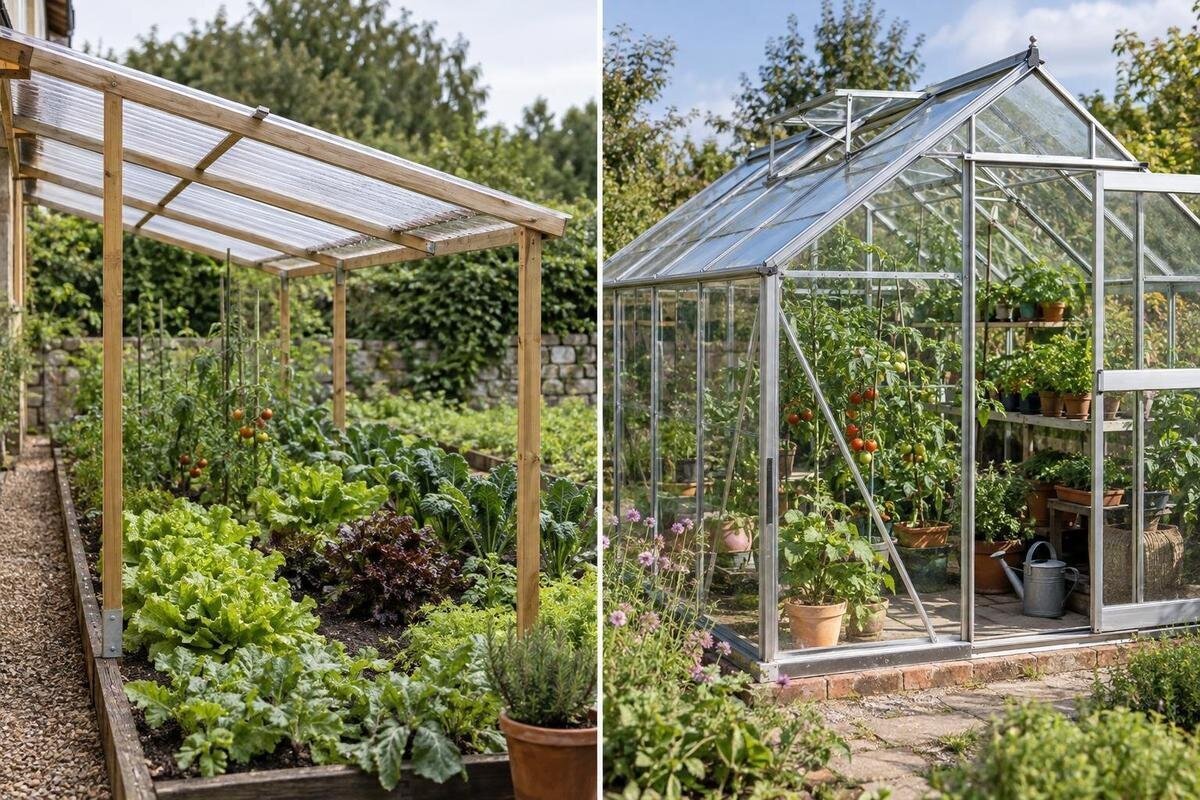
Here, a rain shelter means a rain-shedding roof or cover above a growing area, with most of its sides open. It describes what the structure does rather than one standard shape or material. The main effect is to intercept some direct rainfall before it reaches leaves, fruit, or soil. Air and weather still pass around the cover, so wind can carry rain underneath and conditions remain close to those outdoors.
A greenhouse encloses a growing space with a roof and sides, plus doors or other openings for access and ventilation. That boundary blocks more direct rain and can reduce some exposure to wind, but it does not create a fixed climate by itself. Sunlight, outdoor temperatures, openings, and how you manage them all affect the inside. A rain shelter changes rainfall exposure; a greenhouse creates a more enclosed growing environment that needs management. The options can also serve different crops in the same garden, but two structures mean two areas to water and maintain.
When a rain shelter is enough
A rain shelter is a close fit when the problem is specifically repeated rain on a particular bed or crop. A roof may reduce direct wetting of foliage and fruit, rain splash from soil, or disruption to harvesting and care during wet spells. How much difference it makes depends on roof coverage and the direction and strength of the rain; an open-sided cover cannot promise dry plants. It also will not remove humidity from the surrounding air or prevent every crop disease, so treat it as rain management rather than a cure. Plan coverage around mature plants, not just the small transplants you set out in spring. Leaves and fruit may eventually extend beyond the protected area. Allow clearance above the crop and room to reach it for pruning, tying, and harvesting. If plants need support, check how that support will be provided rather than assuming the shelter frame can carry it.
Open sides suit growers who want an outdoor bed with a roof, easy access from more than one side, and airflow that does not depend on opening a greenhouse vent. The same openness leaves crops exposed to cold, wind, insects, and rain blown in at the edges. It can also make insect access less restricted where a crop needs pollination, though crop-specific needs still matter. Check that the roof passes the light your crops need, covers the beds rather than just their centers, and does not leave an overlooked rain problem at the edges. If your main concern is frost or wind exposure, a rain shelter alone may not solve it.
Before choosing 2
What a greenhouse adds beyond a roof
A greenhouse makes sense when you need more than a dry canopy: for example, a protected place for seedlings, containers, or crops that benefit from a more sheltered growing environment. Its walls and roof create a boundary that can reduce direct exposure to rain and wind, but conditions still shift with sunlight, outdoor weather, doors, and vents. For scale, the Classic aluminum greenhouse is listed in sizes from 40.6 to 302.3 sq ft. Use that range to identify a starting footprint, then compare the exact plan with your beds and access needs. Growing area and temperature performance are separate considerations; square footage alone does not establish either plant capacity or frost protection.
An enclosure gives you a space in which to manage air exchange and observe growing conditions separately from the yard. It also changes how plants interact with the outdoors. Depending on the crop, pollination may require access for insects or another suitable method, so include that in your growing plan rather than assuming enclosure is always an advantage. Seedlings raised inside may also need gradual adjustment to outdoor conditions before transplanting. A greenhouse is still a growing structure, not automatically a climate-controlled room: do not assume it is heated, insulated, or pest-proof. Review the selected configuration's glazing and openings, and consider how you will move plants between sheltered and outdoor growing areas as their needs change.
Season extension depends on climate and crop
Greenhouse growing can stretch the usable part of a season when it lets you start seedlings earlier, shelter plants through unsettled weather, or continue a crop after outdoor conditions decline. The size of that advantage depends on crop tolerance, sunlight, outdoor temperatures at night, ventilation, and whether supplemental heat is part of the plan. An unheated enclosure may offer some buffering, but it should not be treated as frost-proof or as a promise of a particular planting or harvest date. Use crop-specific guidance and local weather patterns when planning a calendar around it.
Area becomes part of the seasonal plan, too: how many starts or containers do you want to shelter at once? The Prestige Greenhouse size options range from 40.6 to 302 sq ft. Map the busiest point in your growing calendar rather than counting only the plants you expect at harvest. Spring seed trays may still occupy benches when larger containers need space, while an established crop can delay room for the next planting. A month-by-month layout helps reveal those overlaps and whether plants can move outdoors when the weather allows. Leave room to reach each group without moving the others. In a warm, sunny period, managing excess heat may matter as much as sheltering crops from cold; a longer season includes changing care needs, not simply more weeks under cover.

Before choosing 3
Rain exclusion changes the watering plan
Both structures interrupt natural rainfall where the roof covers the ground, so crops beneath them still need a dependable way to receive water. At a rain shelter, showers may reach uncovered edges and wind may carry some rain through the sides; neither is a reliable irrigation plan. A greenhouse blocks much more rain from its interior, so beds, containers, and newly planted starts need planned watering. Also consider where roof runoff goes: soil beneath and around a structure may not get rain in the same pattern as open beds. Check the plants and soil rather than assuming a nearby shower watered everything.
More enclosure can change moisture in the air as well as moisture in the soil. Plants release water, and damp surfaces or condensation can contribute to humid conditions, especially when air movement is limited. Ventilation, spacing, and watering habits therefore matter in a greenhouse; an open-sided shelter usually exchanges air more freely but cannot keep rain out in every direction. Keeping foliage drier can be useful, yet neither structure guarantees disease-free crops. For a rough watering-area comparison, the Limited Edition aluminum greenhouse listing shows sizes from 40.6 to 302 sq ft. Its area range alone cannot determine water use, which also depends on crops, containers, weather, and layout.
Ventilation and access shape the daily workload
A rain shelter usually involves fewer enclosure-management decisions: there is no enclosed room to ventilate, although you still need to check plants, water them, and respond to weather. With a greenhouse, expect to pay attention to heat buildup on sunny days, air movement, and moisture. Doors and vents are useful only if the chosen configuration has them in suitable locations and you use them as conditions change; do not assume they operate automatically. A thermometer that records daily highs and lows can help you understand conditions that a single visit misses. Observe temperatures near the plants and keep brief notes alongside the outdoor weather, especially early in the season. If you are often away during the day, consider who will check the enclosure and whether any verified ventilation controls suit your routine. That practical responsibility belongs in the comparison alongside the structure's size.
Think about movement as well as growing area: how will you carry flats, a watering can, harvested produce, and tools past the plants? A roofed open bed may allow approach from several sides, while an enclosed structure has a defined entry and may need an aisle. The aluminum greenhouse with built-in storage listing shows sizes from 59.4 to 302 sq ft. The model name identifies storage as part of the offering, but the size range does not show its position or the remaining planting area. Check the exact plan before counting that space as a growing bed.
Before choosing 4
Match the structure to the crops you want to grow
Match the structure to the actual crop program, not just a broad ambition to grow more. A few beds whose main problem is wet weather may be better served by a roof over those plants, leaving other crops outdoors. A greenhouse is more relevant if you want one protected place for seed trays, pots, and crops with different planting dates, but grouping plants with unlike needs can make the environment harder to manage. List the crops and the months you plan to grow them, then mark which need rain exclusion and which would benefit from more enclosure. Some gardens use both types, but that adds separate space and maintenance.
A larger enclosure can mean more watering, access, and monitoring as well as more floor area. The Bloomcabin Orangerie listing shows a range from 506 to 753 sq ft. Treat that as a product-area reference, not a claim about usable bed space or season performance. For a broad growing plan, sketch paths, work zones, and crop groups before judging whether the footprint is appropriate. A smaller covered area that matches the crop list can be more useful than an enclosure with space you cannot tend consistently.
Check the site before choosing a footprint
Choose a site by observing the conditions the structure will face, not just by finding an empty rectangle. Note sunlight through the day, nearby shade, the direction rain tends to arrive from, wind, access from the house and garden beds, and where water collects. For a rain shelter, consider whether open sides will let wind-driven rain reach the crop. For a greenhouse, make sure you can reach the entrance and care for plants easily. A sheltered-looking spot may still be too shaded for the crops you want to grow.
Check the candidate footprint against paths, doors, existing beds, and any work area, then read the installation requirements for the exact configuration. The Lean-To Greenhouse listing shows sizes from 40 to 154 sq ft; that range is useful for initial space comparison, but it does not confirm that a particular site will work. Review the plan and verify location-specific structural or installation questions with a qualified professional when needed. The same care applies to a rain-shedding cover: its footprint and open edges need to match the area you intend to protect.

Before choosing 5
Area is not the same as planting capacity
Listed square footage is a useful screen for overall size, not a plant count. The space required by one crop can differ from another, and paths, containers, benches, doors, or storage take up room that cannot also be planted. For an open rain shelter, measure the area actually kept under cover and the beds beneath it. For a greenhouse, sketch the interior placement of beds and an aisle from the exact plan. Compare like-for-like drawings rather than assuming every range describes the same shape or usable area.
The T-Model Greenhouse Orangery size range runs from 178 to 323 sq ft. Once you have a candidate size, use its drawing to test a layout with mature crops rather than evenly spaced dots representing young plants. Mark the width of beds or containers, the aisle, and any work surface you actually intend to include. Consider height as well as floor area: tall crops and overhead growth can affect access and shade neighboring plants, while shelves may compete with plants below for light. Keep door operation and access to ventilation controls clear. Count turning room if you will carry flats or harvest baskets inside. For a rain shelter, make a comparable sketch showing which mature plants remain beneath the roof. This gives you a more useful comparison than dividing total square footage by an assumed number of plants.
A practical test for making the choice
Before choosing, state the main job in one sentence: keep direct rain off a specific crop, or provide an enclosed place for growing and working. If it is the first, map a roofed area and check whether wind-driven rain remains a concern. If it is the second, consider which crops need enclosure, how you will manage ventilation, and how you will supply water. If your goal requires reliably controlled temperatures, neither a basic rain cover nor an unspecified greenhouse automatically provides that; identify the required performance and verify it for the exact configuration.
Shortlist only after deciding which growing conditions matter most. The Pyramid-type greenhouse sizes range from 60 to 203 sq ft, providing another footprint range to compare with your crop layout. Then compare the full setup each option would require, not just the structure itself. Include site preparation, watering equipment, plant supports, and any shading or ventilation equipment specified for your plan. Separate initial purchases from ongoing tasks such as cleaning the cover, checking openings, and tending the growing area. Ask what maintenance and replacement parts the exact structure requires; neither a simple roof nor a greenhouse is maintenance-free. This comparison can reveal whether you are buying useful growing capacity or taking on equipment and work you do not need. A split setup may suit crops with genuinely different needs, but budget time and space for both areas.
Frequently asked questions
Will a rain shelter keep crops completely dry?
No. It blocks some direct rainfall where the roof covers the crop, but wind-driven rain can enter from open sides. Humidity and damp soil can remain, too. The amount of protection depends on coverage and local weather, so treat a shelter as a way to manage rain exposure, not a promise of dry growing conditions.
Do crops under a rain shelter still need watering?
Yes. The roof intercepts much of the rain that would otherwise reach the covered bed. Rain may blow in at the edges, but it is not a dependable watering plan. Check soil and container moisture and plan a suitable way to water the crops.
Does a greenhouse guarantee an earlier harvest?
No. An enclosure can reduce exposure to outdoor weather, but crop type, sunlight, nighttime temperatures, ventilation, and any heating all affect results. Use local weather patterns and crop-specific guidance when planning planting dates; a greenhouse alone does not promise a particular harvest date.
Which structure is better for tomatoes?
It depends on why you want cover. If the main goal is to reduce direct rain on selected plants, a rain shelter may address that specific need. A greenhouse offers more enclosure but also requires attention to ventilation and watering. Consider your crop plan and the conditions you can manage.
Can an unheated greenhouse protect crops from frost?
Do not assume that it will. A greenhouse can reduce some exposure to outdoor conditions, but its interior can still get cold. Check the needs of the crops you plan to grow and verify the performance of the exact structure rather than relying on the word greenhouse.
If rain is the specific problem, a shelter over the vulnerable beds may provide the protection you need while keeping the rest of the garden outdoors. If you need a more enclosed space for seedlings or a longer crop schedule, a greenhouse may fit better, provided you are ready to manage its air and water. Compare each option against the crops you actually grow, the conditions they need, and the time you can give them.
