
Can Solar Panels Heat a Greenhouse in Winter?
GREENHOUSE HEATING
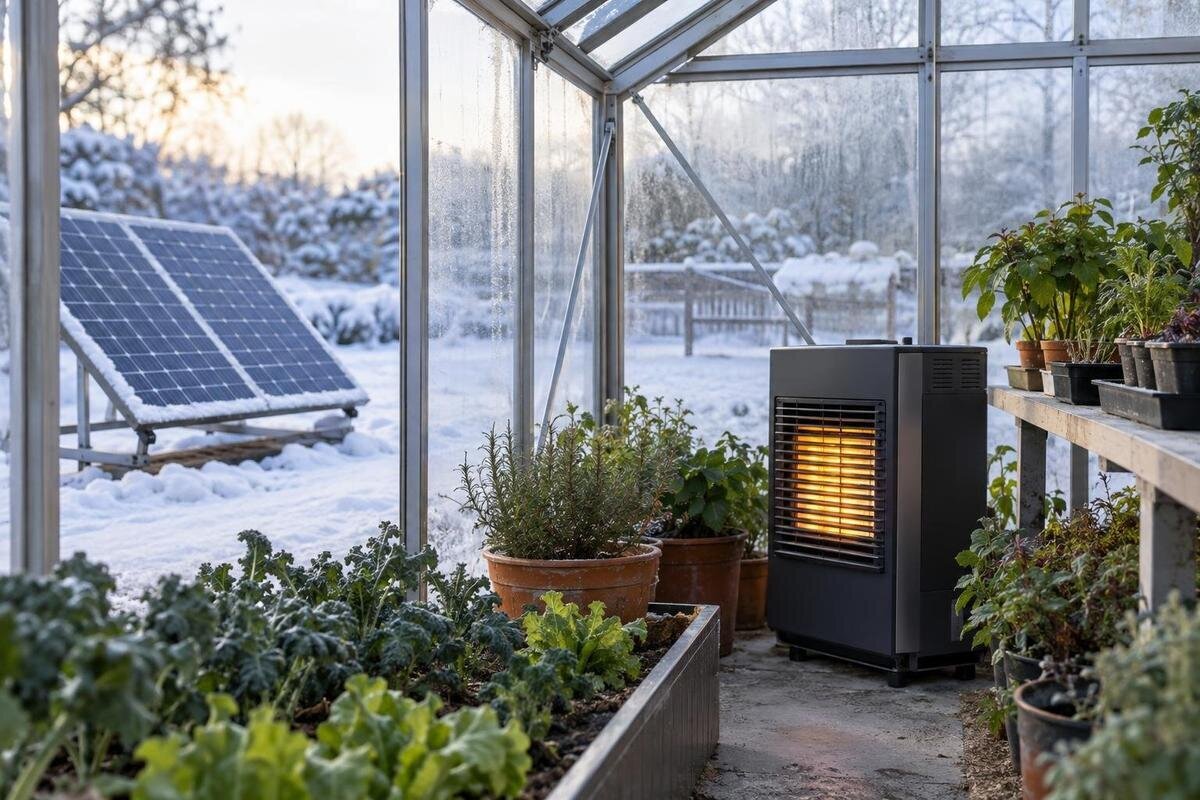
Solar panels can run an electric greenhouse heater, but winter self-sufficiency is not a safe default. Heating demand often rises when sunlight is scarce, and much of it arrives after panels stop producing. The useful question is whether local winter output, storage, and backup can cover the heat your specific greenhouse loses during the coldest stretches—not just whether annual solar production looks substantial. This guide shows how to compare those pieces without assuming one panel size, temperature target, or utility bill fits every site.

01
Solar panels can help, but full winter coverage is site-specific
Yes, photovoltaic (PV) panels can supply electricity for a greenhouse heater. Whether they can cover the full winter load is a different question. A small, carefully managed growing area with modest protection needs has a different energy profile from a large greenhouse expected to support active growth through severe cold. Local weather, the enclosure, air leakage, heater type, and the hours plants need protection all affect the result. Without those details, a fixed panel count or a promise of all-winter warmth is not a reliable plan.
Here, “solar panels” means PV modules that make electricity, which can run a heater or charge a battery. Solar-thermal collectors transfer captured solar heat by a different method and are not interchangeable with PV in an energy comparison. Define the job first: reduce purchased electricity when sun is available, keep a selected growing zone within its crop-specific range overnight, or maintain conditions through a prolonged cold spell. Those are different service levels. A system might offset daytime use without providing dependable all-night protection. Treat solar contribution, lower bills, and assured heat as separate outcomes, and assess each against the hours and conditions that matter.
Winter solar output and heating demand rarely align perfectly
Winter is difficult because solar output and heating demand often move in opposite directions. Days are shorter and the sun is lower; cloud cover, shade from trees or buildings, and snow or debris on modules can affect production at an individual site. These factors change with location and weather, so a summer yield figure or national average cannot stand in for a winter estimate at your property. Ask for production by winter month and the assumptions behind it, including the array location, orientation, shading, and weather data. If the estimate uses typical conditions, ask how it treats unusually poor weather.
A greenhouse heater often needs to work after sunset, before sunrise, and during the coldest weather, when PV may be producing little or nothing. The overlap can be unfavorable: a run of cloudy, cold days can reduce generation while maintaining a substantial heating need. A battery can move available energy from a sunny period into the evening, but it cannot make up a continuing seasonal shortage. Compare challenging stretches, not a clear winter afternoon or an annual production total. If plants cannot tolerate an interruption, plan for utility supply, approved backup power, a lower-risk heating goal, or a combination; do not treat an average solar day as proof of continuous heat.
02
Identify the factors that affect greenhouse heat loss
Describe what separates the greenhouse from outdoor air. Include roof and wall area, glazing type and condition, joints, door and vent leakage, wind exposure, ground contact, and any wall the structure shares with a building. Heat loss depends on the exposed enclosure, how leaky it is, and how far indoor conditions are held above outdoor conditions; floor area alone cannot capture those factors. For an existing greenhouse, note damaged seals or doors that do not close fully. Openings used for necessary ventilation can also release heat, so leaving vents closed as an energy shortcut may conflict with crop and moisture needs.
When comparing greenhouse sizes, collect the enclosure specifications alongside the floor plan. The Bloomcabin Prestige Greenhouse listing covers floor-area options from 40.6 to 302 square feet, so identify the configuration you are considering before requesting an energy estimate. Ask which glazing, doors, vents, and seals are included and which details vary by option. Floor area helps define the growing space, but it does not establish an insulation value. Give the heating professional the available drawings and product documentation, and identify any missing information. If the estimate must use an assumed value, ask that it be labeled clearly so you can see what needs confirmation before buying.
Set a winter temperature goal for the plants
Decide which plants and how much of the greenhouse need protection. Maintaining an active winter crop, keeping an overwintering collection alive, and preventing short-term cold exposure are not the same heating task. Consult reliable horticultural guidance for each crop’s temperature limits and how long a low temperature is acceptable; there is no universal greenhouse setpoint. State whether the target applies all night, at a particular growth stage, or only during selected forecast conditions. A target should reflect the growing plan, not simply the temperature an undersized system happens to deliver.
Draw a boundary around the heated zone: benches, beds, a section of the interior, or the entire greenhouse. For comparison, the Classic aluminum greenhouse listing spans floor-area options from 40.6 to 302.3 square feet. Choose the footprint around the plants you intend to keep through winter, while allowing room for watering, maintenance, and access. If you intend to heat only part of the structure, ask how that area would be separated and how air exchange with the rest of the greenhouse would affect demand. A smaller heated zone is a planning option, not a guaranteed saving; its enclosure and the temperatures on either side still matter.

03
Use the heater’s real energy use, not just its rating
Start with the heater’s documentation and, if it is already in use, measured consumption. Record the model, stated electrical input and heat output, control method, and any conditions attached to the manufacturer’s figures. During representative cold weather, a suitable energy meter and temperature records can show how much electricity the heater actually uses and when it runs. A nameplate rating describes a stated operating condition; it does not by itself show average daily consumption. If no heater is installed, ask a qualified professional to estimate demand from the actual enclosure and the required conditions rather than inferring it from floor area.
For heat-pump equipment, ask how documented capacity and electricity use change at the outdoor conditions expected at your site; a performance figure for milder weather may not describe a cold spell. For any electric heater, verify suitability for the greenhouse environment and have the electrical system and controls assessed by the relevant professional. If you are considering the Lean-To Greenhouse, whose listing offers floor-area options from 40 to 154 square feet, include the adjoining wall and its actual construction in the assessment. Do not assume that proximity to a building supplies useful heat. Ask the professional to distinguish the heater's ability to maintain the target temperature from its expected electricity consumption.
Compare local PV estimates with winter heating use
Ask the solar installer to present production and heating demand on matching timelines. Monthly totals show the broad seasonal balance, while daily or hourly estimates help reveal when electricity must come from storage or the grid. Keep power and energy separate: a panel or heater rating describes power, while electricity produced or consumed over a period is energy, usually reported in kilowatt-hours. Two systems can have similar monthly energy totals yet very different overnight coverage. Ask whether the production figure represents electricity available for use after system losses, and make sure the heating estimate includes any other equipment that the same solar supply is expected to serve.
Use the exact greenhouse size when comparing proposals. The Large backyard greenhouse listing gives floor-area options from 506 to 753 square feet; a quote based on one configuration should not be carried over to another without checking the heating assumptions. For operating costs, use your current utility tariff and distinguish electricity consumed on-site from electricity exported. Import prices, export compensation, seasonal or time-based rates, and fixed charges depend on the provider and plan. Ask for expected winter purchases as well as annual savings, and identify which charges would remain. Summer exports may have financial value, but they do not physically supply the greenhouse on a winter night.
04
Battery storage shifts electricity but cannot create it
A battery can shift some PV electricity from daylight to evening. It cannot increase the array’s seasonal production; if the panels generate little for several days, stored energy can run down while the heater still needs another source or a different operating plan. Check usable capacity rather than relying on a headline figure, and have a qualified installer assess output limits, system compatibility, conversion losses, and any operating restrictions in the equipment documentation. Ask the installer to consider both how much energy is available and how much power the heater requires at a given time.
Base a storage decision on the heater's measured or documented use, the local production profile, and the periods when protection is required. Ask how much reserve would remain after a typical night, how it would be replenished the next day, and what happens if that day is cloudy. Equipment location is a separate purchasing question. The greenhouse with built-in storage space listing offers floor-area options from 59.4 to 302 square feet, but garden storage does not establish suitability for battery equipment. Have the installer identify an approved location using the equipment's environmental and access requirements. Include the space needed for inspection and servicing in the site plan rather than treating the battery as an item that can go anywhere.
Plan how utility power or backup will cover a shortfall
A grid connection can supply electricity when PV and storage do not meet the heater’s needs, but ordinary grid connection and outage backup are different things. Many grid-connected PV systems do not automatically provide power to a building during a utility interruption. Operation depends on the equipment and system design, so ask the installer and utility what would remain powered, under what conditions, and whether battery backup is included. Do not assume that panels connected to the grid will keep a greenhouse heater running when grid service is lost.
An off-grid plan depends more heavily on stored energy, an approved alternative source, or changes to the heating goal during extended low-sun weather. Decide which loads must continue and which can stop, then have the installer document what the backup system can actually supply. If comparing the T-Model Greenhouse Orangery, listed in floor-area options from 178 to 323 square feet, mark the intended winter growing zone on the selected floor plan. That gives the heating and solar professionals a common basis for assessing essential loads. Also decide how you will notice a loss of heat and who can respond; backup capacity is useful only if the system and response plan work together.

05
Keep panel placement separate from greenhouse roof ratings
Treat the PV mounting location and the greenhouse structure as separate design questions. A greenhouse roof may look like available space, but an image, model name, or floor-area listing does not establish capacity for panels, mounting equipment, or local weather loads. Before considering roof mounting, obtain explicit documentation and an assessment from the greenhouse manufacturer, a qualified structural professional, and the solar installer. Ground mounting avoids placing equipment on the greenhouse roof, but still needs a suitable site and a professionally assessed design. Compare possible locations for sun exposure, maintenance access, and their effect on the garden before committing to an array layout.
Coordinate array placement with greenhouse daylight and access. Check whether the proposed panels would shade the growing space during useful light hours or obstruct doors, vents, or maintenance routes. A site drawing should show both structures at their proposed locations, not just the available area for panels. The Pyramid-type greenhouse listing offers floor-area options from 60 to 203 square feet; use the selected configuration's actual drawings when comparing layouts. Ask the solar installer to assess seasonal shadows, equipment access, and the cable route. If moving the array improves solar exposure but reduces useful growing light, consider that trade-off alongside the electricity estimate rather than judging the location on PV output alone.
Test the plan against a cold, low-sun period
A useful feasibility assessment brings together the exact greenhouse model and size, documented enclosure details, intended crop-zone conditions, local weather, heater information or measured use, the proposed PV location, battery and inverter specifications, and the utility tariff. Ask the installer to state assumptions and show likely winter shortfalls as well as average-month production. Discuss expected grid use, the limits of backup, and how the plan changes if low-sun weather lasts longer than expected. Have the solar and greenhouse-heating professionals work from the same description of the structure and heating goal; an estimate based only on annual PV output cannot establish winter reliability.
When the system is operating, compare its performance with the plan using records from the greenhouse: temperatures in the growing area, outdoor conditions, PV output, and heater energy use. Include electricity drawn from the grid and battery charge levels where monitoring provides them. A mild sunny day does not prove performance through a cold spell, so review difficult weather too. If you choose the Limited Edition greenhouse, record the purchased configuration alongside the energy-system specifications and the original assumptions. Reassess after changes to the heated area, crops, target conditions, heater, or array location. Keeping dated records helps distinguish a change in the growing plan from a system that is not performing as expected.
Frequently asked questions
Can solar panels power a greenhouse heater directly?
PV panels produce electricity, which can run a compatible electric heater when the system is producing enough power. That does not guarantee continuous heat: output changes with sunlight, and heaters may be needed after dark. Have the equipment and controls assessed as a complete system rather than connecting a heater to panels without a suitable design.
How many solar panels would a greenhouse need?
There is no reliable panel count without site-specific information. An estimate needs the actual greenhouse and heated area, documented enclosure details, the heater's energy use, the required operating period, and local winter solar production. Ask a qualified installer to state the assumptions and show how the estimate accounts for cloudy periods.
Will a battery keep a greenhouse warm overnight?
A battery can shift some electricity generated during daylight to later hours, but overnight heating depends on its usable capacity, output, system compatibility, and the heater's actual demand. It also cannot replace energy that the panels did not generate during an extended low-sun period. Check the complete system plan, not the battery's headline capacity alone.
Is annual solar production enough to judge winter performance?
No. Annual totals can conceal a shortfall during winter or at night, when heating is needed. Compare estimated PV production and measured or documented heater use over the same winter periods. If reliable heat is essential, ask how the plan performs during a prolonged cold spell with limited sunlight.
Can solar panels be mounted on a greenhouse roof?
Do not assume a greenhouse roof is designed to support PV modules or mounting equipment. A product image, model name, or floor-area listing does not establish roof capacity. Before considering roof mounting, obtain explicit documentation and an assessment from the greenhouse manufacturer, a qualified structural professional, and the solar installer.
Solar panels can realistically contribute to greenhouse heating in winter, but contribution is not the same as dependable, stand-alone warmth. The result depends on the greenhouse’s heat loss, the plants’ requirements, local winter generation, the heater’s actual use, and the way storage and backup are planned. Compare those details over the same cold-weather periods, and treat annual production as only one part of the picture. When a crop cannot tolerate a heating interruption, make the shortfall plan as specific as the solar estimate. That is the difference between panels that offset some energy and a heating system designed around winter conditions.
