
Why Are My Greenhouse Cucumbers Bitter?
Greenhouse crop guide
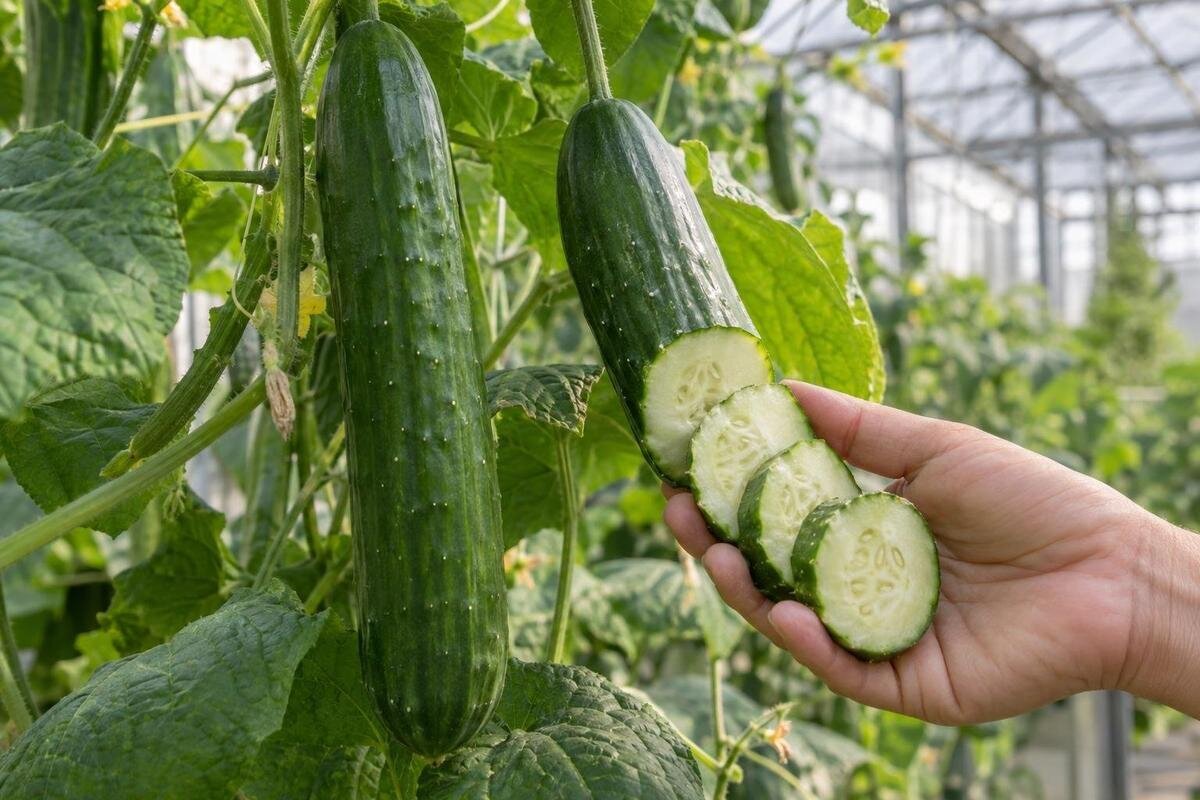
Greenhouse cucumbers can taste bitter even when the fruit looks healthy and the vine is productive. The usual explanation is elevated cucurbitacins, but that names a flavor compound, not one definite growing mistake. Cultivar genetics set a baseline, while heat, uneven soil moisture, and other stress may contribute in some cases. A single taste cannot distinguish among them, and bitterness has no dependable visual signature. Compare the affected fruit with the rest of the crop, note where and when it developed, and treat pronounced bitterness as a reason not to eat that cucumber.

What makes greenhouse cucumbers taste bitter?
Bitterness in cucumber fruit is generally associated with cucurbitacins, naturally occurring compounds in the cucurbit family; cucurbitacin C is the one most often discussed for cucumbers. Most eating cultivars are selected for low bitterness, but they differ in their baseline tendency, and growing conditions can influence how strongly that trait appears. This explains why a bitter taste does not point to one clear mistake. A fruit may stay green, firm, and otherwise ordinary while tasting bitter. There may be no visible defect to photograph or trim away. Greenhouse growing does not remove genetic or environmental variation, and a healthy-looking vine cannot guarantee mild fruit. Even two cucumbers from the same plant can taste different.
Flavor can vary between fruits on one vine and within an individual cucumber. Some bitterness may be strongest near the stem end or just under the peel, but that distribution is not a dependable clue to the cause or a test of safety. If a cucumber tastes distinctly bitter, stop eating it and discard the whole fruit; do not keep tasting to map the bitter area. Peeling, cutting away one end, or cooking it does not reliably make a strongly bitter cucumber safe. High cucurbitacin levels can cause gastrointestinal illness, so do not try to cover the flavor with seasoning.
Cultivar genetics set a baseline
Read the full cultivar name on the seed packet, nursery label, or order record rather than relying on a broad description such as slicer or pickler. Cultivar genetics matter: different cucumbers can have different baseline tendencies toward bitterness, even when grown in the same greenhouse. Terms such as burpless or a particular market type do not guarantee that every fruit will be free of bitterness under every condition. If a seed supplier gives specific flavor notes, keep them with the cultivar name; a general description cannot explain what happened to one harvest. Seed packets also vary in how much detail they provide.
If one named cultivar repeatedly produces bitter fruit while another in the same greenhouse remains mild, variety is a sensible factor to investigate first. It still does not prove a genetic cause: one row or vine may have dried sooner, heated up, or been harvested at a different stage. In a later planting, try a small side-by-side comparison of cultivars in similar positions, with labels kept in place and fruits picked at each variety’s recommended stage. That creates a more useful comparison than replacing every plant after one disappointing cucumber. Keep harvest notes for each cultivar separate, even when you care for them in the same way.
Track where and when bitterness appears
Before changing irrigation or adding fertilizer, record the pattern. Note which plant and row produced the fruit, whether other cucumbers on that vine or neighboring vines tasted bitter, the harvest size, and the date. Add the cultivar, greenhouse position, recent hot weather, and any unusual watering changes. One bitter fruit does not clear the rest of the vine or identify a cause; several affected plants in one zone make location worth checking. A note saying only that the cucumbers tasted bad loses details that could help separate a cultivar pattern from a local growing condition.
Draw a simple bed map and mark doors, vents, greenhouse sides, nearby shade, and watering points; then add affected vines as you harvest. A cluster beside one wall or at the end of a row is a clue to examine, not proof that the position caused bitterness. Give each row a label so you can connect harvest notes with the same location later. If you are also comparing growing spaces, sketch proposed beds within the selected dimensions of the Large backyard greenhouse. Keep that proposed plan separate from the map of your current crop so observations and future layout ideas do not get mixed together.
Check moisture below the soil surface
Uneven soil moisture is worth investigating because cucumber plants need a relatively steady water supply, but a fixed watering calendar can conceal dry and saturated patches. The surface may look damp while soil near active roots is dry, or a dry surface can sit above a still-wet root zone. Check more than one point along the row at a similar depth, and compare an affected plant with an unaffected one. Soil texture and bed depth affect how quickly moisture changes. Record what you find before adjusting the routine; a brief wilt or recent watering event alone cannot explain why a particular fruit tasted bitter.
If a bed repeatedly dries out or remains waterlogged, address the underlying pattern rather than alternating a long dry spell with a heavy soak. Aim for more even watering and allow excess water to drain; check container edges, raised beds, and the far ends of rows separately because moisture can differ across them. For a new layout, use the selected configuration of the Classic aluminum greenhouse to plan access to those checking points. Mark where you would stand and which plants you would need to reach. A watering plan is easier to evaluate when it identifies individual beds rather than treating the entire crop as one area.

Look for heat and airflow patterns
Heat can contribute to plant stress, and greenhouse air may become warmer than the outdoor forecast suggests. Conditions are not necessarily the same throughout the structure: a sunny corner, a shaded edge, and a bed near an opening can differ on the same day. If bitterness began during a hot stretch, take temperature readings near cucumber foliage at different times for several days and note shade and ventilation conditions. Where possible, compare the affected bed with a less exposed part of the crop. An outdoor high or one noon reading cannot show what a plant experienced through the full day. Treat heat as a possible contributor, not an automatic diagnosis.
Use the ventilation and shading arrangements already available to limit prolonged excess heat where appropriate, but do not assume a cooler afternoon will explain bitterness that appeared earlier. Airflow depends on openings, their position, and the site, not a structure label. If you are considering the Lean-To greenhouse, compare the proposed site’s orientation and the selected design’s documented openings with your planned cucumber beds. Identify where you would take temperature readings, including any locations that differ in exposure. For the current crop, keep readings tied to a time and place rather than recording a single temperature as representative of the whole greenhouse.
Compare light and shade by location
Map where sun and shade fall through the day rather than describing the whole greenhouse as sunny. Trees, fences, nearby buildings, the structure’s position, and dense foliage can create shadows that move with the season. A patch that looks shaded in the morning may be exposed during the hottest part of the afternoon. More direct sun can raise leaf temperature and speed moisture loss, but sunlight alone does not prove the source of bitterness. The useful comparison is whether affected vines also experienced warmer air or drier soil than nearby vines. Record those conditions before changing shade or moving plants.
Compare the locations of bitter and mild fruit with canopy temperatures and root-zone moisture over several days. If only the most exposed row is affected, light and heat deserve closer attention; if bitterness occurs throughout the greenhouse, look at cultivar and crop-wide conditions too. When assessing a proposed site for the Limited Edition aluminum greenhouse, note nearby shade and the times when it crosses the planned beds. Use the same observations you would collect for an existing crop: morning exposure, afternoon exposure, and differences between rows. Assess the exact configuration alongside those site notes; the product listing alone cannot describe the changing shadows at your growing location.
How harvest stage fits the diagnosis
Harvest stage is worth checking, but bitterness is not a dependable sign that a cucumber is simply overripe. Follow the named cultivar’s guidance, because preferred size differs among slicing, pickling, and specialty types. Fruit left on the vine too long may become oversized, yellow, or seedier, while a bitter cucumber can still be green and otherwise normal. Record fruit size and picking date, and note whether the flavor issue recurs at one stage. That comparison is more informative than treating an unusual taste as a ripeness test. Do not leave a bitter fruit on the vine to see whether its flavor changes.
Harvesting at a consistent, recommended stage helps make comparisons fair, and regular picking lets you notice changes across the crop. If a fruit tastes distinctly bitter, stop tasting that cucumber and discard it. Access also affects whether you spot overgrown or yellowing cucumbers in time, so sketch rows and paths before estimating planting numbers. If you are comparing the T-Model greenhouse orangery, use the selected configuration and interior dimensions to assess where you could stand while inspecting each row. Mark any plants that would be difficult to reach. This makes harvest access a concrete part of the layout review rather than an assumption based on the model’s name.
Separate bitterness from other plant symptoms
Inspect the vines for other symptoms, but keep them separate from the taste result. Wilting despite moist soil, unusual leaf spots, stunted growth, damaged roots, or uneven development may point to a problem worth diagnosing on its own. Those clues do not identify cucurbitacins or prove that a visible problem caused the bitter fruit. Conversely, lush foliage cannot rule out bitterness because the compounds have no dependable visible marker. Photos can document where spots, wilting, or damage occur, but a photograph cannot measure flavor or identify the bitter compound.
Do not add fertilizer, pesticide, or disease treatment solely because a cucumber tastes bitter. Taste is not a soil test, and excess fertilizer can create separate growth problems. If plants also show persistent changes, use an appropriate soil test or local horticultural diagnostic resource rather than guessing at a nutrient deficiency. Record visible symptoms separately from flavor observations, labeling each photo with the plant and date. If you are also comparing the pyramid-type greenhouse, keep that purchase decision separate from the diagnosis. Assess its selected configuration for your proposed beds and access routes, while using observations from the current crop to investigate the plant problem.

Keep a useful harvest record
Treat the next harvests as observations, not a controlled experiment. Keep a short log of cultivar, row, harvest size, date, recent watering, root-zone moisture, canopy temperature, and visible plant symptoms. Mark unusual heat spells or sudden cooling alongside routine notes. This record can help distinguish one isolated fruit from a repeated cultivar or location pattern. When possible, change one manageable condition at a time. If you alter watering, shade, pruning, and fertilizer together, a later improvement will not show which adjustment mattered, and different weather may complicate the comparison further.
Keep the notes where you already check the greenhouse so the record does not depend on memory. Use consistent row labels and units, and distinguish a measurement from an impression such as unusually hot or dry. Leave room to record when an adjustment began, so later harvests can be compared with earlier ones. If your growing-area plan also needs storage, review the aluminum greenhouse with built-in storage against the beds and access routes you need. Mark where supplies would go without losing access to observation points. For troubleshooting in an existing structure, a notebook and simple map are usually enough; new storage is not necessary to keep a useful record.
When a cultivar or layout change makes sense
Choose the smallest adjustment that matches a repeated pattern. A cultivar pattern suggests comparing a different named variety; a moisture pattern calls for reviewing how evenly the root zone stays moist; a consistently hot area warrants a closer look at existing shade and ventilation. None of these conclusions follows from bitterness alone. If visible symptoms are spreading or difficult to identify, a county extension office or local horticultural diagnostic service can review clear photos, cultivar details, and your notes. Those records give more context than a picture of one fruit by itself.
Consider changing the greenhouse only when records point to a recurring layout or climate issue that the current space cannot address, not after one bitter cucumber. If you compare the Bloomcabin Prestige greenhouse, first identify the specific limitation you want to address, then assess the exact configuration and documented openings against your site. Keep cultivar choice separate from that comparison: a different structure cannot correct a cultivar trait on its own, and no greenhouse can guarantee mild fruit. If there is no repeated pattern, continue recording variety, moisture, temperature, and harvest stage. That leaves you with a clearer basis for deciding whether to change plant care, try another cultivar, or reconsider the growing space.
Frequently asked questions
Can heat make greenhouse cucumbers bitter?
Heat can stress cucumber plants and may contribute to bitterness, but a hot spell does not prove why a particular fruit tastes bitter. Cultivar traits, soil moisture, and other conditions also matter. Compare temperatures and fruit locations over time rather than diagnosing from taste alone.
Are bitter cucumbers safe to eat if I peel them?
If a cucumber tastes distinctly bitter, stop eating it and discard the whole fruit. Bitter compounds may not be limited to the peel or stem end, so trimming or peeling does not reliably make a strongly bitter cucumber safe.
Can I tell from a cucumber’s appearance whether it will taste bitter?
Not reliably. A bitter cucumber can look green, firm, and otherwise normal. Photos can document visible plant symptoms or damage, but they cannot show how a fruit tastes or measure its bitter compounds.
Why is only one cucumber bitter?
Bitterness can vary among fruits on the same plant. Cultivar traits and local growing conditions may both play a part, and one fruit may have experienced different conditions as it developed. Record its plant, location, size, and harvest date, but treat one fruit as a clue rather than a diagnosis.
Does a bitter taste mean I watered incorrectly?
No. Uneven moisture is one possible stress to investigate, but bitterness alone cannot identify a watering problem. Check moisture near the roots in more than one part of the bed, and compare those observations with the cultivar, heat, and harvest pattern.
Think of bitterness as a reason to investigate, not as a diagnosis. Cultivar traits set a baseline, and heat or uneven moisture may contribute, but a single fruit cannot identify the cause. Discard cucumbers that taste distinctly bitter. Then compare cultivar, plant location, moisture, temperature, and harvest records, and make changes only when a repeated pattern points to something specific.
