
Aluminium or Cedar Greenhouse: Compare Care Requirements
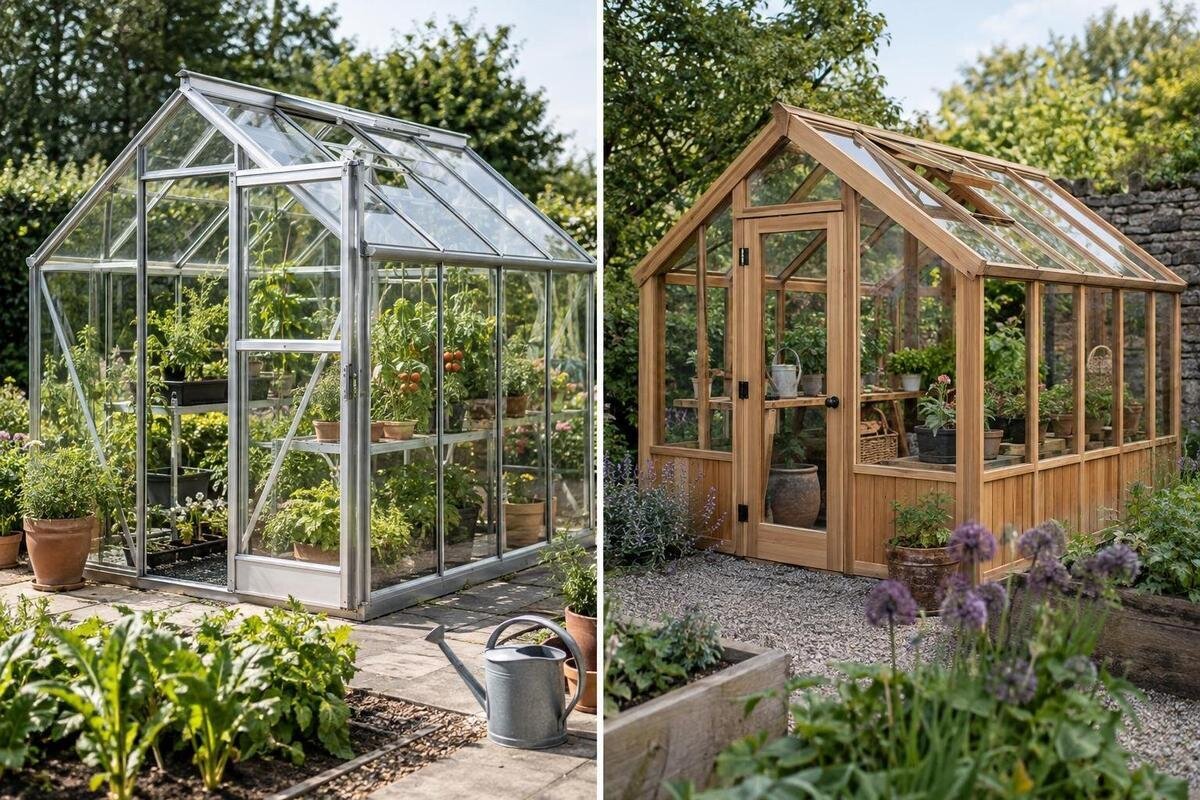
Greenhouse care guide
Choosing between cedar and aluminium changes more than appearance: it changes which parts of a greenhouse need attention and what a sensible care plan should cover. Cedar may involve finish-specific checks or renewal; an aluminium frame avoids timber-treatment tasks, but it does not make doors, glazing, fasteners or surfaces maintenance-free. The exact work depends on the timber species, treatment, finish, construction and site exposure. Compare written instructions for equivalent builds, then weigh recurring jobs against the appearance you want and the time you are prepared to spend caring for it. A product label alone cannot tell you what ownership will involve.

01
Compare the complete greenhouse specification
Material names are a poor substitute for a full specification. A cedar greenhouse may use different species, grades, joinery and surface treatments; aluminium structures can also differ in finish, connections, fasteners and included components. Compare candidates with similar dimensions, glazing, base arrangement, opening elements and intended use. A longer maintenance list may reflect extra components or harder access, not timber or aluminium alone. Check drawings and verified specifications for what is actually included, then treat frame material as one factor in the ownership decision. A coated timber frame and a particular aluminium finish should not be judged as if every care difference comes from the material name. Also separate work supplied by the maker before delivery from work expected after assembly.
Build a like-for-like comparison table with separate rows for frame cleaning, finish care, glazing, door and vent hardware, the base, initial treatment, inspections and renewal work. Record which tasks are one-off at assembly and which recur. If you are considering a wall greenhouse, compare its exact configuration with a cedar greenhouse of similar scale and layout. Otherwise, differences in access or components could skew the material comparison. Use the product listing to identify the configuration, then obtain its care instructions. Note whether each task needs particular products, tools or outside help so the table captures practical demands as well as frequency.
Cedar care depends on species and finish
Cedar is a common name, not a complete material specification. Ask which species is used, what grade or treatment is supplied, how the frame is joined and whether any coating is applied before delivery or after assembly. These details affect what the owner is expected to maintain, which products are compatible and how much of each surface can be reached. Ask whether concealed faces, exposed end grain and areas close to the base receive the same treatment as visible faces. A description that says cedar alone does not answer these questions. Request the exact timber and finish details in writing, then compare them with the care instructions for the supplied build, not a generic timber article.
Depending on that specification, the care plan may involve cleaning only, checking an existing finish or applying a compatible finish again when the maker's instructions say it is due. Do not assume every cedar greenhouse needs painting or oiling, and do not assume every one is designed to weather without care. Ask what finish is supplied, what appearance it is intended to retain, whether renewal is expected, how to recognise when it is due and which treatment is approved. If instructions are silent, seek clarification before using a generic timber product; a product chosen for a deck or fence is not automatically suitable for a greenhouse frame. Keep the approved product and preparation details with the model documents.
02
Site exposure changes the upkeep
Exposure changes where attention is needed, even on one greenhouse. Direct sun, wind-driven rain, irrigation spray, soil splash, persistent shade and limited airflow can affect visible faces and joints differently; a sheltered side may weather differently from an exposed one. Before comparing cedar care claims, note which sides receive direct sun or water and whether the lower frame is close to wet ground or regular watering. Leaf build-up or a sheltered corner can also make a surface harder to inspect. This is not a reason to invent a schedule from the climate alone; it is information to give the supplier when you ask whether the written care plan suits your site.
Use any maker-stated inspection interval as your baseline, then follow advice specific to the model. During those checks, note a finish that is lifting, timber newly exposed by wear or visible changes around a joint; record the location and ask the manufacturer what action is appropriate. If no interval is supplied, ask for one rather than borrowing an interval from another structure. Do not infer from one patch that the entire greenhouse needs a new coat. Keep dates and photographs with the care documents so later changes can be compared with the original condition. If you notice movement or damage that may affect stability, seek qualified help rather than attempting a structural repair.
Aluminium still needs cleaning and inspection
An aluminium frame does not need timber preservative, which removes one kind of frame-care task. That does not make the complete greenhouse maintenance-free. Dust, leaves and other garden debris can collect around rails, connections and glazing edges; the finish, seals, fasteners and moving parts may still require cleaning or inspection according to the exact product instructions. Doors and vents should be checked as components, not assumed to take care of themselves. The frame material tells you less about maintenance of its coating, hardware or adjoining parts than the finished specification does. Follow instructions for any fastener checks; do not tighten or adjust parts by guesswork.
If a model has a coloured or otherwise treated aluminium finish, confirm which cleaning products and methods are allowed; do not assume all coatings can tolerate abrasive pads, solvents or pressure washing. Ask how to handle a mark or damaged surface rather than testing an unlisted chemical. When considering the Limited Edition aluminium greenhouse, request the finish details for your chosen configuration alongside the cleaning instructions. This lets you assess surface care separately from the other maintenance tasks. Apply the same distinction to the cedar alternative: cleaning a frame, maintaining its finish and renewing that finish are different jobs, even if a supplier groups them under general upkeep.

03
Glazing and moving parts need care in either structure
Greenhouse care extends beyond the frame. The material used for glazing or panels affects which cleaning methods are appropriate, so confirm the exact panel type and the supplier's permitted cleaners before using a brush, chemical or abrasive pad. Remove loose debris using the recommended method, and inspect accessible edges and supports for visible displacement or damage. Do not assume instructions for household windows apply to greenhouse panels; materials and support arrangements can differ. Add this work to both sides of the comparison because changing from cedar to aluminium does not remove the need to care for the covering. Consider how each surface can be reached without damaging it.
Where the selected build includes hinges, latches, vents, tracks, seals or drainage channels, add each to the routine list and note the maker's cleaning and inspection instructions. Clear loose debris only in the permitted way, and do not force a part that sticks or make adjustments without guidance. If you are comparing the T-Model Orangery Greenhouse with a cedar option, check the panels and hardware included in each configuration. Differences in the number or type of working parts belong in the comparison alongside frame care. This helps distinguish time spent maintaining the material from time spent keeping the greenhouse's doors, vents and other components serviceable.
Compare written schedules and recurring tasks
Ask for a written maintenance schedule for the exact model, timber species or aluminium finish and selected configuration. It should distinguish routine cleaning and inspection from any timber treatment or surface-finish renewal, and state what is expected at assembly compared with later ownership. For each task, seek the recommended interval, approved products, preparation method, signs to watch for and whether the work is suitable for an owner or requires a tradesperson. Ask whether the advice assumes a particular level of sun or rain exposure. If the supplier calls a greenhouse low maintenance, ask what tasks that means in practice. If no schedule is available, treat that as an unanswered ownership question rather than borrowing an interval from another greenhouse.
For a model such as the Pyramid Greenhouse, make sure the schedule covers the options you intend to order, rather than just a standard version. Obtain equivalent information for the cedar build, then put the schedules side by side. Separate essential care from optional appearance work, such as refreshing a finish for a particular look, and note the products and equipment each task requires. A calendar can then reflect confirmed instructions instead of a guessed annual routine. Keep the schedules with the model details and record when the advice was provided, so you can refer back to the instructions that informed your purchase.
04
Assess construction quality and material junctions
Material comparison is meaningful only if the builds are comparable in quality and specification. Use drawings and verified product details to check frame sections and connections, joint design, fasteners, finish, glazing retention, base construction, included opening components and replacement-part arrangements. This is not about calculating strength from a drawing; it is about knowing which parts make up each product and what the manufacturer expects you to maintain. If one option has a more elaborate finish, extra openings or a different base, list that difference separately instead of attributing every extra task to timber or aluminium. Visual similarity alone does not prove equal construction or care requirements.
Pay particular attention to points where materials meet: the lower frame and base, timber ends, glazing supports, hardware fixings and any drainage route. Ask whether those interfaces have specific cleaning or inspection instructions, and where to get replacement components if a part wears. The Prestige greenhouse with a metal base offers a specific configuration to compare with a cedar build that has a documented base and comparable fittings. Examine how the base and frame are described in each specification rather than treating the base as separate from the maintenance comparison. If the drawings or instructions leave an interface unclear, ask the supplier how it should be maintained.
Size and access affect the time needed for upkeep
Routine work depends not only on how many square metres a greenhouse covers but also on how much frame and glazing need attention and how easily each surface can be reached. Roof height, perimeter access, door openings, nearby planting and the position of the structure all affect practical effort. Use the product drawing to consider the actual surfaces you will clean and inspect, rather than converting floor area directly into hours. If a task requires awkward or elevated access, include a suitable access plan in your ownership estimate and ask the supplier or a qualified professional about safe methods; do not improvise. Check whether regular cleaning blocks a path or requires moving plants or equipment.
One scale reference is the Spacious Greenhouse, listed with area options from 47 to 70 m². That range describes area, not cleaning time or a care interval. For any candidate, compare exact dimensions and access points in the specifications, then estimate recurring work by task. A larger area may mean more surface to inspect, but shape, height, components and access can matter just as much. Consider how much room you have to move around the structure and whether nearby plants or equipment would need moving for routine work. These practical demands belong in the comparison even when two greenhouses have similar floor areas.

05
Account for finish changes and added features
Decide what you want the frame to look like after years outdoors. With cedar, ask whether the specified finish is intended to retain a particular colour or whether weather-related change is expected, and how the care plan differs between those outcomes. Do not treat timber's natural appearance as proof it can be left untouched, or assume preserving a chosen colour needs no future work. An aluminium frame may also have a specified surface finish with cleaning limits or touch-up guidance; confirm the actual finish rather than inferring it from the material. If appearance is central to the decision, request finish samples or clear product information and ask what ongoing care they represent. Your preference is part of the ownership calculation.
Check whether built-in or optional features add their own surfaces, moving parts or care instructions. With the Limited Edition aluminium greenhouse with built-in storage, ask what materials the storage uses, how they are finished and what care they require. Compare it with a cedar model of similar configuration rather than treating the extra feature as a consequence of frame material. Do not infer the storage's construction or upkeep from aluminium in the model name. Apply the same questions to benches, opening gear or other extras when they are included in the build under review. Keep their care requirements separate so you can see what each feature adds to the overall workload.
Choose a routine you can maintain
If avoiding timber-specific treatment is a priority, aluminium may suit your ownership preference, provided its exact finish and whole-structure care schedule are acceptable. If cedar is the look you want, choose with a clear understanding of the timber species, supplied treatment and any renewal work; do not assume a standard recoating interval. Either material can be a poor fit if the required inspections are difficult to carry out or the finish does not suit the way you want the greenhouse to age. Weigh the routine against the time you are prepared to spend on it, including any work you would need someone else to do.
For a final comparison, match the Classic aluminium greenhouse with a cedar model of similar dimensions and specification. Review the differences you have recorded: which jobs come from the frame material, which come from the finish and which belong to the glazing, hardware or added features? Keep initial treatment separate from recurring work so the first year does not distort your view of longer-term care. Where an answer is still missing, identify the particular task or component rather than accepting a broad claim of easy maintenance. The result should show what you would actually need to do for each greenhouse, not simply which material has the shorter sales description.
Frequently asked questions
Does an aluminium greenhouse need maintenance?
Yes. The frame does not need timber preservative, but the complete greenhouse still needs cleaning and inspection. Follow the instructions for its finish, glazing, fasteners, seals and any doors, vents or drainage components supplied.
Does a cedar greenhouse always need painting or oiling?
Not automatically. The cedar species, any factory treatment and the supplied finish determine what the maker expects. Ask whether the timber is intended to weather, whether a coating must be renewed and which treatment is compatible; do not choose a product from the word cedar alone.
How often should I recoat a cedar greenhouse?
There is no universal interval. Exposure and the exact finish matter, so request a written schedule for the greenhouse you are considering and ask what signs mean renewal is due. Do not transfer a deck or fence interval to a greenhouse.
Is aluminium lower maintenance in a sunny garden?
Not necessarily for the whole structure. Aluminium avoids timber treatment, but sunlight, dust, rain, panel type, finish and access still affect upkeep. Compare the exact care instructions and site exposure rather than assuming one frame is universally easier.
What should I ask for before buying?
Request like-for-like drawings and verified specifications, the precise timber species or aluminium finish, panel and hardware details, and a written care plan. It should distinguish initial treatment from recurring cleaning, inspections and finish renewal, with intervals and approved products.
Aluminium mainly removes timber-specific preservative tasks from frame care; it does not remove cleaning and inspection of the whole greenhouse. Cedar's care cannot be reduced to a single rule because species, supplied treatment, finish and exposure vary. The fairest choice is a similarly built greenhouse with documented tasks you can realistically carry out and an appearance you are comfortable maintaining. If care instructions for the exact model are missing, treat that uncertainty as part of the ownership decision instead of relying on a general claim about either material.
