
Scratched Greenhouse Powder Coating: How to Assess Repair Options
Greenhouse maintenance
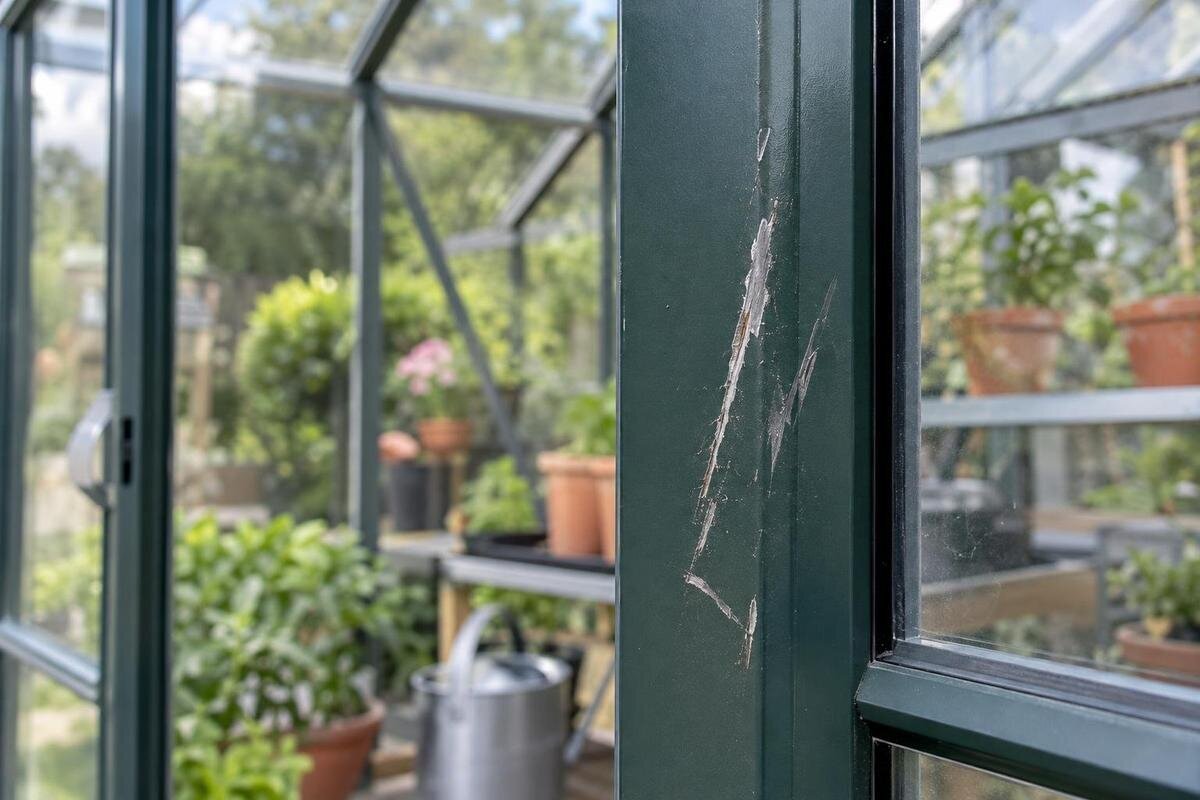
A scratch on a greenhouse frame can look worse in strong light than it is, while a small chip may matter more if it has broken through the coating. The first decision is not which paint to buy, but what the mark is, where it sits and whether its edges are changing. A powder-coated surface can show transferred material, a rubbed patch or a true break in the finish; photographs alone may not distinguish them. Inspect without scraping, record the greenhouse details, then check the manufacturer’s approved care or touch-up guidance. If the finish is broken and there is no exact procedure, leave it untreated until the manufacturer or a qualified installer advises.

Is it a scuff, a stain or a break in the coating?
A dark line, pale patch or shiny area does not by itself show that powder coating has come away. It may be soil or plant residue, material transferred from a pot or tool, or a scuff that has altered the sheen without cutting through the finish. A chip, flake or crack has an edge where the coating appears interrupted. A colour difference can suggest that another layer is visible, but it does not reliably identify the coating depth or the material underneath. Glare and shade also change how a mark looks, so treat appearance as an initial clue rather than a diagnosis.
Photograph the mark before touching it. Then, only if the greenhouse care instructions allow it, use the specified gentle cleaning method and a clean soft cloth; do not scrub to see what happens. If the mark lifts, transferred material or residue becomes more likely, but that does not prove the finish beneath it is undamaged. Do not test the line with a fingernail, blade, coin or abrasive, pick at an edge, or use a solvent. Those tests can create new damage or make a minor question harder to assess. If you remain unsure, record the result as uncertain and leave the surface alone.
Inspect the frame without disturbing it
Look at the area in even daylight, away from glare, and view it from more than one angle without pressing on the frame. Note whether the mark is on a broad face, an exposed corner, a cut end or near a joint, fastener, glazing channel, door or vent. Record whether it is isolated or accompanied by other marks. Location helps a manufacturer or installer interpret the question, but a scratch near a fitting does not automatically mean that the fitting or frame has failed. Include the surrounding frame section in at least one photograph; a close-up alone can hide useful context.
Keep the inspection at a safe, accessible level. Do not climb on the greenhouse, lean against glazing, remove a pane, loosen a fastener or pull a seal to reach a scratch. Marks on a roof, beside glass or above shoulder height are reasons to ask an installer to inspect them rather than improvise access. If the frame appears bent or loose, a pane seems unstable, or a door or vent no longer sits as before, stop treating the issue as cosmetic and arrange a competent assessment. A coating repair cannot establish whether the assembly is sound.
Record the mark before cleaning it
Make a simple record while the mark is untouched: take one wider photograph showing the greenhouse and affected frame section, then a close image in steady light. Put a ruler or other scale next to the mark without touching the finish, so the picture gives context without risking a rub. Include nearby joints or glazing in one view, but do not place anything where it could slip against the frame. Save the original files, note the date and avoid filters that alter colour. Comparing later photographs is more useful than relying on memory or an edited, heavily cropped image.
Write down the model name and variant as they appear on your paperwork, if known. If your order identifies a Bloomcabin Prestige Greenhouse, keep that wording rather than shortening it to ‘the aluminium one’; add any order reference or model code recorded alongside it. A product title can orient an enquiry, but it does not identify the exact frame section or coating code. Also note whether you have cleaned or treated the mark, since that may affect the advice you receive. If you do not know the model, say so rather than assigning one based on appearance.
Confirm the greenhouse model and affected component
Check the order confirmation, invoice, assembly manual, packaging record or any model label that can be read safely. Record the complete product name, model or variant code, approximate purchase or installation date if known, and any serial or order number. A range name can be shared across options, so retain every suffix and code rather than copying only the headline. Do not dismantle a frame to find a label. If the paperwork is missing, send clear exterior photographs to the supplier or installer and describe any details you can confirm; identification from a similar-looking photograph is only tentative.
Describe the damaged member in ordinary terms, such as the left side of the front door frame or a lower edge of a side frame, and state the viewpoint used in your photograph. A name such as Spacious Greenhouse may appear alongside a more specific option or code in your records, so copy both rather than relying on the broad name alone. If needed, mark the location on a copy of a wide photograph. Do not guess a part number from a diagram without checking that it applies to the correct model version.

Confirming the coating colour and finish
Look for the original colour name or code in the paperwork or manual, along with any finish description provided. Record whether the information is confirmed or only estimated. Sunlight, shade, age, dirt and camera settings can alter how a photographed surface appears; a screen image or generic paint-card comparison is not a reliable substitute for the original specification. If you have a swatch or touch-up product from an earlier repair, check its label and source before assuming it belongs to this greenhouse. Do not guess a colour code from a frame that merely looks similar.
Send a well-lit photograph as supporting evidence, not as the only colour reference. An entry titled Aluminium Classic Greenhouse can help identify a product name, but the finish on your individual frame still needs to be confirmed from its records. Ask the manufacturer to verify the colour and finish for your model and version, and whether an approved touch-up material is available. If the colour cannot be verified, say so plainly. A guessed shade may make the repair more noticeable and can complicate later identification.
Use the manufacturer’s touch-up procedure
Use a manual or written advice that applies to the exact greenhouse model and version. Check whether it says touch-up is appropriate and identifies the approved material or kit, permitted preparation, application method and any conditions or drying directions. The manufacturer may instead recommend a replacement component or installer review. Do not turn general cleaning or painting advice into a repair process. If the instructions are unclear or appear to be for another version, ask the supplier to confirm which document applies before starting.
Do not borrow a procedure from a different product or a paint tutorial. A product page for an Aluminium Lean-to Greenhouse is not touch-up guidance for a separate greenhouse, even if the frames look alike. Do not sand, scrape, apply primer or rust treatment, or use a solvent, aerosol, household paint or automotive paint unless the exact manufacturer instructions permit it. Changing the surface before you have an answer can make assessment harder. If you cannot obtain the approved material or steps, leave the mark alone and ask for written advice.
A touch-up may not make the mark disappear
An approved touch-up may improve the appearance of a small damaged area, but it is not a promise that the mark will disappear. A locally applied product can look different from an older surrounding finish because colour, gloss and surface texture are seen together; results depend on the specified material and method. Ask what the approved repair is intended to achieve and whether it is likely to remain visible. This sets a realistic cosmetic expectation before you buy a kit or arrange work. Do not assume that painting a wider section will blend better; that would be a separate procedure requiring approval.
If the coating is missing over a larger area, lifting around an edge or damaged across several frame pieces, ask whether touch-up is appropriate or an identified component should be assessed for replacement. Do not order an extrusion from a picture or adapt another part. A complete greenhouse listing such as Aluminium Limited Edition Greenhouse is not a spare-part identifier. Request the exact part reference and confirmation for your model before deciding how the issue should be addressed; never alter the frame to make a part fit.
Get an installer’s view when access or condition is uncertain
Arrange an installer’s assessment when the mark is extensive, appears to be flaking or spreading, sits around a joint or fixing, or is difficult to reach safely. Also ask for a review if you see pitting, corrosion-like staining, a bend, looseness or a change in how a door, vent or glazed panel sits. Those observations do not prove a structural fault, but a cosmetic paint decision is not enough to assess them. Do not remove glazing or make frame alterations to get a closer look. Leave the assembly intact and explain what you observed so a qualified person can decide whether the frame or an adjacent component needs attention.
Where possible, send the wider and close-up photographs, exact product name and location note before an inspection. If your records identify a T-Model Orangery Greenhouse, include that wording in the enquiry. Ask whether the mark appears limited to the surface, whether an approved coating repair exists, and whether any component needs a separate check. If the frame or glass seems unstable, keep clear and arrange professional assessment rather than handling it. A single close-up may not give an installer enough context to distinguish a surface mark from a wider issue.

Decide whether repair or replacement is proportionate
Replacement is not the automatic answer to one small cosmetic mark. If the coating remains intact and the mark is superficial, cleaning by a method allowed in the manual may be all that is appropriate. If the coating is chipped, the choice depends on the manufacturer’s approved repair, the extent and location of the damage, the availability of the exact material or component, and the result you want. There is no useful universal size at which a scratch becomes a replacement job. Keep surface appearance separate from concerns about a loose, bent or damaged frame, which need their own assessment.
Consider a broader replacement enquiry if the manufacturer cannot recommend a repair, the damage is widespread or other parts of the greenhouse also need attention. Ask first whether an identified component can be addressed instead of assuming the whole structure must go. If you compare a new model, treat a listing such as Bloomcabin Oasis Pyramid Greenhouse as a separate product to assess against your site and needs, not as evidence that it will suit the existing space or reuse old components. Those questions require their own review.
Make a repair or parts enquiry easy to answer
Send the exact model name and code, any order or serial reference, the original finish code if known, and two or three clear photographs. State where the mark is, when you first noticed it, whether it has changed, and what cleaning or coating products have already been used. Ask for the manufacturer-approved touch-up material and procedure, or the exact spare-part identifier if replacement is recommended. Mention difficult access or nearby glazing if you need an installer, so the inspection can be planned appropriately. A message saying only ‘scratch on the frame’ is unlikely to provide enough detail.
If the identity is uncertain, write ‘model not confirmed’ and attach the records you have. Include Limited Edition Aluminium Greenhouse with Built-In Storage only if that is the product name on your paperwork; a similar shape is not enough to identify your greenhouse. Keep the reply, part reference and approved instructions with your photographs. Ask the supplier to confirm any detail that is not explicit, rather than relying on a product listing for repair specifications. A clear record helps prevent a generic paint choice, an incorrect part request or a repeat enquiry based on missing information.
Frequently asked questions
How can I tell a scuff from a chip?
A scuff may change the surface sheen without a visible break; a chip or flake appears to interrupt the coating. Photograph the mark, then clean it only by a method permitted in the greenhouse care instructions. If you still cannot tell, describe it as uncertain rather than scraping or probing it.
Can I use a paint pen or automotive touch-up paint?
Not unless the manufacturer confirms that exact product and method for your greenhouse finish. A similar colour does not establish a compatible coating or suitable preparation. Check the model-specific instructions before buying or applying any touch-up material.
Should I clean the scratch first?
Take photographs before cleaning. If the care instructions permit it, use the specified gentle cleaning method and a clean soft cloth; do not scrub or use a solvent to test the mark. If the mark remains, record that result and seek guidance.
How do I find the matching colour?
Look for a colour name or code in the original paperwork or manual, then ask the manufacturer to confirm it for your model and version. A photograph or screen image can support the enquiry, but lighting and camera settings make it unreliable as the sole colour reference.
Does one scratch mean the greenhouse needs replacing?
No. A single cosmetic mark does not establish that replacement is needed. First find out whether the coating is actually damaged and whether an approved touch-up or component replacement is available. Get an installer’s view if the damage is widespread, hard to reach or accompanied by a change to the frame or glazing.
A scratch is not automatically a failed coating, and an apparent scuff is not automatically safe to paint over. Record the mark, identify the greenhouse and finish, and use only touch-up instructions approved for that model. If the damage is extensive, difficult to reach, near glazing or accompanied by a change to the frame, have an installer assess it rather than treating it as a cosmetic repair. When no suitable repair guidance is available, an exact parts enquiry or a considered replacement assessment is more reliable than an unverified paint choice.
