
Should You Replace or Restore Greenhouse Soil?
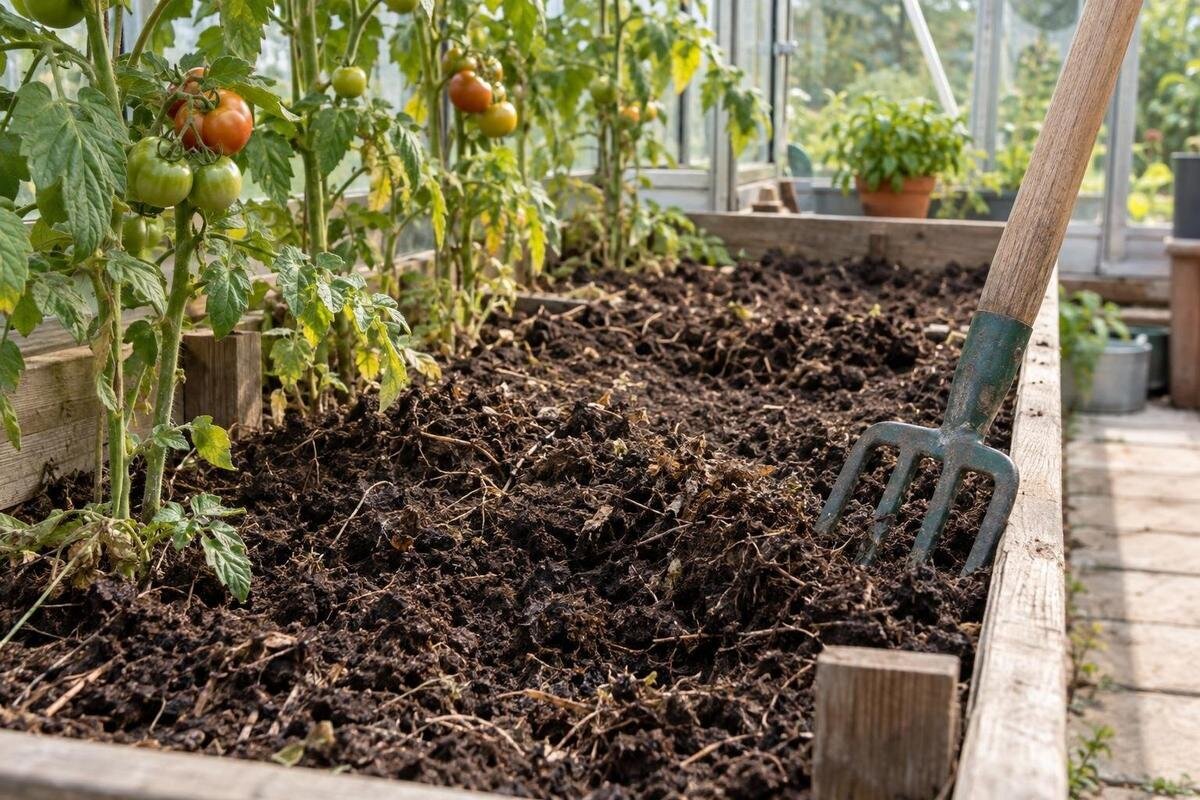
Greenhouse soil guide
Greenhouse beds can produce disappointing crops for several different reasons, and replacing the soil is not a reliable first response. Yellow leaves, stunted growth or wilting may point to nutrient imbalance, unsuitable pH, poor structure, irrigation problems, heat stress, root pests or disease. Several causes can occur together, so a symptom alone cannot tell you what is wrong. Check the growing conditions, roots and soil separately. The aim is to find out whether the problem is local and repairable, or whether all or part of the root zone should be replaced.

Before replacing soil 1
Greenhouse soil does not need replacing every year
There is no fixed replacement interval for greenhouse soil. A bed can remain useful for many seasons if its structure, drainage and nutrient balance continue to suit the crops being grown. A poor harvest is not proof that the soil is spent: temperature, ventilation, light, watering, pests, planting density and crop choice can all limit growth. Replacing soil by calendar may discard sound growing ground while leaving the actual cause of weak plants untouched. The age of a bed is context, not a diagnosis.
Protected growing does change how a bed is used. Crops return to the same limited area, and irrigation and fertiliser inputs are concentrated there; nutrients or soluble salts may build up or become unbalanced over time. The pace depends on crop type, amendments and water source, so age cannot answer the question. Keep a simple record of crop families, planting dates, symptoms, watering and compost or fertiliser additions. Note whether trouble recurs in the same location or follows a recent change in routine. Comparing these records with a soil test is more useful than judging by colour or by the number of seasons since the bed was filled.
Separate soil problems from growing conditions
Look for a pattern before disturbing the bed. If one crop is affected while nearby plants in the same soil look sound, consider crop-specific needs, pests, disease or planting stress. If several crops in one wet corner wilt together, drainage or a leaking irrigation line may be more likely than a bed-wide nutrient shortage. Symptoms across an entire greenhouse can follow a heat event, inadequate airflow or a change in watering. These are clues, not diagnoses. Record which plants are affected, when symptoms began and whether the pattern follows a bed, watering zone, crop row or recent change in routine. Check whether it tracks an edge or exposure as well.
Check a plant's roots and the moisture around them, not just the leaves. Very wet soil, dry pockets, damaged roots and root restriction can all reduce uptake even when nutrients are present. Check how water reaches different parts of the bed and whether drainage outlets are working; one wet patch does not represent the whole greenhouse. Compare an affected patch with a healthy one, but keep them as separate investigation areas instead of mixing soil or test samples. If you're considering a new greenhouse, allow access to inspect roots and irrigation throughout each bed. The Pyramid Greenhouse range is listed from 5.53 m² to 18.9 m²; compare the model dimensions with your proposed bed and path layout.
Before replacing soil 2
Use a soil test to investigate nutrient problems
A soil test is more useful than adding fertiliser in response to leaf colour. Ask for an analysis suited to the crop and growing medium; depending on the question, it may include pH, electrical conductivity (EC) and key available nutrients. An organic matter measure may also be useful when assessing soil condition. Follow the laboratory's sampling directions, as the required method varies by test. Usually, the useful sample represents one bed or management zone, not a mixture from the whole greenhouse. Take subsamples consistently from that zone, use clean tools and avoid a fertiliser spill, compost heap, path or recently amended spot that could distort the result. Keep different beds and affected patches separate, and sample before adding a new product where possible.
Read the report against the needs of the crop and the test method, ideally with the laboratory's interpretation or advice from a horticultural professional. A confirmed shortage may call for a targeted input; it does not automatically justify removing soil. A high result or imbalance can be made worse by adding more compost or fertiliser without a plan. Keep the report with its date, crop, sampling location and recent inputs so future results are comparable. When planning beds in a new structure, mark sampling zones on the floor plan and give each bed a consistent name or number. If you're considering the Limited Edition Aluminium Greenhouses with Storage, include the intended storage space in that plan rather than treating the entire footprint as growing space.
Poor soil structure may be repairable
Structure is the way soil aggregates hold together and leave spaces for air and water. A surface that crusts, a bed that stays waterlogged, water that runs off instead of soaking in, or roots that meet a compacted layer can signal a structure or drainage problem. The same signs may come from overwatering, a blocked outlet, a shallow bed or unsuitable fill, rather than a need to replace every bit of soil. Check where and when water collects, how the bed drains after irrigation and whether plant symptoms follow the wet or compacted area. A surface that looks friable does not prove the deeper root zone drains well.
Foot traffic on growing beds, working wet soil and repeated disturbance can damage structure; address the cause as well as the symptoms. Keep access paths out of planted areas, avoid unnecessary cultivation and use organic amendments only when they suit the soil and crop. Don't make a whole-bed change based only on a surface crust: the condition lower in the root zone matters too. Avoid choosing an amendment simply because the soil feels heavy or sandy; its likely effect depends on the starting soil and crop. A small trial area can show whether a measured change helps before you alter every bed. For a new layout, compare the Bloomcabin Prestige Greenhouse dimensions with bed widths and path positions that let you tend plants without stepping onto the soil.

Before replacing soil 3
Check pH, salts and irrigation water
Soil pH affects how available nutrients are to plants, but an unsuitable pH can resemble a nutrient shortage. The suitable range depends on crop and growing medium; don't apply lime, sulphur or another pH-adjusting product just because leaves are pale. Test first and interpret the result for the crop. If symptoms differ between beds, test each management area separately. A single result from one corner may not represent a greenhouse where beds have different histories, amendments or watering. Changing pH without a reason can create a new imbalance rather than restore the original one.
EC is an indicator of soluble salts, not a diagnosis of their source. Fertiliser, compost and irrigation water can all contribute to the conditions measured, and the test method affects interpretation. If EC is raised, investigate input water and accumulated amendments before trying to flush the bed; extra water is not a sound fix where drainage is poor. If the irrigation source has changed, testing the water may help explain a new pattern. Ask the testing service how to interpret results for the crop and soil. When planning a larger growing space, such as one from the Spacious Greenhouse range, note which beds will share a water supply and which you intend to manage separately. That distinction will help you compare results if a problem later affects several beds.
Investigate suspected soil-borne disease before removal
Repeated wilting, poor growth, discoloured roots, lesions or galls can justify a disease or pest investigation, especially when the same patch is affected over successive plantings. None of these signs proves that a pathogen or pest lives in the soil: waterlogging, salinity, root injury and other stresses can look similar. Note the affected crop and location, inspect roots where practical, and avoid carrying soil, plant debris or dirty tools from a suspect patch into healthy beds while you investigate. A record of when symptoms appeared can help distinguish a recurring root-zone issue from a one-off watering or heat problem. A photograph and location map provide useful context, but they do not confirm a diagnosis.
Ask a plant diagnostic service, laboratory or suitably qualified horticultural adviser how to collect a useful sample. Include roots and growing medium only as requested, and provide details of crops, timing, irrigation and recent inputs. Diagnosis matters because replacing soil alone may not remove a problem if it also persists in infected plant material, containers, tools or water. If a soil-borne issue is confirmed and persists despite appropriate management, targeted removal or a different growing system may be justified; follow advice on handling affected material and choosing a replacement. If you're also considering a structure from the Aluminium Greenhouses range, resolve how affected soil and equipment will be managed before transferring them to the new growing space.
Before replacing soil 4
Restore the bed when the cause is manageable
Restoration is a sensible starting point when tests identify a correctable nutrient shortage, a pH unsuitable for the crop or a localised structure problem, with no evidence of persistent contamination. Match the response to the finding: adjust inputs carefully, keep foot traffic out of beds, and improve water movement only after checking drainage and the source of the problem. If only one bed is affected, treat it as a separate zone rather than changing every bed in the greenhouse. Keep unaffected soil and plants as a useful comparison while you assess the change.
Make changes in stages and note what you changed. Mature, suitable organic matter can improve some soils, but compost is not a universal cure: its nutrient content, salt level and effect on pH vary. Check the source and suitability for the intended crop, and avoid combining several unmeasured amendments. Then observe the next crop and retest where appropriate; a gradual response gives you a better chance of identifying which action helped. If restoration forms part of a new layout using the Wall Greenhouse range, plan how you'll reach each bed to apply amendments and monitor the response. Check the selected model's dimensions against that working layout.
Replace part or all of the soil when evidence supports it
Partial or full replacement becomes more reasonable when a confirmed problem is severe, widespread and not practical to correct in the existing root zone—for example, persistent contamination or a growing medium whose physical properties no longer suit the planned crop. It may also be practical to refresh a limited volume in a raised bed or container when testing and plant history show that correction is unlikely to be worthwhile. The decision should follow diagnosis, not soil colour or the age of the bed. If only one bed or patch is affected, don't assume the rest needs removal; define the boundary of the problem first.
Before bringing in new material, check its composition, pH, salinity, drainage behaviour and suitability for the crops, and ask the supplier what it contains. 'Topsoil', compost and potting mix are not interchangeable labels for every use. Avoid moving material from a suspect patch into healthy beds, and follow expert advice on how to handle it. Measure the bed's length, width and depth to estimate the amount needed, but confirm the replacement is suitable before ordering. If you're replacing beds as part of a redesign with the Limited Edition Aluminium Greenhouses, plan the route for removing old material and bringing in the replacement without crossing unaffected growing areas.

Before replacing soil 5
Choose a growing system that fits the crops and site
Greenhouse crops can grow in existing ground soil, raised beds, containers or a purpose-selected growing medium. Changing the system can make management easier, but it is not a substitute for finding the cause of poor growth. Decide whether crops will share one root zone, how much access is needed, and whether drainage and irrigation can be managed for each area. If you move from in-ground beds to imported media, keep the systems distinct while you learn how water and nutrients behave in each. A small container trial can let you assess a different medium without disturbing a permanent bed, although its watering needs may differ.
A layout drawing should show beds, containers, paths, doors, water points and room to work—not just the greenhouse's total floor area. Plantable area is less than the floor footprint once access and equipment are included. The T-Model Orangery Greenhouse options are listed from 16.52 m² to 30 m²; use the selected model's dimensions to draw your intended growing system to scale. Mark any areas you want to manage separately, whether for different crops, media or watering routines. Decide how you'll label those areas and keep their test results and treatment records distinct before filling the space.
Reduce the chance of the same problem returning
Once a bed is back in use, match the routine to what the investigation found. Avoid walking on growing soil, keep irrigation appropriate to the crop and drainage conditions, and remove diseased plant material promptly using advice for the identified problem. Rotating crop families can help break some repeated pressures, but it does not control every soil-borne pest or disease; some persist beyond one crop. Clean tools between beds when a disease is suspected, and avoid transferring soil on footwear, trays or equipment.
Record what was planted, which areas were affected, test results and all amendments. Keep bed-specific notes as well as greenhouse-wide records, because a problem may return in only one location. Recheck soil when crop performance changes or a previous result gives a reason to monitor a particular measure; use comparable sampling methods so the new result can be interpreted against the old one. Stable crops and test results are a reason to keep managing a bed, not to replace it to meet a schedule. If problems return, revisit the diagnosis with the new evidence rather than repeating the same amendment or beginning with a complete soil change.
Frequently asked questions
How often should greenhouse soil be replaced?
There is no universal interval. Keep a bed in use while its structure, drainage, test results and crop performance remain suitable. Reassess when growth changes, inputs build up or problems recur. Regular soil testing can inform management, but it does not mean the whole bed needs replacing every year.
Can I add compost instead of replacing the soil?
Sometimes, if the compost is mature and suitable for the crop, but it is not a remedy for every underperforming bed. Its nutrient and salt content can vary, and it will not correct a drainage fault or diagnose disease. Use test results and check the compost's suitability rather than adding it in the hope of resolving unexplained symptoms.
Do yellow leaves mean the soil has run out of nutrients?
No. Leaf colour can reflect nutrient availability, pH, waterlogged or dry roots, pests, disease, light or temperature. Check the plant and its growing conditions, then test the relevant bed before adding fertiliser or removing soil. The pattern across plants and beds can help narrow down what to investigate.
Should I replace the whole bed or only an affected patch?
Let the diagnosis and the extent of the problem guide the scale. If a confirmed issue is limited to one area, changing every bed may be unnecessary; keep affected material separate and follow advice on managing it. If the problem is widespread and cannot be corrected in place, a larger replacement may be justified.
Can I reuse greenhouse soil after a diseased crop?
That depends on what caused the disease and whether the problem remains in soil, plant debris, containers, tools or water. A new crop or a layer of fresh material does not guarantee the risk is gone. Identify the problem and follow crop-specific management advice before moving or reusing suspect soil.
Replace greenhouse soil because evidence shows it is the right response, not because a calendar says it is time or a crop looks tired. First distinguish a root-zone problem from irrigation, temperature, pests or crop needs; then use testing and diagnosis to decide whether a targeted repair, a local change or full replacement is proportionate. When the bed still functions well, keeping it and managing it carefully is a sound choice.
