
Buying a Lean-To Greenhouse on Black Friday: Check Your Wall and Space
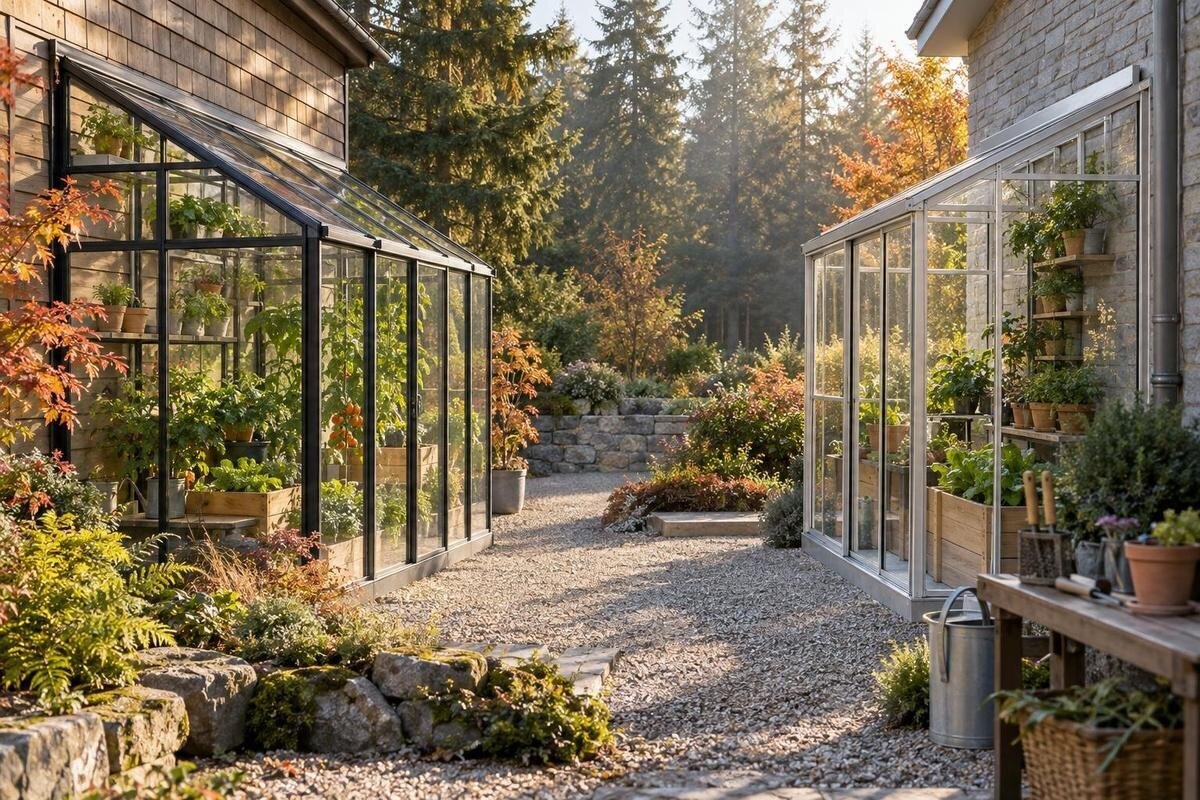
Greenhouse buying guide
If you’re planning to buy a lean-to greenhouse on Black Friday, decide where it could go before comparing prices. The wall, usable ground area and room needed to reach the door all affect whether a model suits your garden. Measure the space, check the wall and note obstructions, then assess each exact product listing for dimensions, installation requirements, inclusions and delivery terms. An advertised event price is only worth comparing once you know what the site needs and what the order would include.

Assess the wall-side space first
If you’re planning to buy a lean-to greenhouse on Black Friday, decide where it could go before comparing prices. The wall, usable ground area and room needed to reach the door all affect whether a model suits your garden. Walk the proposed position with a tape measure and note the boundaries, nearby openings, overhead edges and anything that cannot be moved. Sketch a provisional footprint from a model’s published dimensions, or mark it out with removable markers, rather than judging by a product photo. Include paths, gates and nearby structures as they are now.
Write down why the position works and what might rule it out: the wall’s condition, changes in sunlight during the day, likely water run-off and access from the house. Record the measurements with the date and make a simple sketch showing fixed features; this is more reliable than trying to remember the site while comparing listings later. These observations help you ask focused questions; they do not replace the manufacturer’s site requirements. A wall-side position may make sense for your garden, but the structure still needs an appropriate installation arrangement and a practical working area. If the wall, surface or drainage raises a structural or installation question, pause and seek suitable professional advice rather than guessing because an event is under way.
Confirm the greenhouse is a lean-to
A lean-to greenhouse is designed to sit alongside a wall, but its support and installation arrangements can vary by model. Check that the product page describes the greenhouse as a lean-to and explains any relevant wall, base and clearance requirements. Look for the exact model’s instructions or installation information, not just a category label or a photograph of a greenhouse beside a building. If the page leaves the intended setup unclear, ask the retailer for documentation for that model before deciding whether it suits your site.
A product name does not explain how a greenhouse is meant to be installed. For example, the name Bloomcabin Orangerie does not by itself tell you whether a model is designed for a wall-side position. Check the product description and instructions rather than inferring its type from its appearance or name. Compare the stated layout with the position you marked out, including where the structure is intended to sit relative to a wall and where access is shown. Keep a note of confirmed details and unanswered questions for each model you compare. That makes it easier to distinguish a lean-to from a greenhouse with a different layout, even when seasonal listings and promotional messages make several options look similar.
Check the wall and its condition
Inspect the full section of wall where the greenhouse would sit. Note its material and condition, along with any uneven areas, repairs or finishes that might matter to the installation. The important question is not simply whether the wall looks solid: it is whether the instructions for the exact greenhouse allow installation in those conditions. Don’t assume that the wall is suitable to support or anchor a structure. If you cannot confirm that the wall meets the stated requirements, ask the retailer for clarification or have a qualified professional assess the site before ordering.
Look along the proposed wall-side position for features that could affect placement or future access, including windows, sills, gutters, downpipes, lights, taps, cables and meter boxes. Photograph the area and note where each feature sits, including the height of features that may conflict with the proposed location. A title such as T Model orangery greenhouse for wall base still does not answer what your existing wall or base requires. Check the documentation for the exact model, including any stated connection or clearance conditions. Don’t assume a greenhouse will accommodate wall irregularities or fit around an obstruction unless the product information confirms it. Where features cannot be moved, treat their location as a fixed boundary in the plan.
Mark openings, services and exposure
Check whether a door, window, gate or service point needs to remain accessible after the greenhouse is in place. Mark the space used by anything that opens, and include room for you to reach taps, meters and other features for ordinary access or maintenance. Consider both the route to the feature and the standing room needed to use it; a narrow gap may technically remain open but still be impractical. Don’t plan to cover or alter a service item just to make the greenhouse fit. If an opening or service conflicts with the proposed position, adjust the site plan or ask a suitable professional what options are appropriate before you order.
Consider how the wall and nearby structures affect sun, shade and water at the proposed position. A tall wall may cast shade at different times of day, while eaves and gutters can influence where rainwater runs. Note the conditions on your own site rather than assuming one orientation suits every garden, then compare them with the model’s stated requirements. A listing titled aluminium lean-to greenhouse identifies a lean-to by name, but does not alone establish its clearances or suitability for your wall and local conditions. Check the exact product details before deciding.

Measure the full footprint
Measure the available width along the wall and the depth out from it, then compare these figures with the dimensions published for the exact model. Check which measurements describe the greenhouse itself and which, if any, describe a base or another part. Don’t treat a product photo as a scale drawing. Even a title such as Prestige greenhouse with metal base cannot tell you which dimensions apply to the base or the overall structure. If the product information does not make that clear, ask before using the figure to plan your site.
For a narrow or irregular space, take measurements at several points and mark the proposed outline on the ground. Measure from a consistent wall line rather than from a projecting fitting, and record where the available depth changes. Allow for any projections or other dimensions specified in the product information, and check where the footprint meets paving, garden beds or existing paths. The outside footprint is not necessarily the same as the usable growing area inside: the frame, access route and planned equipment can affect how you use the space. Keep your measurements together and compare them against the same model and variant throughout your search.
Allow room for doors and everyday access
A greenhouse can fit on the ground and still be awkward to use if the entrance is blocked or there is no practical approach. Check the product information for the door location and how it opens, then mark the space needed to reach it. Don’t infer a clearance from a number in a model name: Classic Plus 385 is not, by its name alone, a measurement of the room required to enter. Use dimensions and opening details stated for the exact model, and check them against paths, gates and other doors nearby.
Think through the tasks you expect to do inside, such as carrying trays, watering or reaching plants for routine care. Also consider whether you will approach the door with a wheelbarrow, storage container or other item, as this may affect the route you need to keep clear. The space you need will depend on how you plan to use the greenhouse and what you intend to keep around it. Include access to the wall and any equipment or services that must remain reachable. There is no universal clearance that suits every layout, so combine the model’s stated requirements with your own measurements. If your planned route relies on moving an existing feature, resolve that before choosing the greenhouse.
Compare the exact model specifications
Once the site looks workable, compare the product details for the exact model and variant. Check the published dimensions, door arrangement, ventilation details, base information and any other features that affect your wall-side layout. Confirm that the information applies to the option you intend to order, rather than relying on a general category page or an image that may show a different configuration. A product name such as aluminium limited edition greenhouse is not a specification; the words in a title do not confirm dimensions, included options, current availability or offer terms.
Keep comparisons focused on information that is stated for each model. Note any details that could change the footprint, access or site preparation, and ask the retailer about gaps or inconsistencies before checkout. Set out the information in the same order for every option so that a missing detail is visible rather than silently treated as a match. Don’t assume that two greenhouses with similar names, photographs or apparent layouts have the same dimensions or installation requirements. If a product page refers to an instruction manual or additional documentation, check that it is for the selected model. A clear comparison helps you avoid treating a model label or promotional description as a substitute for the information needed to plan your garden.
Check the base and ground requirements
Find out what the exact model requires beneath it and whether a base is included, optional or not specified. Check the instructions for any stated surface or preparation requirements, rather than assuming existing paving or garden soil will be suitable. Even a title such as pyramid greenhouse for a masonry base is only a product name; it does not show that its base approach applies to a lean-to greenhouse or your site. Confirm the requirements for the model you are considering, and don’t copy another greenhouse’s setup as a shortcut.
Look at the proposed ground as well as the wall. Note any uneven areas, drainage concerns or obstacles that could affect preparation, and check what the product information says about them. Consider whether the work area can be reached without damaging planted beds or blocking a route you use regularly. If the site needs work or you are unsure whether it meets the stated requirements, speak with a qualified installer or builder before ordering. Also confirm which components are included and whether any separate base or preparation costs belong in your budget. These details can change the total project cost, so they are worth resolving alongside the greenhouse price.

Compare the Black Friday price and terms
Compare offers only after you have identified the exact product and variant. Record the price shown, what the order includes, any required extras and the delivery cost, then use the final checkout total to compare like with like. A title such as aluminium classic greenhouse identifies a listing, but its name alone does not establish that it matches another model in size, features or inclusions. Check that any price or promotion you are considering applies to the particular greenhouse and option you intend to buy.
Read the offer terms shown for the product rather than assuming that a site-wide message applies to every model. Check for any stated exclusions, conditions or limits, and don’t infer a discount, deadline or stock position from the Black Friday label alone. Save or note the product and option selected when comparing totals, because changing a variant or included item can make a comparison unreliable. Add likely project costs, such as a separately listed base, site preparation, accessories or professional installation, when you assess the total. If the advertised price does not clearly match the product details or you cannot confirm what is included, get clarification before committing. There is no advantage in rushing a purchase that may not fit the site.
Confirm delivery and ordering details
Before placing an order, check the delivery information for your address and the access available at the property. Confirm what the retailer says about delivery, receiving the order and any steps you need to take on arrival; don’t assume what is included from another product listing. Consider where the greenhouse components could be kept and whether the route from the delivery point to the garden is clear. If access is restricted or the delivery details are unclear, ask the retailer before checkout so the site plan and order arrangements match.
Make one final comparison against your measurements and notes: the wall and proposed position, the model’s footprint, access around doors and services, the base requirements, confirmed inclusions and final cost. Read the selected option in the order summary carefully, especially if you have compared several similar listings during the event. Check that the product page and order summary refer to the same model and variant. If any key point is still unanswered, wait until you have the relevant information rather than relying on a photograph or promotional wording. Once the site and order details agree, you can compare the available options with a clearer view of whether the greenhouse suits the space you actually have.
Frequently asked questions
Can a lean-to greenhouse go against any wall?
No. Suitability depends on the exact model’s installation requirements and the wall’s condition, material and surrounding features. Check the product instructions and get advice from a qualified professional if you are unsure the wall or site is suitable.
How much clearance should I leave in front?
There is no single clearance that works for every greenhouse. Check the model’s dimensions and how its doors and vents open, then allow enough room for your planned access and garden tasks. Include paths and gates in your measurements.
Does every lean-to greenhouse attach to the wall?
Installation arrangements vary, so don’t assume the wall must support or anchor the structure. Check the instructions for the exact model to see whether a wall connection, particular surface or other site condition is specified.
How do I compare a Black Friday greenhouse offer?
Compare the exact model and variant, what is included, any required extras, delivery costs and the final checkout total. Check the offer terms for that product rather than assuming a banner or advertised price applies to every greenhouse.
Is a base included with the greenhouse?
That depends on the exact product and variant. Read the product details and ordering information to confirm whether a base is included, optional or not specified. Don’t infer the answer from another model’s name or listing.
A useful Black Friday comparison starts with the wall and the space around it, not the promotional wording. Measure the proposed footprint, allow for access, check the exact model’s installation and base requirements, then compare what the order includes and costs. When those details are clear, you can judge whether a lean-to greenhouse is a practical fit for your garden as well as whether its price suits your budget.
