
Buy a greenhouse for seed raising: benches, light and temperature control
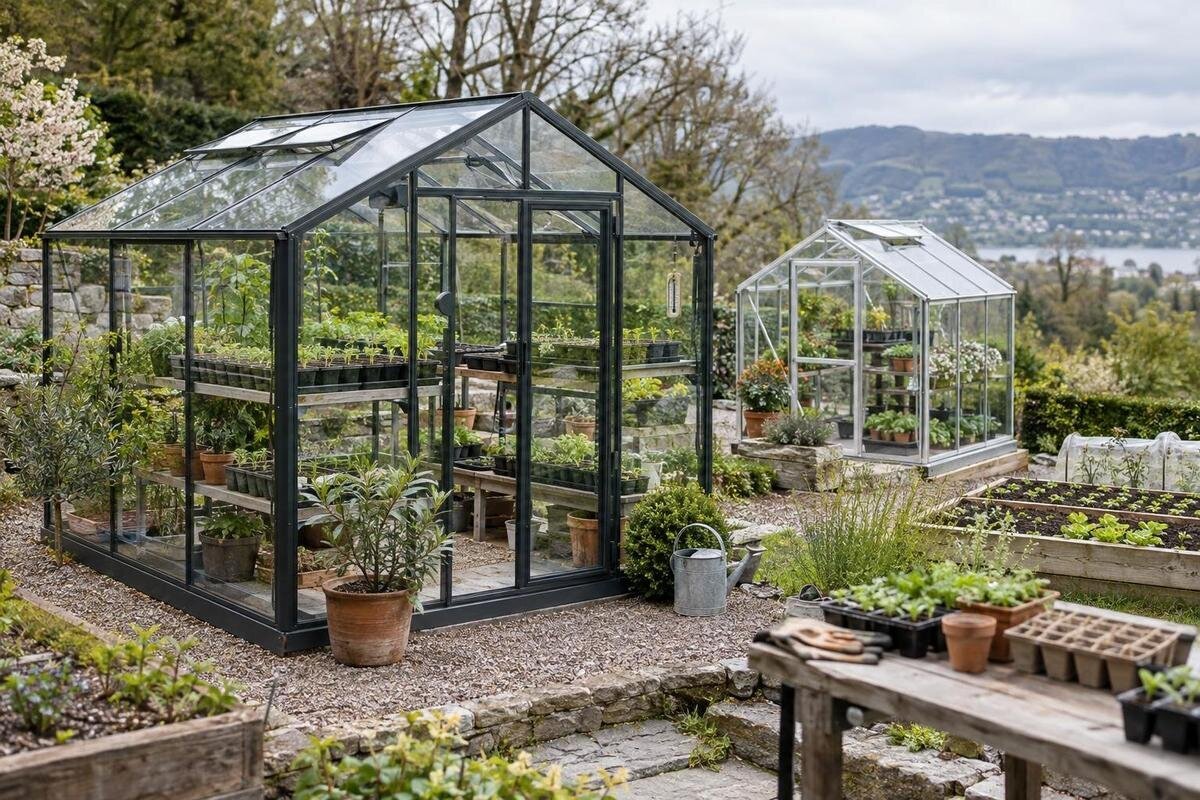
Greenhouse buying guide
Buying a greenhouse for seed raising is mainly about matching usable bench space, natural light and manageable temperature to your sowing routine. The outside footprint alone cannot tell you how many trays will fit or whether a site is bright enough. Count trays at peak overlap, sketch benches and access, then observe light and temperature where the structure would sit. A greenhouse offers shelter, but it is not automatically climate-controlled: seedlings still need conditions suited to their crop and attention to changing weather. Comparing these points before ordering helps you choose a structure that fits both the garden and the work you plan to do, rather than relying on a model name or product photo.

Estimate tray space before comparing greenhouse footprints
Count the trays you expect to raise at the busiest point, not only the number you sow on an average weekend. Include seed trays, cell trays and pots that will be moved on after germination: staggered sowings can overlap, and different stages may occupy the greenhouse together. Note container sizes, too. Allow room for labels, sorting and handling, so you can inspect a batch or lift a tray without shifting everything beside it. This peak-use estimate is a useful starting point for comparing growing area, and is more informative than choosing a structure by its outside footprint alone.
Draw the interior to scale using published measurements. Mark the entrance, benches, working aisle and fixed obstructions, then place tray outlines on the bench areas. Check whether you can reach the back row without moving other trays and whether containers fit without crowding. The Bloomcabin Prestige greenhouse with metal base can go on the same comparison sheet, but its title does not state how much usable bench area it offers. Check the published internal dimensions and listed inclusions; external length and width are not the same as clear planting surface. Include a small holding area for trays being watered, potted on or moved outdoors. This prevents a plan that works only when every tray is permanently in its final position.
Plan benches and the aisle together
Benches use floor space, so sketch the working route at the same time as the growing surface. A clear path from the entrance makes it easier to carry a tray in, reach plants and take equipment out again. Compare a single bench with other layouts that might suit the interior, but do not assume that every greenhouse shape can accommodate benches on both sides. On your plan, leave enough room to turn with the trays you use and to reach the plants at the back without leaning over everything in front.
Test the layout with your actual tray dimensions rather than a rough rectangle labelled ‘bench’. Include the edge of the bench, space for your hands and the way you will move along the aisle while watering or checking labels. When reviewing the Bloomcabin Orangerie, use the same test against the current listing’s measurements; the model name does not tell you the width of the usable bench area or aisle. If those details are not clear, ask the seller before treating the plan as workable. Think about where a watering can, labels and potting supplies will sit while you work. Keeping these items off the main growing surface preserves space for trays.
Choose bench height and shelf levels for seedling work
Think through the jobs you will do at the benches: sowing, labelling, checking germination, watering and moving young plants into larger pots. A bench that is convenient for one task may not feel as practical for another, so consider the height and depth against the containers you use and how you prefer to work. Also consider whether surfaces can be wiped down between batches. A tidy, accessible work area makes it easier to keep trays identifiable and to manage successive sowings without turning the whole greenhouse into a storage space.
Shelves can add growing surface, but only count levels that you can reach and that will receive suitable light. An upper shelf may shade trays below it, while deeper shelves can make the back row harder to access. Check whether benches or staging are included, sold separately or left for you to source, and confirm dimensions and any stated load limits. The Classic Plus 385 is another listing to assess on those points; do not infer a bench layout or included accessories from its model name. Consider how you will remove a tray from each level without brushing foliage or dislodging labels. A shelf that is awkward to use may add nominal capacity but little practical growing space.
Check daylight at the proposed greenhouse site
Observe the intended position at several times of day, noting when nearby buildings, fences and trees cast shade. A spot that looks bright during one visit may receive less light at another time, and the pattern can change across the months when you plan to raise seedlings. If you can, record the sun and shade over more than one day and consider whether deciduous trees will alter the pattern. This gives you a more realistic view of the daylight available than choosing a location from a quick look or a photograph.
Seedlings need light suited to the crop and stage of growth; insufficient light can leave young plants stretched. A greenhouse does not create daylight, and the covering affects how much light reaches the trays. Consider the whole growing area: a bright patch near the entrance is not evidence that every bench position receives similar light. Keep your planned shelf levels in mind as well, because a layout that shades lower trays may make the usable space smaller than the floor plan suggests. Note where the brightest positions fall, so crops with different light needs can be arranged deliberately. Recheck the site as the season changes instead of assuming one observation represents the whole sowing period.

Compare glazing and shade options
Check what glazing is specified for each greenhouse and whether the product information describes its light transmission. If figures or descriptions are provided, make sure they refer to the glazing included rather than an optional upgrade. A clear-looking panel or a polished product image is not enough to judge the light reaching seedlings. When reviewing the pyramid greenhouse for a masonry base, use the product page’s own specifications to check the glazing and inclusions; the model name alone does not answer those questions.
If the site receives strong direct sun, consider how you would respond to it rather than assuming permanent shade will suit every batch. Shade cloth can reduce direct sun, but it also reduces light reaching the plants. Check whether a proposed shade solution is compatible with the greenhouse and can be used without obstructing access or ventilation. Establish whether it is included or an additional purchase, and consider how you will adjust the setup as the sun, weather and needs of your seedlings change. A removable or adjustable approach may be easier to review as crops develop. Keep enough unshaded area for batches that need the available daylight rather than treating every bench identically.
Check ventilation for practical temperature control
A greenhouse can warm up in sunlight, so check the ventilation details before assuming the structure will provide a steady environment. Look for information about windows, vents and the entrance, including where openings are placed and how they are operated. More than one opening may help air move through a space, but the layout varies by greenhouse. Do not assume that an opening shown in a photograph is included, or that a particular arrangement will suit your growing area without checking the listing.
Consider who will adjust the openings and how often you can check the greenhouse during changing weather. If you are comparing the aluminium classic greenhouse, use its product page to verify the actual openings and any stated ventilation accessories rather than relying on the general expectations you may have of a greenhouse. Manual and controlled options, where specified, need to be understood as part of your routine. Good temperature management involves both the features available and your ability to respond to conditions. Also consider whether vents and doors remain easy to reach once benches and trays are in place. An opening that is difficult to operate is less likely to be used when conditions change quickly.
Monitor conditions around the seed trays
A thermometer near the growing area can give you a better picture of what seedlings experience than a reading from outside the greenhouse or near the roof. Position it close to the trays, shaded from direct sun and not touching the glazing. Conditions can vary within the structure, and a single check in the middle of the day will not show how they change over time. A minimum–maximum thermometer can help you see the range between checks, but the important point is to measure where you are actually raising the plants.
Keep a brief record of readings and what you did in response, such as opening or closing vents or using shade. Compare the results with the sowing guidance for each crop; suitable conditions for germination may differ from those needed once seedlings have emerged. If trays are on several levels, check whether the readings vary between them. This helps you decide whether to change the layout, adjust ventilation or raise fewer batches at once, instead of relying on a generic temperature target. Record the time as well as the reading, since morning, midday and overnight conditions can differ. A simple record can reveal whether a recurring problem affects one area or the whole greenhouse.
Assess a wall-adjacent position carefully
A wall or other nearby structure can change the shade around a greenhouse and affect how easily you reach its sides. Check the light at the proposed position rather than assuming a wall will improve conditions or keep temperatures stable. Consider whether the site leaves room to open the entrance, tend plants, clean surfaces and access any vents. Also check whether surrounding structures could restrict airflow or make one side difficult to reach for routine work.
If a wall-adjacent option is on your shortlist, review the aluminium lean-to greenhouse listing against the space you have. Confirm the product’s dimensions, base and fixing requirements from its own information, and ask the supplier or a qualified installer if anything about the support surface is unclear. The name does not establish how a particular model is attached or how much room you will have to work around it. Measure the position, including access, before deciding it fits. Check whether downpipes, taps, outdoor furniture or service equipment occupy the same wall. These can limit both the footprint and the access needed for everyday seedling care.

Confirm the base, ground and delivery access
Check what surface and support the greenhouse requires, and whether a base or related fittings are included. Requirements differ between models, so follow the information for the particular product rather than adapting a plan from another structure. Consider whether the chosen area is level and how water drains around it; avoid a position where the surrounding ground regularly collects water. If the site or support requirements are uncertain, ask the supplier or a qualified installer to assess them rather than relying on guesswork.
The T-model orangery greenhouse for a wall base is one product page whose stated base requirements should be checked directly, not inferred from the title. Also measure the route from the delivery point to the chosen location, including gates, turns and obstacles, and check the listing for assembly information. These details affect whether the structure can be brought into place and put together as planned. Keep base, access and growing-area measurements on the same site plan so they are considered together. Consider where packaging and components can be set down temporarily without blocking the route or damaging garden beds. Planning this early avoids discovering that a suitable growing position is difficult to reach.
Compare product details before ordering
Use the same checklist for each greenhouse you are considering: internal and external dimensions, entrance measurements, glazing details, ventilation, base requirements and stated inclusions. Record whether benches, shelves, shade equipment or other fittings are part of the listed package or need to be sourced separately. Product names and photographs help identify a model, but they are not a substitute for the information you need to judge its suitability for trays and access. If an important measurement or inclusion is missing, seek clarification before ordering.
The aluminium limited edition greenhouse can be assessed against that checklist using the details stated on its product page; its name alone does not establish its dimensions, materials, included fittings or availability. Before placing an order, review the listed price and what it covers, along with the stated delivery and assembly arrangements. Check that any benches or accessories you plan to use are compatible and accounted for. A side-by-side comparison helps separate the features you need from attractive names or images that do not answer practical questions. Date your notes when comparing listings, particularly if you are making the decision over several weeks. This makes it easier to revisit any detail that changes or still needs clarification.
Frequently asked questions
How much bench space do I need for seed trays?
Base it on the busiest period, including trays at different growing stages that will be in the greenhouse at the same time. Add room to reach, label and move trays, then compare that plan with published internal measurements rather than the outside footprint.
Where should I place a greenhouse for seed raising?
Choose a spot after observing its light and shade at different times of day during the months you expect to sow. Also check that you can reach the entrance and work around the structure. A nearby wall or tree can affect light and access, so avoid relying on assumptions about the site.
Will a greenhouse keep seedlings at the right temperature?
Not by itself. Conditions can change through the day, and a greenhouse can warm up in sunlight. Check the available ventilation, monitor conditions near the trays and follow the growing guidance for the particular seeds you are raising.
Do I need shade for a seed-raising greenhouse?
That depends on the light at your site, the glazing and the crops. Assess the location first, then check whether any shade option is compatible with the greenhouse and whether it is included or sold separately. Shade also reduces the light reaching trays.
Are greenhouse benches included?
Do not assume so from a product name or photograph. Check the listing’s inclusions for benches, shelves and any fittings, and confirm their dimensions and stated load limits if you plan to use them.
A suitable seed-raising greenhouse is one whose usable bench area fits your busiest sowing period, whose position receives appropriate light and whose ventilation you can manage. Compare product pages using verified dimensions, glazing, openings, base requirements and inclusions, then consider how you will monitor conditions once seedlings are inside. A clear plan for trays, access and temperature makes the buying decision more grounded in your growing routine than a choice based on footprint or appearance alone.
