
Buying a Greenhouse for a Coastal Garden: Materials and Maintenance
Greenhouse buying guide
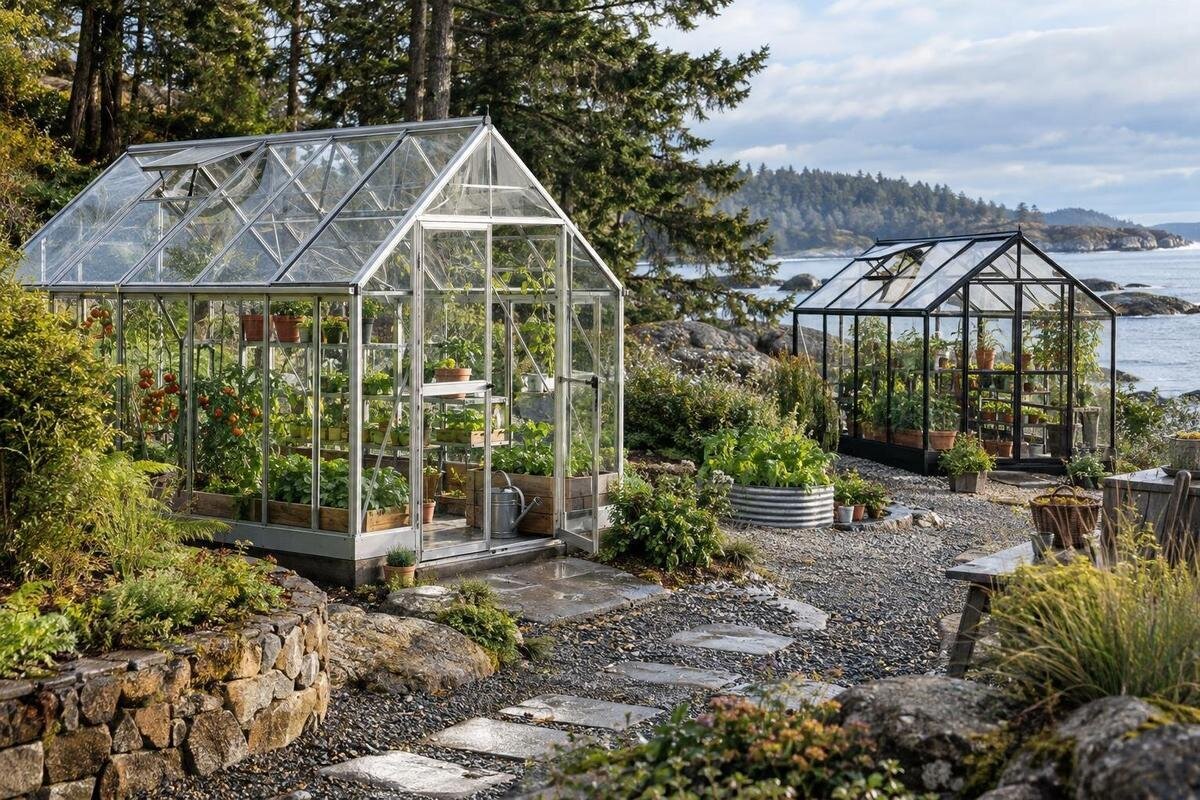
Buying a greenhouse for a coastal garden calls for more than choosing a frame material that sounds durable. Salt carried in sea spray and humid air can reach different parts of the garden, while sun, wind-driven rain and damp pockets affect how finishes, joints and seals need attention. The frame, fasteners, cladding, base and assembly details all contribute to upkeep; no single material label guarantees that a complete structure suits a particular site. Before ordering, compare documented specifications and care instructions with the exposure where you intend to put it, then check that the layout supports the plants and working space you need.
Map salt exposure around the garden
Salt exposure depends on more than distance from the shoreline. Sea spray travels with wind, and the amount reaching a garden varies with local shelter, gaps between buildings or vegetation, and repeated wetting and drying. An exposed corner can receive much more spray than a sheltered area on the same property. A hedge or wall may reduce direct spray yet create shade or hold damp air nearby. Conditions can also change with weather, so treat “coastal” as a prompt to examine the site rather than one standard exposure level. Compare more than one possible position instead of assuming the most sheltered-looking spot will be the driest.
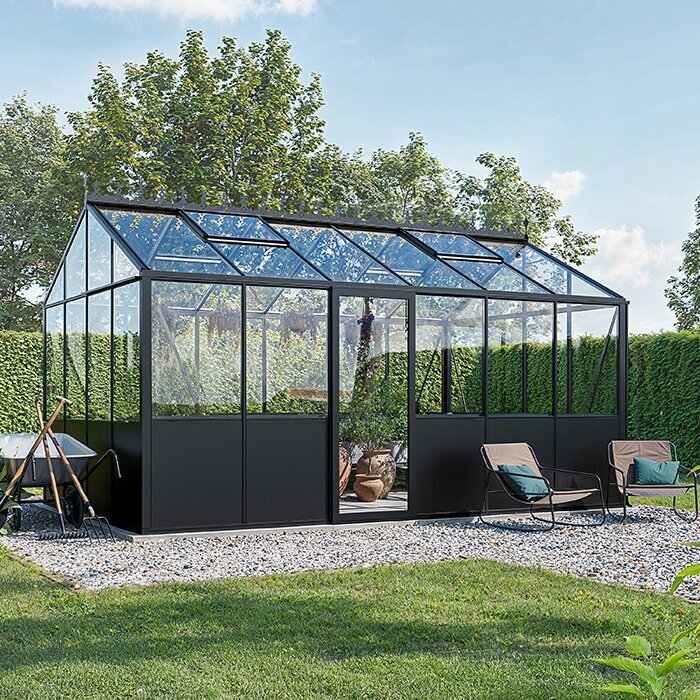
Walk the proposed site and inspect gates, taps, hinges, outdoor furniture and existing painted metal. Salt film, rust staining or peeling finishes offer clues to how materials age there, but they do not predict how a greenhouse will perform. Note where wind-driven spray arrives, where rainwater collects and whether you can reach all sides for cleaning. A listing such as the Prestige greenhouse with a metal base can go on your shortlist, but compare its documented frame and base details with those conditions instead of treating the title as a coastal rating.
Compare frame materials and their finishes
Compare the whole frame, not just its headline material. Aluminium, coated steel and timber each have different inspection needs, and performance depends on the grade, treatment, finish, joints and exposure. Steel that loses protection at scratches or cut edges can corrode. Aluminium is not maintenance-free: its finish can be damaged, and contact between incompatible metals in a damp joint can cause problems. Timber avoids metal corrosion but needs its own moisture protection and attention to coatings and joints. These are tendencies, not a ranking; two assemblies made from the same broad material can have quite different details.
Ask for the exact frame material and surface treatment, including how corners, drilled holes and cut ends are protected, and which cleaning or touch-up products are permitted. Find out whether fasteners and brackets use compatible materials and whether replacement pieces are available. For timber, ask what treatment is supplied and how often the maker expects the finish to be renewed; do not assume every timber frame needs the same schedule. A product name such as Aluminium Classic greenhouse is only an identifier: the listing or supporting documentation must establish the actual construction and coastal-care advice.
Assess glazing, panels and seals separately
Cladding deserves a separate comparison because the panels and the frame face different maintenance issues. Glass does not rust, but its retaining channels, clips and seals can corrode or deteriorate. Deposits on any glazing can reduce the light reaching plants until they are cleaned. Plastic panels will not rust, but their long-term condition depends on the specific material, UV guidance, surface and compatibility with cleaning products. Scratches, clouding or damaged edges can affect both appearance and upkeep. Do not infer the glazing type or its lifespan from a greenhouse’s general name or photograph.
Ask what the panels are made from, whether the maker identifies an exposed side or particular handling limits, how the panels are held in the frame, and whether matching replacements and seals are available. Request the recommended cleaning method: water and a soft cloth may suit many surfaces, but the manufacturer’s instructions should govern, particularly around coatings and gaskets. Include the time and access needed to clean roof panels, not just the parts reachable from the path. When reviewing Classic Plus 385, compare its documented glazing and replacement details with other options; the model name alone answers neither question.
Check fixings and joints for maintenance access
Salt often settles where a quick visual check misses it: screw heads, overlapping rails, brackets, door hinges, channels and the underside of a frame. These small connections can determine whether routine cleaning is simple or awkward. Moisture trapped around a joint can prolong exposure, and when dissimilar metals touch in a wet environment, corrosion can be accelerated. Ask what each fastener and connector is made of, whether it is coated, and how the design avoids water or debris sitting in the joint. A statement about the main frame alone says little about these components.
Before buying, find out which fasteners are exposed, whether replacement parts are compatible and how they can be inspected or replaced without damaging nearby panels. Maintenance should include looking for rust-coloured streaks, coating blisters, loose screws and gaps in seals. Follow the stated repair method rather than adding unapproved paint or lubricant. A listing such as Bloomcabin Orangerie is worth assessing for a parts and care specification; do not assume the product name tells you what its hinges, brackets or screws are made from.

Confirm the base and site requirements
The base is part of the coastal-material decision, not a separate afterthought. Some structures are supplied with a base, while others are described for installation on a prepared support; confirm the arrangement for the model you choose. Compare the greenhouse-to-base connection, the base material and the way rain and wash water drain around it. Metal near the ground can collect grit and moisture; timber in persistently damp contact may decay; masonry can retain moisture or deposits. These are reasons to check the detail and keep the area clean, not proof that one base type is always right.
Look for written guidance on the approved support, fixing points, surface level and drainage, and ask who is responsible for preparing and anchoring it. A product labelled pyramid greenhouse for a masonry base still needs a full check of the base interface, fixings and site requirements; the title cannot establish that an existing patio or wall is suitable. Coastal gardens can be exposed to strong winds, so do not assume that a greenhouse or garden base is suited to your specific location. Have a qualified installer assess the site if the manufacturer’s instructions do not resolve the question, and avoid improvising an anchor arrangement.
Plan a realistic cleaning and inspection routine
Think honestly about the maintenance you will do, not only the material you prefer. A greenhouse in a spot where salt deposits build quickly may need more frequent attention than one in a sheltered position, but a fixed cleaning interval cannot be assumed for every product or garden. Ask the manufacturer for a care schedule and set reminders around that advice and visible salt build-up. A clear route to the sides, roof edges and door hardware makes routine checks easier. If a panel or fastener is hard to reach, factor in safe access or help rather than letting maintenance slip.
Useful checks include deposits on glazing, blocked drainage channels, damaged finishes, signs of corrosion, loose hardware, cracked panels and shifted seals. Clean only as directed, and use approved touch-up treatments, lubricants and replacement components; harsh chemicals or abrasive tools can harm some finishes and panels. Keep a simple record of issues and repairs so you can notice whether a problem is recurring. For Aluminium Limited Edition greenhouse, as for any shortlisted model, make the written care instructions part of the comparison instead of assuming the word “aluminium” means no upkeep.
Match the layout to your plants and access
Material choice is worthwhile only if the greenhouse also fits the way you grow. Compare usable floor area with the space taken by benches, pots, beds and a clear route through the structure; an external footprint does not tell you how much room remains inside. Check door width and opening clearance against your equipment, and consider plant height, shelving and where you will work without brushing against panels. Use your growing plans to decide what space is essential, rather than paying for an arrangement that leaves awkward corners or restricts access.
Coastal exposure can influence placement too: a sheltered site may be easier to maintain, but it still needs the light, drainage and access your plants and routine require. If a listing such as the T-model orangery greenhouse for wall base is on your shortlist, verify its actual dimensions, base arrangement, access and clearances with the manufacturer or installer. A nearby wall may provide shelter from one direction, but it does not automatically protect every panel or joint from salt or wind. Check where doors and maintenance access fall before committing to the position.
Ask for coastal-use details in writing
Ask for a product specification that names the material of each important component, not just a single broad phrase. For a metal frame, look for the stated alloy or steel type where relevant, surface finish or coating, and treatment of cut edges; for timber, ask about treatment and exterior finish; for cladding, ask for the panel material and its UV or cleaning guidance. Then check the fasteners, hinges, seals, base parts and connectors. A coastal-suitability claim is useful only if the seller explains what it applies to and any stated limits; a claim about the frame should not be taken to cover every fitting.
Request the current assembly and maintenance documents before ordering, including instructions for cleaning, repairs and replacement components. Compare stated dimensions, what is included, the required support and any restrictions for exposed sites; ask for unclear answers in writing. Review the warranty terms and exclusions rather than assuming salt-related wear is covered, and ask how to obtain matching panels or hardware later. If the aluminium lean-to greenhouse is among the listings you compare, its name alone does not establish frame details or wall-fixing requirements, so use the same documentation checklist as for every other model.

Check delivery and assembly before ordering
Ordering practicalities can affect whether a greenhouse remains easy to care for. Measure the route from the delivery point to the intended site, including narrow gates, steps and tight turns, and confirm how components are packaged and what assistance unloading requires. Ask which base parts, glazing, fixings and tools are included, and whether assembly is supplied or arranged separately; do not infer this from photographs. Plan where components can be stored dry and protected if assembly cannot happen straight away. Clarify how damaged or missing pieces are reported and how replacements are handled before placing the order.
Before assembly, read the model-specific instructions and confirm who is responsible for site preparation and anchoring. A coastal garden’s exposure can place demands on a structure that a sheltered site does not; the product documentation needs to address the intended location, and installation must follow its requirements. If the site is unusually exposed, uneven or close to a boundary or retaining feature, ask a qualified installer what support is appropriate rather than making structural calculations yourself. Avoid adapting parts or substituting fasteners unless the manufacturer confirms the change is compatible.
Compare ownership costs and make a shortlist
Compare whole-life effort alongside the purchase price. Include the base and site preparation, any installation help, routine cleaning, approved coatings or lubricants, and the possibility of replacing panels, seals or fixings over time. You cannot calculate a meaningful upkeep cost from a material label alone: it depends on the product’s components, exposure, access and care instructions. Ask for prices of commonly replaced parts where available, and consider the time needed to clean the greenhouse. A design that is easy to inspect may be more practical for a busy garden than a supposedly low-maintenance option with inaccessible joints.
To make a fair shortlist, compare each candidate against three questions: does its documentation cover the materials and exposure at your site; can you realistically complete the stated maintenance; and does its usable layout suit the plants and tasks you have in mind? Then confirm delivery, support and replacement-part arrangements. If one point remains unclear—especially coastal exposure, finish or anchoring—ask for a specific written answer or favour a model with clearer documentation. This keeps the decision grounded in your garden instead of a broad claim that one material is best.
Frequently asked questions
Is aluminium automatically the best frame material for a coastal greenhouse?
No. Aluminium can be a useful option, but the material name alone does not tell you about the finish, joints, fasteners or care requirements. Compare the complete frame specification and ask how it is expected to cope with your site’s exposure. A well-detailed assembly and realistic maintenance plan matter more than a broad material label.
How often should I clean a greenhouse near the sea?
There is no interval that suits every garden or greenhouse. Follow the manufacturer’s care instructions, and pay attention to salt deposits and the condition of joints, panels and finishes. A more exposed location may need attention sooner than a sheltered one. Make sure you can reach the parts that need cleaning safely and easily.
Are glass panels or plastic panels better in coastal conditions?
Neither is automatically better. Glass does not rust, but its retaining channels, hardware and seals still need care. Plastic panels will not rust, but their material, UV guidance, cleaning requirements and replacement options vary. Compare the documented details for the whole glazing system, including how panels are held in place.
Can I install any greenhouse close to the coast?
Do not assume that every greenhouse is suitable for an exposed coastal site. Ask whether the product documentation addresses the conditions where you plan to install it, and confirm the support and anchoring requirements. If the site is particularly exposed or the instructions leave questions unresolved, ask a qualified installer to assess it.
What should I ask before ordering a coastal greenhouse?
Ask for details of the frame, finish, cladding, fasteners, seals and base, as well as the recommended maintenance and replacement parts. Confirm the dimensions, what is included, site and anchoring requirements, delivery access, assembly arrangements and warranty exclusions. Get specific answers about coastal exposure in writing rather than relying on the product name.
A sound coastal purchase is a greenhouse whose construction and care requirements are clear, and whose layout works for your plants. Compare the frame, cladding, fixings and base as one assembly; judge whether its maintenance is manageable and confirm installation details before ordering. A realistic view of your garden’s salt, dampness, wind and access is a better basis for choosing than any single material label.
