
Buying a Greenhouse for a Windy Garden: Site and Specifications
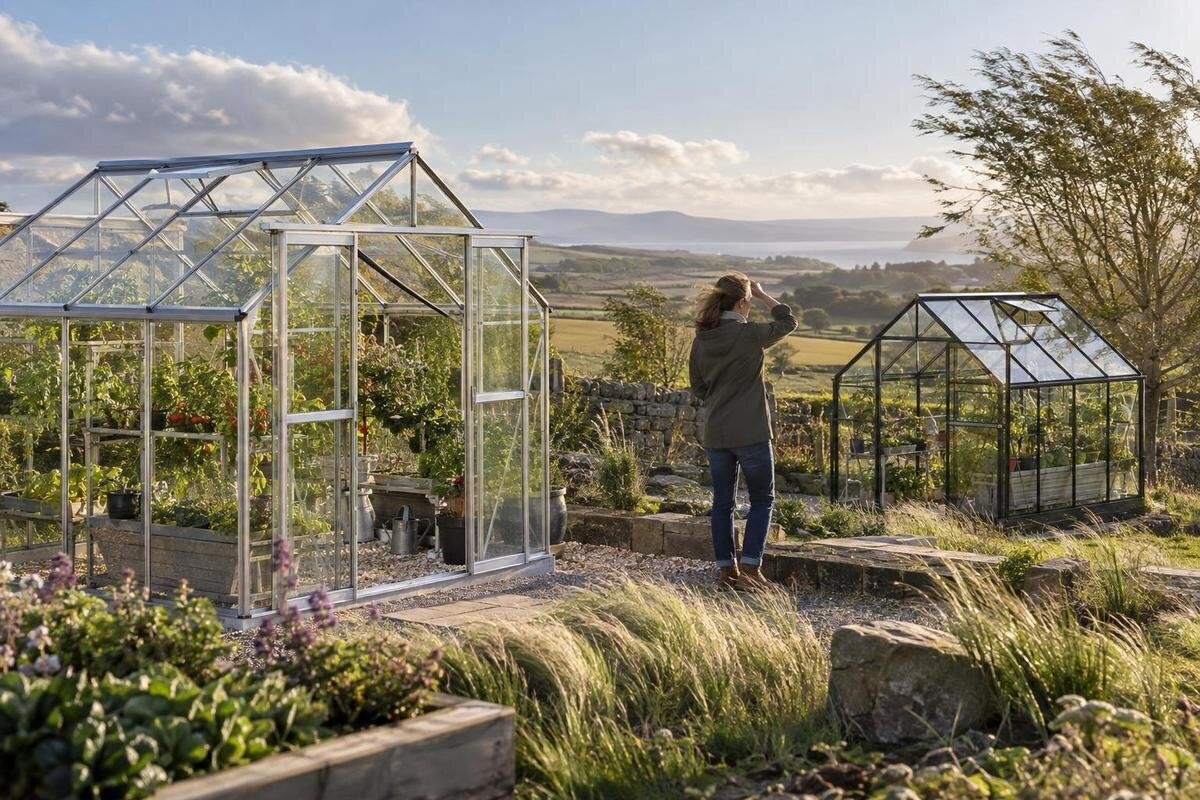
Greenhouse buying guide
If you're buying a greenhouse for a windy garden, assess the proposed position and the exact product specification together. Wind exposure can vary within one block: an open boundary, a gap between buildings, a change in level or a line of planting may affect what reaches a particular spot. Then check the complete structure, including its frame, glazing, base and anchoring method. Before ordering, map the site and compare the manufacturer's documented wind conditions with the exposure you expect. If the information is missing or unclear, ask for written clarification rather than treating a sturdy appearance as evidence.

Wind exposure and product performance are separate questions
Wind conditions can vary across a garden and over time. A calm visit only tells you what the proposed spot felt like then; it cannot establish exposure during stronger gusts or from another direction. For a purchase, keep two questions separate: what conditions may reach the site, and what wind performance the manufacturer documents for the exact greenhouse and its specified installation. The site assessment addresses the first; the product information should state the limits and assumptions behind the second. Treat a gap between these answers as a reason to ask, not a detail to fill with guesswork.
A sturdy appearance, heavy frame or description such as 'robust' is not a substitute for documented performance. Wind affects the structure as an assembly: frame, joints, glazing, doors, vents, base and anchors all matter, as can the way those parts connect. A specification for one configuration may not automatically cover another. Note the site and the exact configuration you intend to buy, then check that the published information addresses both. Keep the relevant product documents and written replies together, including the date and configuration discussed. This helps prevent details for a similar model being mistaken for confirmation about your chosen greenhouse.
Map wind at the proposed greenhouse site
Begin with the proposed location, not a product photo. Walk around the planned footprint and note open boundaries, gaps between buildings, corners, changes in ground level, and structures or planting that interrupt the wind. Record the directions from which gusts reach the spot and whether conditions differ across it. If practical, observe on more than one occasion; a calm visit gives little information about exposure. Ask people who regularly use the property where wind-driven debris, rattling gates or difficult-to-use doors occur, as these observations can identify local wind paths. A simple sketch showing likely wind approaches, paths, boundaries and access is more useful than a general note that the garden is windy.
Local weather information can provide background on common wind directions, but a nearby record cannot show the effect of a particular fence, building or gap at your site. Mark the proposed footprint and space needed to reach the entrance and any openings shown in the product information. For a candidate such as the Bloomcabin Orangerie listing, use any dimensions and layout details actually published for that model, not a photograph or its name. If key measurements are missing, ask for them before deciding whether the position has enough room.
How much shelter does the location actually provide?
Existing shelter is worth mapping, but it should not be treated as a guarantee. A wall, fence or hedge may interrupt wind from one direction while leaving the site open to another; near ends, corners or gaps, conditions can change. Planting may also change as it grows or is pruned. Compare the proposed footprint with the shelter at several points, and consider what happens if the wind direction shifts. Do not decide from the sheltered side of the garden alone or assume that adding a screen makes a location suitable.
A wall-side greenhouse is a candidate only if its specified installation matches both the wall and the exposure. The Aluminium lean-to greenhouse listing is one page to examine for that purpose; check its documentation for permitted attachment, base and location requirements, and whether wind information covers the installed arrangement. Consider adjacent roofs, eaves and return walls as well, since they can alter how wind reaches the proposed position. A wall can block wind from one direction while leaving other faces exposed. If the documents do not cover the wall's material and condition, ask the supplier and a qualified building professional before ordering.
What the greenhouse wind specification should cover
Look for wind information that identifies the exact greenhouse or configuration it covers and explains the conditions behind the stated figure. Ask whether it refers to wind speed, wind pressure or another measure; what directions and site exposure it assumes; and whether it is based on testing, calculation or another documented method. You do not need to convert technical figures yourself. The buying question is whether a competent professional can compare the specification with your site and explain what it means for the selected installation.
Also ask whether the stated performance depends on particular door or vent positions, and whether a specified base or anchoring arrangement is part of the assessment. Check whether optional accessories, altered dimensions or a different site category affect the documented result. Do not transfer a figure from a similar model, a different size or another glazing option without confirmation. The Aluminium Classic greenhouse listing is one candidate page to inspect for model-specific information; check whether it applies to the exact variant and its supplied components. If wind details are unclear or absent, request written clarification rather than relying on a general description of outdoor use.

Base and anchoring requirements for the ground
Clarify what 'base' means on a product page. It may refer to a greenhouse component, the support beneath it, or the interface used for anchoring; those are not automatically the same item. Ask what the selected configuration includes, which supporting surface is allowed, what preparation is required, and how the greenhouse and base are fixed in place. Confirm who is responsible for preparing the support and checking it before installation, particularly where an existing surface will be reused. The anchor type and installation method should match the manufacturer's instructions and the actual substrate. A heavy-looking base by itself does not show that the complete assembly is secure.
If considering the pyramid greenhouse for a masonry base listing, check the stated supporting arrangement rather than assuming that masonry is supplied or that any masonry base will work. Ask for the manufacturer's base requirements, connection details, whether fixings are included and who will confirm that the prepared surface is suitable. Existing paving or a change in level does not, by itself, confirm that the specified anchoring method can be used. If the ground or support is uncertain, involve a qualified installer or building professional instead of adapting anchors by guesswork.
Frame construction and connections
Compare frame descriptions, but do not use material alone as a measure of wind performance. Ask what the frame is made from according to the specification, how its members join, whether bracing is included, and how corners, openings and the base connect. Look for information about the complete assembly, not just a list of parts. The relevant question is how the configured structure connects to its anchors. If the documents are technical, have a qualified professional explain whether they address your site rather than trying to infer capacity from appearance.
Use a product page such as the Aluminium Limited Edition greenhouse listing to look for those details, not as evidence of any particular frame strength. Compare the model's documented connections, bracing, included components and installation constraints with other candidates. Note which details are expressly supplied and which would need to be selected separately, as an incomplete comparison can conceal an installation requirement. Ask whether the wind information changes with the size or options you plan to select, including the door, vent, glazing and base configuration. If a description uses a general phrase without defining its scope, request clarification and keep the answer with the exact model details you are comparing.
Glazing and panel retention
Consider glazing as part of the structure, not just for light or appearance. Find out what panel material and thickness the candidate includes, how each panel is held in the frame, and what seals, clips or other retainers are specified. Ask whether the wind information applies to that exact glazing and retention system, including around doors, roof sections and opening panels where relevant. Check whether the installation information identifies any inspection points after assembly, because retainers and seals are only useful when fitted as specified. A frame description alone does not explain whether the complete assembly keeps its panels in place. If the product information is silent, ask for details before comparing models.
For example, check the Classic Plus 385 listing for the glazing and fixing information actually provided for that configuration; do not infer details from its name or an image. Ask whether replacement panels and retention parts can be identified for future repairs, and how the manufacturer recommends maintaining them. If more than one glazing choice is available, compare the wind information for each rather than assuming one specification covers all. A complete answer should address the panels, how they are attached and the installed greenhouse as a whole.
Wall-adjacent greenhouse installation
A wall-adjacent format changes both exposure and installation requirements. A wall may interrupt wind on one side, but the other faces, roof edge and connection still need to be considered; its presence is not an automatic shelter guarantee. Confirm that the wall's construction and condition suit the attachment method described for the greenhouse, and check how its base is supported. A freestanding option has a different relationship to the surrounding site, so compare each model only in the arrangement its manufacturer documents. Do not treat the two installation formats as interchangeable.
The T-model orangery greenhouse for a wall base listing is a reason to examine the wall and base interface closely. Check what the product information and installation instructions say is included, where the structure must attach, and whether the wind information covers that arrangement. Establish whether nearby downpipes, services or uneven surfaces affect the documented placement before settling on the location. Plan the position so that access remains usable without relying on a sheltered wall to replace specified anchors. If the wall or ground support needs assessment, ask an appropriate building professional before purchase. Choose only an arrangement that can be installed as documented.

Assembly and maintenance for a windy site
Include installation in the buying comparison because documented performance depends on assembly. Read the instructions or ask for them before ordering, and note any required sequence, fixings, base preparation or restrictions on substituting parts. Confirm who will assemble the greenhouse and whether the proposed installer can follow those requirements. A suitable site and specification cannot compensate for missing or altered connections. If a detail is unclear, get the manufacturer or supplier to resolve it before work begins; do not improvise an anchoring method or alter the structure without confirmation.
For a listing such as the Prestige greenhouse with metal base listing, verify what the named base refers to and which parts and fixings are included in the configuration you would order. Do not infer that it includes every ground anchor or suits your substrate. Keep the supplied instructions accessible for the person carrying out any routine checks, rather than relying on memory after installation. Ask what routine checks the manufacturer recommends, what signs call for professional inspection, and how replacement glazing or connectors can be identified. Follow the supplied maintenance and storm guidance, so that care requirements are understood before delivery rather than left until after assembly.
Compare complete specifications before ordering
Build a like-for-like comparison for each exact model and option. Record the site's exposure, the published wind information and its assumptions, the specified base and anchors, frame and glazing details, installation requirements, and any stated exclusions. Mark whether each answer comes from product documentation, a written supplier reply or your own assumption. Keep assumptions visibly unresolved; it is easy to mistake a confident conversation or polished photo for confirmation. Compare the parts as one installed structure, and do not treat specifications for different configurations as equivalent without an explanation.
Before ordering, confirm the complete configuration on the quote or order summary: greenhouse model, included base and fixings, glazing choice, any separately required parts, and whether installation or delivery arrangements are included. Compare the final written details against the product documentation, especially if discussions have involved options or substitutions. Ask who can answer site-compatibility questions and what documentation will be supplied. The aim is not to choose the product with the most impressive description, but one whose documented conditions match the garden and can be met by the planned installation. If a critical wind or anchoring point remains unknown, pause rather than treating silence as approval.
Frequently asked questions
What wind rating should a greenhouse have?
There is no single rating that suits every site. The relevant specification depends on the exposure at the proposed position and the exact greenhouse, base, anchors and configuration it covers. Ask for the rating basis, then have a qualified professional confirm how it applies to your site.
Can a fence or hedge shelter a greenhouse?
It may reduce exposure from some directions, but it is not a guaranteed shield. Gaps, ends, corners and changes in wind direction can leave the footprint exposed, and planting can change as it grows or is pruned. Assess the exact position and do not treat a barrier as a substitute for a suitable specification.
Does a heavier greenhouse need less anchoring?
No. Weight alone does not establish how the frame, base, anchors and supporting ground work together. Follow the anchoring method specified for the exact greenhouse and substrate. If those requirements are unclear, ask a qualified installer or building professional rather than choosing fixings by appearance.
Is a wall greenhouse automatically safer in wind?
No. A wall may shelter one side, but that does not confirm that its material, condition or connection suits the greenhouse. Check that the permitted wall and base arrangement matches the site and that the wind information covers it. Get professional advice if the building connection needs assessment.
What if a product listing has no wind specifications?
Ask the supplier or manufacturer for written wind information, its assumptions and the required anchoring and installation details for the exact configuration. If the answers are unavailable or do not match the garden, do not guess from the structure's appearance. Compare options only when their documented limits can be checked against the site.
For a windy garden, a sound purchase matches a mapped site with the complete greenhouse specification. Record where wind reaches the proposed position, distinguish real shelter from an assumption, and verify the rating, base, anchors, frame, glazing and installation conditions for the exact configuration. When the documents do not answer a material question, seek clarification from the supplier and a qualified professional before committing. That gives you a more useful comparison than a model name, photograph or seemingly sheltered corner can provide.
