
Buying a Greenhouse in Stages: Essential Features and Later Upgrades
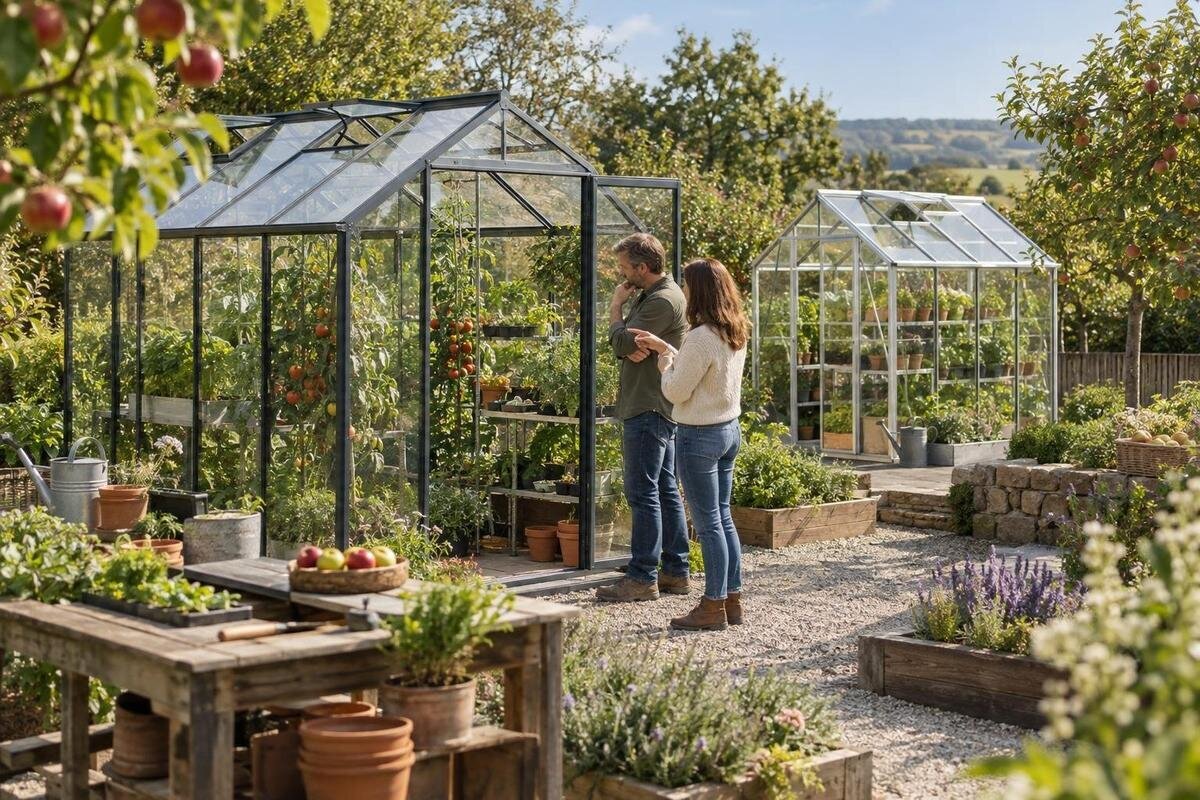
Greenhouse buying guide
Buying a greenhouse in stages can keep the first order focused, but it only works when the choices that are difficult to change suit your site and growing plans. Prioritise the usable footprint, support arrangement, frame, glazing, access and ventilation from the outset. Shelving, containers and compatible growing systems may be added later, once you know what you use. This guide separates those essentials from upgrades and explains what to verify before ordering.

01
What to buy first in a staged greenhouse purchase
Staging a purchase spreads decisions and spending over time; it does not mean choosing a greenhouse that is too small or incomplete for its first job. Select the core structure around the plants and routines you already plan to support. Its location, usable dimensions, base requirements, glazing, doors and ventilation are part of that core, not casual add-ons. A greenhouse used for propagation may need a different working layout from one intended to shelter larger potted plants. If a crop or routine depends on a feature from day one, specify it at the outset rather than assuming it can be retrofitted.
Separate decisions that affect the shell from equipment that sits inside it. A frame, fixed opening, base arrangement or footprint can be difficult to change after installation, while movable benches, pots and hand tools may be purchased as their value becomes clear. Some accessories still need particular fixing points, clearances or services, so they are not automatically easy to add. Label each item essential now, desirable soon or optional, then check whether the chosen model supports planned upgrades. Also consider the order in which work will happen: a bench may be easy to position before the growing area is full, whereas a later fixture may be harder to fit around established plants. Keep a short record of the dimensions, openings and components selected, including the exact version where it is stated. The first stage should provide a complete, usable growing space; defer only what your initial plan can genuinely do without.
Define the growing job before choosing a size
Write down what you want the greenhouse to do in its first year: start seedlings, shelter selected plants, extend the growing season or provide a protected place for potting. Name the plant groups, approximate numbers and periods when they will occupy the space. A greenhouse used mostly for propagation has different day-to-day demands from one holding larger established plants. Include the tasks you will perform—watering, potting, moving trays or checking plants—so the layout supports the work, not just the plant count. If you have several aims, rank them; that makes the compromises easier to see.
Think beyond the day plants arrive. Estimate their eventual size and the room needed between pots and trays; leave working space for a hose, watering can or small equipment if you expect to use them inside. Consider which conditions matter to your chosen plants and compare them with the greenhouse features actually specified. Group plants with similar needs where practical, but leave enough room to remove a tray or move a pot without disturbing everything beside it. If plans may expand, identify the likely change, such as more trays or taller plants, and decide whether it calls for spare floor area now. Include storage and movement through the doorway: space that exists only on a drawing may disappear once benches and pots are in place. A written brief helps distinguish useful capacity from space you would rarely use.
02
Check the site before comparing greenhouse models
Inspect the proposed position at different times of day and, where possible, through different parts of the year. Trees, fences and neighbouring buildings can change the available light as the sun moves and foliage grows or sheds, so a single glance is not enough. Note where morning and afternoon sun fall, and observe whether nearby surfaces create reflected heat or whether water collects after heavy rain. Note wind exposure, runoff after rain, drainage and how easily you can reach the greenhouse with water, plants and supplies. Consider the practical route from storage or a tap as well as the destination itself; repeated trips with soil, trays or harvested plants can shape how convenient the greenhouse feels. There is no universally correct orientation for every yard; compare the actual light and exposure with your growing goals and the manufacturer’s placement guidance.
Measure the clear area, then allow for access around the structure, including space for doors and ongoing maintenance. Check whether the ground suits the proposed support system rather than assuming a lawn, paving or an existing slab will work. A named listing such as Prestige greenhouse with metal base is only an identifier; use its stated dimensions, base details and site requirements, where provided, to compare the model with your site. If requirements are unclear, or the ground is sloped or exposed, ask a suitably qualified professional to assess preparation or anchoring rather than guessing.
Choose a footprint that works with your layout
Size means more than the outside footprint. Draw the internal arrangement you expect to use: plant rows or beds, a clear route from the door, temporary potting space and room for items you may add. Mark the direction in which the door opens and the locations of any specified vents or other openings, because these can limit where tall plants or shelving can go. A bench can take useful growing area, while large pots may need room around them; sketching both gives a better sense of whether the greenhouse will remain workable. Allow for seasonal variation too: a layout that works for a few seedling trays may become crowded when pots are brought in for protection. Account for the door’s opening and the approach path outside as well. Do not plan to fill every corner if reaching, watering or moving plants would become awkward.
Compare the exact stated width, length, height and opening positions rather than inferring capacity from a model name or photograph. Ask what the measurements cover if it is not clear whether they are external or internal. For a named option such as Bloomcabin Orangerie, use the listing’s measurements to sketch your own arrangement; the title alone does not tell you how many benches or plants will fit. If a larger collection is likely, compare the cost and site impact of choosing enough capacity now with the possibility that a later extension may not be supported.

03
Confirm the base and ground requirements
The support arrangement is a core purchase decision because the greenhouse, its anchoring and the prepared surface need to be compatible. Confirm whether the base is supplied, sold separately or not specified, what surface the instructions require, and who is responsible for ground preparation. Do not assume that soil, decking, paving or an existing slab is suitable simply because it is available. Check how water will drain from the proposed area and whether the site meets the requirements for the specified support system. Unclear ground conditions may need a professional assessment.
Decide whether the structure will stay in one position and whether a permanent base suits that plan. If there is a wall, retaining edge or existing foundation nearby, verify that the design is intended for that arrangement rather than adapting it by eye. The product name T-model orangery greenhouse for a wall base should prompt you to confirm the exact written base and wall requirements and what is included; it does not establish that a particular wall or site is suitable. For uncertain anchoring or foundation work, seek advice from a qualified professional.
Compare the frame and glazing specifications
Compare the specifications for the frame and glazing separately. Check the stated frame material and finish, panel type, thickness if provided, connection details and replacement-part information; a broad product label is not enough to judge the complete build. Ask what glazing is included and whether alternatives are offered, then review the manufacturer’s stated care and performance information. Be wary of comparing one model’s detailed specification with another’s headline description: missing information is a question to resolve before purchase, not a benefit to assume.
Consider how those components relate to your site conditions and maintenance expectations. If the greenhouse will sit in a highly exposed position, check whether the manufacturer documents relevant suitability limits and ask a qualified professional about any concerns. An item named Aluminium Classic greenhouse still needs its exact frame, glazing and included-component details checked; the name alone does not confirm how the complete model is constructed or performs. Keep the specification for your chosen version with the order details so later questions about replacement parts or accessories can be checked accurately.
04
Make access and ventilation part of the initial choice
Ventilation is an essential design choice, not just an accessory to consider after the first warm spell. Greenhouses can become hot, so compare the number, position and operation of the openings specified for each model and consider whether they suit your plants and your ability to reach them. Do not assume a vent, louvre or automatic opener is included unless the listing says so. Manual operation and powered systems have different practical requirements; if your plan depends on powered ventilation, verify compatibility and arrange electrical work through a qualified professional.
Check access at the same time: opening width, threshold, door position and the route from the entrance to your paths or work area. Think about carrying seed trays, pots and supplies through the opening, and whether equipment inside will block it. These can be awkward constraints to correct after the structure is in place. Review the specified openings for shortlisted options, including Classic Plus 385, and confirm whether any extra vent or door feature is supplied, optional or unavailable for that version.
Decide which greenhouse upgrades can wait
Movable benches, shelving, pots, trays and hand tools may suit a later purchase if they are not needed for your initial crop plan. Some watering, shade or monitoring accessories may also wait until you have observed the space in use. These are examples, not a universal list: for one growing goal an item may be convenient, while for another it may be essential from the outset. Keep basic ventilation, access and structural requirements in the first purchase rather than treating them as later extras.
Before relying on any future add-on, ask which exact model and version it fits, whether it needs a prepared opening or mounting point, and what space, water or power it requires. Check any published capacity limits before hanging or placing loads, and do not assume a later product will match an older frame. The listing name pyramid greenhouse for a masonry base does not confirm accessory compatibility or site suitability; those details need to come from the specific documentation. Use a qualified professional for powered installations where appropriate.

05
Budget for a complete first stage
Work out the cost of a usable first stage rather than comparing bare structure prices alone. Include the greenhouse, any separately required base, site preparation, delivery, assembly if purchased, and the initial items your growing plan truly needs. Inclusions and amounts vary, so record them from current written information instead of relying on a category label or assumption. If delivery or assembly is handled separately, establish what is and is not included before comparing totals. That gives you a clearer view of the purchase you are actually planning.
Make a simple cost table with four headings: supplied, required extra, optional later and not specified. Put each shortlisted greenhouse through the same table, including aluminium limited-edition greenhouse, without assuming the name indicates its package, cost or current terms. A staged plan can mean separate purchases or work later, so consider those potential costs alongside the initial order. Reserve room in the first-stage budget for essentials rather than spending it all on a structure and discovering that the first workable setup needs more than you planned.
Check the order details before planning an expansion
Before placing an order, confirm the exact model and version against the written listing or order documents. Recheck external dimensions, glazing, frame details, door and vent arrangement, base requirements, included accessories and any stated site preparation. Check the delivery and installation scope, access to the chosen location and any conditions that affect your setup. A product photograph or family name cannot confirm these specifics. For a shortlisted item such as aluminium lean-to greenhouse, resolve missing information with the seller before committing and keep the answer with your order records.
Treat expansion as a decision informed by actual use, not a promise that every greenhouse can be extended. After using the space through the periods relevant to your growing plan, note what restricted you: a full bench, insufficient headroom, difficult access, ventilation needs or simply too many plants for the available area. Distinguish a genuine capacity problem from a layout or scheduling issue. Before buying an upgrade, confirm compatibility, availability, fixing requirements and total cost. If the shell itself is the constraint, an accessory may not solve it.
Frequently asked questions
Which greenhouse features should I choose upfront?
Choose the features that define the structure and its first use: footprint, frame and glazing, base requirements, door access and ventilation. If your planned plants or routine depend on a feature from day one, include it in the initial purchase. Defer an add-on only when the greenhouse will remain usable without it and the manufacturer confirms it can be fitted later.
Can I enlarge a greenhouse later?
Only if the exact design supports an extension. A similar-looking model or product-family name does not establish that sections can be joined, the base will suit an extension or components will be compatible. Confirm the manufacturer’s written guidance and consider any site, base and cost implications before buying on the assumption that you can expand.
Which greenhouse upgrades can wait?
Movable items such as pots, hand tools and some benches or shelves may be suitable for a later purchase if they are not needed for your initial growing plan. Some watering or monitoring accessories may also wait, subject to compatibility. Keep essential access, ventilation and structural requirements in the initial design.
How do I know what size greenhouse I need?
List what you plan to grow, estimate the space plants will occupy, then draw the layout with benches, pots, storage and a clear route from the door. Compare that plan with the exact stated dimensions and opening positions. Allow for the work you will do inside, not just the number of plants you hope to fit.
What should I confirm before ordering?
Confirm the exact model and version, dimensions, glazing, door and ventilation details, base requirements, included accessories and any stated site preparation. Check the delivery and installation scope and resolve missing information with the seller. Keep the written product and order details so later compatibility questions can be checked against the correct version.
A staged greenhouse purchase works when the initial structure matches your site and planned growing, while postponed items are genuinely optional and compatible. Decide the footprint, support, glazing, access and ventilation up front; separate confirmed inclusions from open questions; then let actual use guide later additions. That leaves you with a useful first-stage greenhouse and a sound basis for any future change.
