
Buying a Wooden Greenhouse: Materials and Maintenance
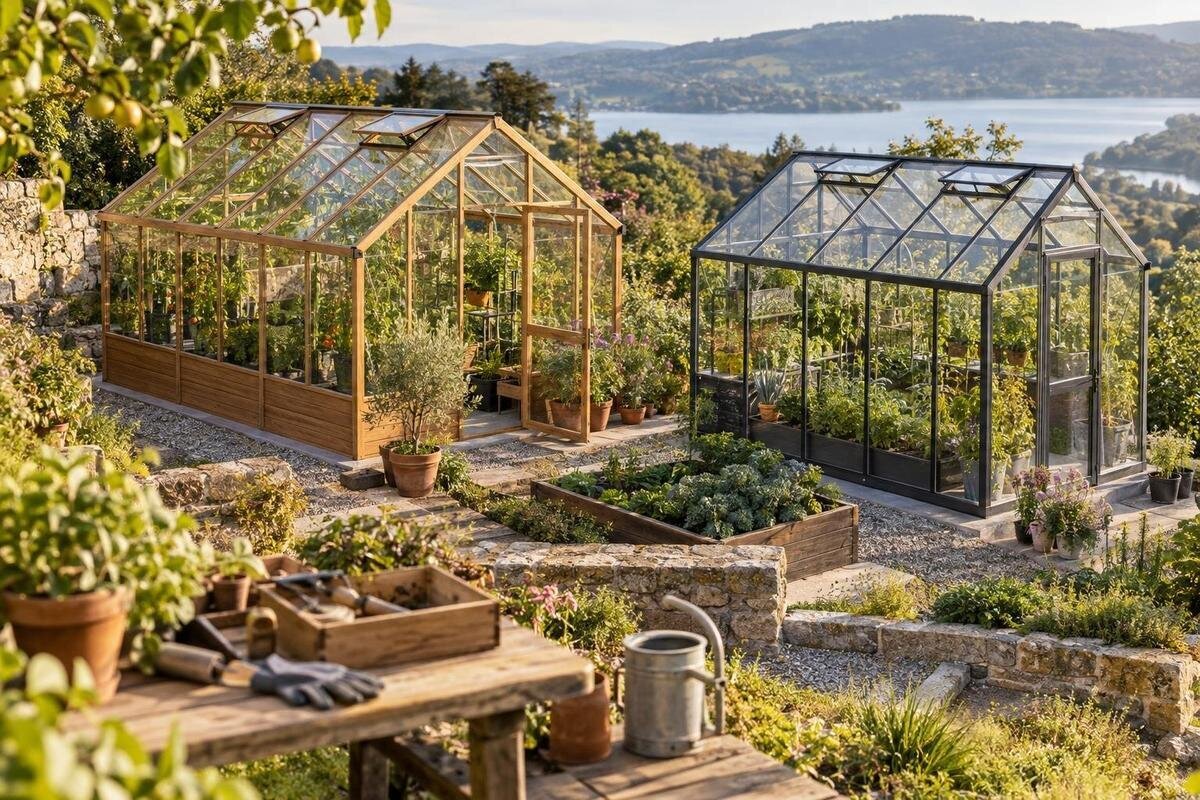
Greenhouse buying guide
Buying a wooden greenhouse is as much a decision about ongoing care as it is about appearance. Timber species, treatment, joints, finish and the way the structure meets its base all affect what you may need to inspect and maintain. Conditions around the greenhouse matter too: sun, rain, airflow and splashback vary from one garden to another. This guide explains what to ask a supplier, how to judge the likely upkeep from written details and when a different frame material may suit your priorities better.

How much maintenance are you prepared to do?
Decide first what level of care you are willing to take on. A greenhouse frame sits outdoors and can also be exposed to humid air and condensation; how those conditions affect it depends on the timber, finish and construction. Ask whether you are comfortable checking exposed surfaces and joints, spotting places where water repeatedly collects around the base, and renewing a finish when the maker’s instructions call for it. Benches, pots or a narrow path can make routine work awkward once the greenhouse is in use. Consider when you could do that work, not just whether you like the look of timber. If ongoing care would be a burden, compare written maintenance plans before becoming attached to a style.
Separate preferences from requirements before comparing models. A timber appearance may be important, but usable growing area, access, a compatible base, assembly demands and an achievable maintenance plan are practical pass-or-fail points. Note how you will use the greenhouse—raising seedlings, sheltering pots or growing through more of the year—then work out how much floor space and clear access that calls for. The intended use helps define the layout; it does not identify the right timber or coating. Compare candidates against the same list, and treat missing material or upkeep information as a question to resolve before ordering. Decide which preferences you can trade and which conditions would rule out a model.
Timber species, treatment and base materials
Ask for the timber species, grade or other precise material description, and any treatment applied. Broad labels such as softwood or hardwood are not enough to assess a particular structure. Natural durability varies between species; treated timber depends on the treatment specified and how it is used in the design. Neither the word timber nor a general durability claim tells you how the frame will perform in your garden. Request product documentation and ask which components are timber, which are not, and whether the treatment covers all exposed parts. Ask what the supplier means if it describes timber as naturally durable or treated. If important details are unclear, resolve them before comparing the structure with another model.
Keep the frame, base, glazing and finish as separate items in your comparison. A wooden frame does not mean the whole greenhouse is timber, and a metal base does not establish the frame material. For example, Bloomcabin Prestige greenhouse with metal base is a listing to examine alongside its current product details; its name is not a complete specification. Check the product information for every component, including what meets the ground and how the frame connects to the base. Find out whether a base is included or specified separately. Distinguishing these parts helps you compare material claims and plan care, since different components may have different instructions.
Frame construction and joinery
Look beyond species to how the frame is assembled. Ask for a drawing or component schedule showing member sizes, spacing, joint details and connection points; that helps you see what the model actually comprises and where inspection access may matter. Find out how parts are joined and what fasteners or connectors are supplied. Ask how replacement parts can be identified if something needs repair later. A timber species cannot tell you whether joints are accessible or how water is managed around them, so request model-specific construction information instead of relying on a general claim about timber. If the supplier’s documents conflict, ask for one confirmed set before ordering.
Confirm who is responsible for assembly, what preparation is expected and whether the instructions explain the base connection. A kit may place more work on you than a structure assembled by a contractor; the order page or photographs alone may not make that clear. A product name such as Bloomcabin Orangerie identifies a particular listing, but the name itself says nothing about timber species, joints or maintenance. Use the current product information, material list and diagrams to judge the actual offering. Ask what tools or extra help are expected, and whether any part of the installation needs professional assessment.
Finishes and ongoing timber care
Treatment within the timber and a coating on its surface are not the same thing, so ask about both. Find out whether the greenhouse arrives unfinished or with a specified finish, which surfaces are covered and whether the manufacturer requires a particular product for future care. Request the inspection interval or visible signs that prompt maintenance, plus instructions for exposed ends, joints or damaged areas. Terms such as weather-resistant are not a practical upkeep plan. Some faces become difficult to reach after assembly, so ask how they are protected and whether they require attention. If the supplier cannot describe the finish and aftercare for the exact model, do not borrow assumptions from another wooden greenhouse.
Consider when and where maintenance can be done. You may need room to reach the exterior, protect nearby plants and follow the coating maker’s directions for preparation, application and drying. Check that any proposed product is stated to suit the greenhouse materials and intended setting; an ordinary outdoor coating is not automatically compatible with glazing, seals or a growing environment. When comparing Classic Plus 385 with a timber design, use the care instructions for each actual frame and finish, not the range name, to judge workload. Keep the manufacturer’s guidance with the purchase record so later maintenance does not rely on guesswork.

Site conditions around a wooden greenhouse
Map conditions at the proposed position before choosing a frame. Note how sun and shade change through the day and year, where rainwater runs, whether the ground stays damp, and whether sprinklers or roof runoff wet the base. Timber responds to moisture; water repeatedly trapped against a component can make upkeep harder, although the effect depends on design and exposure. Do not assume a sunny position is always better or that a shaded corner is unsuitable. If the site is exposed to salt air, strong sun, heavy rain or persistent damp, include that in your questions to the supplier. Describe the actual location rather than asking whether a wooden greenhouse suits Australian conditions in general.
Leave room to inspect the sides and corners, not just to walk through the doorway. A fence, wall or dense planting can restrict access and affect drying after rain; consider whether you can maintain the frame once the greenhouse is in use. Where a greenhouse may sit against or near a wall, check the boundary surface, runoff and clearances rather than assuming the existing wall is appropriate. The T-model orangery greenhouse for wall base listing must be checked against your wall and site; its name cannot confirm compatibility. Ask for the exact interface details and have a qualified professional assess the proposed support if there is any doubt. Include access for future care in your site plan.
Base requirements and installation
Treat the base as a compatibility question, not a finishing detail. Before ordering, confirm whether the greenhouse requires a prepared base, what shape and dimensions the interface uses, how level and drainage are addressed, and whether the proposed surface is acceptable to the supplier. Ask whether any timber is intended to meet soil or paving, and what the design specifies at that point. Site slope, ground conditions and wind exposure can alter what support is appropriate; ask a qualified builder or installer to assess these points rather than improvising a foundation or anchoring arrangement. This is especially important where the site or existing surface is uneven or difficult to inspect.
Product titles can suggest questions to investigate, but they do not replace the instructions. A listing such as pyramid greenhouse for masonry base should prompt you to check the stated support requirements, not assume that an existing concrete pad or masonry surface will work. Ask what is supplied, what must be prepared separately, and which measurements or fixing details the installer needs. Confirm how water drains and how the design manages exposure to persistent wetting. If the site or base is uncertain, settle it before delivery so the greenhouse is not ordered on an unverified assumption. Have the supplier confirm any detail that affects the connection between the structure and its support.
Size, access and growing layout
Measure for growing tasks as well as the outside footprint. Allow space for the frame, door movement, a clear route and the benches or pots you expect to use. Check usable height and whether you can reach the sides of plants and the frame; a large external dimension does not automatically give you an equally convenient working area. Mark the intended position and access route in the garden before choosing a size. Think through delivery and assembly access too, particularly if a gate, path or established planting limits where components can be carried. Decide whether tools and supplies need storage, rather than assuming they can be kept inside without affecting growing space.
The frame choice should fit that layout, not distract from it. If you are comparing timber with another greenhouse option, include aluminium Classic greenhouse only after checking the current dimensions and care details needed for a like-for-like comparison. Check the actual footprint, internal access, glazing and base requirements for every model. Keep the material decision separate from the growing-area decision: a frame that suits your preferred appearance still needs a workable route for watering, ventilation and maintenance. Make sure the plan leaves enough room to work around the greenhouse, not just enough room to place it.
Budget for time as well as materials
Estimate the cost of ownership in tasks as well as money. Compare the purchase price shown when you are shopping with any separately specified base, finish, assembly, tools or replacement parts, but do not assume items are included or excluded unless the listing says so. Then translate the maintenance plan into time: how often the manufacturer expects an inspection or finish renewal, how much access the work needs and whether you can do it yourself. If you may need a tradesperson for assembly or repairs, ask what the quoted work covers. A price is difficult to compare with another model when important parts of the work are not yet clear.
Access has a real bearing on the workload. A frame squeezed against a fence or wall may be harder to inspect, clean or refinish than one with reachable sides, whatever its material. If you are considering a layout close to a wall, examine aluminium lean-to greenhouse using the current drawing and stated maintenance-access information; its name does not show the clearance required or whether your site suits it. Include the time needed to move pots or benches before care work; a realistic plan is more useful than a broad claim that one material is easy to maintain.

What to confirm before ordering
Put the decisive questions in one place: exact timber species and treatment; finish supplied; maker’s maintenance instructions; external and usable dimensions; frame and base materials; required base preparation; glazing and accessories; assembly responsibilities; and the process for obtaining compatible replacement parts. These are not details to infer from a photograph, a broad category heading or a model code. Use the product page and any supplied documents, then ask the retailer to confirm unclear points in writing. If an important answer is unavailable, compare a better-documented structure or pause rather than treating a guess as a specification.
Check the practical terms before paying: what is in the package, what is optional, how delivery and assembly are arranged, and what the supplier says about care, repairs and warranty conditions. A title such as limited-edition aluminium greenhouse does not establish current availability, replacement-part support or an upkeep commitment; those details need confirmation from the current listing or supplier. Apply the same standard to the wooden structure you want. If a base, coating or installation service is quoted separately, compare the complete arrangement rather than just the greenhouse line. Keep the model details and care documents together for future reference.
Deciding whether timber suits your priorities
Timber is a considered choice when its appearance and the specific design appeal to you, and its stated maintenance fits your routine. It may be a poor match if the supplier cannot explain the materials or care requirements, or if you will not be able to reach the frame for the work it needs. That is not a judgement on timber as a category: the same structure can be more demanding in a position that stays damp or makes access difficult than in a more sheltered, reachable spot. Base the decision on the actual product and site, not an assumed lifespan or a general promise about timber.
Make a short comparison sheet with three headings: what is confirmed about the materials, what maintenance the manufacturer specifies, and what your site and routine allow. Each candidate should have useful information in all three columns. Put unanswered questions in a separate list and resolve them before ordering; if one answer changes the care or base plan, update your comparison rather than choosing on appearance alone. This keeps the decision grounded in what the structure asks of you while leaving room to choose a design you genuinely want.
Frequently asked questions
Is a wooden greenhouse more work to maintain than an aluminium greenhouse?
The material name alone does not tell you. Timber species, treatment, finish, construction and site conditions all affect the care required; other frame materials have their own maintenance needs too. Compare the instructions for the specific models, including care around joints and the base.
How often should I recoat a wooden greenhouse?
Follow the care plan for the exact timber and finish. Exposure and the coating system affect when maintenance is needed, so a general annual rule may not suit your greenhouse. Ask what signs to look for and which products are compatible.
Which timber should I choose?
Ask for the exact species, grade and any treatment, then check how those materials are used in the frame. Broad labels such as softwood or hardwood do not tell you enough about a particular design. The finish, construction and conditions at your site matter as well.
Can I put a wooden greenhouse on an existing paved or masonry base?
Confirm the base dimensions, connection details and drainage requirements for the exact model before ordering. Ask the supplier whether your proposed surface is suitable, and have a qualified builder or installer assess the site and support if there is any doubt.
Does a wooden frame tell me what glazing is included?
No. Frame material does not confirm the glazing or other components supplied. Check the product information and package contents separately, including the base and any listed accessories, rather than assuming that a wooden greenhouse is made entirely from timber.
Treat the purchase as a matched set of choices: timber specification, finish, frame construction, base and site. When those details are clear and the maintenance instructions fit the time and access you have, a wooden greenhouse can be a considered choice rather than an appearance-led guess. If key information is missing or the care plan does not suit your routine, compare another documented greenhouse before ordering. The right fit is the one whose materials and upkeep you understand and can realistically manage.
