
Buying an Aluminium Greenhouse: What to Check in the Frame
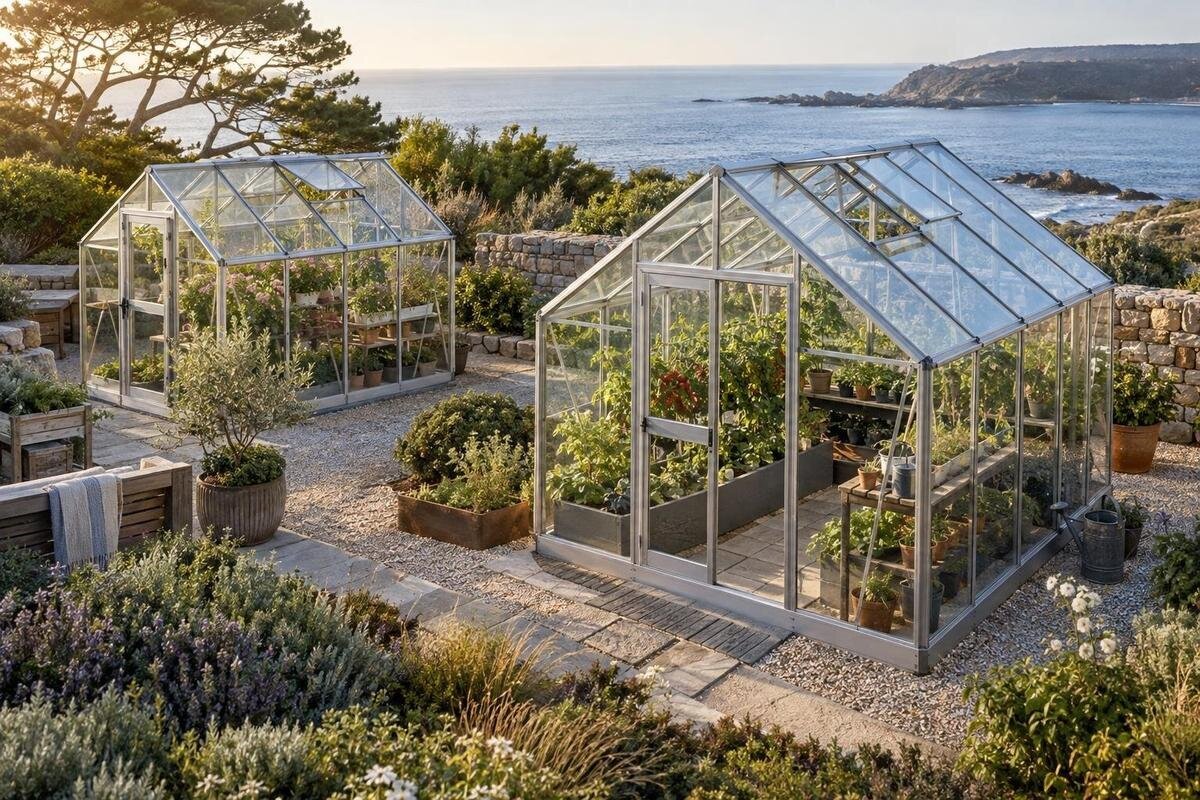
Greenhouse buying guide
Buying an aluminium greenhouse involves more than deciding whether you like the frame material. Check the profiles, joints and connections to glazing and base, then match the exact frame documentation to how you will use and install it. This guide focuses on those details so you can compare listings without assuming more than their specifications show.

What the aluminium label tells you
An aluminium greenhouse is more than a material label. Where the product information confirms an aluminium frame, that fact alone does not explain the shape or spacing of the members, how they join, or how the frame meets the glazing and its supporting base. Those details affect assembly and compatibility, and determine what to check before ordering. A photograph can show the overall outline, but rarely tells you the exact profile, connector type or fixing arrangement. Check whether the description covers the main frame alone or also the door and vent framing. Treat the material name as a filter for your shortlist, not proof that two aluminium-framed greenhouses are otherwise comparable.
Begin with what the frame has to accommodate in your growing setup: the planned bed layout, access for carrying pots or compost, and usable headroom for the crops you intend to grow. Compare those needs with the model’s stated dimensions and internal layout, rather than assuming the exterior shape tells you what the interior will feel like. Product names identify pages, not construction. For example, the Bloomcabin Orangerie product page belongs on an aluminium shortlist only if the written information confirms its frame material. If material details are missing, ask before treating it as an aluminium option, and note that uncertainty separately from confirmed facts.
Compare frame profiles and members
Ask for a frame plan or assembly drawing that labels the uprights, side rails, roof members, ridge, eaves and corner joins. Read the parts schedule alongside it: that helps you see where each named member is used and whether different pieces are fitted around the roof, walls or openings. If profile dimensions or cross-sections are shown, record them so you can compare equivalent parts rather than descriptions such as strong or robust. If they are not supplied, ask which written specification defines the frame. The Aluminium Classic Greenhouse listing identifies a product, but its title alone cannot tell you which profile sections are used. Check that the drawing is labelled for the exact model and size.
Compare the same frame locations across shortlisted models: door uprights, long side rails, roof spans and corners. One nominal measurement may not describe every member, so ask whether a published detail applies to the whole frame or just one section. Where alloy, profile size or wall thickness would affect your decision, request the exact model’s specification rather than estimating from a product photo. Check that the drawing matches the size and configuration you are ordering; a related version may have different rails or openings. Record the document version with your notes so later assembly information can be matched to the order, not a similarly named greenhouse.
Inspect joints, connectors and assembly details
A greenhouse frame is a set of members joined at corners and intersections, so connection details matter to the buyer as well as the assembler. Look for a parts list that identifies brackets, joining pieces, screws and other fasteners, plus a drawing showing which pieces belong at roof joints, corners and around openings. Confirm which items are included, which are optional and whether the base uses a separate fixing set. This prevents an overview photograph from being mistaken for a complete parts specification. If a description uses broad words such as secure or reinforced, ask what physical component or documented change those words refer to. Check that the connectors shown match the assembly instructions.
Check that the assembly instructions match the exact model and configuration, and that the sequence makes clear how members and connectors fit together. Ask whether any tools or additional fixings are required, and how each part is labelled if something is missing or damaged. A screw or bracket that looks familiar should not be assumed interchangeable with a listed component. The Aluminium Limited Edition Greenhouse listing is a product identifier, not a description of its joint system; assess its parts schedule and assembly documents just as you would for another model. Keep those documents with your purchase details, especially if you later need to identify a replacement component.
Check how the glazing fits the frame
The frame and the glazing form an interface, although choosing a glazing material is a separate comparison. Depending on the design, panels may sit in channels or be held by clips, covers or seals; the frame information should make clear which system the model uses. Match the stated panel material, thickness or format to that system, and confirm whether clips, gaskets and retaining strips are part of the package. A broad description such as glazed greenhouse does not show how panel edges are retained or whether the chosen configuration uses different components. This is a frame check: it establishes compatibility without asking you to choose a glazing type based on appearance alone.
In the assembly information, trace one panel from its edge to the frame and check how a replacement would be identified if it were damaged later. Ask whether the manufacturer lists compatible panel sizes and retention parts for the exact model, and whether an optional glazing version changes any frame components. Do not assume that a sheet with similar dimensions will sit correctly in the same channels or clips. For example, the Classic Plus 385 listing should be read alongside model-specific glazing and frame information; its name does not answer which parts are supplied or what replacements fit. Keep this separate from the question of which glazing material best suits your plants.

Verify the frame-to-base connection
Inspect the lower edge of the frame as carefully as the roof. The frame needs to meet a base or supporting surface in the way specified for the model, so ask for a plan showing the footprint, lower rails, fixing points and any joining piece between frame and base. Confirm whether the base is included, offered as an option or expected to be supplied separately; the product title or photograph is not a reliable package list. If frame and base are ordered separately, verify that the selected versions are intended to fit together before paying. Check that the drawing uses the dimensions for the greenhouse size you have chosen.
Also establish what the manufacturer means by base: a perimeter component, a supporting structure or another part of the greenhouse package. Ask for its dimensions and alignment details, the type of surface it is designed to sit on, and the fasteners at the frame-to-base junction. Where masonry or another prepared support is involved, do not guess an anchor pattern or alter the frame to make parts fit; get model-specific guidance, and use a qualified professional if the support or installation is unclear. The Prestige greenhouse listing with metal base is a title to check against the actual contents and fixing instructions, not a substitute for them. Clarify who supplies any unlisted component.
Confirm anchoring guidance for your site
Anchoring is a separate check from whether a base is present. Ask which parts tie the assembled frame to its support, where the fixing points are shown, and what supporting surface the installation guide assumes. The aluminium label does not establish how a greenhouse will perform in wind, and a product photograph cannot show its permitted site conditions. Look for written guidance for the exact model and configuration, including any stated limits on exposure or placement. If the seller cannot explain which documents cover anchoring, do not substitute a generic fixing suggestion for model-specific advice; the attachment details should correspond to the frame and base you intend to order.
Consider the conditions around your garden, especially if the proposed position is open or exposed, and give that context to the manufacturer or a qualified builder or installer. Ask whether the documented frame and anchoring arrangement is suitable for those conditions, and whether a different base or installation method would need assessment. A product name such as Pyramid greenhouse for masonry base identifies a page but does not establish that your masonry support, anchors or site are suitable. Do not compare models by assumed load capacity when no model-specific evidence is available; have a relevant professional assess uncertainties before ordering. This is particularly important where the listing does not explain its installation conditions.
Check door and vent openings
The door opening is part of the frame layout, not just an accessory choice. Check the stated clear opening, threshold arrangement and door position against everyday tasks such as carrying trays or reaching a bed, and confirm which way a door opens or whether it runs on a track. The assembly drawing should show the uprights and cross-members around the opening, while the product page should identify the door arrangement for the exact model. Do not estimate usable clearance from a photograph; perspective can make an opening look different from its stated dimensions. Note whether a chosen option changes the opening or its surrounding frame.
Apply the same check to vents and other moving panels. Confirm which openings are included in the chosen version, where each sits in the frame and what operating hardware is supplied. If you plan to add a shelf, shade or other accessory later, ask whether that exact item has a specified attachment point and whether it affects access to an opening. Avoid hanging extra loads from a rail merely because it appears convenient; use only attachments and limits stated by the manufacturer. That avoids assuming a rail is designed for a purpose it has not been documented to support. A parts plan can also clarify which members sit around doors and vents.
Understand wall-connected frame designs
A wall-connected greenhouse has a different frame junction to check from a freestanding design. The point where the frame meets a building needs clear documentation: the drawing should identify the intended interface and any parts or seals involved, while the instructions should say what is expected from the adjacent wall. Do not assume the building automatically supports the greenhouse or that a generic wall fixing will suit it. Ask whether the frame is designed for that arrangement and what a qualified installer should verify before assembly. This is about the structural connection, not simply the amount of garden space the greenhouse occupies. Also clarify how the manufacturer describes the junction between the frame and building.
Names that mention a wall or base are not enough to settle the detail. For a product page titled T-model orangery greenhouse listing for a wall base, check the actual plan, base information and wall-junction notes for the version you are considering; the title does not give interface dimensions or identify what the building must provide. If those details are not published, ask the manufacturer for them before ordering. Clarify which components are included at the junction and which belong to site preparation, then have any uncertain building connection assessed by a qualified professional. Keep the answer with the exact product configuration.

Ask about finish, care and replacement parts
Surface treatment and care can vary between frames, even when both are described as aluminium. Ask the seller to identify the finish on the exact frame option and provide its care instructions, including which cleaning products or methods to avoid. Do not assume that an aluminium label means the surface is untreated, coated, maintenance-free or suitable for every environment. If the greenhouse will sit in a particularly exposed or corrosive setting, describe that setting when asking about suitability and care; generic advice may not apply. Written instructions are more useful for long-term upkeep than a colour shown in a product photograph.
Ask what is available for future repairs: part numbers for frame rails, connectors, door hardware and glazing retainers make later identification clearer. Find out how replacements are requested and whether the manufacturer can identify the correct component from the order details; do not assume a visually similar part will fit. Ask whether components can be replaced individually or only as sets. Keep the model name, configuration, parts list and assembly documents together after purchase, particularly if the product family has several versions. If the seller cannot explain how parts are identified, factor that uncertainty into your comparison instead of assuming every component will be obtainable later.
Compare the exact package before ordering
Before choosing between two shortlisted greenhouses, set the answers side by side rather than comparing adjectives. Record the frame material, available drawings, profiles, connectors, glazing retention, base interface, anchoring guidance, door and vent openings, finish instructions and included parts. Mark each item as confirmed, unclear or not stated, so an appealing feature cannot distract from a missing detail that matters to your setup. Check that every answer refers to the same size and version; listings for one product family may present options differently, and a shared name does not guarantee an identical configuration. Keep your questions tied to the exact page or quotation you are comparing.
Read the current product description, specification and assembly documents as one set, then make sure the order names the exact greenhouse and any selected base or options. A title such as aluminium lean-to greenhouse listing can help identify a candidate, but it cannot replace checking what frame arrangement and components that particular listing covers. If a key point is unclear—material, included fixings, compatibility or site suitability—ask for written clarification before placing the order. Save the answer with the product information, so you can refer back to the agreed configuration when the greenhouse arrives. Confirm that any accessories are matched to that same version, not merely to a similar-looking model.
Frequently asked questions
What should I check first when buying an aluminium greenhouse?
Confirm the frame material in the product information, then compare the exact model’s drawings, joints, glazing connection, base and anchoring details. Aluminium alone does not describe the frame profile or show whether the stated installation requirements suit your site.
Are all aluminium greenhouse frames built the same way?
No. The material label does not define the members, connectors, layout or surface finish. Compare model-specific drawings and parts lists, and ask about missing details rather than assuming that similarly named greenhouses use the same construction.
How can I tell whether the frame suits my site?
Compare the manufacturer’s installation and anchoring information with your proposed base and site conditions. If the position is exposed, wall-connected or otherwise uncertain, ask the manufacturer or a qualified builder or installer to assess it rather than relying on a photograph.
Does an aluminium greenhouse automatically include a base?
Do not infer package contents from a title or photograph. Check whether the base, anchors and fasteners are included, optional or supplied separately, and confirm that the chosen frame and base versions are intended to fit together.
How do I check that the frame is compatible with the glazing?
Use the exact model’s information to match the panel type, thickness or format with its channels, clips or other retainers. Confirm which retaining parts are included and how to identify a compatible replacement panel.
An aluminium frame is best judged by its documented members, connections and interfaces, not by the material label alone. Bring the frame drawing, glazing retention, base and anchoring details, openings, finish instructions and parts list together for one exact model. If a specification leaves a gap, keep it as an open question rather than filling it with an assumption from a photograph or another greenhouse. That gives you a clearer basis for choosing a frame that fits your growing plans and your site’s installation conditions.
