
Planning a Greenhouse for Cacti and Succulents
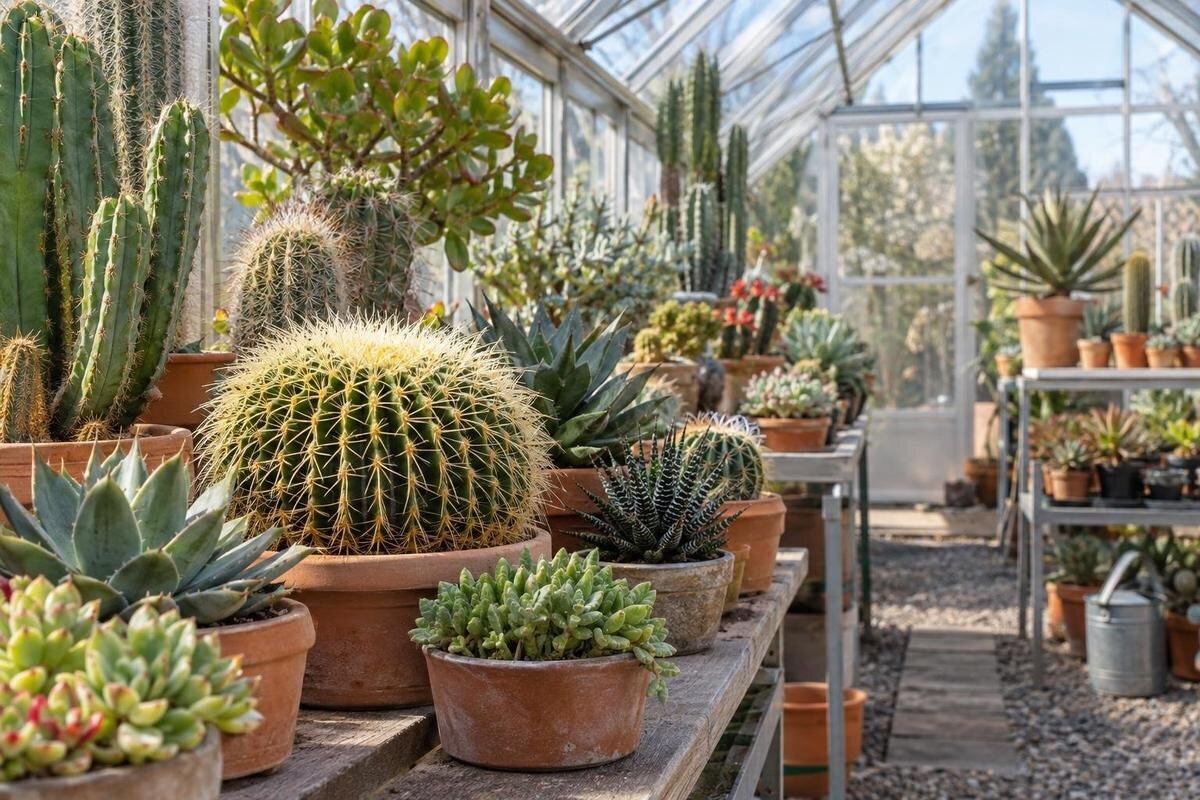
Greenhouse planning
A greenhouse can make cactus and succulent growing more predictable by sheltering pots from much of the rain and giving you control over their position. It does not create one ideal desert climate: glazing can raise temperatures quickly, still air can slow drying, and species vary in light, growth cycle and cold tolerance. A workable plan starts with an inventory, then matches plant needs to the greenhouse’s light, ventilation and usable space. Some succulents need rain protection; others tolerate cool outdoor conditions, while forest cacti need different light and watering from desert species.

What a greenhouse changes for cacti and succulents
A greenhouse is most useful to a cactus and succulent collection as a controllable shelter, especially where outdoor pots receive prolonged rainfall. Keeping much of the rain off the mix makes watering more deliberate and lets you arrange plants by exposure, but enclosure does not make roots dry by itself. Damp substrate, crowded pots and still air can hold moisture for longer; glazing can also send temperatures up on a sunny day, then allow them to fall quickly after sunset. Treat the structure as a way to manage rain, light and airflow, not as a self-regulating warm, dry habitat. The Wall Greenhouse listing spans 3.69 to 14.34 m², but that area does not tell you how much sun or shelter your site receives.
Plant examples show why there is no single cactus setting. Sempervivum tectorum is a cold-tolerant succulent that can grow outdoors in many climates when excess water drains away; it may need rain protection more than extra warmth. Schlumbergera truncata, an epiphytic forest cactus, is frost-sensitive and generally suits bright, filtered light rather than the hottest full-sun position. Lithops need watering matched to a distinct growth and leaf-replacement cycle, not the routine used for a mature desert cactus. These examples are starting points, not universal care recipes: cultivar, provenance and acclimatisation affect performance, so identify plants before assigning a permanent bench.
Group plants by their actual growing needs
Before choosing benches, make an inventory with the botanical name where known, common name, purchase source, container size and observed growth period. Add the light the plant currently receives and what happens after watering; those notes are more useful than a broad label such as succulent, which covers plants from very different habitats. Keep the original label and take a photo of uncertain plants instead of guessing. For any claimed cold minimum or strong-light requirement, record a reliable reference that names the same species or cultivar. Broad advice for a whole genus may not match the plant in your pot.
Sort the collection into working groups: bright-light desert plants, plants that need protection from intense direct sun, species with a cool or dry rest, and those that remain active in warmer conditions. A plant may fit more than one group, so treat these labels as reminders rather than fixed climate zones. Mark which pots can share a watering round and which need their own timing; a simple group map near the door can help. The Limited Edition Aluminium Greenhouses range lists area options from 3.77 to 28.08 m². As you compare footprints, allow for separate groups rather than assuming every square metre becomes usable bench space.
Choose a site for usable light
Check the proposed site at the level where plants will sit, not only from a window indoors. Note direct sun in the morning and afternoon, shade from fences and buildings, and how tree canopies change through the year. The best orientation depends on latitude, neighbouring structures and the plants you intend to grow; a compass direction alone cannot tell you how many useful light hours reach a bench. Avoid a position where an overhang blocks light for much of the day or where plants will be difficult to reach when you need to open vents or move pots. Leave room for shade control and an accessible path.
Many desert cacti need strong light, but plants raised in shade can scorch if transferred straight into hot, direct sun. Increase exposure gradually and watch for persistent bleaching, dry patches or unusual red or purple stress colouring. A plant’s normal colour and the appearance of new growth can help you tell adaptation from damage. Forest cacti such as Schlumbergera suit a brighter, filtered position, away from the most exposed zone. The T-Model Orangery Greenhouse listing offers area options from 16.52 to 30 m²; that figure helps compare floor footprints, not the light each shelf will receive. Map actual sun before fixing benches.
Allow room for benches, access and mature growth
Draw the interior to scale before ordering benches or buying more plants. Include the entry clearance, aisle, access to water and space to lift a pot out without catching a neighbouring spine or leaf. Put frequently handled plants where you can read their labels, check drainage trays and reach containers without leaning over a dense collection. A lower shelf may receive less light, while a high shelf can be warmer; check these differences rather than assuming the greenhouse has one uniform environment. Leave an open area where you can rotate trays or temporarily isolate a plant.
Compare usable growing area with the advertised footprint: paths, frame edges and storage reduce the space available for pots. A Pyramid Greenhouse listing gives options from 5.53 to 18.9 m², but a footprint does not show shelf arrangements, clearances or what will fit through the entry. Measure the largest trays and containers you expect to move, then reserve a clear handling area. Plan for plants at their likely mature size, including spines, offsets and flowering stalks. A greenhouse that is packed from the outset is harder to inspect, water and keep organised.

Match pots, growing mix and watering
Use pots with unobstructed drainage holes and a growing mix suited to the plant, pot size and local drying conditions. Many desert species do better in an airy, fast-draining mix than in dense, water-retentive potting soil, but there is no universal cactus recipe: mineral content, organic matter, pot material and watering habits all matter. Forest cacti and young plants may need a different balance from established desert specimens. Raise pots enough for excess water to escape, empty standing water from trays and avoid reusing mix from a plant that had root problems.
Water by plant and growth phase, not by a weekly greenhouse schedule. For actively growing desert cacti, thorough watering followed by drainage and a suitable drying period is usually more useful than frequent small splashes; dormant or cool-growing plants need different judgement. A dry-looking surface does not prove the centre of a larger pot is dry. Keep Lithops and other specialist groups to their own instructions, and note the date and response of each watering round. The Limited Edition Aluminium Greenhouses with Storage range lists sizes from 5.52 to 28.08 m²; if storage matters, check the layout so equipment does not displace needed bench and handling space.
Plan ventilation around moisture
Ventilation is part of water management as well as summer comfort. Air exchange helps limit prolonged dampness on plant surfaces and stagnant pockets, but it cannot correct a mix that stays wet or a pot without drainage. Look for openings that you can access and operate during routine care. Check their positions and number on the exact greenhouse configuration instead of assuming that a model name or size indicates ventilation capacity. Where the layout permits, avoid blocking openings with tall shelves or stacked boxes, and keep a clear route for air to move across the collection.
Observe the greenhouse after watering and during cool, humid weather. Persistent condensation, a damp smell, algae on surfaces or mix that stays wet longer than usual are prompts to review watering, potting mix and airflow together. Adding a fan or heat without identifying the cause may not solve the problem. The Bloomcabin Prestige Greenhouse has listed area options from 3.77 to 28.08 m²; that range says nothing about vent performance, so verify the openings and operating arrangements for the chosen size.
Manage summer heat and direct sun
Sun through glazing can make a greenhouse much hotter than the air outside, particularly when openings are shut or airflow is weak. Use a minimum–maximum thermometer or logger to learn the conditions at plant height; keep its sensor out of direct sun so the reading reflects air temperature rather than heat absorbed by the sensor. Compare readings with the needs of each species, and pay attention to the hottest part of the day as well as the overnight low. One reading is only a snapshot, so check during a heat spell and after changing shade or ventilation.
Plan adjustable shade before extreme weather, and introduce it in a way that does not suddenly leave light-hungry plants too dark. Shade, open vents and moving sensitive pots to a cooler position can be combined, but the right balance depends on the species and site. Shade cloth should be secured and positioned according to the greenhouse manufacturer’s guidance, without obstructing openings. A Spacious Greenhouse listing spans 47 to 70 m², yet a large floor area alone does not guarantee even temperatures or prevent hot pockets. Allow for monitoring and access across the whole space.
Set winter protection by cold tolerance
Cold protection is not a single setting for every succulent. Check the minimum temperature for the exact species or cultivar, then allow for how long the cold lasts, whether roots are dry and how exposed the pot is. A cold-hardy cactus such as Opuntia fragilis can tolerate conditions that would damage frost-sensitive Schlumbergera, although tolerance varies with provenance and growing conditions. Even hardy plants can suffer in cold, waterlogged mix. A greenhouse is not automatically frost-free: overnight, its inside temperature can approach outside conditions unless it is actively managed. Do not infer winter performance from glazing or frame material alone.
Group plants by cold tolerance and watering needs so tender species can receive extra protection without changing conditions for the whole collection. Some desert cacti benefit from a cooler, drier rest; forest cacti and tender succulents can need different protection, and active growth changes water needs. Seek guidance that names the plant and explains its minimum rather than borrowing a generic cactus temperature. Many Northern Hemisphere growing guides use different month-by-month timings, so follow the plant’s growth cycle and local conditions rather than copying their watering dates. The Aluminium Classic Greenhouse listing covers 3.77 to 28.08 m²; area options do not state winter minima, so check the selected configuration’s documented specifications.

Inspect plants for pests and rot
Inspect new purchases before placing them among established plants. Keep them apart long enough to notice pests or rot, and retain their name and source. Mealybugs can hide in leaf joints, under spines and around roots, while scale may be mistaken for a natural mark. Check the crown, leaf undersides, pot rim and drainage holes, using a hand lens if needed. If you find a pest, isolate the plant and identify the problem before choosing a treatment; a product selected without checking the plant and pest can cause damage and may not address poor growing conditions.
Keep benches and tools tidy enough to spot changes: remove dead leaves and fallen flowers, clean pots before reusing them, and avoid runoff from a suspect plant soaking neighbouring containers. Do not crowd plants so tightly that you cannot inspect or reach them; close spacing also makes watering and airflow harder to manage. Record whether a mark is new and how it develops before treating it as disease. Sun stress, old damage and natural surface markings can look alarming but need different responses. A small quarantine area is more useful than relying on a greenhouse to keep pests out.
Make space for propagation and useful records
Leave a separate, reachable place for cuttings, offsets, seedlings and recently repotted plants. They are not miniature versions of mature specimens: roots are limited, moisture needs can differ and young plants can scorch under strong sun. Keep propagation labels and trays together, and follow the method for each plant instead of assuming every succulent will root from a leaf or every cactus cutting should be handled alike. If you grow from seed, a sheltered, clean surface and a way to check moisture without disturbing adult pots make routine care easier.
Keep a simple record of hot and cold readings, watering, repotting, flowering and unusual changes. Dated notes can show whether a plant’s growth shifted after a bench move or whether mix dried more slowly in a shaded corner. Adjust one factor at a time where possible; changing light, water and temperature together makes results difficult to interpret. Review the layout as plants grow and keep some space for new purchases or temporary isolation. A greenhouse plan is easier to maintain when it allows for ordinary busy weeks, not just a full collection on opening day.
Frequently asked questions
Do cacti and succulents need a heated greenhouse?
No. Many grow well without added heat, and some tolerate cool outdoor conditions; tender species may need frost protection. Check the minimum temperature for each plant, as a greenhouse can still become cold overnight. If you plan to add heating, confirm that it suits the chosen structure and seek qualified advice about installation.
Can every succulent grow in full sun?
No. Many desert cacti need strong light once acclimatised, but sudden exposure can scorch plants raised in shade. Forest cacti such as Schlumbergera truncata generally suit bright, filtered light. Group plants by their needs and adjust exposure gradually.
How often should I water greenhouse cacti?
There is no reliable weekly schedule for every species. Watering depends on the plant’s growth phase, temperature, pot and growing mix. Check that excess water can drain, and let the mix dry to the degree appropriate for that plant before watering again.
Is humidity in a greenhouse harmful to succulents?
Humidity alone does not determine whether a plant will thrive. The concern is often a combination of wet mix and still air, which can slow drying. Ventilation helps, but does not replace suitable drainage or species-specific care; forest cacti may need a different moisture balance from desert species.
How do I choose a greenhouse size for a collection?
Count the pots, then allow space for access, separate care groups, propagation and future growth. A listed floor area is not the same as usable bench space. Compare the exact configuration, entry clearance and opening arrangements, and sketch where each group will sit.
Plan from the plants outward. A rain-sheltering greenhouse is useful only when each group can still receive suitable light, airflow and watering for its own growth cycle. Identify the collection, observe the site through changing conditions and leave enough space to handle and inspect the plants. That approach makes the greenhouse easier to manage and more adaptable as the collection grows.
