
Growing Cape Gooseberries in an Australian Greenhouse
Greenhouse crop guide
Cape gooseberries (Physalis peruviana) can grow well under cover, but a greenhouse does not remove their need for warmth, light and a long run-up to ripe fruit. The plants branch widely, carry fruit on many stems and can outgrow a cramped bench quickly. In Australia, the useful plan depends on your local frost pattern, summer heat and whether the greenhouse is heated. This guide covers the crop from sowing to harvest, including support, pollination and the papery husks that signal ripeness.

Greenhouse conditions for cape gooseberries
Cape gooseberry (Physalis peruviana) is a warm-season crop that needs time to flower, develop fruit and ripen. It grows as a leafy, branching shrub rather than a compact vine, so a young seedling can look deceptively small before taking up space. Under cover, a sheltered start may encourage earlier growth and protect blossoms and fruit from wind and cold rain. That advantage matters only if the greenhouse gives the crop enough light and warmth over several months, not merely a few bright afternoons. Plan around conditions at plant height, including overnight lows, rather than the warmth you feel when you enter at midday. The useful growing window includes establishment, flowering and ripening, not just the period when the plant is green.
An unheated greenhouse can make a mild season more dependable, but it does not guarantee frost protection: temperatures can fall sharply overnight, and cold soil can slow root growth even when the air warms by day. In very warm parts of Australia, the opposite issue matters; a closed structure can overheat, so ventilation and shade management are part of the crop plan. Heating may extend growth in colder conditions, but weigh the expected harvest against the extra energy and make sure any system can be used safely. For a footprint reference, Bloomcabin Prestige Greenhouse area options are listed from 3.77 to 28.08 m². Area does not indicate warmth, ventilation or plant capacity, so check the chosen layout separately.
Choose the season using local conditions
Use your local frost history and the expected run of warm nights to set a planting window; Australian regions do not share one dependable sowing month. In a frost-free district, sowing can begin earlier, while a colder or more exposed garden may need seedlings kept protected until spring weather settles. If you are new to the site, record minimum greenhouse temperatures for a few weeks. A clear day can make a structure hot while a cold night still stresses a tender young plant. Avoid moving seedlings out simply because daytime conditions feel pleasant. The relevant question is how long your site stays warm enough for the crop to mature, not what month a general calendar recommends.
Allow several months between sowing and the first ripe fruit. In favourable warm, bright conditions, roughly four to six months from seed is a useful planning estimate, not a fixed promise; cool nights, low light, transplant setbacks and cultivar can all shift it. Fruit ripens progressively, so the first ripe berry is not the end of the season. In cooler areas, an earlier protected start may help, but starting too far ahead without strong light can produce weak seedlings. Work backwards from the likely end of your warm growing period, and check overnight temperatures before relying on an unheated greenhouse to carry a late harvest.
Sowing and transplanting seedlings
Start seed in a clean tray or small pots using a free-draining seed-raising mix. Sow shallowly, cover lightly, and keep the mix evenly moist rather than saturated; warm, steady conditions help germination. Greenhouse benches can swing from warm to chilly, so use a minimum–maximum thermometer at tray height instead of judging by the midday air. Once seedlings emerge, give them bright light and enough space for air to move around the leaves. Crowded, dim seedlings can become thin and awkward to handle, making the later transplant and support work harder. Label trays with the sowing date and cultivar so you can compare growth rather than guess how long a slow batch has been growing.
Pot on seedlings when roots have filled the first small cell or the plant is becoming crowded, then transplant to the final bed or a suitably roomy container after frost risk has passed and nights are mild. Harden plants off gradually if they have been raised indoors or on a protected bench; avoid moving tender growth straight into full sun and strong airflow. Prepare the final position before transplanting, and choose a sunny spot with well-drained soil. Water the plant in without burying the stem. If you are comparing growing space, Aluminium Greenhouses area options are listed from 3.77 to 28.08 m²; consider room for seed trays now as well as mature plants later, rather than judging a greenhouse by seedling capacity alone.
Allow space for a branching plant
A cape gooseberry develops into a broad, leafy plant, and its mature canopy needs more room than a small transplant suggests. Spacing around 75–100 cm between plant centres is a practical starting point, with extra room for vigorous growth or access from all sides. In a bed, keep the stem far enough from the glazing and path that branches can be tied without blocking movement. In containers, leave space to reach behind the plant; the pot rim is not a reliable guide to the eventual canopy. Consider how the plant will affect neighbouring crops as it spreads, especially if they need direct light.
Sketch the greenhouse layout to scale before planting: mark the door, main aisle, benches, water access and the mature canopy, not just the pot position. If you are comparing larger layouts, the Spacious Greenhouse’s listed area range is 47–70 m². Mark each proposed plant position on the plan, then allow for access around its branches. Leave enough clearance to inspect fruit on the far side and move a watering can or harvest container without snapping a stem. If space is tight, grow fewer plants well rather than crowding a row together. Check the space between neighbouring canopies as well as the distance between plant centres.

Support the stems as they grow
Set supports while the plant is still manageable. A sturdy stake, cage or frame can hold the main stems as they spread; position it before roots and branches become tangled, then secure stems with soft ties that can be loosened as they thicken. Fruit forms on side branches, and a heavy crop can make long stems lean, split or rest on the soil. The support should carry the canopy and keep fruit clean and reachable, not pull every stem upright into a narrow column. Choose a support arrangement that leaves space for the branches to widen and for you to work around the plant.
Guide a few strong stems outward and tie them at intervals, leaving room for leaves to move and air to pass. Check ties after rapid growth and when fruit begins to weigh down the branches; a loop that was loose can become restrictive. Remove broken or crossing growth, but avoid severe pruning unless you are following reliable cultivar-specific guidance, as you may also remove flowering and fruiting sites. When planning space for supports, T-Model Orangery Greenhouse area options are listed from 16.52 to 30 m². Compare the available floor plans with your proposed support arrangement, including the space you need to reach stems for tying and pruning.
Pollination when plants grow under cover
Cape gooseberry flowers are generally self-fertile, so one plant can usually produce fruit; a second plant is not essential just for pollination. Outdoors, insects and air movement help transfer pollen. A greenhouse can reduce insect visits, especially when doors and vents are kept shut, so a flush of flowers does not always lead to fruit set. During flowering, allow appropriate pollinator access when practical and manage openings to limit unwanted pests. The small flowers can be easy to overlook among the leaves, so check them regularly rather than assuming that a leafy plant is already setting fruit.
If flowers drop without swelling into husked fruit, consider the growing conditions before assuming pollination is the only cause. Excessive heat, cold nights, poor light, water stress or a crowded canopy can disrupt flowering or fruit development. In still conditions, gently tapping a flower-bearing branch can help move pollen, but handle stems lightly so blossoms are not damaged. When comparing smaller growing spaces, the Wall Greenhouse area range is listed from 3.69 to 14.34 m². Look at the position of doors and vents in the layout you are considering, and whether you could reach flowering branches without pushing through foliage.
Soil, watering and feeding
Use fertile soil that drains freely and holds some moisture; cape gooseberries struggle if their roots sit in waterlogged ground. Before planting, add mature compost where the soil needs better structure, but avoid filling a bed with rich material that stays wet. Keep moisture reasonably even through flowering and fruit enlargement. A brief dry spell may not kill a plant, but repeated swings between dry and saturated conditions can cause stress and uneven growth. Water at the root zone, and check containers more often because pots dry faster than garden beds, particularly in warm greenhouse weather. A well-drained potting mix is important if the crop is grown in a container.
Feed according to the fertiliser label and the condition of the plant rather than adding fertiliser every time growth slows. Too much nitrogen can produce a lush leaf canopy at the expense of balanced flowering; poor growth may instead point to cold roots, shade or watering problems. Mulch can reduce rapid drying in a bed, but keep the stem base clear and check that the soil below remains moist, not boggy. For a layout with beds or large pots, Limited Edition Aluminium Greenhouses area options span 3.77–28.08 m². Plan a clear watering route alongside the beds so you can reach the root zone and check the soil beneath the mulch without disturbing supported branches.
Manage summer heat and airflow
An Australian summer can make a greenhouse much hotter than the garden outside. Use a thermometer near the canopy, open available ventilation as conditions climb, and avoid leaving the crop sealed in a heat trap. If leaves are exposed to harsh sun or wilt repeatedly around midday, temporary shade during the hottest period may help, but dense shade can slow flowering and ripening. Aim for bright light with air movement rather than trying to keep the whole structure uniformly hot. If you are considering a heated or shaded growing set-up, base the decision on measured conditions and the crop calendar, not on a catalogue label.
Inspect the undersides of leaves and new stems regularly for pests such as aphids or whitefly, and check that foliage is not staying damp and congested. Remove fallen leaves and overripe fruit promptly, and tie back growth if it blocks ventilation or presses against another plant. Air circulation will not prevent every pest or disease, but an open canopy makes inspection easier. When comparing layouts, the Pyramid Greenhouse area range is listed from 5.53 to 18.9 m². Check the ventilation details and allow access to the openings, so a mature plant does not prevent you from reaching them during hot weather.

Recognise ripe fruit
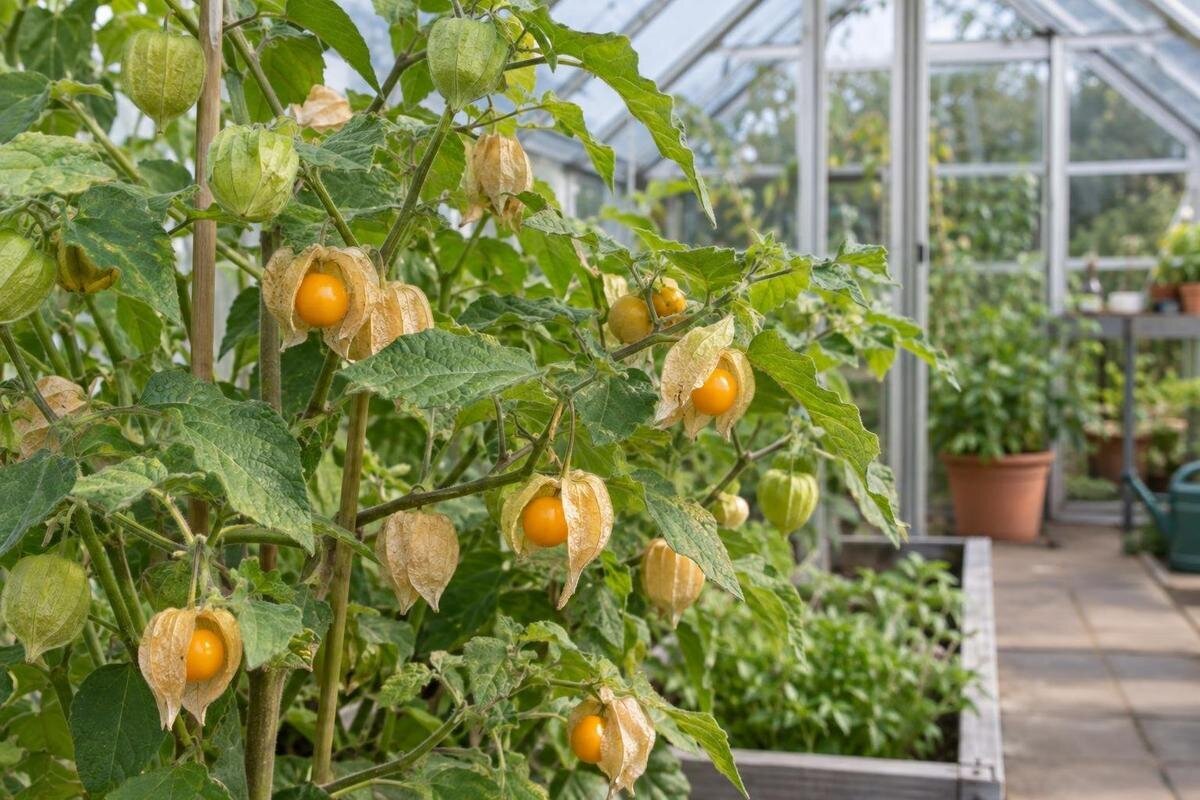
The husk is a useful clue, but judge it together with the berry. Young fruit sits inside a green, papery casing; as it ripens, the husk dries and turns straw-coloured while the berry inside changes from green to golden yellow or orange. A ripe berry often fills the husk and may fall to the ground. Colour can vary, so do not rely on a brown husk alone if the fruit itself is still green. Check several fruits on the same plant because they do not all ripen at once, and leave greener berries to mature rather than harvesting the whole plant together.
Pick or collect mature fruit regularly so it does not get lost on the greenhouse floor beneath leaves and debris. Handle the husk gently and keep it attached until you are ready to use or sort the berry; set aside fruit that is split or mouldy, and do not treat green fruit as ripe. Only fully coloured ripe cape gooseberries are eaten: remove the papery husk and wash the fruit before serving. Because fruit matures in waves, frequent small harvests are more reliable than stripping the plant when the first berries colour. A brief record of flowering and the first ripe fruit can help you refine next season’s sowing date.
Plan for the plant’s full growing cycle
In warm, frost-free conditions, a cape gooseberry may persist beyond one year, but its size and health can make renewing it more practical. In colder settings, treat it as a seasonal plant unless your greenhouse can maintain suitable conditions through winter; passive cover alone is no promise of survival. If you keep an older plant, check its base and inner canopy for damaged, crowded or pest-affected growth before a new season begins. Decide whether retaining it will leave enough light and room for seedlings and other crops, rather than allowing an established plant to occupy space by default.
Think of the crop as occupying greenhouse space for months: seed trays at the beginning, a broad supported plant later, and repeated access while fruit ripens. The Limited Edition Aluminium Greenhouses with Storage area range covers 5.52–28.08 m². Compare the chosen floor plan with the space needed for paths, benches and equipment, then consider how those needs change as the plant matures. A bench used for propagation early in the season may be close to spreading branches later. Plan for both stages so the crop can remain accessible through the final harvest without displacing everything else you want to grow.
Frequently asked questions
Can cape gooseberries grow in an unheated greenhouse?
Yes, if your local growing season is warm and long enough. An unheated greenhouse can provide shelter and extend a mild season, but it may still get very cold overnight. Track temperatures at plant level and do not assume the structure will protect plants from frost.
Do I need two plants for pollination?
Usually not. Cape gooseberry flowers are generally self-fertile, so one plant can set fruit. In a greenhouse, limited insect access or still air may affect pollination, so allow appropriate pollinator access or gently tap flowering branches.
What support should I use?
Use a sturdy stake, cage or frame to support the spreading stems. Position it while the plant is still small, then tie the main branches loosely as they grow. Check ties regularly and leave room for the canopy to widen.
How long does it take to get the first fruit?
Allow several months from sowing. In warm, bright conditions, roughly four to six months is a useful estimate from seed to first ripe fruit, but cool nights, low light and transplant setbacks can extend the wait.
How can I tell when a cape gooseberry is ripe?
Look for a golden-yellow or orange berry inside a dry, straw-coloured husk. Ripe fruit often fills the husk and may fall from the plant. A dry husk alone is not enough if the berry is still green.
Growing cape gooseberries under cover is most rewarding when the crop has a long warm season, space for a supported canopy and enough airflow through hot spells. Use local temperature records to judge the season, watch whether flowers set fruit, and check the berry as well as its husk when harvesting. In colder areas, plan the crop around the available warm months rather than expecting an unheated greenhouse to keep it growing through winter.
