
Growing Carnivorous Plants in a Greenhouse
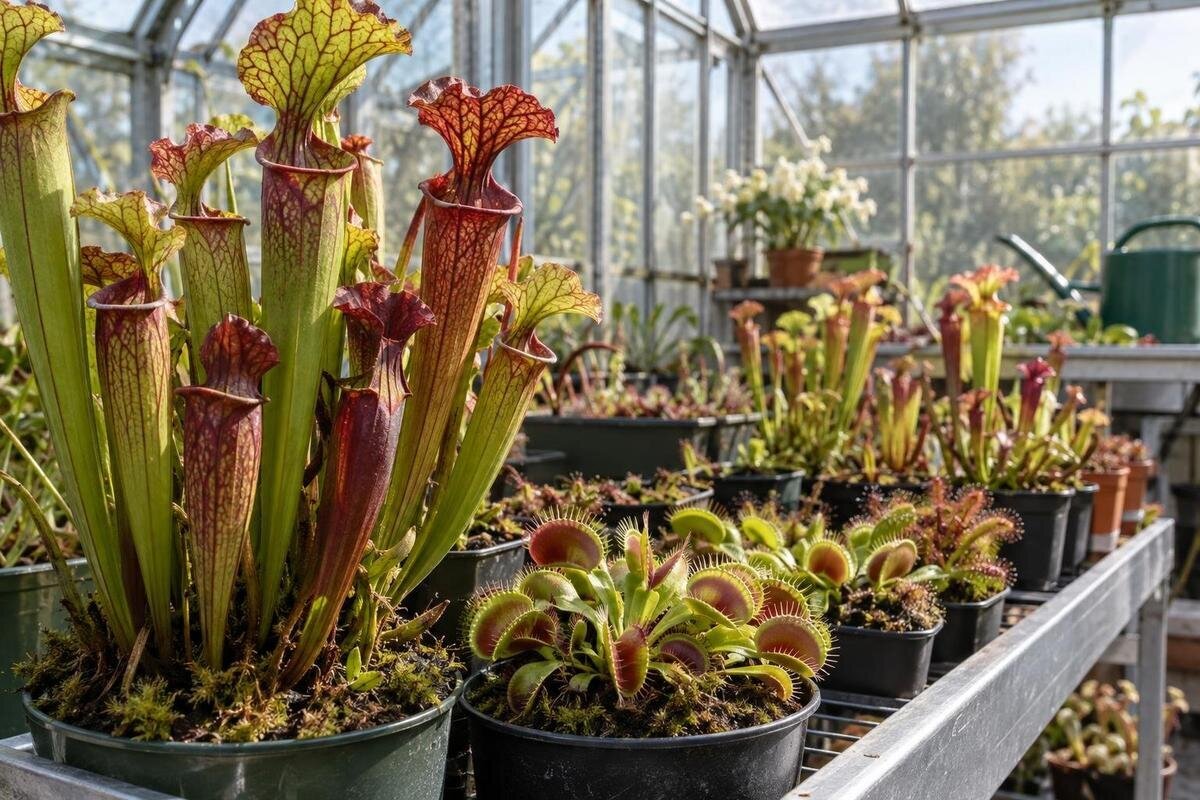
Greenhouse growing guide
Growing carnivorous plants in a greenhouse is less about creating one humid, tropical room than matching each plant to its natural seasonal pattern. A Venus flytrap, a Sarracenia and a Nepenthes can all catch insects, yet differ in light, water depth, night temperatures and winter rest. A greenhouse can provide bright light while also trapping heat. Start with species names, low-mineral water and a plan for seasonal conditions; then decide whether the structure will help deliver them without forcing unlike plants into the same environment.

Species identification and care records
Record the full plant name rather than relying on the broad label “carnivorous plant”. The group includes Venus flytraps (Dionaea muscipula), North American pitcher plants (Sarracenia), sundews (Drosera) and tropical pitcher plants (Nepenthes), among others. They share an adaptation to nutrient-poor habitats, but come from different climates and respond differently to direct sun, standing water and winter conditions. Keep the plant label and any care information that came with it; a named species or hybrid is a more useful starting point than a general category. Create a simple care record for each plant, noting its light requirements, watering method and seasonal rest, if any. Include the date you acquired it and the conditions it was growing in. This gives you a practical reference when arranging benches and helps you distinguish a deliberate seasonal change from an accidental change in care.
The differences affect whether plants belong together. Venus flytraps and many temperate Sarracenia need a seasonal cool rest, whereas Nepenthes include warm-growing and cool-growing groups. Drosera is also diverse: a temperate sundew and a tropical one should not automatically receive the same winter care. If a collection includes plants with opposing needs, arrange them in separate positions or focus on a group with overlapping requirements. A greenhouse is a way to manage conditions, not a reason to treat every carnivorous plant as tropical.
Match light to the plant
Venus flytraps and many Sarracenia are high-light plants and generally need strong direct light. A greenhouse can provide that exposure, but glazing can also intensify heat on clear days. Plants moved abruptly from a dim shelf into harsh sun may scorch, so increase their exposure gradually. Many Nepenthes do better in bright, filtered light, although species and hybrids vary. Sundews and butterworts also span different light levels. Use species-level care information rather than placing every carnivorous plant on the brightest bench.
Observe the sun’s path through the greenhouse at different times of day and consider how it changes between seasons. This helps you identify a bright position, a more sheltered spot and places where afternoon heat may build up. Movable pots make it easier to adjust exposure as you learn how plants respond. When comparing the Classic aluminium greenhouse, available in sizes from 3.77 m² to 28.08 m², sketch the intended bench positions rather than judging by floor area alone. Mark which plants need the brightest positions and which need filtered light. Include nearby trees or buildings in the sketch, so their shade is part of the comparison. Keep a record of where each plant sits when assessing its response; otherwise, frequent moves can make it difficult to identify a suitable position.
Manage greenhouse heat and airflow
A greenhouse can heat up quickly in sunshine, even when the outdoor air feels mild. Record maximum and minimum temperatures at plant height, especially during hot, clear weather, and check more than one position if the structure has sunny and shaded areas. A thermometer near the door may not reflect conditions on a high shelf or beside a sun-warmed wall. Use the readings to decide whether plants need a different position, more shade or better air exchange; an outdoor forecast alone does not tell you the temperature inside.
Some Nepenthes appreciate humid air, but humidity by itself will not create a suitable environment if the plants are also too hot or the air is stagnant. Watch how air moves around foliage and leave room between pots rather than packing them tightly together. If comparing a wall-greenhouse format, the Wall Greenhouse range is listed from 3.69 m² to 14.34 m². Consider the adjacent building when assessing the site, including its shade and reflected heat. Before settling on a layout, work out how you will reach the openings used for ventilation without moving plants each time. Record temperatures during your normal daily routine as well as when you are present to open everything; the arrangement needs to be manageable on an ordinary day.
Use water with very few dissolved minerals
Many commonly grown carnivorous plants are sensitive to minerals that build up in their pots and trays. Low-mineral rainwater, distilled water or reverse-osmosis water is a safer starting point than assuming tap water is suitable. Water quality varies, so use a TDS or conductivity meter if you want to assess dissolved minerals in your supply. Treat its reading as a guide to mineral content, not a test for every contaminant. White deposits on a pot or growing medium can be a warning of mineral build-up, but their absence does not prove the water is suitable.
If collecting rainwater, use a clean collection surface and clean storage, and avoid visibly dirty runoff, particularly after a long dry spell. Keep a reliable reserve so you are not tempted to switch to an untested source when the tank runs low. Label stored water clearly, especially if other garden supplies are kept nearby, and use a consistent place for recording meter readings. When planning space for water containers, the Limited Edition aluminium greenhouse offers listed sizes from 3.77 m² to 28.08 m². Include storage in the layout alongside benches and pots. Think through the route from the container to each tray, leaving enough room to fill a watering can and carry it without leaning over plants or blocking the doorway.

Growing media and watering methods
Choose a clean, nutrient-poor growing medium that suits the plant group. Venus flytraps and Sarracenia are bog plants that need a consistently moist root zone and an appropriate low-nutrient medium. Nepenthes are generally grown in a more open, well-aerated mix rather than treated like plants that live in a deep water tray. Avoid ordinary fertilised potting mix, compost and manure around the roots. Recipes and suitable ingredients vary, so check a reliable species-specific guide and make sure the medium contains no added fertiliser or lime.
A shallow tray of low-mineral water is a common way to keep bog plants moist during active growth, but it is not a rule for every pot. For most Nepenthes, water the medium and let excess drain rather than leaving the pot in a deep tray. Adjust watering to the species and season; a tray routine used during active growth may not suit a plant during winter dormancy. Keep trays clean and separate where practical, so runoff and debris are not shared across the collection. Insects may be caught naturally, but meat and root-zone fertiliser are not substitutes for suitable growing conditions.
Plan for winter dormancy
Venus flytraps and most temperate Sarracenia need a seasonal period of cooler conditions and reduced growth. This rest is part of their annual cycle, not an automatic sign that the plant has failed. Check the needs of the named species before changing its position or watering routine, and do not try to keep a temperate plant in constant warmth simply because the greenhouse makes that convenient. Dormancy requirements can differ, so avoid assuming every plant described as a pitcher plant or sundew follows the same schedule. Add a winter-care entry to the plant’s record, covering its intended position and the watering guidance you will follow. Note the changes you observe rather than judging the whole collection against one plant. This also gives you a useful reference for the following year, when you can compare the same plant at a similar stage.
Greenhouse temperatures can remain warmer than outdoor conditions in sunshine, including during winter. Measure the actual minimum and maximum around the plants and compare those readings with reliable advice for each species; do not expose a plant to cold conditions based on a general rule alone. If you are comparing space for separate groups, the T-Model Orangery Greenhouse listings range from 16.52 m² to 30 m². Use a floor plan to show where the winter-resting plants would sit and how you would reach them for inspection. Keep that plan separate from your summer arrangement, rather than assuming the same bench allocation will work all year. Additional floor area can accommodate different positions, but does not itself create a cool dormancy zone.
Temperature and seasonal needs of Nepenthes and sundews
Nepenthes are not one uniform tropical group. Lowland species generally suit warmer conditions, while highland species are adapted to cooler conditions and often cooler nights; intermediate plants and hybrids broaden the picture without removing the differences. Find the plant’s full name and research its specific needs before choosing a greenhouse position. Recording both daytime highs and overnight lows can help reveal whether a site is consistently warmer or cooler than expected, especially when outdoor conditions change quickly. Compare both readings with the plant’s requirements rather than relying on a daily average. Before adding another Nepenthes, check whether its needs overlap with those already in your collection. A shared genus name is not enough to decide that two plants should occupy the same growing area.
Some sundews have a different seasonal pattern from the better-known temperate bog plants. Cape sundew (Drosera capensis), for example, does not usually need the same winter dormancy as a Venus flytrap, though cold can slow its growth. Other Drosera species should be checked individually. For climbing Nepenthes, think about vertical room as well as bench area. The Pyramid Greenhouse listings span 5.53 m² to 18.9 m². Compare the selected configuration’s internal height with the positions you intend to use, rather than treating its floor area as a guide to climbing space. Include room to inspect the plant and move its pot when necessary. Keep tall growth clear of the access needed to care for smaller sundews nearby.
Arrange plants by shared growing conditions
Group pots by the conditions they need, not simply by their botanical labels. Put plants that need strong light where they will not be shaded by taller specimens, and leave enough room to reach, water and inspect each pot. Separate trays can help keep watering routines distinct, while clear labels make it easier to move a plant for dormancy or to respond to heat. Leave space around foliage for air movement and avoid placing pots where water dripping from above will constantly wet plants with different needs.
Regular inspection is useful in a closely spaced collection: check new plants before placing them beside established ones, remove dead leaves and keep benches and trays clean. Carnivorous plants may catch insects, but they should not be relied on to control greenhouse pests. If storage matters to your layout, the Limited Edition greenhouse with built-in storage has listed sizes from 5.52 m² to 28.08 m². Check the exact storage arrangement against the supplies you intend to keep there. Give clean water containers, spare labels and growing materials designated places, separate from products that could contaminate them. Leave room to take items out without temporarily placing them among the pots. An orderly storage arrangement makes it easier to keep plant care and general garden tasks separate.

Check usable space, height and ventilation
Estimate space from the plants, benches and access you need, not just from the number of pots you own today. Tall Sarracenia and climbing Nepenthes need more vertical room than a compact sundew, while benches and paths reduce the floor area available for plants. Check the internal height, door access and room to reach the back of a bench. Also consider where water will be stored and whether you can move pots easily when their seasonal position needs to change. Draw the benches and trays to scale, then mark the route you would use while carrying a full watering can or a large pot. Allow somewhere to put a tray down during cleaning. These everyday tasks provide a more useful layout test than fitting as many pots as possible into the available space.
Before choosing a structure, review the actual ventilation and shading options for the configuration you are considering. The position and accessibility of openings matter to day-to-day heat management, but a product name or listed floor area does not confirm those details. The Prestige Greenhouse listings span 3.77 m² to 28.08 m². Compare the dimensions and features of the specific option with your proposed layout. Check that benches, tall plants and stored equipment will not obstruct access to openings or shade controls. Keep floor area, usable bench space and internal height as separate items in your comparison rather than using one measurement to stand for all three.
Decide whether the greenhouse suits the collection
A greenhouse is not essential for every carnivorous plant. In a suitable local climate, some temperate species may grow outdoors, where seasonal conditions are easier to experience naturally. A greenhouse can help you organise pots and manage exposure, but it can also trap heat and may keep a temperate collection warmer than intended. Tropical plants may need more protection from cold, while their requirements still vary by species. Choose the structure only after comparing the plants’ needs with the conditions at your site.
For a large collection, extra floor area may make it easier to keep groups apart, but it does not automatically create separate climates. The spacious Orangerie greenhouse is listed in sizes from 47 m² to 70 m². Consider that scale in relation to the collection you can realistically maintain, including the time needed for watering, cleaning and seasonal moves. List the plants that fit the conditions you can provide now, then identify any that would need a separate growing area. This makes the trade-off between expanding the collection and simplifying its care more concrete. A smaller, well-organised collection with compatible needs may be easier to care for than a larger assortment sharing one unsuitable environment.
Frequently asked questions
Can Venus flytraps and Nepenthes grow in the same greenhouse?
They can share a greenhouse only if you can provide suitable positions for both. Venus flytraps need strong light and a cool seasonal rest, while Nepenthes requirements vary between warm- and cool-growing groups. Use separate benches or zones where possible, and check the care needs of each named plant.
Is tap water suitable for carnivorous plants?
It depends on its dissolved mineral content and the plant. Low-mineral rainwater, distilled water or reverse-osmosis water is a safer starting point for many commonly grown species. A TDS or conductivity meter can help assess mineral levels, but it does not identify every possible contaminant.
Do all carnivorous plants need winter dormancy?
No. Venus flytraps and many temperate Sarracenia need a seasonal cool rest. Tropical Nepenthes and some sundews have different seasonal patterns. Check the named species or hybrid before changing its winter conditions; genus names alone may not provide enough detail.
Is a greenhouse necessary for growing carnivorous plants in Australia?
Not always. Some temperate species may suit an outdoor position where local conditions match their needs. A greenhouse can help organise a collection, but it can also become very hot in strong sun and may not provide the cool winter rest a temperate plant needs.
Should I feed plants grown in a greenhouse?
Usually, you do not need to feed them by hand if they can catch insects. Do not give them meat or use ordinary fertiliser in their growing medium. Prioritise suitable light, low-mineral water and the right seasonal conditions; catching insects cannot make up for poor growing conditions.
A reliable collection starts with plants that share enough of the same light, water and seasonal requirements to thrive in the positions you can provide. Record greenhouse temperatures, use suitable low-mineral water and keep labels with each plant so you can adjust care by species. Once you have managed a full growing cycle successfully, you will have a clearer basis for deciding whether to add plants with different needs or create a separate growing area.
