
What Causes Long, Leggy Greenhouse Seedlings?
Seedling care
Long, thin stems and wide gaps between leaves are often a sign that seedlings are reaching for more light than they receive. In a greenhouse, warmth and close sowing can intensify the response, so height alone does not identify the cause. Compare plants of the same crop and age, then check light, temperature and spacing at seedling height. Early adjustments may improve the growth that comes next, although an elongated stem will not usually shorten again.

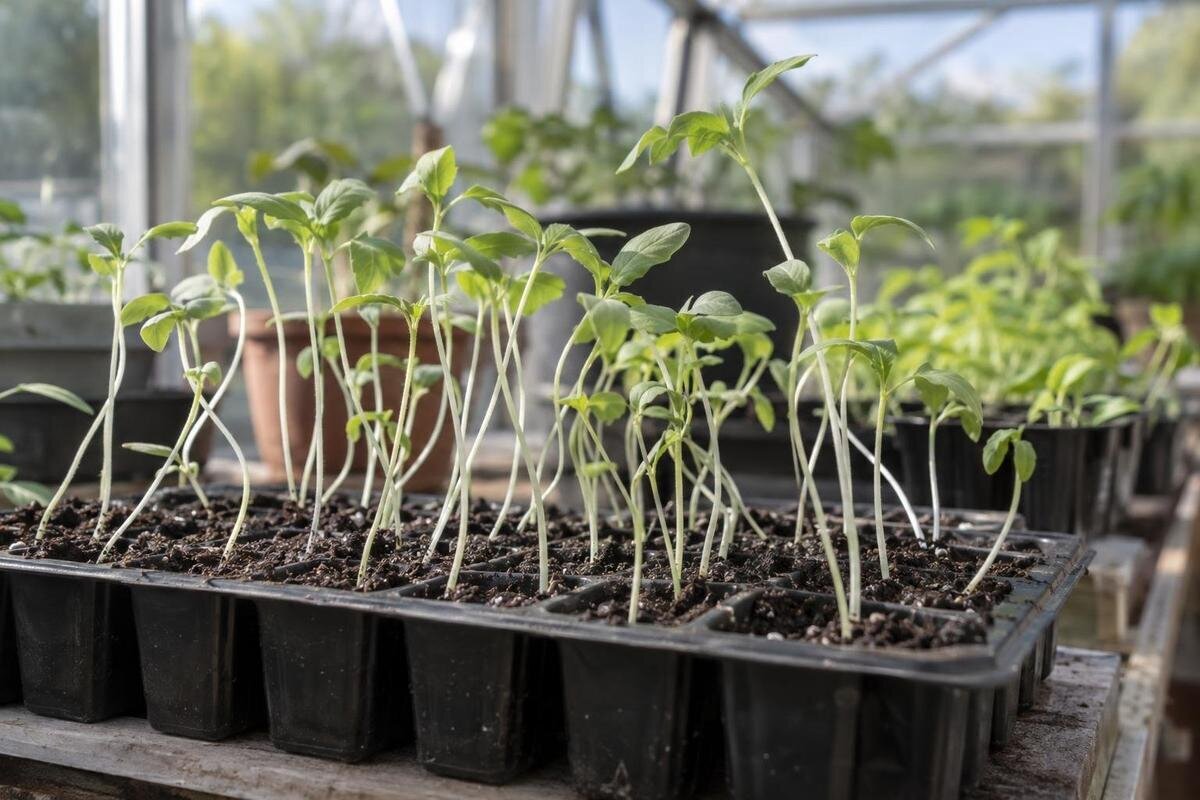
What leggy seedlings look like
Leggy seedlings usually have thin, elongated stems, longer gaps between leaves than expected for that crop, and a tendency to lean or flop. Leaves may look small compared with the stem, but appearance varies by species and age. Height alone is not enough: peas, climbing plants and many other crops naturally differ in shape as they develop. Compare seedlings of the same variety, sown at the same time and seen at the same stage, rather than applying one ideal height to every tray. Use the seed packet or a reliable crop guide as a baseline; a brief stretch as a shoot emerges is not automatically a problem.
Look at the stem sections between successive leaves, as well as stem thickness and whether new growth can support itself. At the cotyledon stage there may be too little growth to judge confidently, so reassess when the first true leaves appear. Note which plants are affected: a few at one edge may reflect natural variation, while most seedlings leaning in the same direction suggests a shared condition. A side-on photo or written note makes comparison easier after a few days. If a stem is pinched, darkened or collapsing at mix level, investigate a different problem rather than labelling it legginess.
Low light is the first condition to check
Light is the first condition to assess because young plants need it to develop leaves and sturdy stems. When the light reaching the leaves is too weak or too brief for the species, a seedling may extend quickly while producing relatively little leaf area. The problem is often more visible when warmth also encourages fast growth: the stem lengthens, but the plant cannot build compact form at the same pace. A greenhouse that feels bright to you may still provide too little usable light at bench level. Compare seedlings of the same crop in different positions if possible.
A greenhouse does not guarantee strong light. Short winter days, overcast weather, shade from buildings or trees, and a bench tucked behind shelving can all reduce what reaches seedlings. Check crop-specific sowing instructions instead of relying on one universal number of light hours. If natural light is insufficient, move trays to the brightest suitable position or consider a purpose-made grow light, following its placement guidance and crop advice. Avoid shifting sheltered seedlings abruptly into harsh direct sun. When planning storage, consider whether its position would shade the growing area. The Limited Edition greenhouse with built-in storage is listed in sizes from 5.52 to 28.08 m². Compare the storage and bench arrangement you need rather than assuming the overall area tells you how much well-lit propagation space will be available.
Where light is lost inside a greenhouse
Light can vary across a greenhouse. Frame members, shelves, hanging items, taller plants and nearby trees or fences may cast shade, and the sunny patch moves through the day and across seasons. Dust or algae on glazing can also reduce the light entering. Check the actual growing area at seedling height in the morning, around midday and later, rather than judging from the doorway or roof. Note whether all trays on a bench are affected or only those behind an obstruction; that distinction helps separate a general shortage from a local shadow.
If the brightest light comes from one side, turning trays periodically can reduce one-way leaning, but rotation does not replace light that is missing throughout the day. Move avoidable shade sources where practical, without shifting delicate seedlings straight into a hotter, exposed patch. A simple sketch of when shadows cross the bench can help you choose a position before sowing. Include fixed obstructions as well as items you can move: relocating a shelf is a different decision from working around a neighbouring fence. If comparing the Bloomcabin Prestige Greenhouse, listed from 3.77 to 28.08 m², use that sketch alongside the proposed layout. The useful question is where the trays would receive light, not merely which model has the largest footprint.
Warmth can intensify low-light stretch
Warmth can intensify low-light stretch. In conditions warmer than a crop needs after emergence, stems may lengthen quickly, particularly when light is weak and leaves cannot develop at the same pace. The best temperature varies by species and stage: what helps a seed germinate is not automatically ideal for a young plant afterwards. Record emergence as well as sowing dates so you know when to reassess the conditions for each batch. A tray of newly emerged seedlings and one still waiting to germinate should not be treated as though they are at the same stage simply because they share a bench. A greenhouse may heat during sunny periods and cool at night, so one comfortable reading beside the door does not show what a tray experiences across a full day.
Use a thermometer near the seedlings and note the high and low for several days, especially if trays sit near glazing, a door or a shaded corner. Compare those readings with the crop’s propagation guidance; avoid using a single temperature target for every seed. If the area is too warm, ventilation or appropriate shade may help, but keep changes within the crop’s needs and avoid cold draughts. In a larger growing area, take readings at the intended propagation bench rather than treating one measurement as representative of the whole space. The Spacious Greenhouse is listed from 47 to 70 m²; its overall size does not establish the temperature seedlings would experience.

Crowded trays create light competition
Seedlings sown too thickly compete for light as soon as their leaves begin to overlap. Faster-growing plants can shade smaller neighbours, which may reach upwards and become thinner than seedlings around the tray edge. A crowded patch can therefore look worse in its centre than at its perimeter. Compare the centre and edges within the same batch before concluding that the whole greenhouse is too dark. Also check whether the poorer growth follows a dense patch of seedlings or a shadow falling across the tray; both can occur together, but they call for different adjustments. More light may help, but it will not remove the canopy created by tightly packed leaves. Follow the crop’s recommended spacing rather than assuming that extra seeds per cell will compensate for poor emergence.
Prick seedlings out when they have reached a suitable stage and can be handled without excessive root damage; species differ in how well they tolerate disturbance. Give each remaining plant room for its leaves to expand without sitting beneath a neighbouring canopy. Where roots are tangled, snipping unwanted seedlings at mix level can avoid tugging at the plants you are keeping. If bench space is limiting, sow fewer trays at once. Allow for the space plants will need after thinning or potting on, not just the space occupied by freshly sown trays. The Aluminium Classic Greenhouse is listed from 3.77 to 28.08 m². Use the specific model’s dimensions to plan that later spacing, with enough access to handle individual trays.
Moisture and nutrients can complicate the diagnosis
Watering and feeding matter, but neither is the first fix for every elongated stem. Mix kept constantly wet can leave roots short of air and make plants weak, while severe drying can interrupt growth; height alone does not distinguish these problems. Excess fertiliser can encourage soft growth in some plants, and adding feed does not replace light. Check the moisture in the mix, how it drains and what the seed-raising mix is intended for before changing a routine. Follow crop-specific instructions rather than responding to a thin stem with extra water or fertiliser.
Inspect the stem at the mix line and, only if the plant can be lifted without tearing it, look at the roots. A long, thin stem that remains upright is different from one pinched at soil level, darkened or collapsing; those signs may indicate a disease or moisture problem instead of simple stretching. Remove clearly decaying seedlings and avoid transferring wet mix between trays. If losses are spreading or the cause remains uncertain, ask a knowledgeable local nursery or horticultural service for advice rather than applying treatments at random.
What to change first after spotting stretch
Act while seedlings are small. Improve the light reaching the leaves and bring temperatures into the crop’s recommended post-emergence range; then watch the next leaves and stem sections for a change. Do not try to make plants sturdy by abruptly putting them into full outdoor sun or wind. Seedlings raised under cover can be stressed by a sudden change, and hardening off is a separate gradual transition before planting out, not a remedy for inadequate light. If a dark position and excessive warmth are both obvious, address both carefully rather than allowing the stress to continue.
Thin crowded patches and move trays only when the new position is more suitable, keeping labels with the plants. When the cause is unclear, change one condition at a time and note what you did; this makes the next assessment more useful. Record where a tray came from as well as where you moved it, so you can relate any improvement to the conditions it experienced. For a wall-side growing area, assess whether the intended bench position addresses the light or temperature problem you have identified. The Wall Greenhouse listing covers models from 3.69 to 14.34 m². A smaller structure is not automatically brighter or easier to manage for seedlings, so choose the position before assuming a change of greenhouse will help.
When a stretched seedling can recover
Whether a stretched seedling can recover depends on how much of it is still healthy and how quickly its growing conditions improve. An elongated stem generally will not shorten or become compact again. Instead, look for new leaves emerging closer together on a firmer stem, and check whether the growing point remains active. At the cotyledon stage, the first true leaves provide a useful point for reassessment; there may not yet be enough growth to judge the outcome. On a seedling that already has true leaves, distinguish the old stretched section from growth produced after you changed the conditions. This avoids rejecting a recovering plant simply because its lower stem still looks lanky. Keep a sound seedling in a crop-appropriate environment and give it time to produce new growth. If it keeps falling over, stops growing or has a damaged growing tip, starting another sowing may be more practical if the crop’s timing allows.
Do not bury the long stem as a universal remedy. Some crops tolerate deeper planting when potted on, while others may be damaged or develop stem problems; follow guidance for that species and handle roots gently. A small support can hold a healthy plant upright, but it does not correct low light, excessive warmth or crowding. If repeated difficulties lead you to consider the Limited Edition Aluminium Greenhouses, listed from 3.77 to 28.08 m², identify what the new arrangement needs to change. More room may let you separate crowded trays, but it does not by itself correct the conditions that caused stretching. Keep the immediate recovery decision separate from a longer-term purchase.

Plan a propagation area around light and access
Plan a propagation area so each tray is easy to inspect, water and reposition. Measure the bench and access space rather than counting only the greenhouse floor area; trays need to be reachable, with room to lift one without disturbing its neighbours. Keep seedlings where shelves, hanging equipment or established plants will not block their light. If raising several crops, keep them labelled and grouped by their needs so one adjustment does not suit one species but stress another. A consistent position also makes temperature readings and comparisons between trays more meaningful.
Before choosing a greenhouse, mark the intended bench location on a site plan and observe the light there through the day. The T-Model Orangery Greenhouse listing gives an area range of 16.52–30 m², useful for comparing overall model scale. Check detailed dimensions against the bench, aisle and door access you intend to use. Include the practical movements involved in propagation: carrying a tray through the doorway, lifting it from the bench and reaching plants at the back. This turns a floor-area comparison into a usable layout without assuming that the listed area establishes tray capacity.
Prevent another leggy batch
Keep a short record for the next sowing: crop and variety, sowing and emergence dates, tray position, spacing, and any changes to light or watering. Note temperatures close to the leaves rather than elsewhere in the greenhouse. A side-on photo of a few labelled seedlings can show whether new stem sections are becoming shorter and firmer. Use the same viewpoint for later photos so a different angle does not obscure the comparison. Record when a change was made, rather than relying on memory to connect it with new growth. Compare plants of the same age; seedlings that emerged several days apart may not be directly comparable. If only one corner stretches, investigate its shade or heat; if every tray is affected, look for a condition shared across the growing area.
Match sowing dates to crop guidance and to the light and temperatures you can provide, rather than starting earlier simply because the greenhouse feels sheltered. Use your records to work out whether the limiting factor was siting, heat, sowing density or a combination before deciding to expand. When comparing a different design, such as the Pyramid Greenhouse, listed from 5.53 to 18.9 m², return to that diagnosis: what would you arrange differently for the next batch? Extra growing space is useful only if your plan addresses the conditions you need to change. Preventing another leggy batch depends on managing light, warmth and spacing, not simply choosing a different structure.
Frequently asked questions
Why are my greenhouse seedlings leggy when the greenhouse looks bright?
Light can vary across a greenhouse, and a bright doorway does not show what reaches a shaded bench. Check the trays at seedling height at different times of day. Warm conditions, close sowing and low light can also combine to encourage stretch.
Can high temperature alone make seedlings stretch?
Warmth can speed stem growth, but leggy seedlings often result when that growth outpaces the light available. The best temperature depends on the crop and its stage, so check conditions near the leaves and compare them with crop-specific guidance.
Will stretched seedlings become short and stocky again?
An elongated stem generally will not shorten. However, a seedling may produce firmer, more compact new growth once its conditions improve. Judge recovery by the leaves and stem sections that develop next, rather than expecting the existing stem to change shape.
Should I move leggy seedlings into direct sunlight?
Move them towards a brighter suitable position, but avoid an abrupt shift from sheltered conditions into harsh sun. If natural light is inadequate, a purpose-made grow light may help; follow its placement guidance and the needs of the crop.
Can I bury a leggy seedling's stem deeper?
That depends on the species. Some crops tolerate deeper planting when potted on, while others may be damaged or develop stem problems. Check crop-specific advice before burying a stem, and avoid bending or forcing a fragile seedling into place.
Treat legginess as a clue about growing conditions, not just as an untidy shape. Compare seedlings at the same stage, then look at the light reaching their leaves, the warmth at tray level and how closely they were sown. Correct the conditions that fit the pattern and judge progress by new growth. If stems keep stretching or plants collapse at mix level, reassess the cause before repeating the sowing.
