
Electric or Fuel Heating for Your Greenhouse
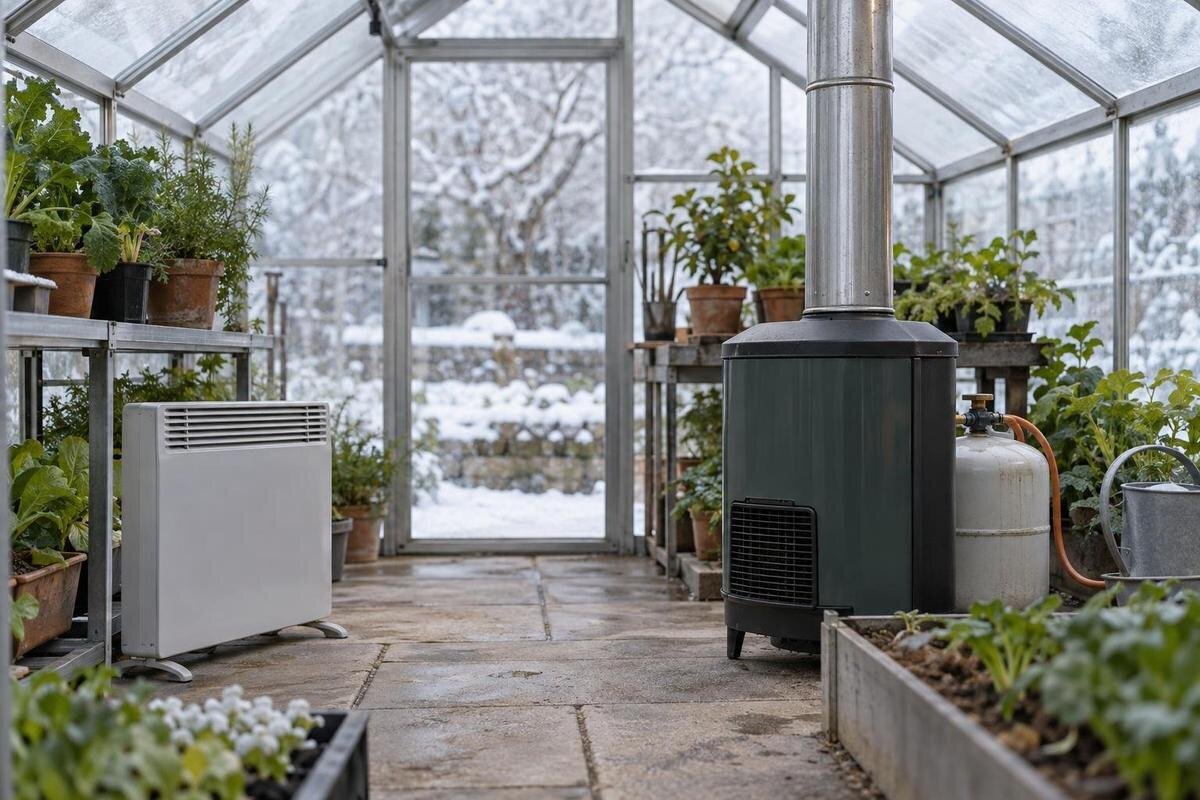
Greenhouse heating guide
Electric and fuel-burning greenhouse heaters can provide heat, but they affect the growing space in different ways. Electric units avoid on-site combustion; fuel-burning models raise questions about exhaust, water vapour, air supply and flue design. Both depend on a suitable installation, ventilation and a realistic operating routine. Compare the appliance type, the greenhouse layout and the instructions together rather than choosing by fuel name alone. This guide focuses on moisture, emissions, ventilation, installation and everyday use—not on calculating running costs or heater size.

What to compare 1
Greenhouse details and heating needs
Before comparing energy sources, identify the greenhouse the heater will serve. Record its floor area, internal height, glazing or covering, doors, vents and obvious gaps, along with exposure to wind and sun. Note how often doors are opened and whether partitions or crowded staging affect airflow. These details influence heat loss and air exchange; floor area alone is not a heater specification. The Classic aluminium greenhouse range is listed from 3.77 m² to 28.08 m². That range describes possible scale, but use information for the exact structure you select when assessing equipment. Do not infer heat retention or heater capacity from a greenhouse name or area figure.
Then describe the operating pattern: occasional protection during cold spells, regular growing, or maintaining conditions while the greenhouse is unattended. That affects the controls, monitoring and contingency plan you need, regardless of energy source. Note when heat will be required, who can check the space and what will happen if power or fuel is interrupted. A portable unit can still be unsuitable if it needs attention when nobody is available. You do not need to select a precise temperature from a generic chart before assessing equipment, but you should have a clear use case and follow relevant plant and appliance guidance.
Electric heaters avoid combustion inside the greenhouse
Electric heaters vary. A resistance unit converts electricity to heat at the appliance, while a heat pump transfers heat and has different components and operating requirements. Neither burns fuel inside the greenhouse, so neither produces combustion exhaust or combustion-generated water vapour in the growing space. That can simplify the local emissions and moisture comparison. It does not mean electricity has no emissions overall: generation-related emissions may occur elsewhere. Compare the exact heater type rather than treating every electric model as alike. Fans, controls and noise vary by design; for a heat pump, check any outdoor equipment and condensate arrangements in the model documentation.
The electrical supply is a separate constraint. Check the heater’s stated requirements and whether the site can support them; do not assume an existing power point, shared circuit or outdoor lead is suitable. A permanent setup, cable route and protection from damp or accidental contact need assessment by a qualified electrician. The Lean-to wall greenhouse range is listed from 3.69 m² to 14.34 m². That area helps identify the structure, but cannot tell you whether the site has a suitable circuit, safe cable route or appropriate heater clearances. Include other equipment using power in the greenhouse when you discuss the supply.
What to compare 2
Fuel heaters differ by flue and combustion design
Fuel-burning heaters use different fuels and combustion designs, so check the precise model rather than assuming all heaters vent in the same way. A flued unit is designed to carry combustion products outside; an unflued or direct-fired unit discharges them into the greenhouse air. Combustion uses air and produces exhaust. Water vapour is one by-product, and carbon monoxide can be produced by incomplete combustion; exhaust composition varies with fuel and design. Check how the appliance obtains air and whether it needs electrical controls or a fan. Even if a product is described as a greenhouse heater, check whether its particular fuel and design suit your intended enclosed space.
Flued does not mean install anywhere: the exhaust route, clearances, air supply, servicing access and compatible materials all need to be addressed for the specific greenhouse. Do not assume a wall or roof panel can take an opening, or that an outdoor or patio model is suitable indoors. The Limited Edition aluminium greenhouse range is listed from 3.77 m² to 28.08 m²; the model identity and area do not establish whether a combustion heater can be fitted. Check the heater instructions alongside the greenhouse information, and have a qualified installer assess site-specific questions. If the instructions do not clearly cover the intended setting, seek clarification rather than improvising.
Combustion can add moisture to greenhouse air
Moisture is a practical difference between some fuel and electric systems. With an unflued fuel heater, combustion products enter the enclosure, including water vapour; the amount depends on the fuel and appliance. Added vapour can contribute to condensation on glazing or frames, especially when surfaces cool. A correctly designed and installed flued system sends combustion products outdoors, so its effect on indoor moisture should differ, but the actual design still needs checking. Combustion is only one source of moisture: watering, wet growing media, plant transpiration and damp surfaces also add water to greenhouse air. Avoid attributing every condensation problem to the heater alone.
An electric heater avoids water produced by combustion at the point of use, but it does not dry the space. Heating can change a relative-humidity reading without removing the water in the air; cool panels may still collect condensation. Consider moisture management separately from heat source, including plant density, watering routines and air exchange. The T-Model Orangery range is listed from 16.52 m² to 30 m², but area alone says little about internal volume, plant load or moisture behaviour. Use the selected structure’s details and ventilation information rather than assuming floor area predicts humidity.

What to compare 3
Electric heating does not remove the need for ventilation
Ventilation matters for reasons beyond heater combustion. Greenhouses need air exchange to manage humidity and changing conditions; ventilation can also carry heat away, so the balance depends on the structure and how it is used. An electric heater does not create flue gases, but it does not make an airtight greenhouse a good operating environment or remove moisture from plants and irrigation. A fuel-burning unit may have specific combustion-air or ventilation requirements in addition to routine greenhouse ventilation. Keep those requirements distinct: opening a general vent is not a substitute for a flue or an approved installation.
Check what ventilation the greenhouse actually has—openable vents, doors or a mechanical system—and how each is operated. A product’s size or style does not, by itself, tell you the airflow available. The Pyramid greenhouse range is listed from 5.53 m² to 18.9 m²; that floor-area range is not a ventilation specification. Check the selected structure’s documented openings and the heater’s operating instructions, then ask an installer how they work together. Do not close vents solely to retain heat if that conflicts with heater requirements or the ventilation your plants and structure need.
Installation constraints can rule out an option
Installation can narrow the shortlist before performance comparisons do. For an electric heater, consider the proposed position alongside the greenhouse’s working layout. Connections need to be kept away from water, condensation and routine movement, while the appliance needs the clearances specified by its manufacturer. Check how watering, moving pots and reaching benches would work with the heater in place. Its environmental limits and any requirement for a fixed connection also need to be understood before you settle on a location. A product photograph cannot establish electrical suitability: use the instructions to discuss the proposed arrangement with a qualified electrician rather than adapting a household lead or power point on guesswork.
Fuel equipment adds questions about delivery, refilling or replacement, storage, air supply, flue route and access for inspection. Each depends on the specific appliance and fuel, so follow its documentation and have a qualified professional assess placement. Do not assume a greenhouse storage compartment is suitable for fuel or that glazing and frames can accept a flue opening. The Limited Edition greenhouse with built-in storage is a named structure option, but built-in storage does not establish approval for fuel storage or heater clearances. Treat storage and installation as separate checks; do not improvise openings through greenhouse panels.
What to compare 4
Compare upkeep and dependence on power or fuel
Day-to-day effort differs by model, not just by energy source. An electric heater has no burner or combustion flue to maintain, but a fan, controls, connections or filters may still need checks or cleaning as the manual specifies. A fuel heater can require attention to its burner, fuel supply, combustion air and flue, with tasks and intervals set by the manufacturer. Ask what routine work you can do and what needs a technician. Do not assume electric means maintenance-free or that every fuel model has the same service schedule. Ease of access also matters when a fault or routine check occurs in poor weather.
Consider who will operate the heater and how often the greenhouse is visited. Refilling or replacing fuel may be inconvenient if the supply is not close at hand, while an electric unit depends on an available supply whenever it is needed. A fuel appliance may still rely on electricity for ignition, a fan or electronic controls, so fuel on site does not automatically provide backup heat during an outage. When considering the Prestige greenhouse range, include heater access and space for servicing in your proposed layout. Think about whether routine checks would require moving pots or staging, and whether the person responsible could reach the equipment easily.
Greenhouse layout and heat distribution
Heat does not necessarily spread evenly through a greenhouse. Height, length, internal layout, draughts and vent positions can leave areas at different temperatures; a fan heater’s airflow and a heat pump’s circulation pattern are model-specific. A thermostat reading close to a heater, door or sunlit panel may not represent conditions elsewhere, so follow the manufacturer’s sensor-placement guidance and observe representative points in the space. Do not add fans or redirect a heater outlet without checking its instructions. Instead, assess the appliance’s stated use and airflow requirements in the actual structure, including how people move through it.
The spacious greenhouse range is listed from 47 m² to 70 m². When comparing layouts at this scale, consider the arrangement of the growing space as well as its overall footprint. Internal height, partitions, crop arrangement and ventilation affect how air moves, so include these details when discussing coverage with an installer. Mark the intended heater and sensor positions on the same layout as the benches, doors and vents. This gives the discussion a specific setting rather than relying on floor area alone. Keep heat distribution separate from heater sizing: a suitable position does not, by itself, establish the output needed or promise a particular temperature.

What to compare 5
Read the heater specifications, not just the fuel label
When you have a shortlist, read the technical specification and instructions for each exact model. Check the fuel type, whether it is flued or unflued, stated suitability for the intended setting, ventilation needs, installation clearances, controls and maintenance requirements. For electric units, establish whether the appliance is resistive or a heat pump and check any additional equipment or condensate arrangements. For fuel appliances, confirm how exhaust is handled and what supply is required. Look for information that addresses the conditions in your greenhouse; do not infer an environmental rating from a product’s appearance or a broad retailer category. Ask the supplier or installer to clarify ambiguous wording.
Compare like with like and pay attention to the assumptions behind any performance claim. An advertised output figure alone does not establish how a heater will perform in your structure, in your local conditions or with your ventilation operating as required. Check whether the controls suit your intended use, how the appliance should be monitored and what it needs during a power interruption. If an important specification is missing or unclear, request the relevant manufacturer information before deciding. Do not use a general description such as indoor, outdoor or portable as proof that a heater is suitable for a greenhouse.
Compare the practical trade-offs
Once unsuitable models have been removed, compare what operating each remaining option would involve. For an electric heater, weigh the available supply and installation arrangements against the benefit of avoiding combustion exhaust and combustion-produced moisture in the growing space. For a fuel-burning heater, consider fuel access, exhaust handling and combustion-air requirements alongside routine greenhouse ventilation. Neither comparison ends with the energy source: controls, monitoring and upkeep still need to fit your use. An option that looks convenient for occasional supervised heating may be less practical when the greenhouse is unattended. Make that distinction explicit rather than choosing by fuel label or assuming one type is universally preferable.
Keep a short comparison record for the shortlisted heaters, using the same greenhouse details and operating pattern for each. Separate confirmed requirements from unresolved questions, and note who would handle refilling, routine checks, servicing and interruptions to the supply. This makes differences in everyday responsibility easier to see without repeatedly comparing isolated specifications. Take any remaining installation questions to a qualified electrician or fuel-appliance professional with the relevant instructions and site details. An option that depends on blocking required vents, improvising a flue route or using an unchecked supply is not a sound match. The final choice should fit both the structure and the people who will operate it.
Frequently asked questions
Does an electric greenhouse heater add water vapour?
It does not add water through combustion because it burns no fuel at the point of use. It also does not remove moisture from plants, wet growing media or the air, so condensation can still form on cool surfaces. Check the instructions if an electric system has additional functions such as cooling.
Can I use an unflued gas heater in a greenhouse?
Only consider it if the exact heater’s documentation permits use in the intended greenhouse setting and a qualified professional confirms the site requirements. An unflued unit releases combustion products, including water vapour, into the space. Do not assume a patio or shed heater is suitable.
Does a flued fuel heater still need ventilation?
Yes. A flue is designed to carry exhaust outside, but the appliance may still have specific air-supply and ventilation requirements. The greenhouse also needs air exchange for reasons unrelated to combustion. Follow the heater’s instructions and get site-specific advice rather than treating a flue as a substitute for ventilation.
Will a fuel-burning heater work during a power outage?
Not necessarily. Some models need electricity for ignition, a fan or electronic controls, even if they burn fuel. Check the instructions for the exact appliance and plan for interruptions; a fuel supply alone does not prove the heater can operate without power.
Which type is safer: electric or fuel-burning?
Neither is automatically safer in every greenhouse. Electric equipment needs a suitable supply and placement; combustion equipment brings exhaust, air-supply and flue considerations. Choose a model intended for the setting, follow its instructions and have installation questions checked by a qualified professional. Never rely on smell to assess combustion exhaust.
There is no universal winner between electric and fuel-burning greenhouse heat. Electric models avoid combustion exhaust and combustion-produced moisture in the growing space, while fuel appliances require closer attention to exhaust, air supply, fuel handling and installation. Either choice can disappoint if the supply, ventilation or maintenance plan does not suit the site. Narrow the shortlist using the exact heater instructions and the details of your greenhouse, then choose the option whose operating requirements fit the structure and your day-to-day routine.
