
Growing Cucamelons in an Australian Greenhouse
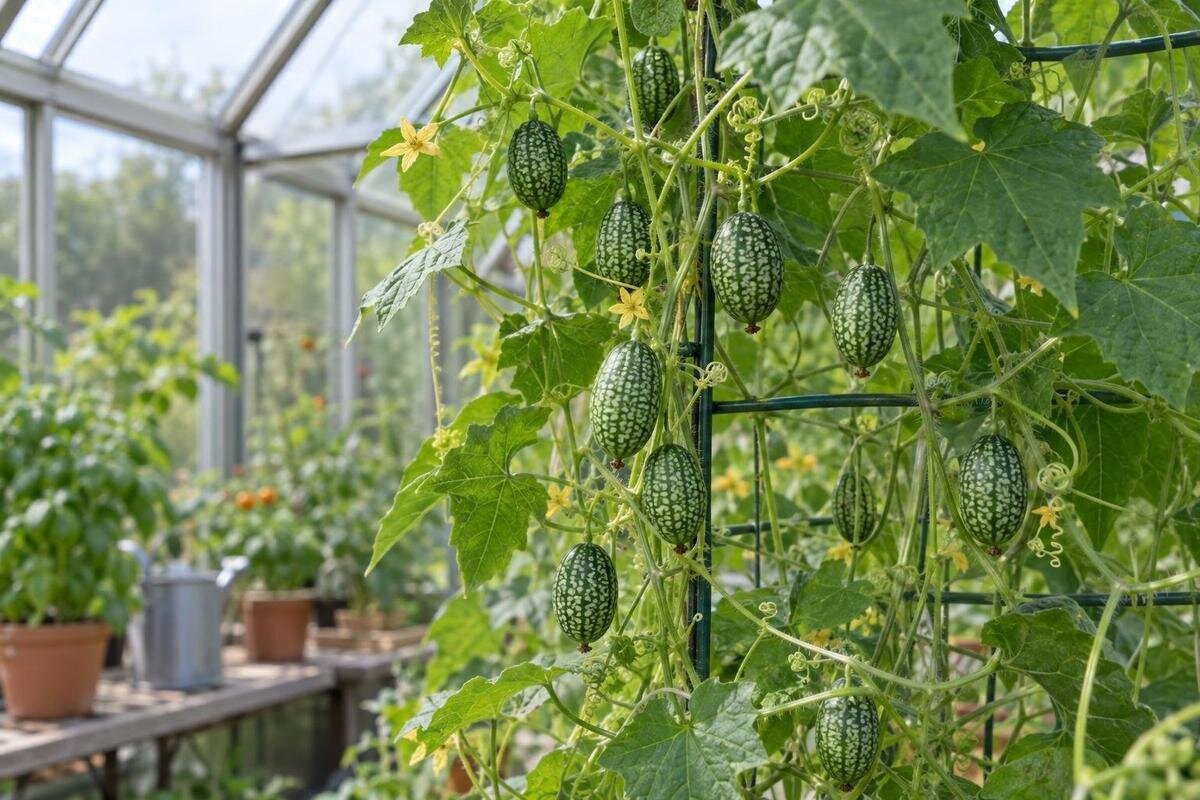
Cucamelon growing guide
Cucamelons can turn greenhouse height into productive growing space, but they still need a warm, sufficiently long season. In Australia, the right sowing window depends on local frost risk, soil warmth and how quickly a protected structure heats up, not on one national calendar. This guide follows the crop from seed to harvest, with advice on starting seedlings, training the vines, managing pollination and picking the fruits before they become overmature.

Is a greenhouse a good place for cucamelons in Australia?
Cucamelon (Melothria scabra), sometimes called a Mexican sour gherkin, is a climbing, warm-season cucurbit with small, striped fruit. It needs sustained warmth to grow, flower and crop, and its vines make good use of vertical space. A greenhouse can shelter seedlings from cool weather and give a crop more protection at the beginning or end of the season. It does not, by itself, create a warm growing environment: an unheated structure can cool sharply overnight, and cold soil slows establishment. Treat it as protection from some weather, not as a heated room or a promise of a longer harvest. If your frost-free period is brief, sowing too early can leave plants stalled rather than advanced. Check the seed packet’s maturity information when judging how much warm weather the chosen variety needs.
Australia’s climates vary widely, so a calendar date that suits one garden can be premature or late elsewhere. Use your local frost pattern, current forecast and soil warmth as decision points. In warmer, frost-free areas, the main challenge may be limiting excessive heat inside a closed greenhouse rather than gaining warmth. If cucamelons already grow outdoors through your warm season, a greenhouse may add little unless you need a sheltered start, rain protection or more control over the growing area. Decide which condition you want to improve before reserving space for the crop; a greenhouse helps only when its microclimate addresses that specific limitation.
Manage warmth, light and ventilation
Choose a sunny position with direct light for much of the day, then plan how to keep the enclosed space from overheating. A greenhouse can warm rapidly in strong sun, while temperatures around the canopy may differ from readings near a door or on a shaded bench. Put a min–max thermometer near the intended vine height and check it during warm afternoons and overnight periods. This gives you a better picture of the conditions the plant experiences without relying on a generic target temperature. If heat builds, use the structure’s intended openings and consider temporary shade when needed. Avoid blocking vents with shelves, stored pots or climbing stems.
Air movement matters throughout the growing season, not just on the hottest days. Keep enough room around the plants for air to pass through the canopy, and make sure you can reach the openings without disturbing the vines. Before comparing greenhouse options, sketch where the bed, trellis and walking space would sit. The Classic Aluminium Greenhouse range covers 3.77–28.08 m², giving you several floor areas to compare with that sketch. Look beyond the total area to the usable width, clear height and vent arrangement of the specific option. Draw the vine’s intended growing position as well as the pot or bed beneath it: the foliage will occupy space above ground level. This helps you assess whether you could still operate the vents with the crop in place, rather than judging the layout only while the greenhouse is empty.
When and how to sow cucamelon seeds
Wait until frost risk has passed and the soil is warm rather than sowing just because the greenhouse air feels mild at midday. For seed raising, use individual pots or cells filled with seed-raising mix, sow at the depth on the packet and water gently. Keep the mix moist but not saturated, and give the seeds a warm, bright position. Once seedlings emerge, good light helps prevent thin, weak growth. Cucamelon seed can be slow or uneven in cool conditions, so allow the packet’s stated germination period before assuming a tray has failed. Label the pots and protect them from cold overnight spells.
Direct sowing into the final bed is another option once conditions are warm enough, and it avoids moving a young plant later. Raising seedlings separately can be useful when you want to make a planned start, but sow them only shortly before the growing space is ready; overgrown, pot-bound seedlings are harder to establish. If seed trays and mature vines will share a protected area, plan where each will go. The Wall Greenhouse options range from 3.69 to 14.34 m²; compare the individual dimensions with the space needed for both seed raising and the final planting position. A bench shown on your plan should not occupy the same space as the future trellis unless you intend to move it. Decide when that changeover will happen, so seedlings can move into their growing positions without waiting for you to reorganise the greenhouse.
Move seedlings into their growing positions
Transplant when seedlings have true leaves, the roots hold the mix together and conditions are reliably warm. Before moving plants from a sheltered indoor position to a sunnier greenhouse, acclimatise them gradually to brighter light and changing temperatures. This helps avoid an abrupt change in conditions, especially when the greenhouse warms quickly. Water the pots before handling, keep the root ball intact and plant at about the same depth as before. A cucamelon that has been crowded in a small pot for too long may be harder to settle in, so avoid leaving seedlings until their roots are tightly tangled.
Follow the seed packet’s spacing advice, allowing room around each plant for roots, airflow and access to the trellis. In a container, use one plant per generously sized pot with drainage rather than crowding several vines together. Leave enough working space to reach the plant and water at its base without stepping through the canopy. The Limited Edition Aluminium Greenhouse sizes cover 3.77–28.08 m². Compare the selected option’s dimensions with your bed or container layout, including the path you will use after planting. Mark the proposed positions on the ground before moving seedlings in, then check that you can reach each root zone from the path. If access depends on moving a planted container every time you water, revise the layout before its vine becomes established on the support. That is easier than rearranging plants once tendrils have attached.

Train the vines on a secure support
Put the trellis or other support in place before planting, while there is room to work around it. Cucamelon vines climb using tendrils, so guide new growth towards a sturdy support and redirect it as it lengthens. Use loose ties if a stem needs help; ties that are too tight can constrict growing stems. Check the vine regularly and keep it away from doorways, vents and any moving parts. Vertical training can keep foliage and fruit off the ground, but the plant still needs space for its leaves and for you to reach it.
Do not assume the greenhouse frame or glazing bars are suitable as a trellis. Use a separate support or attach anything to the structure only if the manufacturer confirms that the fixing is appropriate. When comparing the T-Model Orangery range, which covers 16.52–30 m², check the selected model’s actual dimensions against the proposed support. Floor area alone will not show whether the trellis fits beneath the roof or leaves enough room to work alongside it. Plan where you will guide stems when they reach the top, rather than letting them spread wherever the tendrils catch. Keep the climbing surface within reach for training and picking, and check that ties remain accessible behind the foliage. A support that fits into the empty greenhouse should also allow you to tend the vine once it is covered in leaves.
Keep the root zone evenly moist and well drained
Cucamelons grow best in fertile soil that drains freely. Before planting in a bed, work in mature compost to improve the soil; avoid planting where water tends to sit around the roots. For containers, use a suitable potting mix and make sure excess water can drain away. Containers can dry more quickly than beds, particularly in a warm greenhouse, so check the mix rather than relying on a fixed watering timetable. Aim for steady moisture around flowering and fruiting, avoiding a cycle of wilting followed by heavy watering. Water at the base where practical, and use mulch if it helps the root zone hold moisture.
Feed according to the product label and the plant’s growth. Too much nitrogen can favour leafy vine growth over flowers and fruit, so avoid adding extra fertiliser just because the plant looks vigorous. Keep your watering route clear, especially where pots or supplies share the growing area. The greenhouse range with built-in storage covers 5.52–28.08 m². When comparing a particular layout, distinguish the growing area from the storage section rather than treating the entire footprint as planting space. Plan where the watering can, hose and fertiliser will be kept, then check that you can reach them without moving containers or leaning through the vine. Keep fertiliser labels available so you can follow the directions at each application. Having supplies close by is useful only if their position also leaves you a straightforward route to the root zone.
Support flowering and pollination
Cucamelons usually produce separate male and female flowers on the same vine. A female flower has a small swelling behind it, which develops into the fruit after pollination. Male flowers may appear before female flowers, so an early flush of blossoms without fruit is not necessarily a problem. Give the plant time to develop, and check that it is growing in suitable light and warmth. A plant that flowers but consistently fails to set fruit may not be receiving enough pollen, particularly if the greenhouse is kept closed and pollinating insects cannot reach the flowers.
When conditions allow, provide pollinators with access through the greenhouse’s intended openings. If you see female flowers but no fruit forming, you can transfer pollen from an open male flower to the centre of a female flower with a small, soft brush. Look for the swelling behind the female flower before choosing which blossoms to pollinate; counting flowers alone does not tell you whether fruit should be forming. The Pyramid Greenhouse range covers 5.53–18.9 m². When comparing its options, look specifically at how the selected model opens, rather than using floor area as a guide to insect access. Keep flowering stems visible enough to inspect without untangling the whole vine. After hand-pollinating, watch the female flowers for fruit development before deciding whether to repeat the task. Avoid spraying broad insect treatments around open flowers, where pollinators may be visiting.
Check for pests, disease and heat stress
Inspect the tender shoot tips and undersides of leaves for aphids, whiteflies and spider mites. Look for signs such as sticky residue, stippling or fine webbing, and check often enough to notice problems before a dense canopy hides them. Train stems apart, remove fallen leaves and fruit, and keep tools clean. Yellowing or marked leaves can have several causes, so identify the problem before choosing a treatment. If a treatment is needed, use one labelled for the pest and edible crop, and follow its directions; take particular care around flowers that pollinators may visit.
Heat stress can resemble a watering problem. If leaves wilt in the hottest part of the day, check the soil before adding more water; dry roots and excessive greenhouse heat call for different responses. Scorched or faded leaves are also a prompt to check the temperature and light reaching the canopy. Adjust ventilation or provide temporary shade when actual conditions call for it. The Spacious Greenhouse sizes range from 47 to 70 m², but a larger footprint is not a substitute for checking conditions beside the crop. In a larger growing area, include an inspection route in the layout so you can reach the back of the foliage as well as the side facing the path. When investigating damage, compare the affected leaves with the rest of the vine and check both the root zone and canopy conditions before deciding what to change.

Pick cucamelons while they are firm
Pick cucamelons when they are small, firm and green with pale stripes. They are not meant to grow to the size of a full-sized cucumber, and the exact size can vary with the variety. Check the seed packet for cultivar-specific guidance and use firmness and colour as practical signs. If fruits begin to yellow or soften, they are past their crisp picking stage and may become more seedy. Check the vine regularly once fruit is forming, as leaves can conceal small cucamelons until they are ready to pick.
Use scissors or snips to cut the fruit from the stem rather than pulling hard on the vine. Frequent picking makes it easier to harvest at the crisp stage and can encourage the plant to keep producing while conditions remain suitable. Cucamelons can be eaten fresh or used for pickling. For harvest access, compare the Prestige Greenhouse range, covering 3.77–28.08 m², with the aisle and trellis positions on your plan. You should be able to reach fruit without pulling stems into the path or pressing against neighbouring plants. Decide where to put a small harvest container so you have both hands available for holding the fruit and using the snips. At each picking, look behind the leaves as well as along the exposed stems, and remove fruit that has passed its crisp stage rather than leaving it hidden on the vine.
Clear the crop as the season ends
As warmth declines, an unheated greenhouse cannot keep a cucamelon vine growing indefinitely. Pick any fruit that has reached a suitable stage, then remove the exhausted vine and fallen fruit once production slows or the plant declines. Clear ties and other plant debris from the support so they do not remain in the growing area. If leaves or fruit show signs of disease, do not leave them beside the next crop. Clean reusable supports and containers before planting again, and consider rotating the bed to a crop from a different plant family where space allows.
Use what happened during the season to identify the main limitation before changing the setup. If establishment was slow, consider whether the soil was still too cool at sowing or transplanting. If flowers appeared without fruit, review pollinator access and whether female flowers were present. For wilt or scorching, consider both root-zone moisture and greenhouse heat rather than assuming the plant needed more water. Separate an early-season problem from one that appeared only during hot weather: the same adjustment may not address both. Change the factor that best matches the problem rather than responding to every setback with extra fertiliser or heating. If the warm growing window was too short for a reliable crop, reconsider the sowing time and whether the greenhouse offered a useful advantage over an outdoor warm-season position.
Frequently asked questions
When should I sow cucamelons in Australia?
There is no single sowing month for every Australian garden. Wait until frost risk has passed and the soil is warm; you can raise seedlings under cover shortly beforehand, following the seed packet’s guidance.
Can cucamelons grow in an unheated greenhouse?
Yes, if the local warm season is long enough. An unheated greenhouse can still become cold overnight and very hot during the day, so protection does not remove the need to manage those conditions.
Do I need to hand-pollinate cucamelons?
Usually not if pollinating insects can reach the flowers. If female flowers appear but do not set fruit, you can transfer pollen from an open male flower to a female flower with a small, soft brush.
How tall should a cucamelon trellis be?
There is no universal height; growth varies with the plant and growing conditions. Check the seed packet, provide enough support for the vine to climb, and keep it clear of vents and doorways.
How do I know when cucamelons are ready to pick?
Pick them while they are small, firm and green with pale stripes. If they yellow or soften, they are past the crisp stage; regular picking also makes it easier to catch fruit at the right size.
Cucamelons suit a greenhouse when it gives them a useful warm-season start without trapping them in excessive heat. Sow according to local conditions, train the vine onto a secure support, keep the root zone evenly moist and check that flowers can be pollinated. Picking the small fruits regularly is the final part of the routine, and watching how the crop responds will show whether your greenhouse genuinely improves its growing season.
