
Direct Sow or Raise Seedlings for Greenhouse Crops?
Greenhouse growing guide
Greenhouse crops do not all benefit from the same start. Carrots and parsnips are usually sown where they will finish, while tomatoes are commonly raised in trays and planted out later. Other crops, including lettuce and cucurbits, may suit either approach when timing and conditions are right. Direct sowing avoids moving roots; raising seedlings gives you a batch to manage before the final bed is ready. The practical decision is not which method is universally better, but which crop tolerates a move, how soon the growing space is needed and how much nursery work you can manage. A greenhouse gives you another place to grow; it does not remove each crop’s requirements.

Direct sowing and transplanting serve different crops
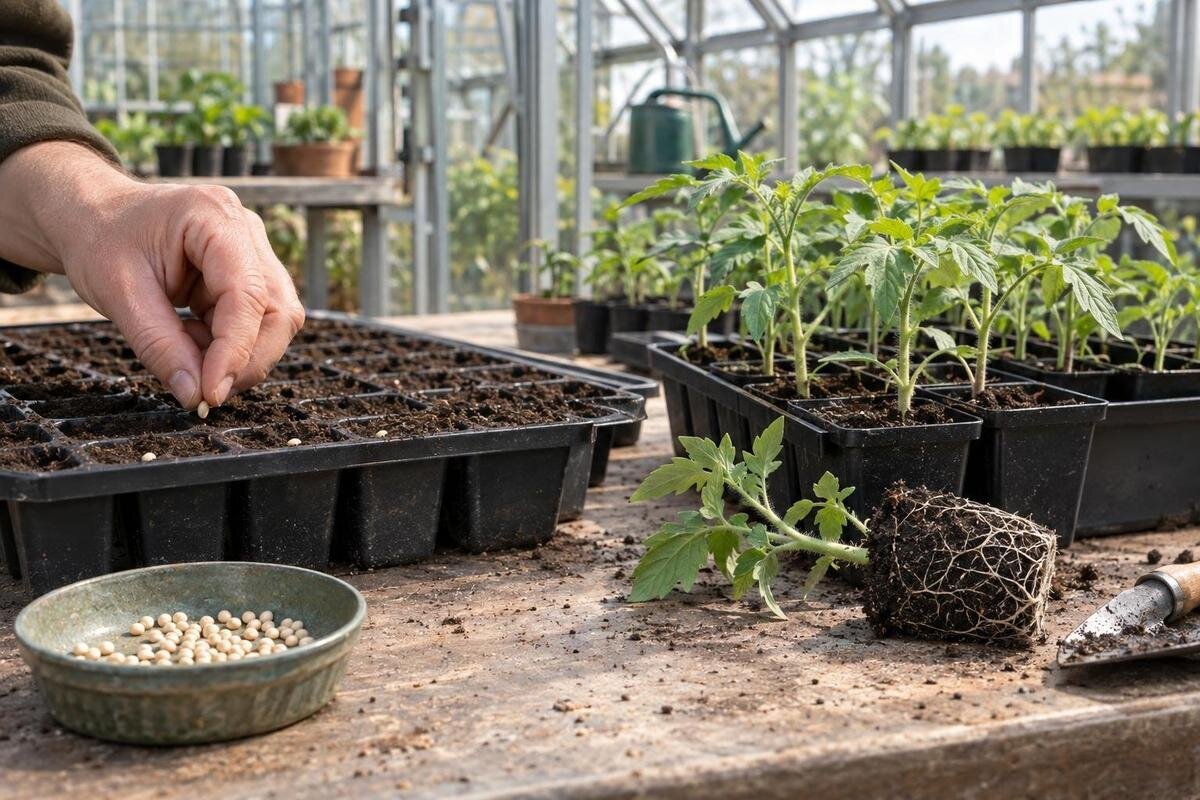
Treat direct sowing and raising transplants as two tools, not rival systems. Direct sowing puts seed into the bed or container where the crop will finish; raising seedlings means starting seed in a tray or pot and moving a young plant later. Direct sowing avoids transplanting and the separate work of filling, labelling and tending a nursery batch. Trays let you manage young plants before the final space is ready and can make tiny seed easier to space. The choice depends on root sensitivity, growth habit, germination pattern, planting date and whether the crop will finish in a bed or container. One greenhouse can use both approaches at once, so there is little reason to apply one routine to every crop.
Greenhouse area is only one part of the decision. If you are comparing structures as well as sowing methods, the Limited Edition Aluminium Greenhouses are listed in sizes from 3.77 m² to 28.08 m². That range describes available product sizes, not how much bench or bed space a particular layout leaves free. Sketch where trays, access and final growing beds will sit before deciding that a certain number of seedlings will fit. If space is tight, direct-sow crops can avoid a temporary tray stage; if you have a suitable clear surface, raising selected crops may make scheduling easier. Decide on the crop list before settling on how many seedlings to start.
Root crops are usually best sown in place
Root crops with a taproot or roots that are sensitive to disturbance are usually the clearest direct-sowing candidates. Carrots and parsnips are normally sown where they are to mature; lifting and replanting young seedlings can disturb the developing root, affecting its shape or slowing growth. Radishes are also simple to sow into their final row or patch, and beetroot is commonly direct sown. Follow the seed packet for depth and spacing, then thin crowded seedlings if advised. Direct sowing does not mean every seed will emerge, so plan for the intended spacing and avoid pulling up neighbouring seedlings if their roots are already entangled.
Peas and beans are also often straightforward when sown in their final position, provided the bed and conditions suit the crop. A short start in a container may help if the growing space is not ready, but avoid keeping plants in small cells until they are difficult to move. When planning beds in a structure such as the T-Model Orangery Greenhouse, distinguish crops that will occupy their final position from sowing onwards from those you will bring in as seedlings. Direct-sown crops commit that space during germination as well as later growth. This matters when a previous crop is still in place: an available tray does not solve the problem unless the new crop tolerates transplanting.
Trays help when young plants need a separate start
Trays are useful when you want plants ready before the final bed is free, or when sowing very small seed directly would make spacing difficult. Tomatoes, capsicums, chillies, eggplants and many brassicas are commonly raised under cover and transplanted. A tray also groups a batch by variety, makes it easier to see what has germinated and helps you raise a planned number of plants. These benefits come with extra work: each batch needs a label, suitable moisture and light, and possibly thinning or potting on. Use a tray when that control matters, rather than assuming every greenhouse crop should begin in a container.
Choose containers to suit the crop and the time it will spend in them; there is no single tray size that works for every species or schedule. If you are considering the Pyramid Greenhouse, compare your actual trays with the usable space in your proposed layout. Include somewhere to handle seedlings, rather than counting only the surface occupied by containers. You need to be able to water each batch, read its labels and lift plants without disturbing neighbouring trays. A manageable batch is more useful than a full bench that is awkward to tend. As seedlings grow, review whether they still have enough room rather than assuming the arrangement that worked at sowing will suit them until planting.
Handling seedlings at transplanting
Successful transplanting depends on the crop and stage, not on choosing the biggest seedling. Move plants while they are young enough to handle easily, following the crop’s instructions, and keep their roots and growing medium together where practical. Individual cells make it easier to lift a plug without tugging at stems; seedlings in an open tray may need to be separated more carefully. A plant held too long in a crowded container can be harder to handle and may pause after planting. Prepare the final space before lifting a batch, so roots are not left exposed while you make room. Water newly planted seedlings as appropriate for the crop and growing medium.
Cucumbers, zucchini, pumpkins and melons show why the choice can go either way. Depending on the crop and conditions, you can sow them in their final growing place or start them briefly in individual pots, then transplant while young with the root ball intact. A tray start can bridge a wait for a prepared bed; direct sowing skips the move. The Limited Edition Aluminium Greenhouses with Storage are listed from 5.52 m² to 28.08 m² and are identified as having built-in storage. When comparing a greenhouse with storage, account for that separate use of space rather than treating the entire listed area as room for trays and growing beds.

Common greenhouse crops: which method suits?
Tomatoes are often raised in trays or small pots and transplanted later, which is convenient when you want to manage several plants together and select healthy seedlings. Capsicums, chillies and eggplants are also commonly started under cover, but being inside a greenhouse does not by itself provide suitable light or growing conditions. Brassicas such as cabbage, broccoli and kale are often tray-raised for planting out, though direct sowing can suit a prepared bed. Lettuce can go either way: direct sow it for rows or a closely spaced bed, or raise seedlings in modules when you want plants at more even intervals.
For a mixed crop list, group plants by their likely establishment method before deciding how much space to devote to trays. Put carrots, parsnips and radishes in the direct-sowing group, and list crops such as lettuce and cucurbits separately where either method may suit. These are useful tendencies, not inflexible rules: variety, seed instructions and local conditions can change the best approach. If you are comparing sizes in the Bloomcabin Prestige Greenhouse range, use that grouped crop list to describe your intended mix of beds and temporary seedling space. This keeps the purchase tied to what you plan to grow, without assuming that every crop needs a tray stage or that every available bed should be direct sown.
Sowing dates still depend on growing conditions
Raising a seedling does not automatically mean you can sow earlier. A greenhouse changes the conditions around a crop, but temperature and light still vary, and a covered space can become too hot or remain cool at the wrong time. Direct-sown seeds depend on suitable conditions in the final growing medium; transplanted seedlings need suitable conditions both in their containers and after planting. Use the seed packet’s locally relevant sowing window and crop-specific guidance, and check conditions where the seed or plant will actually grow. Do not substitute an indoor sowing date for recommended guidance just because greenhouse space is available.
Work back from the expected planting date, but keep the schedule flexible. If you raise a batch, allow time for germination and enough growth to plant out without holding it too long. If you sow in place, prepare the bed when conditions suit rather than tying every crop to one start date. When planning several crops in a Spacious Greenhouse, give each its own sowing window and expected planting date instead of treating the whole growing area as a single batch. Record whether a date refers to sowing in a container, sowing in the final bed or transplanting. A calendar is a planning aid; it cannot tell you on its own whether seedlings are ready to move.
The work involved in each sowing method
Each method asks for work at a different stage. Direct sowing means preparing a suitable bed, placing seed accurately, keeping the surface evenly moist and thinning seedlings where needed. It avoids filling, labelling and tending trays, but the bed is committed earlier and uneven emergence can leave gaps. Raising seedlings moves some early care to containers: you need to label batches, monitor moisture and light, thin or separate plants where appropriate, and keep them in good condition. Later, you still need to transplant them and settle them into the final growing space.
Think about which set of tasks fits your routine and the crop. For a short row of a crop that establishes readily, a tray may add handling without much benefit. If you need a known number of young plants for a prepared bed, a tray can make it easier to keep track of the batch. When comparing the Aluminium Greenhouses, consider how you would carry out those tasks in your proposed layout: tending a direct-sown row and handling a batch of seedlings involve different working spaces. Choose a batch size you can water, label and transplant at the right stage. Spare cells are not a reason to sow more plants than you intend to grow.
Allow for temporary seedling space
Bench space matters because trays are temporary, but seedlings also need room as they develop and a clear route from germination to planting. A tray may fit when empty yet become awkward when you need to reach plants at the back or move a batch. For each crop, ask how long it is likely to occupy a separate container, what happens when the bed is ready and whether you can transplant it then. Direct sowing saves that temporary stage for crops suited to it; it does not create extra room if the greenhouse bed itself is already full.
The Wall Greenhouse range is listed from 3.69 m² to 14.34 m². Those figures help compare product sizes, but they do not specify clear bench width or how many trays fit; check usable dimensions against your setup rather than estimating from the headline area. If your propagation space is limited, reserve it for crops that benefit most from transplanting and sow suitable root crops in their final beds. Keep some clear room to handle and move plants instead of allocating every available surface to seed trays.

Keep sowing batches easy to identify
A mixed sowing plan is easier to manage when each batch is traceable. Label trays and direct-sown rows with the crop, variety and sowing date; use a simple map if labels might move during watering or bed preparation. Sow to the depth and spacing recommended for that seed, and avoid crowding a tray just to save room. For direct-sown rows, mark the line clearly until seedlings appear, especially if the crop takes time to emerge. For trays, note which cells were sown so empty spaces are not mistaken for failed seedlings before the expected germination period has passed.
Watering needs attention in both places. A tray contains a smaller volume of growing medium than a bed, so it can dry at a different rate; a bed may also dry unevenly across its surface. Check each batch rather than assuming one watering routine suits both methods, and avoid leaving seedling trays persistently wet. Follow the crop guidance for moisture and keep newly emerged plants labelled. If a batch fails, record whether the likely issue was sowing depth, moisture, conditions or handling before changing methods next time.
A crop-by-crop test for choosing a method
Use the same short test for each crop. First, ask whether its roots are sensitive to disturbance during transplanting; if so, direct sowing is generally simpler. Second, decide whether a tray solves a real problem, such as a bed that will be ready later, tiny seed that is difficult to space, or the need to raise a known number of plants. Third, check whether the crop can be moved at a suitable young stage and whether the final growing conditions will suit it. If both methods are reasonable, choose the one that avoids unnecessary handling while fitting your timetable. Follow seed-specific instructions and local crop guidance over a general rule.
Make the plan specific by listing each crop, its chosen method and a sowing window from reliable growing guidance. Mark a crop as direct sow, raise and transplant, or either; then decide which approach fits your conditions and routine. Review the plan if a bed is delayed or conditions change, so seedlings are not held too long and a prepared space does not sit unused. Keep notes on what germinated and how each crop settled after planting. Over time, those records will show which method works best for each crop in your greenhouse.
Frequently asked questions
Which greenhouse crops are usually best direct sown?
Carrots and parsnips are usually sown in their final growing position because their roots are easily disturbed. Radishes, beetroot, peas and beans are also commonly direct sown. Check the seed packet for the variety and conditions you have.
Can I transplant carrots raised in a tray?
You can move a young carrot, but it is usually simpler to sow carrots where they will grow. Disturbing the developing taproot can affect its shape and growth. If you want seedlings for other crops, use trays for species that transplant more readily.
Should I start tomato seeds in trays?
Trays or small pots are a common way to raise tomatoes because you can manage a batch of seedlings before planting them out. They are not essential in every situation: follow the variety’s sowing guidance and make sure the seedlings have suitable light and growing conditions.
Can cucumbers be started in trays?
Yes. You can sow cucumbers in their final position or give them a short start in individual pots. If you transplant them, move them while young and keep the growing medium around their roots intact as much as possible.
Does a greenhouse mean I can sow earlier?
Not automatically. Conditions inside a greenhouse still vary, and a protected space does not guarantee suitable warmth or light for every crop. Use locally relevant sowing guidance and check conditions where the seeds will germinate or the seedlings will grow.
A useful greenhouse sowing plan pairs each crop with the method that suits its roots, growth habit and planting conditions. Sow root-sensitive crops in their final position, raise transplant-friendly crops when a separate start makes the schedule easier, and use either method where guidance supports both. Keep simple records of emergence and transplanting, then use those observations to refine the next batch.
