
Early Greenhouse Beetroot: Growing Baby Roots
Greenhouse growing guide
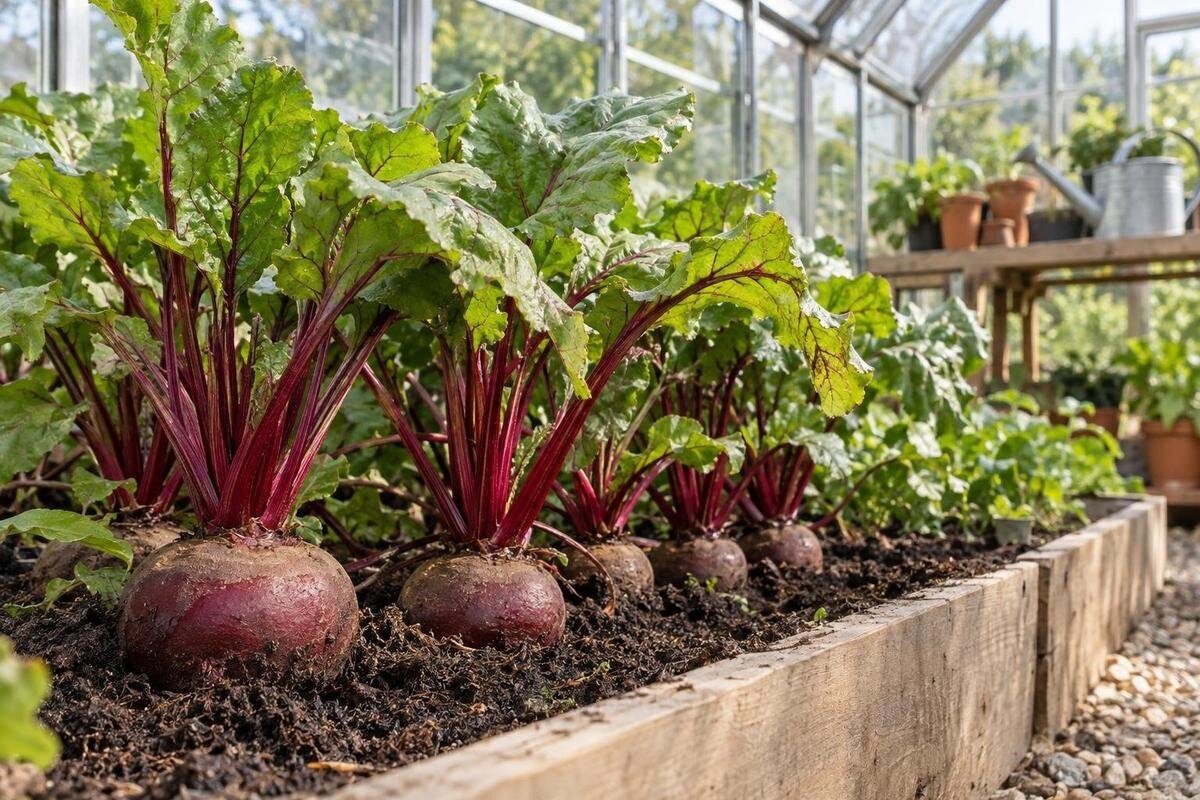
Baby beetroot can earn a place in a greenhouse when outdoor beds are still cold, wet or difficult to work. The case for growing it under cover is not that it needs a heated greenhouse: beetroot is a cool-season root crop, and an unheated greenhouse changes conditions only within limits. A covered bed may become workable earlier, yet nights can remain cold and sunny days can quickly overheat. The aim is a modest, direct-sown crop harvested young, then replaced before warm-season plants need the space. Whether that makes sense depends on local weather, available light and what else the greenhouse must grow.
Is an early greenhouse beetroot crop worthwhile?
Beetroot is a good candidate for direct sowing, so a greenhouse is not required for raising seedlings before transplanting. Under cover, the practical advantage is shelter from wind and heavy rain and, in some conditions, a bed that warms or dries enough to sow earlier. If the outdoor soil is already workable and the weather is mild, sowing outside can be just as effective while leaving protected space for crops that need it more. An unheated greenhouse is not a heated propagator: cold nights can still slow emergence, while strong sun can make daytime temperatures climb quickly. Treat the cover as a conditional head start, not a promise of a particular harvest date.
Baby roots make sense as a small, short-term crop. They can be lifted at about 3–5 cm across, depending on the variety and the size you prefer, then the bed can be used for something else. That makes beetroot useful between seasons, but not necessarily a reason to devote an entire greenhouse to one sowing. The Pyramid Greenhouse range is listed from 5.53 m² to 18.9 m²; these figures describe the structure’s area range, not the area available as a beetroot bed. Consider whether a modest sowing could share a greenhouse with other crops before planning a structure around baby roots alone.
Choose a sowing window from local conditions
There is no single Australia-wide date for early sowing: local weather, elevation, exposure and seasonal patterns all affect the bed. Use a reliable local beetroot calendar as a starting point, then assess the conditions where the seeds will actually grow. Sow when the soil is workable rather than saturated and when the coming weather is likely to support steady germination. Beetroot grows well in cool-to-mild conditions. Very cold soil can delay emergence, while a spell of hot weather can stress young seedlings and affect root development. A greenhouse can shift the conditions, but it cannot remove the limits of the season.
Check the temperature and feel of the bed over several days instead of relying only on the outside forecast. Ventilate the greenhouse when sunny weather starts to build heat; keeping it closed to trap warmth can create the wrong conditions for a cool-season crop. If the soil remains cold at night, waiting may give a more even stand than sowing a few days earlier. If you are selecting a greenhouse partly for an early crop, weigh that use against the structure’s overall area: the Aluminium Greenhouses are listed across a range from 3.77 m² to 28.08 m². Compare the selected size with your full crop plan, not beetroot alone.
Measure usable bed space, not just floor area
Sketch the greenhouse layout before deciding how much beetroot to sow. The listed area of a structure is not all planting space: paths, access to the door, benches and stored items can take up part of the floor. Mark out the bed and the route you will use to reach it, then check that you can thin, weed and harvest without stepping on the soil. The Prestige Greenhouse with Metal Base is listed in sizes from 3.77 m² to 28.08 m². Compare the exact option and its layout with your intended bed rather than assuming the listed floor area is all available for planting.
A narrow bed that is easy to reach is often simpler to manage than a wide bed with an inaccessible centre. Leave enough room to sow rows, water them and handle seedlings during thinning. Keep the bed clear of places where larger plants or stored equipment will shade it, and avoid planning every spare corner as a crop row. Beetroot is compact, but access matters throughout its short growing period: you will need to check moisture, spot uneven emergence and pull roots without damaging the plants that remain.
Light and soil preparation for beetroot
Choose a bright position and watch how shadows move across the greenhouse during the day. Glazing, framing, nearby buildings and trees can all reduce light at the bed. A wall greenhouse may be shaded by the wall or eaves; a wall does not automatically provide useful warmth. The Wall Greenhouse range is listed from 3.69 m² to 14.34 m², but any proposed position still needs to be assessed for light, airflow and site suitability. Do not assume that a particular structure or position will make an early crop possible in every garden.
Prepare a fine, open seedbed so roots can develop without meeting clods, stones or compacted soil. Break up the surface, remove stones and level the bed before sowing. If the soil needs organic matter, incorporate mature compost rather than fresh manure; too much nitrogen can encourage leafy growth at the expense of roots. Beetroot also needs drainage, so avoid sowing into soil that stays waterlogged. As a greenhouse roof limits direct rainfall, check the soil itself before planting rather than assuming it is moist because the air feels humid.
Sow direct and thin seed clusters
Sow beetroot where it is to grow. What is sold as a beetroot seed is often a seedball that can produce more than one seedling, although some varieties produce single seedlings. Place seedballs in a shallow row, around 1–2 cm deep, and follow the packet for the variety you have chosen. Spacing them a few centimetres apart makes it easier to manage the seedlings once they appear. Cover lightly and water gently so the seed stays in place. Direct sowing avoids disturbing the young root during transplanting and makes the final spacing easier to control.
When seedlings are large enough to handle, thin to one plant about 5–7 cm from the next for baby roots. Give the rows room for access; around 20–30 cm is a useful guide where the bed allows, but check the seed packet. Snip surplus seedlings at soil level rather than pulling them close to plants you are keeping. That reduces disturbance around the remaining roots. If you are fitting several crops into a greenhouse, the Limited Edition Aluminium Greenhouses are listed across 3.77 m² to 28.08 m²; allow for paths and other crops in the chosen layout when working out how much row length is available.
Keep moisture steady and air moving
Greenhouse beds receive less direct rain, so watering is your responsibility even when outdoor soil looks damp. Keep the seed zone moist while seedlings establish, then check the soil below the surface as the roots grow. Water when it is beginning to dry rather than waiting for the bed to become very dry and then soaking it heavily. Uneven moisture can contribute to poor root growth or splitting, while persistently wet soil can cause other problems. Aim for consistent moisture without waterlogging, and direct water to the bed rather than relying on humid air as a substitute.
Warm, still air can build quickly under cover, so check conditions inside on bright days and ventilate before heat accumulates. Follow the greenhouse’s own operating guidance and keep vents unobstructed. Crowded foliage can make it harder to inspect the bed and restrict air circulation, which is another reason not to leave surplus seedlings in place. Tools and watering equipment also need space in a shared greenhouse. The Limited Edition Aluminium Greenhouses with Storage are listed from 5.52 m² to 28.08 m²; compare the selected structure’s total area with the growing area you intend to keep free.
Harvest at baby size and sow in small batches
Use the shoulder of the root as a guide, then pull one plant to check its size. Baby beetroot is commonly harvested at about 3–5 cm across, though variety and growing conditions affect how quickly it reaches that point. The seed packet’s maturity estimate is useful for planning, but it is not a fixed date: cool conditions can slow growth. Pull roots as they reach the size you want rather than waiting for the whole row to become large. That gives you a more flexible harvest and opens sections of the bed gradually.
For a steady supply, sow a small additional row while the weather and greenhouse conditions remain suitable. Staggering sowings by a couple of weeks can spread harvests, but do not continue automatically as the season warms; later seedlings may struggle or take up space needed by the next crop. If the greenhouse is being planned for several successive crops, the T-Model Orangery Greenhouse is listed from 16.52 m² to 30 m². Compare a selected footprint with the beds and paths needed for that wider plan rather than assuming more floor area should all be planted with beetroot.
Compare protected sowing with an outdoor bed
Outdoor sowing is a sound choice once the soil is workable and local conditions are mild enough for reliable germination. It avoids the need to monitor greenhouse heat and leaves protected space available for plants that benefit more from cover. Outdoor beds also receive rainfall directly, although heavy or persistent rain can make them difficult to work. Under cover, you have more control over exposure but must check moisture and ventilation yourself. Compare the actual conditions in both places: if the greenhouse bed is no warmer, brighter or easier to manage, it may not give beetroot a useful advantage.
If a greenhouse already supports a broad growing plan, an early beetroot row can make good use of otherwise empty space before summer crops take over. If you are considering a structure specifically for a single short beetroot crop, the space commitment is harder to justify. The Spacious Greenhouse range is listed from 47 m² to 70 m², an area range to assess only in the context of a much wider growing plan. List the crops and activities you expect to accommodate through the year, then decide whether an early baby-root harvest earns its share of that space.

Diagnose gaps, small roots and premature flowering
A row of beetroot may emerge in clumps because several seedlings can come from one seedball; that is not the same as poor germination. Empty spaces are more likely to need a check of sowing depth, soil moisture, seedbed crusting and soil temperature. In a greenhouse, the surface can dry even when the surrounding air feels damp. If the first sowing is patchy, correct the likely cause before filling gaps, so a second sowing does not face the same conditions. Keep a note of when and where you sowed; it helps distinguish slow emergence from seed that has failed.
Small or uneven roots often point to close spacing, compacted or stony soil, uneven watering or competition from other plants. Check the bed before adding fertiliser: excess nitrogen can produce plenty of leaves without solving a root-space problem. If a plant sends up a flowering stem before making a useful root, the variety and an extended period of cold exposure can be factors. Check the seed packet for suitability to the sowing window and compare the greenhouse’s conditions with local guidance. Changing one cause at a time makes it easier to see what improves the next sowing.
Clear the bed in time for summer crops
Plan the last sowing backwards from the date the next crop is expected to use the bed. Allow for the beetroot’s approximate time to baby size, then add some margin because cool weather can slow growth. Do not keep a row in place for larger roots if the greenhouse bed is needed for another crop; pull usable roots as they reach your preferred size. Small, staggered sowings are easier to fit around a changeover than one large row that matures all at once.
After harvest, remove leftover roots and plant debris, clear weeds and check the soil before replanting. Add compost or other amendments only as the bed needs them rather than applying extra fertiliser automatically. Make sure the next crop is suitable for the temperatures and space available: a greenhouse does not guarantee favourable conditions for every warm-season plant, and it can become hot as the weather changes. A timely baby-root harvest works best when its end date is planned alongside the next planting, leaving the bed ready rather than forcing a delay.
Frequently asked questions
Can I grow beetroot in an unheated greenhouse?
Yes. Beetroot is a cool-season crop, so it does not need a heated greenhouse. Cover can shelter the bed and alter daytime conditions, but cold nights may still slow growth and sunny days can become hot. Ventilate when needed and sow according to the conditions in your own greenhouse.
When should I sow beetroot under cover in Australia?
Use a local sowing calendar as a guide rather than relying on one national date. Sow when the bed is workable and the weather is likely to support steady germination. Very cold soil can delay emergence, while approaching hot weather is a poor setting for a small early crop.
Should I raise beetroot seedlings in trays?
Direct sowing into the prepared bed is usually simpler. Beetroot develops a root that can be disturbed during transplanting, and its seed clusters often produce several seedlings that need thinning. Sow where the crop is to grow, then remove surplus seedlings gently.
How far apart should I thin beetroot for baby roots?
A practical final spacing is about 5–7 cm between plants for small roots, with rows around 20–30 cm apart where the bed allows. Check the seed packet for variety-specific guidance. Snip unwanted seedlings at soil level to avoid disturbing the roots you are keeping.
How long does baby beetroot take to grow?
Allow roughly 8–10 weeks from sowing as a broad guide, but cool conditions and variety can change the timing. Check the seed packet, then judge each row by root size: baby beetroot is often pulled at about 3–5 cm across.
Early greenhouse beetroot is most useful as a modest, direct-sown crop that fills a cool-season gap and comes out while still small. The greenhouse earns its place when it makes the bed workable earlier without creating excessive heat or taking space from crops with greater need of cover. Judge sowing by local conditions, leave room to thin and harvest, and plan the next crop before the roots are ready. If an outdoor bed already offers a reliable start, sowing there is a practical alternative.
