
Greenhouse Sweet Peas for Earlier Flowers
Greenhouse growing guide
Sweet peas can flower earlier under glass, but the advantage comes from shelter and a head start on establishment, not from keeping the plants warm. They are cool-season climbers that need bright light, a well-drained root run and support before the tendrils begin searching. Across Australia, the useful sowing window changes with local winter conditions and the arrival of warm weather, so a greenhouse does not create one reliable national calendar. This guide covers sowing, layout, training, ventilation and the harvest decisions that help a cut-flower crop make the most of its cool season.

What a greenhouse can do for sweet peas
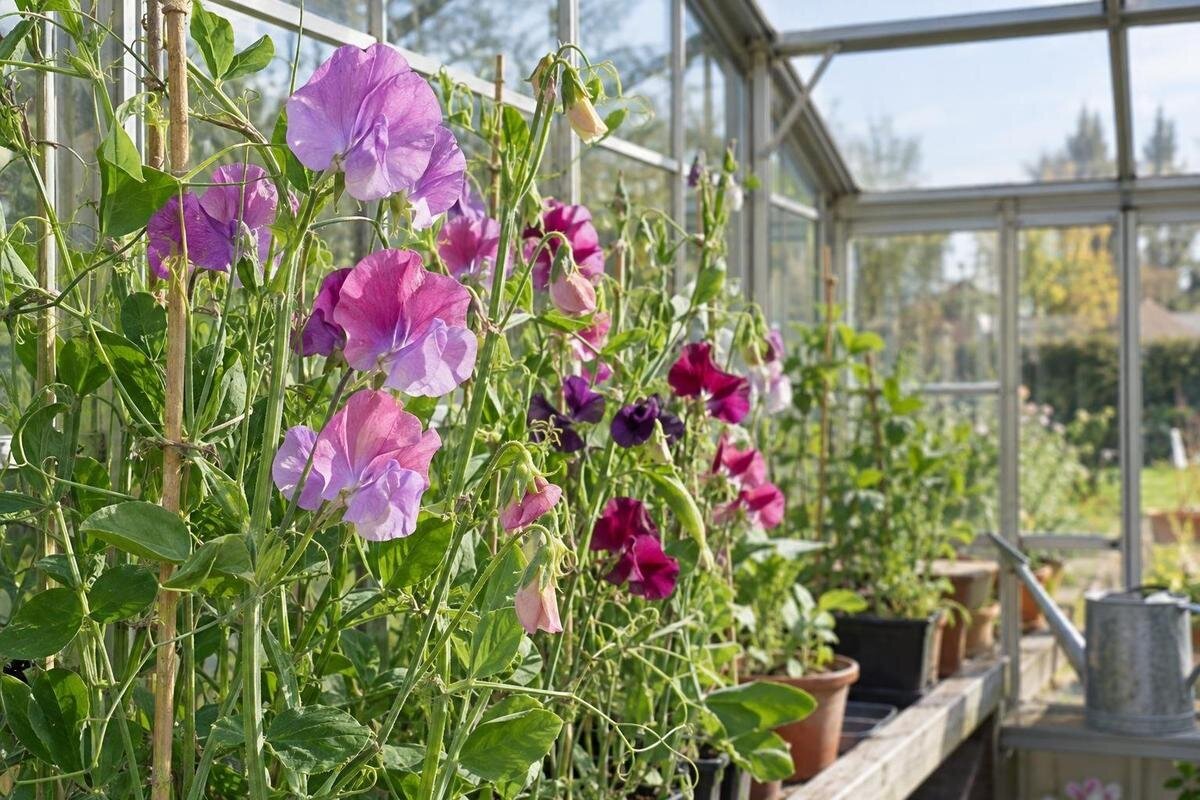
Sweet peas (Lathyrus odoratus) are a useful greenhouse cut-flower project because you can monitor seedlings closely, water small pots and train young vines without depending on an exposed garden bed. Glass can shelter young growth from wind and heavy rain, and it makes a planned sowing easier to observe than a large mixed border. That is a practical advantage, but it does not change the crop’s preference for cool growing conditions. On a sunny day, air inside a greenhouse can warm quickly even when it still feels mild outside, so the protected space can also become the main source of stress. The growing tip and tender flowers are especially worth watching as warm spells arrive.
Think of the greenhouse as a bright, ventilated shelter rather than a heat source. If the goal is the first spring bunch, the useful gain is establishing healthy plants early enough, not forcing rapid growth in a warm room. Very low winter light can leave young stems stretched, while persistent warmth can weaken growth and shorten the period of good flowering. Flowering date also depends on variety, sowing date and changing day length. Glass may move the first flowers forward, but it cannot guarantee a particular harvest week. Keep notes on sowing, first bloom and warm spells, so you can tell whether shelter helped or whether the crop simply had a favourable season.
Set sowing dates around the local cool season
Sweet peas are cool-season annuals, so plan for growth through a cool spell and flowering before sustained heat arrives. Across Australia, that spell begins and ends at different times, and a sheltered urban garden may differ from an exposed or inland site. Autumn sowing is common in many temperate areas; a colder site may need a later start or protection from severe cold, while warmer districts generally use the coolest reliable part of the year. Treat these as broad patterns rather than state-by-state dates. Check a local seed supplier’s calendar for your district and chosen variety, and adjust for the greenhouse’s exposure.
Work backwards from the likely end of your cool growing window. Choose a variety with useful flowering information on its packet, then sow only when there will be enough light for seedlings to stay compact and enough cool weather for plants to develop. Avoid sowing months earlier simply because the greenhouse is enclosed: it can be too warm by day while light is still weak. For a first crop, record the sowing date, emergence, first tendrils, first flowers and hottest greenhouse days. Those notes show whether to begin earlier, later or with a different variety next season more reliably than changing several conditions at once.
Choose early-flowering varieties for cutting
For an early cut, look for a variety described as early-flowering and read beyond the colour name. Seed descriptions may note stem length, flower count per stem, fragrance and mature height. These details matter: a compact bedding type may not produce the long stems you want in a vase, while vigorous climbers need enough headroom and a support they can reach. Compare the supplier’s notes on flowering time and cutting quality, not just the picture on the packet. Light and crowding also affect the stems you get. Two varieties both called early may still flower at different times, so keep labels and sow them separately if the date matters.
A small second sowing can spread the cutting window, provided the local cool season is long enough; it will not rescue a crop exposed to the same heatwave. Keep batches labelled and manage each separately, so you can see which gives the best stems and when. Allow space for both batches if they will overlap, as well as a clear picking path. The Pyramid Greenhouse range spans 5.53 m² to 18.9 m²; compare the chosen option’s plan and clear height with the rows you intend to support.
Sow in deep pots and give seedlings bright light
Sweet pea seed has a firm coat, but soaking or nicking every seed is not essential; follow the guidance supplied for that variety, as damage or excess moisture can cause trouble. Sow seeds individually in deep pots or root trainers filled with a free-draining seed-raising mix. A deeper container gives the long roots room and makes it easier to move a seedling with its root ball intact. Water the mix before sowing, cover the seed as directed on the packet, and label the cultivar and date. Keep the mix damp rather than saturated. If more than one seedling emerges in a pot, cut the weaker one off at the surface instead of tugging at neighbouring roots.
For germination, about 13–18°C is a useful starting range for sweet peas, not a universal rule for every seed lot; follow the supplier’s instructions if they differ. A hot propagator or sunny enclosed shelf can push the temperature above this range. Once shoots emerge, give them the brightest available natural light so stems stay sturdy. A greenhouse is not automatically bright in winter: the angle of the sun, nearby shade and the orientation of the glazing all affect light at pot level. If seedlings become pale or stretched, check light and temperature before adding feed. The Wall Greenhouse listings range from 3.69 m² to 14.34 m²; listed area does not indicate sunlight, so assess the planned position at seedling height.

Prepare a fertile, well-drained bed
Before filling a bed, decide where seed trays, compost, watering gear and harvested stems will go. Storage uses space that could otherwise serve as a planting bed or access, so draw the growing row and path first. The Limited Edition Aluminium Greenhouses with Storage listings range from 5.52 m² to 28.08 m²; check the selected configuration to see how its storage is arranged and how much area remains for sweet peas. A catalogue area alone cannot show the size or shape of the bed you can plant. Keep a small working space beside the row so tying, watering and picking do not require you to step into the soil.
Sweet peas perform best in fertile soil that drains freely: roots need consistent moisture, not a permanently waterlogged bed. Remove weeds and loosen compacted ground before planting. If the soil needs more structure, incorporate well-rotted organic matter rather than adding fresh manure at the last minute. For container growing, fill deep pots with potting mix and confirm that they have drainage holes. Water the bed before planting so the root ball settles without having to flood it later. Avoid working soil that is very wet and sticky, as this can compact it and make it harder for roots to establish.
Install supports before the vines climb
Put the support in place before transplanting or sowing into a permanent bed; threading netting through a dense canopy risks snapping tender shoots. Use a trellis, vertical netting or separate strings that match the variety’s stated mature height. The support should be stable and have openings that let you reach stems and tie them as they grow. Do not assume greenhouse framing is designed to carry a climbing support. For example, the Prestige Greenhouse with Metal Base listings span 3.77 m² to 28.08 m², but floor area and the product name do not confirm approved trellis fixing points. Check the selected model’s instructions before attaching anything.
Guide each young vine towards the support while the tendrils are still short, then check ties often and keep them loose enough not to constrict the stem. Netting suits a row with several shoots, while a cordon system can keep selected stems straighter for cutting but needs more frequent tying and training. Pinching the growing tip after several leaf pairs may encourage side shoots, yet it can delay the first flowers; if earliest blooms are the priority, follow the variety’s advice before pinching. Keep foliage from blocking doors and vents, and leave enough room for your hand to cut stems without pulling the trellis.
Plan rows, paths and picking access
Plan the crop from the doorway inwards: reserve the opening and a continuous path, then mark the bed, trellis line and any staging or storage. A path makes it possible to water, tie, remove spent flowers and carry long stems out without brushing the whole row. If access is limited to one side, choose an arrangement you can manage from that side, and follow packet spacing rather than packing extra plants into the bed. Think about where a bucket or a tray of cut stems will sit while you work. The practical crop area is the clear bed you can reach, not the whole greenhouse footprint.
For a larger cut-flower project, a wider footprint may be worth comparing, but only after sketching rows and paths. The Spacious Greenhouse range covers 47 to 70 m². Compare the floor plans with your drawing, paying particular attention to entrances and the route from each row to the door. Allow for carrying long stems along that route, not just walking through it empty-handed. A single well-managed row in a smaller structure can be more productive for a home gardener than several congested rows, because stems need light and you need access to pick them cleanly.
Manage heat with timely ventilation
A bright day can turn a greenhouse hot before you notice, even while the outdoor air still feels cool. Put a min–max thermometer near the developing canopy, away from direct sun on the instrument, and check it at the warmest part of the day for a week. Open available vents and doors early enough to release rising heat; do not wait until leaves look limp. Ventilate according to the greenhouse manufacturer’s instructions and the weather. A screen or shade may help in some conditions, but too much shade cuts the light the plants need. Use shade only when heat is the greater problem, and keep watching the crop’s response.
Air movement matters alongside peak temperature: humid, still air can leave foliage wet. Where the structure allows it, use openings on different sides and keep vines away from vents so air paths remain clear. When comparing the Aluminium Classic Greenhouse options, which range from 3.77 m² to 28.08 m², look at the opening positions and operating details for the exact configuration. These details help you plan the row without obstructing ventilation. In calm weather, check for pockets of warm air around the upper foliage as well as conditions lower down.

Keep moisture steady and foliage healthy
Water when the upper mix or soil begins to dry, then water thoroughly enough to reach the root zone and let excess drain away. Check pots frequently: smaller containers can dry much faster than a garden bed, and greenhouse sun and air movement alter demand from one day to the next. Avoid alternating a bone-dry root ball with a saturated one; that swing can stress seedlings and reduce flower quality. Apply water to the soil rather than repeatedly wetting foliage, and use the plant’s condition as well as a calendar to judge when to water. Keep the area around the stem base free from standing water.
Use a fertiliser suitable for flowering plants at the label rate if the bed or potting mix needs feeding; heavy nitrogen-rich feeding can favour leafy growth over blooms. Make time for a regular inspection: look at new growth and leaf undersides for aphids, and remove fallen or diseased material promptly. Crowded foliage makes pests and moisture problems harder to spot. The Limited Edition Aluminium Greenhouse range spans 3.77 m² to 28.08 m². When planning a row within the selected layout, allow enough room to inspect both sides of the foliage and water the soil without damaging stems.
Harvest flowers before seed pods develop
Harvest regularly once the first flowers on a stem open and the upper buds show colour; cut with clean snips and take as much stem as you can without stripping leaves or damaging the main vine. Check each variety’s best cut stage if the seed packet specifies one. Removing fading flowers before pods develop helps direct the plant towards more blooms rather than seed, while leaving unpicked stems allows pods to form. Pick in the cool part of the day if convenient, place stems straight into clean water and remove foliage that would sit below the water line. Frequent picking also gives you a chance to check ties and notice heat stress.
Keep a simple harvest record: date, variety, stem length, number of usable stems and any period of heat. If the greenhouse is intended for successive rows, compare the actual layout with the room needed to turn and carry bunches out. The T-Model Orangery Greenhouse range spans 16.52 m² to 30 m²; use the selected floor plan to trace that route from each proposed bed to the exit. When flowering fades as warmer weather settles in, remove tired vines and use your harvest notes to plan the next cool-season sowing rather than trying to prolong plants through conditions they do not suit.
Frequently asked questions
Will a greenhouse make sweet peas flower earlier?
It can help young plants establish under shelter and make them easier to manage, but earlier flowers are not guaranteed. Sweet peas still need cool growing conditions and bright light; a greenhouse that gets too warm can weaken growth or shorten the flowering period.
When should I sow sweet peas in Australia?
Sow during the locally recommended cool season, allowing time for plants to grow and flower before sustained heat arrives. Autumn sowing is common in many temperate areas, but timing varies with local conditions and the variety. Check advice from a seed supplier in your area rather than relying on one national date.
Do sweet peas need direct sun under glass?
They need bright conditions for sturdy growth and good flowering, so choose the sunniest suitable position you have. Winter light can still be limited in a greenhouse. Watch for stretched seedlings, and balance strong light with ventilation when the enclosure heats up.
How tall should a support be for greenhouse sweet peas?
Use the mature height stated for your chosen variety to guide support height, and check that the greenhouse has enough clear space for the vines. Install the support before planting and keep it clear of doors and vents. Confirm with the greenhouse instructions before attaching anything to its frame.
Why are my sweet peas leafy but producing few flowers?
Possible causes include too much warmth, weak light, a variety that flowers later, heavy nitrogen-rich feeding or seed pods left to develop. Check the plants’ growing conditions and your notes on sowing and temperature before making changes. Correct one issue at a time so you can see what helps.
Early sweet peas under glass are a timing and climate-management exercise: start with a locally suitable cool-season sowing, raise compact seedlings in bright light and train vines before they tangle. Good ventilation and regular cutting help make the most of the short period when stems are at their best. Use the first crop’s dates and harvest notes to refine the next sowing; the greenhouse is most useful when it gives the plants shelter without taking away the cool, bright conditions they need.
