
How Much Does Greenhouse Heating Cost in Australia?
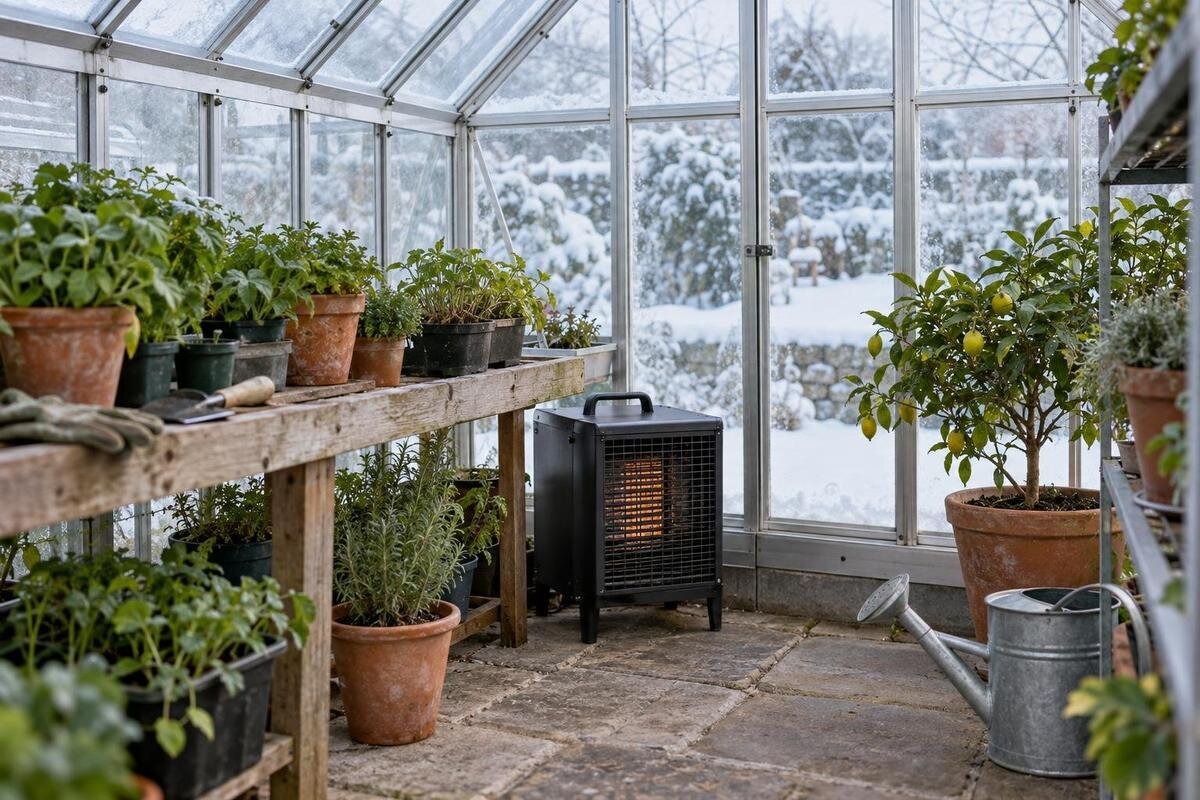
Greenhouse heating
There is no single price for heating a greenhouse in Australia. The running cost depends on local winter weather, the temperature you choose, how quickly the greenhouse loses heat and the electricity rate that applies when the heater runs. A useful estimate makes those inputs visible instead of promising a universal figure. The worked example uses hypothetical values to show the arithmetic, not to predict the cost for a particular greenhouse or household.

What actually drives the bill
Separate the cost of buying and installing a heater from the cost of running it. For an electric heater, the basic operating estimate is electricity used in kilowatt-hours multiplied by the applicable price per kilowatt-hour. A heater drawing 1 kW for five hours uses 5 kWh. Its rating tells you the rate of energy use while it is on, not how long the thermostat will call for heat. Weather and the greenhouse’s heat loss determine that run time. Keep the purchase and installation amounts separate in your budget so that a one-off expense is not mistaken for a recurring winter charge. When comparing heating options, use the same operating period for each: a daily electricity estimate and a full-season estimate are not directly comparable.
A useful estimate needs three inputs: the temperature difference the heater must cover, a heat-loss figure for the whole greenhouse, and the electricity rate. Floor area helps identify the scale of a candidate structure, but it does not by itself describe the exposed surfaces, air leakage or ventilation. For example, the Prestige Greenhouse sizes, from 3.77 m² to 28.08 m² cover a range of areas. Those figures identify options to compare; they are not heat-loss ratings or running-cost estimates.
Use outdoor temperatures from the greenhouse site
Use outdoor air temperatures from the place where the greenhouse will stand, ideally as hourly readings or blocks of a few hours. For each block, compare the outdoor temperature with the chosen indoor target and count only the positive difference. If the target is 10°C and it is 8°C outside, the difference is 2 degrees. When the outdoor air is warmer than the target, the heater may not need to run. Set out each block with its start and finish times, outdoor temperature, indoor target and duration. This makes it easier to spot missing hours or overlapping periods before calculating energy use. If heating is scheduled only overnight, include those hours rather than automatically applying the target to a full 24-hour day.
A nearby weather station may not reflect the conditions around a particular garden, so use the best local data you can obtain and note its limitations. A daily minimum is not a good substitute for a full night’s profile: using it for the whole night assumes the coldest temperature lasted much longer than it did. A daily average can conceal a cold spell. When comparing greenhouse options, hold the site weather constant so that you can distinguish changes in the structure from changes in the weather. For the Spacious Greenhouse range, which covers 47 to 70 m², assess each selected size against that same temperature profile.
Set a temperature target that matches the growing task
Choose the target from the requirements of the plants or use you have in mind, rather than assuming every greenhouse needs the same temperature. Consult suitable growing information for the particular plants, and distinguish a daytime target from the overnight minimum if your plan uses different settings. A thermostat’s setting is a control target; the air temperature elsewhere in the greenhouse may vary, so do not treat the displayed number as a guarantee that every area stays at that temperature.
The effect of a target change depends on the weather profile. In the example used below, the outdoor air is 5°C for 12 hours, 2°C for eight hours and 0°C for four hours. A 10°C target gives 164 degree-hours. With the same profile, an 8°C target gives 116 degree-hours, while a 12°C target gives 212. If heat loss and the electricity rate stay constant, those figures mean about 29% less or more heating energy than at 10°C. That is arithmetic for this example, not a universal saving or a plant-temperature recommendation. If you plan different daytime and overnight settings, calculate each period using its own target. Do not substitute a simple average of the settings: the calculation needs to pair each target with the outdoor temperature and duration for the same period, counting only positive temperature differences.
Use a whole-greenhouse heat-loss figure
A simplified budget uses one whole-greenhouse heat-loss coefficient, H, measured in watts per kelvin (W/K). It represents the heat needed to maintain a one-degree temperature difference under the assumptions used for the estimate. For a block of time, estimated heat loss in watts is H multiplied by the temperature difference. Across several blocks, add the positive temperature difference multiplied by the hours in each block; divide H multiplied by that total by 1,000 to get estimated heat energy in kWh. A Celsius temperature difference has the same numerical value as a kelvin difference.
The coefficient needs to represent the structure as a whole, including relevant surfaces and air exchange; floor area or a single panel figure is not enough. Use documented whole-structure information where available, or ask the manufacturer or a qualified professional what can reasonably be established. If no figure is available, show low, middle and high assumptions as scenarios rather than calling one a verified value. The Wall Greenhouse sizes from 3.69 m² to 14.34 m² are an example of area information only: the name and size do not establish heat loss through the walls, glazing, junctions or ventilation.

A worked one-day cost example
For an arithmetic example only, assume a whole-greenhouse coefficient of 120 W/K and a constant 10°C target. Use three outdoor-temperature blocks: 5°C for 12 hours, 2°C for eight hours and 0°C for four hours. The total is (10−5) × 12 + (10−2) × 8 + (10−0) × 4, or 164 degree-hours. Estimated heat energy is 120 × 164 ÷ 1,000, which equals 19.68 kWh. The 120 W/K figure is invented for this example; it is not a typical value or an estimate for a listed greenhouse.
Assume a simple resistance heater and treat each kWh of electricity as one kWh of heat for this calculation, leaving out differences in controls and other equipment. At a hypothetical flat rate of A$0.30 per kWh, 19.68 × A$0.30 is A$5.904, or about A$5.90 for the day. Thirty identical days would cost A$177.12 at that rate. Keep the unrounded daily result when calculating the total, then round the final amount to cents; multiplying the rounded A$5.90 figure would give a slightly different total. Actual days are not identical. When comparing options in the Limited Edition Aluminium Greenhouse range, from 3.77 m² to 28.08 m², use a separate heat-loss assumption for each selected structure rather than assigning this example’s invented figure to every size.
Apply the rate on your electricity plan
Use the variable usage rate that applies when the heater is running, not an assumed national price. If your plan has one flat rate, multiply the estimated kWh by that rate. Check the units before entering it: 30 cents per kWh is A$0.30 per kWh, not A$30. If your plan has time-of-use prices, work out how much energy falls into each price period and add the costs together. Where a temperature block crosses a tariff boundary, split it at that boundary so that each part uses the correct price. A single average rate is less reliable when the heater is likely to run mostly during one particular period. Keep both the energy subtotal and the cost subtotal for each period; this lets you compare electricity plans without having to repeat the heat-loss calculation.
Keep the estimate focused on the extra cost of heating. A daily supply charge is generally payable whether or not the greenhouse heater runs, so it usually does not belong in a comparison of heater use. If your plan has a demand charge or another variable component affected by the heater, check the bill and include it only as appropriate. Electricity used from rooftop solar is not automatically cost-free: its value depends in part on whether that energy could otherwise have been exported. Use the same tax basis and currency as your bill.
Convert energy use into heater run time
Energy used over a day is not the same as the number of hours the heater stays switched on. For a heater with a fixed electrical input, divide the estimated daily kWh by its input in kW to get full-power-equivalent hours. In the example, a hypothetical 2 kW heater would need 19.68 ÷ 2, or 9.84 full-power-equivalent hours, to use that much electricity. A thermostat may spread those hours across the day in shorter cycles; the result is not a prediction of one continuous run.
Use the heater’s documented electrical input rather than assuming that its advertised heat output equals its electricity use. Different equipment can use energy differently, so check the relevant manufacturer data for the conditions in which it will operate. A product’s greenhouse area does not give the heater’s run time: the T-Model Orangery sizes from 16.52 m² to 30 m² identify area options, not a heater specification or heat-loss coefficient. This running-cost calculation is not heater-sizing guidance.
Estimate a winter season, not just one night
Do not multiply one cold day by the whole winter unless you have a reason to assume every day will be alike. Divide the season into representative periods, estimate the temperature profile and heating hours for each, then add the energy use. For each type of day, multiply its estimated kWh by the number of days it represents before adding the subtotals. Make sure those day counts add up to the heating season you intend to cover, without counting the same days twice. Keep unusually cold periods separate rather than using them to represent the entire season. For a flat tariff, multiply the seasonal kWh by the usage rate. For time-of-use pricing, apply the relevant rate to each period. Count only the days when heating is expected to operate rather than extending a winter estimate across the full year.
Make low, middle and colder scenarios by changing the weather profile and, where it is genuinely uncertain, the heat-loss assumption. Keep the target schedule clear in each case. After heating begins, record actual energy use alongside outdoor and indoor temperatures; measurements can help refine a later estimate for comparable conditions. For a specific candidate, use its actual details rather than treating a product family as one structure: the Pyramid Greenhouse range of 5.53 to 18.9 m² is a range of areas, not one seasonal cost.

Verify the greenhouse and heater details
Before relying on a heat-loss assumption, identify the exact greenhouse and check what information is available for its dimensions, glazing, frame, doors, vents, base and other relevant parts of the enclosure. Ask for documented specifications or suitable assessment rather than inferring performance from a product name, photograph or floor area. Ventilation can be important to the growing environment, so do not treat closing vents as a simple way to save energy without checking what is appropriate for your use.
For the heater, check the documented electrical input, controls and operating conditions that apply to your estimate. Do not assume that a product page includes a heater specification unless it actually says so. If electrical changes or installation work are involved, get advice from a qualified professional rather than relying on a running-cost calculation. The Limited Edition Aluminium Greenhouses with Storage, from 5.52 m² to 28.08 m², form a product range; the storage label alone does not establish whether a particular area is inside the heated enclosure, so check the relevant drawings and specifications.
Reduce avoidable heating demand
Revisit the target and schedule first: heating for fewer hours or to a lower target reduces the temperature difference or time in the calculation, provided the revised settings still suit the plants and purpose. Avoid unnecessary door opening, but do not compromise ventilation simply to reduce the estimate. If only part of the greenhouse needs the target temperature, consider whether a suitable, well-defined growing area is practical; changes to the enclosure can also affect airflow and need to suit the space.
When comparing structures, decide how much area you actually need to heat and check the exact option rather than assuming that a product range has one energy cost. The Aluminium Classic Greenhouse range, from 3.77 m² to 28.08 m² is listed across a wide area range; that information helps identify options, but does not prove that any one option is more efficient. Recalculate using the selected structure’s documented details, your chosen target and your own electricity rates.
Frequently asked questions
Can I work out the cost from the heater’s wattage alone?
No. Wattage shows how much electricity the heater draws while it is running, but not how often or for how long it will run. You also need the outdoor temperatures, the target temperature, the greenhouse’s heat-loss figure and the electricity rate that applies when the heater is on.
Should I use the nightly minimum temperature?
Use hourly readings or blocks of a few hours where possible. Treating the coldest reading as though it lasted all night can overstate demand, while a daily average can hide the colder hours. The temperature profile at the greenhouse site is more useful than either number on its own.
Will lowering the setpoint by 2°C always cut the bill by the same percentage?
No. With a fixed heat-loss figure and the same weather, a lower setpoint reduces the temperature difference that the heater must cover. The percentage change depends on the original setpoint and outdoor temperatures. The worked example shows the result for one hypothetical 24-hour profile.
Are the electricity prices in the example current Australian rates?
No. A$0.30 per kWh is used only to demonstrate the arithmetic; it is not a current-rate claim or a national average. Check your own bill for the usage rate that applies while the heater runs, including any different time-of-use rates.
Can this cost estimate tell me what size heater to buy?
No. Estimating running costs and selecting heater capacity are separate tasks. This model uses an assumed heat-loss figure to calculate energy, not to size equipment. For a heater decision, use the greenhouse and heater manufacturers’ documented specifications and seek qualified advice where needed.
A useful greenhouse heating estimate is built from your site’s temperatures, a target that suits your growing plans, a defensible whole-structure heat-loss assumption and the rate on your electricity plan. The example’s A$5.90 daily figure applies only to its stated assumptions. Replace those placeholders with relevant information, add the expected heating periods across the season, and refine the result with actual energy use where you can.
