
Glass Greenhouse or Polytunnel: What Suits Your Garden Plans?
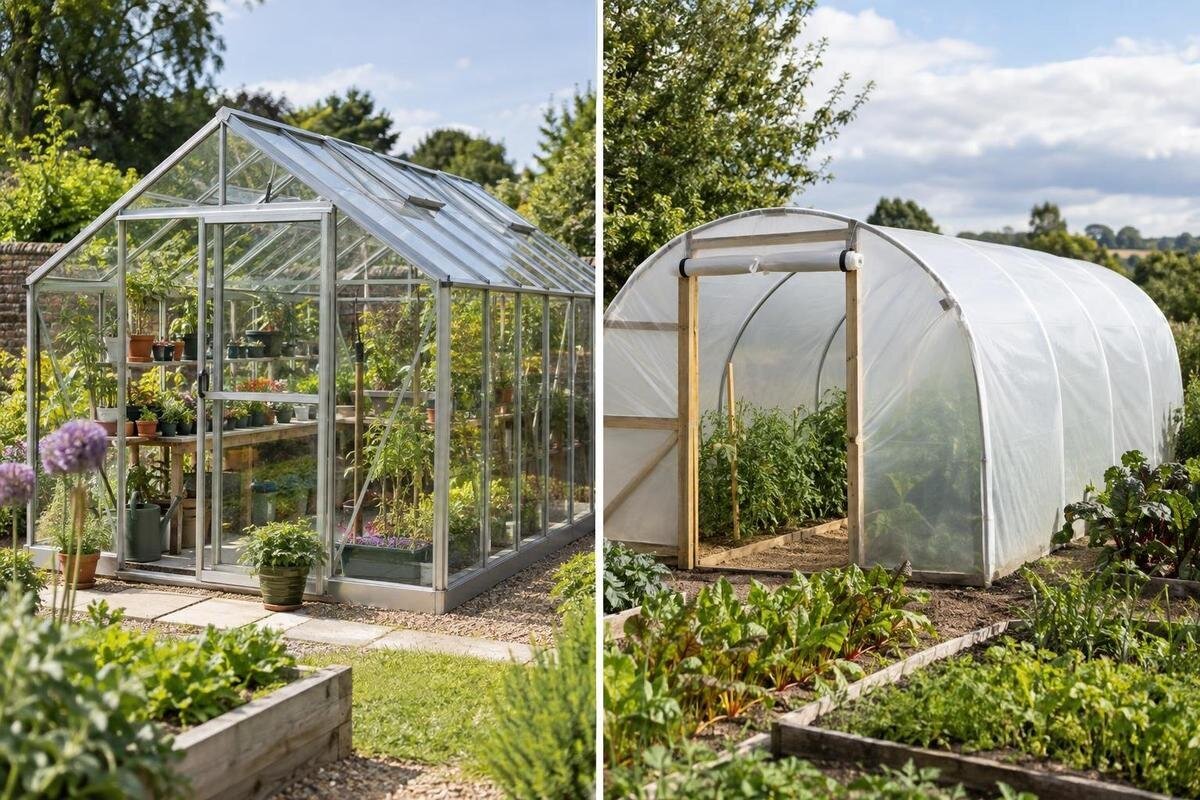
Greenhouse comparison
Choosing between a glass greenhouse and a polytunnel is not just a question of appearance or purchase price. You are comparing two ways to create a protected growing space: a rigid, glazed structure and a tunnel with a flexible cover. Either can support productive gardening, but neither guarantees a stable temperature or a maintenance-free experience. The better fit depends on how permanently you want to use the space, what you plan to grow, how you will manage heat and ventilation, and how much upkeep you are willing to take on.

Glass and film are different coverings
At a broad level, a glass greenhouse has rigid panes held within a frame, while a polytunnel uses a flexible cover over a supporting frame. That contrast is useful, but it is not a complete specification. Greenhouses can use coverings other than glass, and polytunnel designs vary in their film, frame, ends and sides. Check the actual model and configuration rather than treating a category name or product photo as proof of what is included. Light transmission, cleaning, ventilation and repair all depend on the materials and fittings selected, not simply on whether a structure is called a greenhouse or a tunnel.
Damage is handled differently too, although neither format guarantees an easy fix. Where a greenhouse has separate panes, a damaged panel may be replaceable on its own if the frame allows access and a matching part is available. A tunnel cover may be one sheet or a multi-part arrangement; whether it can be patched or needs replacing depends on its material and fixings. Ask how replacement parts are sourced and fitted, and whether a repair affects the rest of the cover. The product descriptions for either type should identify the covering you are comparing, not leave you to infer it from appearance.
Match the space to the way you grow
Begin with the jobs the protected space needs to do. You might want room to raise seedlings, grow crops that benefit from shelter, keep pots under cover or work at a bench. These uses call for different layouts. A few pots and a work surface need clear access; rows of crops need enough bed width and a way to reach plants without constantly stepping into the growing area. If you expect to use the structure across several seasons, include storage for trays and tools in your plan, rather than assuming the floor area will all be available for plants.
A stated area is not automatically usable planting space. Sketch the beds, path, bench, door approach and any equipment, then compare that arrangement with the internal dimensions on the selected plan. Aisle width matters if you carry trays or use a barrow, while headroom and supports can affect where tall crops fit. For one reference point, the Bloomcabin Prestige Greenhouse listing gives area options from 3.77 m² to 28.08 m². Use the drawing for the particular configuration to understand how its area is arranged; a polytunnel should be checked against the same practical layout.
Site exposure changes the comparison
Look at the proposed site through the year, not just on the day you measure it. Nearby trees and buildings can cast changing shade, and a position that receives strong afternoon sun may need a different heat-management plan from a sheltered spot. Consider access from the house or garden path, room to open the entrance, and how water drains around the proposed base. These details affect everyday use as well as installation. Mark the footprint and working space on the ground before comparing products, so a seemingly suitable size does not obstruct a path or leave no room to work outside the entrance.
Exposure matters for both structures. If the site gets strong gusts, hail, falling branches or salt in the air, ask the supplier what the selected model and covering are designed for; do not assume that a rigid-looking frame or a flexible cover is suitable for every location. Base and anchoring requirements are model-specific, so use the manufacturer’s drawings and consult a qualified site professional if the ground or exposure raises questions. The Wall Greenhouse listing gives a stated area range of 3.69 m² to 14.34 m²; use the selected plan to compare its footprint and access needs with your actual site.
Neither structure sets a stable temperature
A greenhouse or polytunnel changes the conditions around plants, but the enclosure alone does not provide precise climate control. Both types can warm in sunshine and cool as outside conditions change. How much the temperature shifts depends on the covering, ventilation, shade, size and weather. A sunny enclosed space can become too warm for some crops, while a drop in outside temperature can still affect plants inside. It is safer to plan for the conditions your crops need than to assume that either glass or film will maintain a suitable temperature on its own.
For a particular growing requirement, compare the complete configurations rather than the coverings alone. Set out which glazing or film, openings, shading and other equipment each quote includes, and which items would need to be added. The Aluminium Greenhouses listing gives a range from 3.77 m² to 28.08 m². Within that range, check the selected version’s climate-control options against those of the polytunnel you are considering. Neither the product family name nor its floor area establishes temperature performance. This comparison helps distinguish what the enclosure provides from the adjustments and equipment you would need to manage conditions for your crops.

Summer ventilation and shade need planning
In a hot, sunny position, the number and placement of openings matter as much as the type of covering. Some tunnel designs use end openings or sides that can be raised; some greenhouse designs use roof vents or louvres. These are possible arrangements, not features to assume are present. Check the actual plan for the size and location of openings, whether air can move through the structure, and whether doors can be left open in the way your garden use requires. Shade also needs attention: do not assume that glass or film will block enough sun for the crops you plan to grow.
Your availability matters too. Think about when you could open and close vents or adjust shade, particularly on days when you are away from the garden. If you need automation, confirm compatibility with the selected model and establish whether the necessary equipment is included. The T-Model Orangery Greenhouse listing shows area options from 16.52 m² to 30 m². For the size you are considering, identify the actual openings and shading arrangements rather than judging ventilation by area. Compare how you would operate these with the openings on your proposed polytunnel, including which adjustments would require you to be there in person.
Light depends on the covering and the site
Do not assume that every glass greenhouse is brighter than every polytunnel. The light reaching plants depends on the exact glass or film, its condition, the cleanliness of the covering and shade from the surrounding garden. Cover specifications can vary, and dust, condensation or other deposits can affect how much light passes through. Ask for information about the chosen material if light levels are important to your crop plan. A clear product photo is not a substitute for a glazing or cover specification, and the word glass or film alone does not describe the whole light environment.
Use the garden’s shade pattern to plan where plants would go inside either structure. Consider morning and afternoon exposure across the growing seasons, then mark positions for sun-sensitive and light-demanding crops on your layout. This connects the covering choice with the way you will use the space, rather than treating brightness as a single measure for the whole enclosure. The Limited Edition Aluminium Greenhouses listing gives area options from 3.77 m² to 28.08 m². Check the glazing and light-transmission details for the chosen version alongside your site observations, and establish whether your intended shade system suits the design. The listed area range does not supply those details.
Maintenance tasks differ by covering
Glass needs periodic cleaning if dirt or deposits reduce visibility or light, and the frame, seals and fittings also deserve inspection. A damaged pane may need attention, so consider whether you can reach all sides safely and whether replacement parts are available. Follow the care instructions for the actual glazing, especially if it has a coating or a particular cleaning requirement. Maintenance is not limited to the transparent surface: debris around the structure, loose fittings and worn seals can also affect how well the enclosure works.
A polytunnel cover calls for checks for tears, wear around fixings and areas that rub against the frame. Use the cover’s care guidance to choose cleaning and repair methods; do not assume that any patch or cleaner will suit it. For either structure, consider how you would reach the covering and fittings, and how much inspection time you can realistically allow. The Pyramid Greenhouse listing gives area options from 5.53 m² to 18.9 m². Assess maintenance access from the selected plan and care details, not the area figure. Compare that access with the space needed to inspect and repair the tunnel cover.
Cover replacement belongs in the buying calculation
Treat a polytunnel cover as a component that may need repair or replacement during ownership, rather than assuming it will remain in good condition indefinitely. There is no universal replacement interval: UV exposure, weather, installation, tension and handling all affect how a particular cover fares. Ask whether the covering can be replaced separately from the frame, what replacement material is available and whether it must match a particular fixing system. Those details help you understand the likely work involved, without relying on a lifespan figure that may not apply to your site.
Glass has no routine replacement timetable simply because it is glass, but damaged panes may still need replacing. For a pane-by-pane comparison with a tunnel cover, ask which parts can be replaced separately, whether matching replacements are available and what the repair involves. The Limited Edition Aluminium Greenhouses with Storage listing gives area options from 5.52 m² to 28.08 m². Establish the glazing and replacement arrangements for the exact configuration before including it in your comparison; neither its name nor its area range supplies that information. The useful distinction is the component you would replace and the work involved, rather than an assumption that either covering lasts indefinitely.

Compare the whole ownership cost
A fair comparison includes more than the initial structure and covering. List what each quote includes: the frame, glazing or film, base requirements, fixings, entrances, ventilation and any shade or growing equipment you plan to add. Also allow for delivery and installation arrangements, your own assembly time if relevant, and future replacement parts. This is not a claim that one type is always cheaper; prices and what is included vary between models and suppliers. Comparing quotes with different inclusions can make one option look better value when it simply covers less of the finished project.
Include your own work in the comparison as well as the quoted price. Cleaning panes, inspecting fittings and changing a cover may be manageable tasks for you, or they may make an otherwise appealing option impractical. Ask about ongoing parts availability, recommended care and whether ordinary repairs require specialist help. If you are considering a larger structure, the Spacious Greenhouse listing shows an area range from 47 m² to 70 m². Use that as a scale reference, then compare the selected layout, installed cost and maintenance requirements with your actual needs. Those details are not established by the area range, and they belong in the ownership comparison alongside the initial purchase.
When a glass greenhouse makes sense, and when a polytunnel does
A glass greenhouse is worth considering if you want a defined, long-term growing structure and prefer rigid panels as part of the garden. That preference works best when you have space for the chosen footprint, a workable plan for ventilation and shade, and a realistic approach to cleaning and occasional repairs. A polytunnel is worth comparing if your main priority is a covered growing area and a film cover fits your maintenance plan. It may suit a practical crop layout better than a feature-led garden design, but the exact cover, access and frame still need checking.
Make the decision against the crops and routines you expect, not against a general claim that one type is stronger, warmer or cheaper. Write down the usable bed and path area you need, the site’s exposure, the amount of heat management you can provide and how you would handle cover or pane replacement. Then compare drawings and specifications for the exact configurations. If neither option meets those requirements without compromise, adjust the size or layout before treating the material as the deciding factor.
Frequently asked questions
Is a glass greenhouse always warmer than a polytunnel?
No. Both can warm in sunshine and cool as conditions change, but the result depends on the cover, ventilation, size, shade and weather. Compare the specifications of the exact models rather than assuming one covering will provide a particular temperature.
How often does a polytunnel cover need replacing?
There is no reliable interval that applies to every cover. Material, UV exposure, weather, installation and care all affect its condition. Ask the supplier about the cover’s intended use, replacement availability and care requirements before you buy.
Which option is better in hot Australian weather?
Neither is automatically better in heat. Look at the site’s sun and wind exposure, then compare the selected design’s ventilation and shading options. A covered structure can heat up quickly in strong sun if air exchange and shade are inadequate.
Does a glass greenhouse need less maintenance?
Not necessarily. Glass may need cleaning and damaged panes may need replacing; frames and fittings also need attention. A polytunnel cover can need inspection, repair or replacement. The workload depends on the materials, design, site and access for maintenance.
Can I compare the two by their advertised floor area?
Use advertised area as a starting point, not a like-for-like measure of growing room. Check the selected model’s drawing for internal dimensions, door access, paths, beds and benches. Compare those usable areas with the tunnel layout you are considering.
A glass greenhouse can suit a lasting, defined garden structure; a polytunnel can suit a crop-focused plan where a replaceable cover is acceptable. Neither is automatically warmer, cheaper or easier to maintain. Weigh the usable growing space against the work each covering requires, including ventilation, shading, cleaning and repairs. The better choice is the one whose layout and upkeep fit the way you intend to garden.
