
How to Grow Celery in a Greenhouse
Greenhouse growing guide
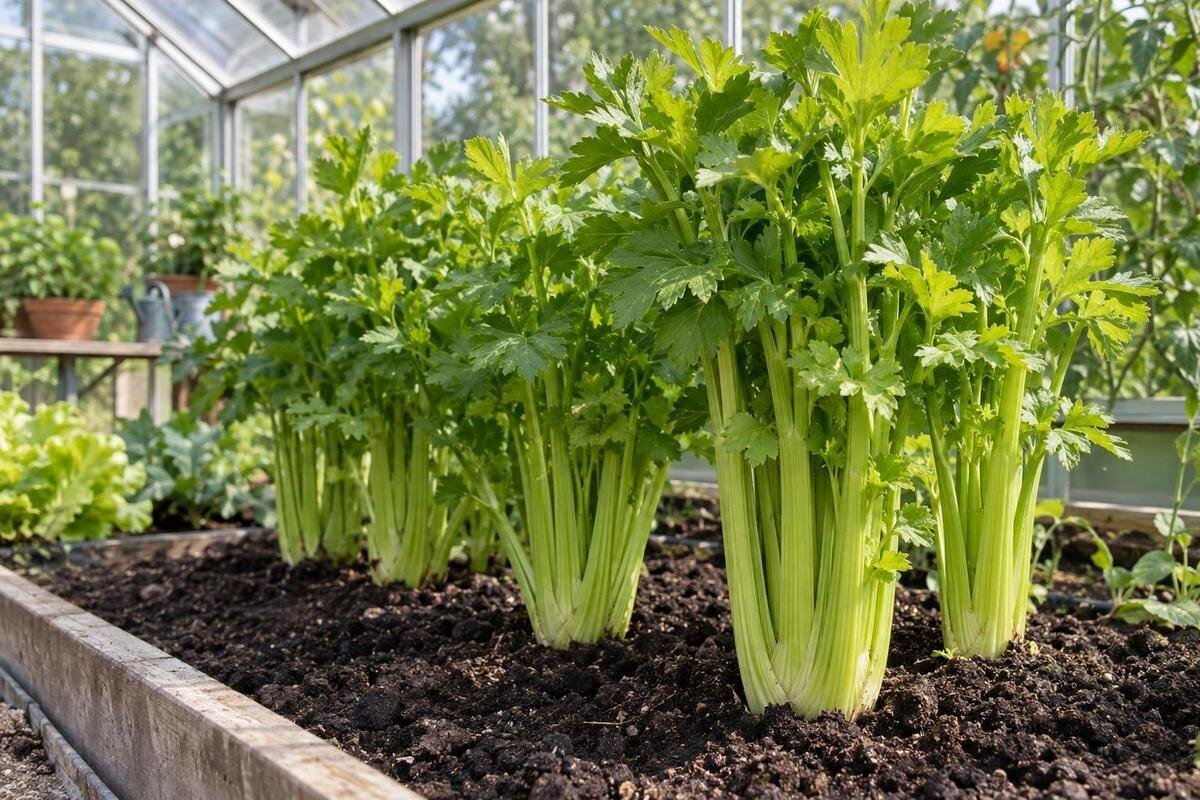
Celery is a long-season crop that needs steady moisture, fertile soil and room for a broad canopy over several months. A greenhouse can offer shelter and make the growing window easier to manage, but it can also trap heat; an unheated structure does not make celery a year-round crop. Plan around your local mild season, check temperatures where the plants will grow, and leave room for both the bed and regular access. The key question is not simply whether celery can grow under cover, but whether your greenhouse can keep the root zone moist without making the air too hot or still.

Choosing a greenhouse 1
Is a greenhouse a good place for celery?
Celery is slow to finish: there is a long gap between sowing and cutting usable stalks. It grows most reliably in cool-to-mild weather, with a fertile root zone that does not dry out. Under cover, plants can be less exposed to wind and heavy rain, and you can manage soil and irrigation more closely. Those advantages matter for a crop that stays in place for months, but they do not mean celery needs extra warmth for its own sake. Use a greenhouse when it solves a specific exposure or season problem; shelter alone will not improve a crop if the interior runs too hot.
Sun on the glazing can raise air temperature quickly, particularly if doors and vents remain closed. Prolonged heat can stress celery and leave stalks coarse or stringy, while an unheated greenhouse may still be too cold during a cold spell. A roof also means the bed gets little direct rainfall, so watering is your responsibility rather than an occasional top-up. If leaves droop during the hottest part of the day, check both air temperature and soil before adding water; wet roots will not correct heat stress. An outdoor bed in a naturally mild period may be easier to manage.
Choose a mild growing window
Choose the planting window by the conditions you expect, not a single Australian calendar month. Celery generally grows best in cool, mild weather; about 15–21°C is a useful guide to comfortable growth, not a hard limit for every cultivar or site. In warmer districts, plan for a cooler part of the year; in cooler districts, avoid setting young plants out where they will face a prolonged cold spell. Look at typical daytime and night-time patterns across the growing period rather than relying on one unusually mild week. If the mild window will end before your cultivar can mature, change the sowing date or variety instead of assuming a greenhouse will solve the mismatch.
Seed can take two to three weeks to germinate, and seedlings need a substantial growing period before they are ready for the bed. As a planning guide, allow about 10–12 weeks from sowing to transplanting, adjusting for cultivar and the temperature of your propagation space. Prolonged cold exposure while plants are young can encourage premature flowering in susceptible celery, whereas sustained warmth can make establishment difficult. Use a min–max thermometer near the trays and later at canopy height, so you know what the greenhouse does overnight and on sunny days. Once seedlings are transplant size, wait for a stable spell rather than planting just before a cold snap or extreme heat.
Choosing a greenhouse 2
Raise slow-growing seedlings carefully
Celery seed is small and should be sown shallowly: press it onto moist seed-raising mix or cover it only lightly, then keep the surface consistently damp until seedlings appear. Use a tray with drainage holes and a fine spray or gentle watering so seed is not washed into one corner. Bright light helps after emergence, and germination can be uneven, so do not discard a tray simply because a few cells are late. Label the variety and date, and sow a few extra seeds so you can keep the strongest seedlings. Keep the mix moist, not saturated; young roots need air, and repeated drying can leave a patchy stand.
Once seedlings have several true leaves, thin them or prick them out so each has room to develop a sturdy root ball. Keep them bright and uncrowded; seedlings stretching towards light or leaning over are harder to handle at transplanting. Acclimatise plants raised in a warmer propagation area before moving them into the final bed, rather than exposing them abruptly to full sun or cold. Plant at the previous soil level, firm gently and water in, taking care not to bury the crown or tear roots. A greenhouse footprint alone does not show whether trays, a mature bed and a path will all fit: Limited Edition Aluminium Greenhouses with Storage are listed from 5.52 to 28.08 m², so sketch propagation space separately.
Allow room for full-size plants
Plan for the full leaf canopy, not just the upright stalks visible in a seedling. A useful starting spacing is about 20–30 cm between plants; follow the cultivar’s directions if they call for more room. Allow enough width between rows to reach each plant and let air circulate through the foliage. Mark plant centres before transplanting, then check that the plants will fit without narrowing the access path. A staggered arrangement can use space efficiently, but do not squeeze in extra plants because gaps look large at first. Crowding makes watering, weeding and pest inspection harder and keeps leaves close together.
Draw a path or reachable bed edge into the layout before planting. You will return repeatedly to water, remove damaged leaves and harvest, so a plant hidden behind another row is difficult to manage even if the bed technically holds it. The Spacious Greenhouse is listed from 47 to 70 m²; that is a large footprint reference, not a required size for celery or a measure of plant capacity. Use the actual dimensions to mark a bed and route around it, then make sure door access and any work area remain clear.

Choosing a greenhouse 3
Prepare a fertile, free-draining bed
Celery needs soil that stays evenly damp yet drains without leaving roots in standing water. Before planting, loosen compacted ground and work in mature compost if the bed lacks organic matter; do not rely on a quick fertiliser dose to compensate for poor structure. Dense soil that remains saturated deprives roots of air, while sandy or shallow beds dry quickly and need closer checks. A raised bed can improve drainage, but it often loses moisture faster than an in-ground bed. Celery generally suits slightly acidic to near-neutral soil, roughly pH 6.0–7.0; test before trying to correct it.
Check how the bed drains after a thorough watering and deal with pooling before transplanting. Use soil-test results or local growing advice to guide pH and nutrient changes rather than repeatedly adding products to a protected bed; salts may build up where there is little leaching. Do this preparation before seedlings go in, because digging around established roots can cause damage. Growing celery in a container is possible, but a small volume of mix dries faster and needs closer attention. The Bloomcabin Prestige Greenhouse range is listed from 3.77 to 28.08 m², but footprint does not equal planting-bed area. Compare the actual plan with the bed and access route you need.
Keep the soil evenly moist
Celery’s main watering risk is a repeated cycle of drying and soaking. Its fine roots are concentrated relatively near the surface, so the upper layer can dry before deeper soil does. Check below the surface with a finger or small trowel instead of judging from dry-looking mulch or a fixed weekday schedule. Water when the root zone is beginning to dry, applying it slowly enough to wet the bed evenly; then let surplus drain. Do not wait for leaves to wilt before checking moisture. Drooping can also reflect heat stress, so check the root zone before deciding that more water is needed. Check more often in hot, bright weather, and re-wet a dry bed evenly rather than flooding one spot.
Direct water onto the soil rather than repeatedly wetting the foliage, and keep the growing point clear. A layer of organic mulch can reduce evaporation, but leave a gap around each crown and inspect underneath for slugs. If using a hose or irrigation line, test how evenly it wets the whole bed; a dry patch at the far end can be hidden by wet soil near the tap. The Aluminium Greenhouses are listed from 3.77 to 28.08 m²; when comparing any footprint, plan how you will reach and water plants at the far end. If the surface looks dry but soil near the roots is still damp, check another spot before watering the whole bed.
Choosing a greenhouse 4
Control heat and keep air moving
Check greenhouse air at plant height through the day, especially after a clear morning. Celery does not benefit from a sealed, hot greenhouse: use the structure’s intended ventilation and temporary shading where needed, while keeping enough light for steady growth. Air movement helps foliage dry after condensation, but avoid directing a drying blast at the bed. Keep the root zone moist without repeatedly wetting the leaves; humid air is not a substitute for soil moisture. A record of maximum and minimum temperatures over several days is more useful than a single midday reading, because repeated hot afternoons and chilly nights can each affect growth.
An unheated greenhouse may soften some temperature swings but cannot guarantee frost-free nights or cool days. Before buying, check the likely sun exposure of the site and the ventilation specified for the model; area alone cannot predict peak temperature. The listed Wall Greenhouse area range is 3.69 to 14.34 m², but that figure says nothing about vent provision or the temperature pattern at your site. Check ventilation details in the product information and, once the greenhouse is in place, monitor temperatures before committing to a long-season crop. If the planting schedule relies on dependable heating, have a suitable system assessed and installed by a qualified professional.
Maintain steady nutrition and inspect plants
A months-long celery crop needs a fertile bed, but feeding should respond to soil and plant growth rather than a habit of adding more. Prepare with mature compost, then use soil-test results and the fertiliser label to guide any follow-up feeding. Keep the soil moist enough for roots to take up nutrients; sharp drying can interrupt growth, while heavy feeding into a bed that stays wet can further stress roots. If new leaves look pale or growth slows, inspect moisture, temperature and roots before assuming fertiliser is the answer. Avoid placing concentrated fertiliser against young roots.
Inspect leaf undersides, the crown and lower stalks weekly for aphids, chewing damage, leaf mines or spreading spots. Remove dead leaves and crop debris, keep plants reachable and avoid repeatedly wetting foliage; crowded, humid growth is harder to inspect and can favour leaf problems. Start with clean seedlings, and where practical avoid planting celery in the same greenhouse bed in consecutive crops. A central flower stalk is a sign of bolting; harvest usable stalks promptly and note the conditions for future sowings. If damage spreads or the cause is unclear, seek local horticultural advice before treating the crop. The Limited Edition Aluminium Greenhouses are listed from 3.77 to 28.08 m²; check the chosen plan for access to every plant, not just its headline area.

Choosing a greenhouse 5
Harvest stalks at the right time
Check the seed packet for the cultivar’s expected maturity and whether its estimate starts at sowing or transplanting. In practice, celery occupies a bed for months, so judge readiness by developed, firm stalks rather than a calendar date alone. You can cut outer stalks near the base as needed and leave the central growing point to continue, or harvest the whole plant at soil level when it reaches the size you want. Use a clean knife and avoid tearing the crown. Check plants often as they approach harvest so a premature flower stalk is noticed before it dominates the plant.
Blanching is optional, not a requirement for every celery plant. Some cultivars produce paler stalks without extra work; traditional blanching excludes light from the stalks and takes extra time, so follow the variety’s advice rather than creating a damp cover by default. Green stalks are still usable. Because each planting holds the bed for months, a small follow-up sowing can spread harvest only if it will mature in another suitable mild window. The T-Model Orangery Greenhouse options are listed from 16.52 to 30 m²; map beds and paths before assuming that floor area is free for succession crops.
Match the greenhouse plan to a long-season crop
Before giving a greenhouse bed to celery, estimate how many plants your household will use and how much time you can give to checking moisture. A single row can occupy the soil for months, so compare that commitment with other crops you plan to grow in the same space. Draw a scaled plan that marks mature plant spacing, the path, watering access, seedling area and the door approach. Count only the bed area that remains accessible, not every square metre under cover. A first small planting can show whether the crop suits your household and site before you commit more space.
Use published product area as a first comparison, then check the actual plans and specifications. The Pyramid Greenhouse range is listed from 5.53 to 18.9 m², but the area figure alone cannot tell you bed dimensions, ventilation or whether your planting season will stay mild. Record temperatures on sunny and cool days before choosing a sowing window, and confirm how water reaches the whole bed. A larger footprint does not fix a climate mismatch, so judge the greenhouse by the conditions it can provide as well as the space it occupies.
Frequently asked questions
Can celery grow in an unheated greenhouse?
Yes, if you choose a mild growing window. An unheated greenhouse can buffer some weather, but it does not guarantee frost-free nights and may become hotter than outdoors on sunny days. Track minimum and maximum temperatures before committing a bed for several months.
When should I sow celery in Australia?
There is no single month that suits every climate. Work back from the mild growing period at your site, allowing roughly 10–12 weeks for seedlings before transplanting. Adjust for the cultivar and local conditions, and check the seed packet.
How often should I water greenhouse celery?
Use the soil, not a fixed weekly schedule, as your guide. Check just below the surface and near the roots; water when that layer is beginning to dry, then let excess drain. Check more often in hot, bright weather.
How much space should I leave between plants?
About 20–30 cm between plant centres is a useful starting point. Follow the cultivar’s instructions and leave enough room between rows to reach the plants and allow air to circulate through the foliage.
Does celery need blanching?
No. Blanching is optional and depends on the variety and the stalk colour you prefer. Green celery is still usable; choose a self-blanching cultivar or follow the seed packet if you want paler stalks.
Celery is worth growing under cover when you can give it several months of mild conditions, consistently damp but well-drained soil and enough room to work around mature plants. A greenhouse is an advantage only if you can monitor heat, account for cold spells and water according to the bed’s actual condition. Set the calendar from local temperatures, draw a plan for the bed and path, and begin with a manageable number of plants. That first crop will show whether your greenhouse can support celery without making moisture and temperature checks a guessing game.
