
Why Are Greenhouse Cucumbers Bitter?
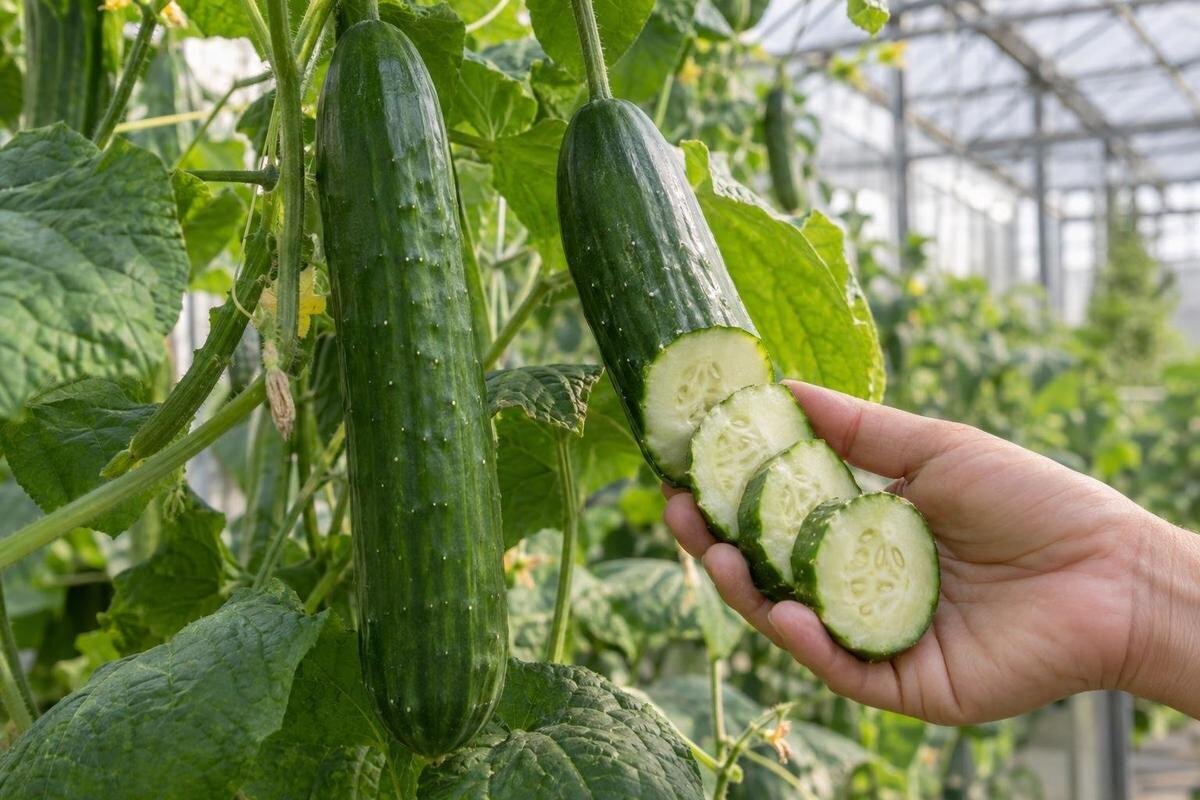
Cucumber growing
Greenhouse-grown cucumbers can taste bitter for more than one reason. The plant’s cucurbitacin levels are influenced by inherited variety traits and, in some cases, stress during growth; a bitter bite alone cannot tell you whether heat, inconsistent watering or maturity was responsible. Compare the seed packet, pattern across plants and fruit, recent conditions and harvest stage before changing care. This guide explains what each clue can—and cannot—show.

What makes greenhouse cucumbers bitter?
The sharp, unpleasant flavour is usually associated with cucurbitacins, naturally occurring bitter compounds that cucumber plants can produce. Cultivated cucumber varieties differ in their tendency to form them, and breeding has reduced bitterness in many varieties grown for eating. The amount can vary between cultivars and between fruits on the same plant. A bitter cucumber is not automatically evidence of poor care, and growing under glass does not create bitterness by itself.
Treat taste as a warning about that fruit, not as a test that identifies a particular growing problem. Heat, dry spells, root stress and other conditions may affect the plant, but flavour alone cannot confirm any of them. If a cucumber is distinctly bitter, stop eating it and discard the whole fruit. Do not assume that peeling it, trimming an end or cooking it will reliably remove the bitterness. Repeatedly tasting the same fruit will not explain what happened to the plant.
Cultivar choice can influence flavour
Check the exact variety name on the seed packet or plant label, then look up its stated use and flavour traits with the seed supplier. Some cucumber cultivars are selected for low bitterness; others may be more prone to bitter flavour, particularly when growing conditions are stressful. A label saying that a variety is suitable for greenhouse growing describes its intended use, not a guarantee about flavour. If one cultivar repeatedly produces bitter fruit while another nearby remains mild, variety becomes a stronger possibility, though conditions may still differ between plants. When reviewing that comparison, note whether the plants share a bed, watering routine and harvest stage. This helps separate a consistent difference between varieties from a difference in how they were grown. If the variety name is missing, record that uncertainty rather than assigning a cultivar based on the fruit’s appearance.
Do not confuse a fruiting trait with bitterness resistance. For example, parthenocarpic varieties can set fruit without pollination, but that trait alone says nothing about cucurbitacins or bitter taste. Fruit shape, skin colour and an early-harvest description are not proof of low bitterness either. When choosing seed, look for a specific statement about reduced bitterness and keep the packet details for comparison. Treat that information as a useful clue rather than certainty: the growing conditions still matter.
Look for a pattern across plants and fruit
Record whether the bitterness occurred in one fruit, several fruits on one vine or cucumbers from most of the crop. Note the plant, row, bed or container, harvest date and fruit size. One bitter cucumber among otherwise mild fruit may reflect local variation, but it cannot distinguish a genetic quirk from a short-lived stress. Repeated bitterness on one cultivar points towards its seed identity; several cultivars affected at the same time make a shared growing condition worth investigating.
If you noticed bitterness during normal preparation, record where it was first apparent, such as near the stem end or through more of the fruit. Do not use appearance or a photograph to confirm the cause. Mark affected plants on a simple plan, using a number for each plant and noting doors, walls, vents and bed edges. Use those same numbers in your harvest notes so you can distinguish repeated trouble on one vine from scattered bitter fruit. The plan need not be to scale; its purpose is to keep plant locations clear between harvests. For a future layout comparison, the Classic Aluminium Greenhouse is listed in sizes from 3.77 to 28.08 m². Keep that overall area separate from the positions of individual crop rows: a cluster beside a wall or doorway is more useful to this investigation than the total greenhouse size.
Check for heat stress under cover
On sunny days, air inside a greenhouse can heat up quickly, particularly when ventilation or air movement is limited. A hot spell may stress cucumber plants, and stress may contribute to bitter fruit in susceptible varieties, but heat is only one possible factor. A warm afternoon does not prove that it caused a flavour change. Compare the dates of hot conditions with the period when affected fruit developed, which plants were involved and whether bitterness continued during cooler weather.
Use a thermometer around foliage height and note readings during the hottest part of the day, alongside the date and outdoor conditions. Record its position too, so a later reading from another part of the greenhouse is not mistaken for a change at the original spot. Check that vents and doors are being used as intended, and note whether they were open when you took each reading. Consider whether shading or dense foliage changes exposure across the crop. These observations give a hot spell more context than a single maximum reading. When comparing a larger growing space, the Spacious Greenhouse is listed in sizes from 47 to 70 m². Its area range does not establish temperature or fitted ventilation. On a proposed layout, identify where you would take readings and how you would reach the openings, rather than assuming one measurement represents every cucumber plant.

Keep root-zone moisture consistent
Cucumbers can be affected by repeated cycles of drying out and becoming very wet. Water stress may contribute to bitter fruit, but a bitter taste does not prove that the soil dried out. Check moisture around the active roots rather than relying only on the surface: the top can feel dry while the soil below remains damp. Take account of the growing medium, plant size and recent weather before changing how you water.
Aim for a steadier moisture pattern without leaving roots waterlogged. Compare the soil or growing medium at a consistent depth and similar times over several days, and check whether one bed or container drains differently. Note when you watered in relation to each check; otherwise, a reading taken just after watering is difficult to compare with one taken beforehand. Do not respond to a bitter fruit by flooding the crop, as that can cause another root problem without identifying the first one. Access matters when planning a routine you can maintain. The Wall Greenhouse is listed in sizes from 3.69 to 14.34 m². When considering a layout in that range, mark the beds or containers and the places you would check moisture. Make sure your plan allows access to the roots you need to monitor, including plants furthest from the doorway.
Consider roots and feeding history
Root damage or a poorly functioning root zone can interfere with water and nutrient uptake. Look for weak growth, wilting despite damp soil or several plants in one bed showing similar decline. These clues suggest a plant-health issue worth investigating, but they do not identify a specific disease or nutrient deficiency. If leaves have spots, distortion or sudden widespread symptoms, photograph the whole plant and close details, then seek a local horticultural diagnosis rather than treating by guesswork.
Fertiliser is not a general remedy for bitter cucumbers. Excess salts, an unsuitable feeding regime or depleted growing medium can all cause problems, and visible symptoms may overlap. Adding more feed without checking the product instructions and growing medium can make matters worse. Review watering, drainage, root condition and feeding history together; a soil or growing-media test may help where appropriate. For the feeding history, record the product used, the amount applied according to its instructions and the application dates. Note whether every plant received the same treatment or whether beds and containers were managed separately. If comparing layouts, the Limited Edition Aluminium Greenhouse is listed from 3.77 to 28.08 m². Mark separate growing areas on your plan so their care records remain distinct. The useful comparison is between plants with known growing and feeding histories, not simply between greenhouses of different sizes.
Harvest at the cultivar’s intended stage
Cucumbers are generally picked before their seeds are fully mature, but suitable size and timing differ by cultivar and intended use. Use the seed supplier’s harvest guidance and check fruit regularly rather than expecting every cucumber to reach the same length. An overlarge or overmature fruit may have tougher skin, larger seeds or less pleasant texture; that does not establish that age alone caused bitterness. Fruit left on the vine can also make it harder to notice how younger fruit taste.
Keep harvest notes by plant and date, then compare fruit picked at the recommended stage with any that were missed. Record the cultivar’s intended picking size beside the actual size, rather than applying one length to the whole crop. If younger fruit are bitter too, maturity is unlikely to be the whole explanation, so return to cultivar and growing conditions. Dense foliage can hide fruit, making access useful for a regular picking routine. When reviewing a growing plan, trace how you would inspect each row and reach fruit without overlooking the far side of a vine. The T-Model Orangery Greenhouse is listed in sizes from 16.52 to 30 m². Use that as an indication of overall scale, then consider the proposed paths and crop positions separately. A layout that you can inspect consistently makes harvest-stage comparisons easier to maintain.
Photograph the plant as well as the fruit
Take clear photos before removing a suspect fruit. Include the whole plant, where the fruit grew, nearby leaves and any visible stress. A cut face can show texture and seed development, but a photograph cannot show bitterness or measure cucurbitacins. Label each image with the cultivar, date, harvest size and growing location. A series taken over time is more useful than one close-up because it can be compared with records of heat, watering and harvest stage.
Keep each photo with the notes for that plant and harvest, rather than collecting unlabelled close-ups. A simple filename containing the date and plant number can help you match an image to the cultivar, fruit size and conditions already recorded. Retain the wider view as well as the detail: a close-up of a leaf or cut fruit loses the context of the surrounding plant. Record whether bitterness was noticed during normal preparation, without repeatedly tasting a distinctly bitter cucumber. For a proposed growing space, the Pyramid Greenhouse is listed in sizes from 5.53 to 18.9 m². If you use a layout drawing to organise future crop records, label the beds and plant positions rather than relying on the greenhouse model name. This keeps photographs tied to identifiable locations, while recognising that images cannot confirm the cause of bitterness.

Greenhouse layout, ventilation and access
Space, nearby shade, crop spacing and working access all affect what you can observe and manage, but a product name or area figure cannot tell you whether a crop has enough ventilation. In an existing greenhouse, note which vents and doors are present, whether air can reach dense foliage and whether plants in a sunny or enclosed end show different patterns. Compare readings and plant response before deciding that the structure itself is responsible for bitterness.
If planning a new structure, check its detailed specifications and the proposed site, then consider where cucumber rows, paths, a thermometer and watering access will go. Draw the growing beds and working areas separately so the overall footprint is not mistaken for planting space. The Limited Edition Aluminium Greenhouse with Built-In Storage is listed in sizes from 5.52 to 28.08 m². Check how its storage and growing areas are arranged before placing crop rows on your plan. Consider access for inspecting plants and operating the specified doors and vents, as well as space for the crop itself. The product name and area range do not establish that layout or its ventilation performance. This comparison is about making routine crop care practical; it does not establish that a different structure would prevent bitter cucumbers.
Test one plausible change at a time
Once you have checked the cultivar, harvest stage and pattern across plants, investigate the most plausible condition. If several plants produced bitter fruit after a documented hot spell, review heat and ventilation. If the issue followed dry root zones in one bed, focus on moisture consistency there. Keep other routines as steady as reasonably possible while comparing later fruit. This is not a controlled experiment, but simple records make it less likely that you will change several things at once and learn nothing.
Do not replace a greenhouse solely because one cucumber tasted bitter. Allow your records to show whether the problem recurs and whether later harvests differ after the change you made. If bitterness persists or other symptoms appear, seek advice suited to your site, using the cultivar details and growing history to explain what you observed. A purchase decision is separate from that investigation. If you are already considering a new structure, the Prestige Greenhouse with Metal Base is listed in sizes from 3.77 to 28.08 m². Compare its detailed features with the practical needs identified in your existing setup, such as access for checking plants, watering and harvesting. Its name and area range do not establish ventilation or site suitability. Base the choice on those requirements rather than expecting a new greenhouse to change cucumber flavour.
Frequently asked questions
Can heat alone make greenhouse cucumbers bitter?
Heat can stress a cucumber plant and may contribute to bitter fruit in a susceptible cultivar, but one bitter cucumber cannot identify heat as the cause. Compare records of hot days with which plants produced affected fruit, and consider cultivar, root-zone moisture and harvest stage as well.
Does uneven watering cause bitter cucumbers?
Fluctuating moisture can be one source of plant stress, but bitterness alone does not prove the soil dried out. Check moisture around the roots over several days and look for differences between beds or containers. Avoid flooding plants in response to a bitter fruit.
Does the cucumber variety matter?
Yes. Cultivars differ in their tendency to develop bitter flavour, and some are selected for reduced bitterness. Check the exact variety name and ask the seed supplier about its flavour traits. A greenhouse-growing label or fruit appearance does not guarantee a bitter-free harvest.
Can a cucumber become bitter because it was picked late?
An overmature cucumber may have tougher skin, larger seeds or poorer texture, but age alone is not a dependable explanation for bitterness. Pick fruit at the size recommended for its variety and compare with younger fruit if bitterness continues.
Can I cut off a bitter end and eat the rest?
If a cucumber tastes distinctly bitter, stop eating it and discard the whole fruit. Trimming the end, peeling or trying to mask the flavour is not a reliable way to deal with a bitter cucumber. There is no need to keep tasting it to investigate the cause.
Bitterness is a clue about the cucumber’s flavour, not a diagnosis of a greenhouse fault. Start with the named cultivar and a pattern across fruit, then compare recorded heat, root-zone moisture and harvest stage. Simple notes are more useful than applying water, fertiliser or shade blindly. If the pattern continues or the crop shows other symptoms, share the seed packet, photos and growing notes with a local horticultural adviser; a photograph alone cannot confirm the cause.
