
Greenhouse Glazing Seals: When Cleaning Will Not Solve the Problem
Greenhouse repair and maintenance
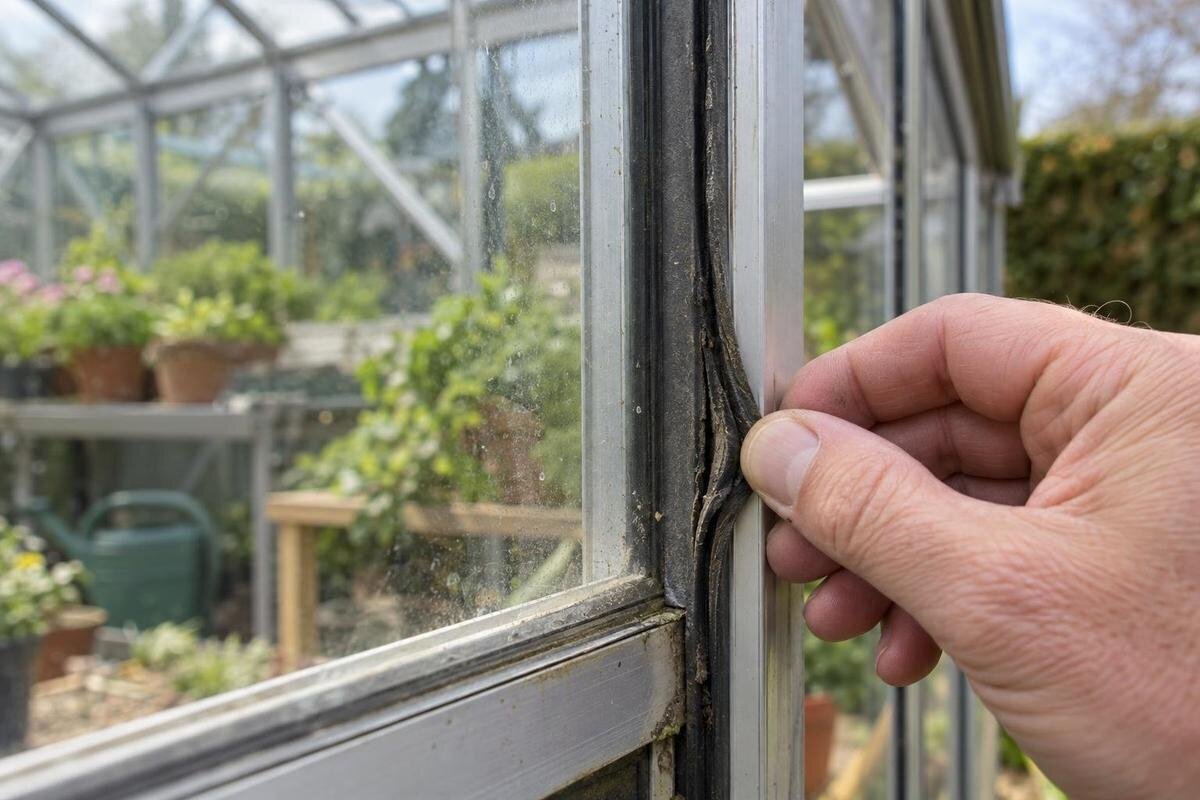
Greenhouse glazing seals are easy to overlook because dirt, algae or residue can make sound material look tired. The useful question is not simply whether a seal looks old, but whether cleaning removes the deposit while the seal remains continuous and undamaged. Splits, lasting compression, shrinkage or poor fit call for identification and a manufacturer-matched replacement—not a stronger cleaner or a strip chosen by guesswork. This guide explains what to inspect safely, what information to gather and when to ask an installer to assess the glazing.

01
What cleaning can and cannot fix
Glazing seals, often called gaskets, sit along panel edges or joints, but their exact job and shape depend on the greenhouse system. In some designs they cushion the glazing; elsewhere, separate clips, bars or retainers perform a different role. Dust, algae and residue can build up beside a profile and make sound material look tired. Clean only by the method allowed in the manufacturer’s instructions. If those instructions permit it, use a soft damp cloth and gentle cleaning; avoid solvents, abrasive pads, sharp tools or forceful jets that could damage the seal or disturb the glazing.
Once the area is clean and dry, look at the seal again. If the deposit has lifted and the visible profile remains continuous, without a split, missing section or obvious gap, cleaning may have addressed the problem. It does not prove that the joint is weather-tight, and a clean surface cannot restore a cut, cracked, shrunken or flattened seal. Compare the affected section with a nearby intact one, without pulling the seal or pressing against the glass. A change in colour on its own is not enough to confirm wear. If the defect remains after the dirt is gone, treat it as a possible parts issue rather than trying stronger cleaning.
Inspect visible seals without disturbing glazing
Choose daylight and a dry surface so dirt and physical wear are easier to distinguish. Inspect from ground level or another readily accessible position, looking along the visible edge of each affected panel. Check the inside only if it is easy to reach without leaning on the frame or glazing. Do not climb onto the greenhouse, move a panel or reach over a roof edge to see a hidden section. If an edge can only be inspected at height or by disturbing glass, note that it needs an installer’s attention rather than trying to uncover it yourself.
Record the location rather than simply noting that a seal is loose. Identify the greenhouse side, panel row or bay, and whether the edge is on the roof or a wall, or beside a door or vent. Take a wider photo showing the location and a close-up of the defect, then give both files the same location reference. Include an inside view only where safely accessible; do not press a ruler against the glass for a measurement. Record model details exactly as they appear on the label or paperwork, and mark anything uncertain as unknown. A catalogue photograph is not a substitute for those details. For example, the Limited Edition Aluminium Greenhouses with Storage page can help identify a current product name during a whole-unit enquiry, but resemblance to that greenhouse does not identify the seals in yours. Keep your own label photograph with the inspection record.
02
Signs a glazing seal may need replacement
Cleaning cannot undo a cut or tear, a missing piece, or an end that has pulled away from a join or corner. Look for a profile that appears permanently flattened, cracked or crumbling, or for a visible section that no longer reaches the edge it should meet. These are more useful signs of physical wear than a faded or dirty surface. Do not tug the seal to test its elasticity or pick at a loose edge; that can disturb the glazing and still will not identify the correct replacement. A close-up photograph is a safer record of what you can see.
An isolated mark is different from a seal that has separated repeatedly or shows gaps across several panels. Record how many areas are affected and where they are, rather than trying to push the seal back into a channel. If you have earlier photographs, note whether the same gap has returned or a different section is now affected. Do not describe every marked section as failed: distinguish visible damage from staining in your enquiry. If a panel appears loose or the glass is cracked, stop and arrange an installer’s assessment. Where widespread wear prompts consideration of a complete replacement, the Bloomcabin Prestige Greenhouse page provides a whole-greenhouse option to review. Keep that purchase decision separate from establishing how many existing seals actually need attention.
A gap does not always mean the seal has failed
A visible gap may come from a panel that is not seated as intended, a separate retainer or glazing bar, or a change in the frame or panel position. Clues can include a panel edge that looks uneven, a visibly distorted frame, or a gap that returns after an earlier repair. A nearby door or vent that no longer meets its frame as it did before may also be worth mentioning. These observations do not establish the cause; they are reasons to avoid ordering a seal based on appearance alone. The seal might be intact while another part of the joint needs attention.
Do not push a panel into place, bend a bar, adjust a retainer or fill the gap with caulk as a shortcut. That can hide the symptom without establishing whether the glazing is secure or the seal is suitable. A cracked pane, visibly loose glazing or distorted frame needs assessment by an installer experienced with the system, particularly where the affected area is overhead. Describe what you can see without naming an unconfirmed cause: for example, record an uneven panel edge rather than declaring that the gasket has shrunk. If the assessment leads to a whole-greenhouse comparison, the Spacious Greenhouse range is listed from 47 to 70 m². That gives a scale reference for a separate replacement enquiry; it does not resolve the cause of the existing gap.

03
Why the exact seal profile matters
Glazing seals are not reliably interchangeable just because two profiles look similar. Their shape, cross-section, dimensions, retention method and glazing system can differ, and one greenhouse may use more than one seal type in different positions. A generic strip that seems to sit in a gap is not necessarily the specified part or suitable for that location. Colour and approximate width are weak ways to identify a replacement. An exact manufacturer part number, matched to the greenhouse model and the position of the seal, is more useful than a photograph of an unrelated profile.
Use the manual, parts diagram, order confirmation or frame label to identify the manufacturer, model and any version details the maker requests. Match the part to the glazing position and type, not just to the greenhouse brand. When several documents are available, include their model references rather than assuming that a newer catalogue name replaces an older one. If the profile is uncertain, ask for an official identifier or drawing before buying. Have the supplier explain which reference applies to the affected position, especially if your enquiry covers both roof and wall seals. The Aluminium Greenhouses listing, with products from 3.77 to 28.08 m², is useful for comparing current complete units if that becomes necessary. Its product names and floor areas are not spare-part identifiers, so retain the original model details throughout the parts enquiry.
What to include in a replacement-parts enquiry
Before contacting the manufacturer or parts team, gather the greenhouse model name and any serial number or frame-label details. Add purchase information if you have it, plus the wide and close-up photos of the affected area. State where the seal sits, how many runs or joints are involved, and whether it appears split, flattened or pulled back. Mention any visible panel damage separately. If you do not know the glazing type or exact dimensions, say so rather than guessing; a wrong measurement can send the enquiry towards the wrong profile.
Ask for the manufacturer-matched seal identifier for that model and position, the quantity or lengths to order, and confirmation that it suits the glazing type. Clarify how the supplier wants the quantity expressed: the number of affected runs and an estimated total length are not the same description. Ask whether the quoted supply covers every location you reported, and keep any different part codes associated with their respective positions. Request fitting instructions and advice on whether an installer should do the work. Do not remove a sample or measure inside a channel unless the manufacturer explains how and it can be done without disturbing the panel. If you are also enquiring about the Wall Greenhouse range, listed from 3.69 to 14.34 m², put that request under a separate heading. This helps keep a quotation for a complete greenhouse distinct from an order for replacement seals.
04
When an installer should assess the glazing
Replacing a seal can involve glazing that is heavy, fragile or overhead, or components that need to remain correctly positioned. A photograph cannot establish whether a particular panel can be removed safely or whether the seal can be changed without disturbing it. Follow an owner-replacement method only when the manufacturer’s instructions specifically describe it and the work is safely accessible. If instructions are missing or unclear, glass must be handled, or a panel moves when inspected, do not improvise with a tool. Arrange an assessment by an installer familiar with that glazing system.
Ask the installer to check the likely cause, identify the profile and part number, and confirm whether the seal alone needs attention or whether a panel, retainer or frame also needs assessment. A useful assessment should specify the location and proposed component, rather than recommending a generic strip. Ask what the work includes, which affected areas it covers and how completion will be checked. If some locations cannot yet be assessed, have those uncertainties recorded rather than treating the initial scope as complete. Should the discussion move towards an upgrade, the Limited Edition Aluminium Greenhouses range can form part of a separate product comparison. Keep the proposed repair scope available alongside that comparison, so you can distinguish necessary work on the existing greenhouse from features you would like in a new one.
Replace the seal or the whole greenhouse?
A seal repair remains a reasonable possibility when the visible damage is limited, the surrounding glazing and frame appear sound, and the manufacturer can identify a matching part. Confirm whether the part is for the exact model and location, whether other positions use different profiles, and whether fitting requires an installer. A part that resembles the old one is not enough. Consider the confirmed parts and installation scope alongside the overall condition of the greenhouse; a dirty surface or one worn section alone does not show that the whole structure needs replacing.
A complete replacement becomes worth considering if there is separate frame or glazing damage, the correct part cannot be identified, or an installer finds that the issue extends beyond the seal. It is not an automatic conclusion. Compare clearly described scopes of work, including access and disruption, before deciding. Check whether each quotation covers the same affected areas and distinguish confirmed work from items that still need assessment. Otherwise, a limited seal repair and a complete replacement can appear comparable when they answer different needs. If you include the T-Model Orangery Greenhouse in that comparison, assess its published specifications and site suitability against your requirements. Record why you are considering a new greenhouse—unresolved damage, unavailable parts or changed growing needs—rather than treating a worn seal alone as the reason to upgrade.

05
How to compare a whole-greenhouse replacement
A seal enquiry and a greenhouse enquiry answer different questions. For a whole unit, compare the available footprint, site access, intended growing use, glazing system and opening layout with your requirements. Consider any storage or maintenance needs that matter to you, but confirm details in the product specifications rather than inferring them from a model name or image. A replacement greenhouse will not necessarily use the same seals as the existing one. Keep its installation documentation and parts information separate from the records for the structure being removed.
The Pyramid Greenhouse listing gives a product range from 5.53 to 18.9 m², providing another floor-area reference if full replacement is in scope. Use the published dimensions and layout of the particular option you are considering, rather than comparing only the smallest and largest figures in a range. Note which specifications answer your requirements and which questions remain open. A product image can help you understand the appearance, but it does not settle site suitability or identify a compatible replacement seal. Keep the original parts enquiry and any whole-unit enquiry separate, while using the same record of your existing greenhouse’s condition. That lets you compare two clear proposals: a matched gasket and defined repair work, or a complete greenhouse with its own specifications and installation requirements.
Confirm the work and keep a parts record
After a matched seal has been installed, follow the manufacturer’s or installer’s instructions for checking it. Look for a continuous, correctly seated profile at the identified edge and no visible section that has drawn back. Check that any adjacent opening works normally, but do not pull on the glazing or use an improvised water test. If the gap remains or the panel shifts, take a photo and contact the supplier or installer. Adding tape, silicone or another sealant can hide the original condition and make it harder to identify the right repair.
Keep the greenhouse model, part identifier, location, installation date and any invoice or installer notes together. At the next routine clean, inspect the same points and compare them with your earlier photos. That record can help distinguish new damage from old staining and makes a repeat parts enquiry more precise. Follow the manufacturer’s advice on inspection and cleaning rather than setting an arbitrary replacement interval. A seal that still looks continuous needs observation; a visibly damaged or displaced one needs identification, not another round of cleaning.
Frequently asked questions
Can cleaning restore a flattened greenhouse seal?
No. Cleaning can remove dirt and residue, but it cannot restore a seal that is permanently flattened, split or missing. Ask the manufacturer to identify the correct profile if the fit has changed.
Can I use a universal greenhouse gasket?
Do not assume a generic seal will fit. Profiles and ways of retaining glazing vary, and a greenhouse may use different seals in different locations. Confirm the manufacturer’s part identifier for your model and glazing position.
How can I tell whether a gap is caused by the seal or the frame?
A visibly split or missing seal is a useful clue, but uneven panel seating, a distorted frame or a loose panel may point to another issue. If the cause is not clear, ask an installer to assess the glazing.
What information should I send when requesting replacement seals?
Include the greenhouse model and any serial or frame-label details, the seal’s location, clear photos and the number of affected runs. Add glazing details or measurements only if you know them or the manufacturer asks for them.
Is replacing a glazing seal a DIY job?
Only follow a DIY method if the manufacturer’s instructions specifically cover it and the work can be done safely. If glass must be handled, the seal is overhead or the panel moves, arrange an assessment by an installer experienced with that glazing system.
The useful dividing line is between dirt that lifts and material that remains damaged. A clean but intact seal calls for observation; a split, flattened, shrunken, missing or persistently displaced profile calls for exact part identification. Before ordering, establish the greenhouse model, glazing position and seal profile from documentation or an installer, and include any frame or panel issue in the assessment. That keeps cleaning, matched replacement parts and whole-greenhouse replacement as separate decisions, rather than leading to stronger cleaning or a strip chosen by guesswork.
