
Pet-Aware Greenhouse Planning: Access, Plants and Equipment
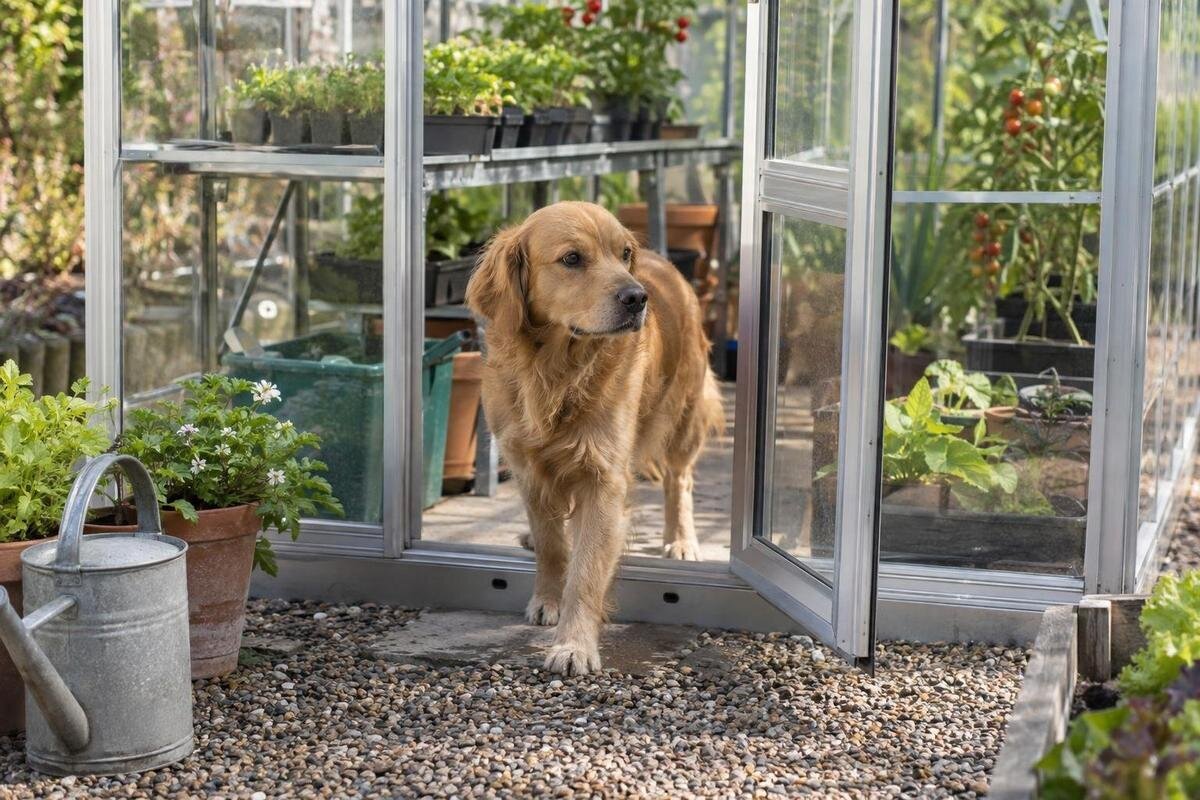
Pet-aware greenhouse planning
Greenhouses are planned around growing conditions, but a pet household also needs clear rules for entry, plants and stored supplies. The frame and door should not be treated as a pet enclosure by default. Start by mapping how each animal could reach the growing area, then decide what must remain inaccessible and how people will manage the door. Check plant and equipment questions against authoritative, pet-specific advice rather than assumptions.

Map the routes each pet can use
Draw the house, garden gates, fences, paths and proposed greenhouse on a simple plan. Mark every route a pet could use, including a side passage, an open gate, a low gap or access through a house door. Add places where people naturally pause or put down trays, because an animal may follow when someone is carrying plants or tools. Include household members and regular visitors who might open a gate. Note which routes are always available and which open only during tasks such as putting out bins or unloading garden supplies. Walk these routes rather than relying on the view from the greenhouse site. The map helps reveal where a routine or physical boundary could fail before you choose a structure.
Think about each animal separately. A dog that noses at a door, a cat that climbs benches or a rabbit that investigates pots needs a different plan; use behaviour you have actually observed rather than a general label such as ‘well trained’. Decide whether entry is never permitted, allowed only under active supervision, or restricted to a physically separated area. If a particular greenhouse is on your list, add its measured outline to the map. The Oasis Pyramid Greenhouse range is one model to compare, but check the proposed configuration against your site rather than judging its fit from a product image.
Choose a site where access is easy to control
Where the greenhouse sits affects how easily you can manage access. A position beside a frequently used pet route, garden gate or outdoor door may turn every gardening visit into a door-control task. Look for a site where a person can reach the greenhouse without leaving a gate open or asking a pet to wait beside the entrance. If the structure is near a fence, hedge or wall, map the route around its edges as well as the approach to its door. The greenhouse’s position does not close gaps elsewhere in the yard.
Walk the route at the times you expect to work, including when carrying a watering can, tray or bulky tool. Notice whether you can see the pet and close the access point without juggling the load. A product such as the Bloomcabin Wall Greenhouse may be part of a site comparison; include the adjacent building, nearby doors and pet routes on the same plan. Use the actual drawings and product information to check the proposed position. If a boundary would attach to the greenhouse rather than stand independently, ask the supplier or installer whether that arrangement is suitable.
Make the door routine clear to everyone
Write a short entry sequence that everyone in the household can follow: put the pet in its agreed area, open the greenhouse only when the route is clear, bring the load through, then close the door before turning to the job. Do not depend on an animal staying still while you carry trays or handle tools. If the routine relies on a second gate, check that it can be shut when someone enters with both hands occupied. A visible reminder near the yard entrance can help visitors follow the same steps, especially when they are helping with a delivery or garden task.
Before ordering, check the specified door position, clear opening, threshold and any closure or latch details for the exact configuration. Photographs do not show every operating detail. Assess a named option such as the Bloomcabin Prestige Greenhouse using its own technical information; do not infer that a door is self-closing, difficult for an animal to open or secure from its appearance. If pet access must be prevented, plan a separate barrier rather than relying on an unverified door feature. Get professional advice before attaching anything to the greenhouse frame.
Keep work paths and pet access separate
Keep the route through the greenhouse clear enough to carry pots and tools past benches, and avoid leaving everyday items where a pet can reach them when someone opens the door. Mark separate spaces for walking, growing and any plants or equipment that must remain inaccessible. Do not assume a high shelf solves access for a climber or that a bench stops a pet from reaching underneath. Include temporary items in the layout: a bag of growing mix, an open tray or a watering can still needs somewhere to sit during a job. Otherwise, the clear route on your drawing may disappear as soon as work begins. Check the manufacturer’s guidance before loading or altering benches, shelving or fixtures, and include the space needed to bring awkward items through the entrance.
Mark the layout before committing to a configuration. Include the door opening, the space needed to carry items, any separate storage and a freestanding gate, not just the planting area. The Bloomcabin Orangerie range is listed from 47 to 70 m²; that area is a comparison point, not a guide to the shape, doorway clearance or pet boundary in a particular layout. Confirm the chosen model’s drawings and dimensions, then check that the working route remains clear with the barrier in place. A larger area does not by itself create a secure zone for an animal.

Verify plant identity before choosing what to grow
Make the plant list before buying seeds or seedlings. Record the common name, botanical name and cultivar when available, and identify the pet species whose access you are assessing. Take that exact identity to a veterinarian or a recognised veterinary toxicology or animal-poison resource in Australia. Ask whether the guidance covers the plant as you intend to grow it and the kind of contact your pet could have. A nursery tag helps identify a plant, but it is not by itself a pet-safety assessment. If you are unsure what a plant is, resolve its identity before putting it where an animal can reach it.
Treat broad internet lists and casual reassurance as prompts for questions, not proof. A common name can be ambiguous, and a general list may not address your animal or the access you are considering. Check the source’s date and scope, and ask your veterinarian about conflicting guidance. Keep a plant register with a label or photo, verified name, source and date checked. If reliable guidance is unavailable, do not mark the plant as suitable for access. Keep it out of reach until you can make an informed decision based on authoritative, pet-specific advice.
Control seedlings, plant waste and harvests
Manage access to plants from arrival through to disposal, not just while they are growing in a pot. Keep packets, bulbs, cuttings, seedlings and newly purchased plants somewhere the pet cannot reach while you sort or label them. Retain the identity label with the plant or in your register, because a fallen tag can leave an unidentified specimen in the greenhouse. Choose a place for unpacking purchases so they do not sit unattended beside an open garden gate. After pruning or repotting, gather loose leaves and stems before allowing any supervised access. Include the trip to the waste bin or compost area in this routine; moving material outside the greenhouse does not put it beyond a pet’s reach. Do not leave a harvest basket or plant waste on the floor simply because the permanent growing area is restricted.
Consider how enclosed storage actually works. The Limited Edition Aluminium Greenhouse with Built-In Storage is identified as a model with built-in storage, but that description does not establish a lock, a pet-resistant closure or suitable conditions for every item. Check the exact compartment details and position, then compare them with the item’s label or manufacturer advice. Keep unidentified plants, seed packets and products with specific handling requirements away from pets, rather than treating an unspecified compartment as a substitute for secured storage.
Store tools and garden products securely
Give tools a designated storage place. Secateurs, knives, wire, plant ties, stakes and small replacement parts can be left on a bench during a job and forgotten when your attention shifts. Make returning them to storage part of finishing the task, and use a cabinet or container that remains inaccessible under your access plan. Allow for unfinished work too: decide where tools and opened supplies will go if you need to answer the door or leave the garden unexpectedly. A temporary tray can keep small items together, but it is not secured storage and should not be left accessible. Keep loose parts out of pots and trays, where they can be hard to notice. Store tools according to their manufacturers’ instructions, particularly if they have blades, batteries or moving parts.
Keep fertilisers, pesticides, weed-control products, pest baits and cleaning supplies in their original labelled packaging. Follow each product label and, where available, its safety data sheet for storage and use. Do not infer that something is suitable around a pet from wording such as ‘natural’ or ‘garden safe’; check product-specific guidance and prevent access as directed. When considering Limited Edition Aluminium Greenhouses, ask whether the actual configuration leaves room for a separate, secured cupboard. The model name does not establish that a cupboard is included or lockable.
Check powered equipment and water systems
List every powered item before deciding where it will go: for example, a fan, light, pump, timer, heating device or irrigation control. Note where cables, plugs, controls and moving parts would sit in relation to a pet’s route, and keep the animal out of the work area while equipment is installed or serviced. Follow the equipment manufacturer’s instructions; do not improvise wiring, covers or attachments to make a setup appear pet-proof. Have electrical work assessed by a qualified electrician. For a candidate such as the T-Model Orangery Greenhouse, use the exact drawings when discussing equipment locations rather than relying on an image.
Water and growing systems need their own check. Mark taps, hoses, open containers, irrigation lines and any reservoir, then consider whether a pet could reach or chew them, knock them over or drink from them. Keep growing water separate from a pet’s drinking supply, and follow the manufacturer’s directions if a product is added to a system. If the animal is not meant to enter, keep the water equipment within that restricted area or maintain a reliable boundary. Ask the product maker or a qualified installer about compatibility before changing or enclosing a device.

Build the pet plan into everyday work
Plan for interruptions and handovers as well as ordinary gardening sessions. If one person starts repotting and another finishes, make clear which plants have been identified, which supplies are still open and whether any waste remains to be cleared. Agree who is responsible for closing up; do not assume the last person seen near the greenhouse has done it. For a delivery or maintenance visit, decide in advance where the pet will stay and who will manage access while the visitor works. Leave a short note for occasional helpers covering the access rule and anything they must not move or use. This is especially useful when someone waters plants in your absence: they need a manageable task, not responsibility for interpreting unfamiliar labels or deciding whether a pet may enter.
Review the arrangement whenever something changes. A new pet, a different plant, a new garden product, replacement equipment, a moved bench or a repair can alter the access picture. Update the register and map rather than assuming an old check still applies. If you suspect an animal has chewed or swallowed a plant or product, contact your veterinarian or an Australian animal-poison advice service promptly for case-specific guidance. Have the plant identification or product packaging available; an online article cannot assess an individual exposure.
Check the exact greenhouse configuration
Before ordering, turn the map and lists into questions for the supplier: what is the exact footprint and door opening, where are the access points, what storage is included, and which accessories or service routes belong to the proposed configuration? Ask for the current technical drawing and check it against the site, pet boundary and space needed to bring plants through. Include any extra gate, cabinet, bench or powered device in the plan. Keep the answers beside the relevant drawing so that details from different sizes or options do not become mixed together. Separate included items from additions you would need to arrange, and note any layout question that remains unanswered. This makes comparisons more useful than a list of model names alone. Obtain qualified help where a choice involves structural alterations or electrical work.
Compare a specific configured option, not just a product title or promotional image. The Aluminium Classic Greenhouse range is listed from 3.77 to 28.08 m²; this area range can help frame a footprint comparison, but it does not establish the dimensions, door arrangement or pet containment of the model you would order. Confirm those details from the exact specification, then test your access routine against the finished layout. Keep plant checks and equipment rules separate from the product choice: pet access depends on the whole household setup.
Frequently asked questions
Can my dog or cat come into the greenhouse with me?
Only if you can manage access and have checked the specific plants, products and equipment for that animal. Supervision does not replace plant identification or secure storage. Treat the greenhouse as a growing workspace, not a pet shelter, and do not leave an animal there unattended. If you cannot reliably control access, a no-entry boundary is the simpler rule.
Will a greenhouse latch keep pets out?
Do not assume so. Whether an animal can reach or operate a door depends on the individual pet and the exact door and latch arrangement. Check the technical information for the configuration you are considering, and assess gaps and other routes around the structure. If access must be prevented, consider a separate boundary rather than relying on an unverified feature.
How do I check whether a plant is suitable for my pet household?
Record the plant’s common and botanical names, cultivar if known, and the pet species involved. Ask a veterinarian or consult a recognised veterinary toxicology or animal-poison resource in Australia. Check that the guidance applies to the plant you have identified and the access you are considering. If the identity or advice is uncertain, keep the plant out of the pet’s reach.
Can I keep garden products in built-in greenhouse storage?
Only if the actual compartment and the product’s storage directions make that appropriate, and the pet cannot access it. A product description mentioning built-in storage does not establish that the compartment locks or is suitable for every item. Follow the product label and any safety data sheet, and use separate secured storage if required.
What should I do if my pet chews or swallows a plant or garden product?
Contact your veterinarian or an Australian animal-poison advice service promptly for guidance specific to the animal and exposure. Have the plant identification or product packaging available if you can. An article or general online list cannot assess an individual exposure.
A pet-aware greenhouse starts with an honest picture of how animals and people move through the yard. Set an access rule that the household can follow, verify plants and products using authoritative guidance, and keep tools and supplies stored as their instructions require. Then check the exact greenhouse layout against that plan. The result is a growing space whose boundaries and routines are deliberate, rather than relying on a product name, a closed door or an assumption about a pet’s behaviour.
