
External or Internal Greenhouse Shade: Which Fits?
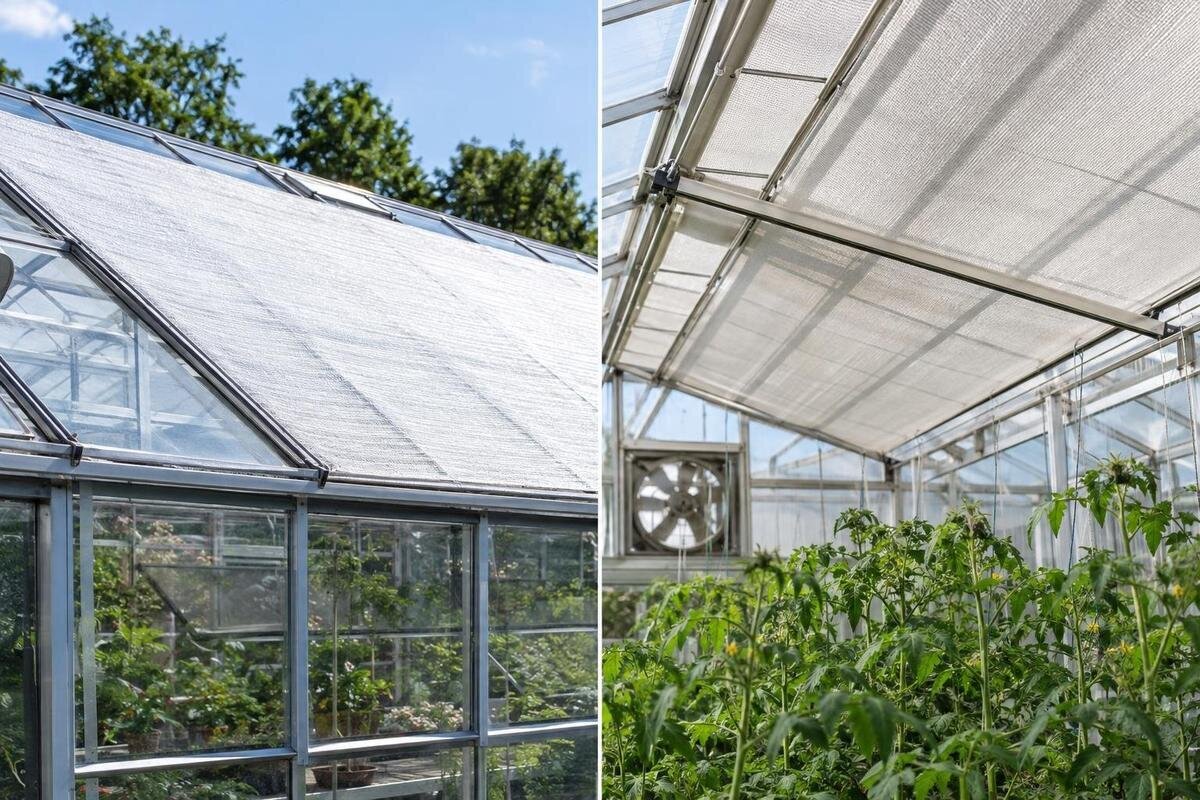
Greenhouse shading
External and internal greenhouse shade can both reduce direct sun exposure, but they act at different points in the solar heat path. An outside screen intercepts some radiation before it reaches the glazing; an inside screen acts after light has crossed the cover. That difference affects heat gain, daylight, access and the fixing points available. The better choice depends on the problem you have observed and the approved options for your particular greenhouse—not on a universal rule that one position always works best.

What to confirm before buying 1
How shade position changes solar heat gain
Sunlight carries energy through a greenhouse covering. An external screen intercepts part of it before it reaches the glazing, so less solar energy may enter the growing space. Some is reflected away; some is absorbed by the shade and released outdoors. The balance depends on the screen material, colour, coverage, gap from the cover and the sun's angle. That makes external placement a more direct response when daytime solar gain is the main concern. It cannot guarantee a particular air temperature: glazing, ventilation, greenhouse size, surrounding shadows and weather still affect the result. The screen can warm too, so its position and the airflow around it matter. Treat shade location as one part of climate management, not a cooling device on its own.
With an internal screen, sunlight first passes through the glazing and the screen then reflects, absorbs or transmits part of it. A reflective inner surface may send some radiation back through the cover, but an internal shade should not be treated as equivalent to stopping sunlight outside. It can still limit direct exposure at plant level, reduce glare or make a work area more comfortable. Its exact effect depends on the shade material and greenhouse, so keep a light-management goal separate from a temperature goal. Reducing direct sun may also reduce useful light; a cooler reading at one point does not prove every crop is receiving the light it needs.
Record what you want to change
Before comparing positions, name the symptom: high air temperature in the afternoon, harsh sun on one bench, direct exposure that a particular crop does not tolerate, or glare while you work. These are related but not identical problems. A broad roof screen may affect the whole greenhouse, while a bright patch entering through an end or side wall can remain. Note the time, location, affected plants and whether doors or vents were open. A record across several comparable periods helps show whether a recurring sun path, rather than a one-off weather change, is driving the problem.
For a brief comparison, record air temperature and humidity at the same point during several comparable sunny periods. Note outdoor conditions, time, door and vent positions, cloud cover and whether shade was in place; otherwise a before-and-after comparison can mislead. Keep the sensor out of direct sun and away from contact with glazing, so the reading is less affected by radiant heating of the sensor itself. Avoid comparing a still, clear afternoon with a cool, cloudy one and attributing every difference to the screen. If crop light is the concern, use crop-specific growing guidance or a suitable light measurement: temperature readings do not show how much light reaches leaves. The aim is to identify whether unwanted sun enters mainly through the roof or a side panel, and when it causes a problem.
What to confirm before buying 2
External shading intercepts sun before the glazing
External shading makes most sense when the main issue is solar energy entering through the roof or another exposed panel. Because the screen sits outside the covering, a portion of the intercepted energy can be released to outdoor air rather than being absorbed inside. Coverage matters: a roof-only screen will not block lower-angle sun entering through a side wall, and gaps can leave a bright strip over the bench you are trying to protect. Watch where the sun falls at the relevant time before choosing a coverage pattern.
Outdoor equipment also has to cope with weather exposure and may be harder to reach for adjustment or removal. Ask whether the shade is intended for external use and how its manufacturer says it should be held in place. If you are considering shade for a Bloomcabin Prestige Greenhouse with Metal Base, check the attachment and operating requirements against that greenhouse's instructions. The model name does not establish compatibility with a separate screen. Include access for adjustment and removal in your comparison, rather than assessing only how much of the roof the fabric covers.
Internal shading and access inside the greenhouse
An internal screen is often easier to inspect or adjust from inside, and it is less exposed to wind and rain than an external screen. That can appeal where outside access is awkward or the greenhouse is used regularly. Its trade-off is its position in the heat path: sunlight has already crossed the glazing. Depending on the material, an inner shade can absorb energy in the growing space or reflect some back towards the cover, so its thermal effect varies. Ask for product-specific information rather than assuming that an internal screen will lower the temperature. Also consider whether the screen changes the amount or distribution of light over the crop.
Check what the screen will occupy once fitted. It should not interfere with opening windows, doors or vents, catch on crop supports, or obstruct watering, pruning and carrying trays. If shelving or equipment already uses roof or wall space, mark it on a simple plan before ordering. For a greenhouse identified as the Limited Edition Aluminium Greenhouse with Built-In Storage, check the selected configuration and ask whether proposed rails or cords would conflict with storage or access areas; the product name alone cannot answer that. Consider whether you can reach the controls safely and whether cleaning or removal can be done without disturbing plants.

What to confirm before buying 3
Match shade coverage to the roof and openings
Shade sold as one continuous sheet may not suit every roof profile or opening. Find out whether the proposed system sits above the roof, follows an internal frame, runs on a track or is divided into separate bays. These are different fixing arrangements, not just different appearances. A roof with several planes or a non-standard outline can leave uncovered sections or require fixings at points that have not been approved for that purpose. Do not cut cloth or improvise tensioning to make a generic size fit. Ask for a fitting diagram that shows the position of each fixing and confirms what must remain clear. Check measurements against the proposed screen, not just the greenhouse footprint.
Use the exact greenhouse model and selected version when requesting that diagram. For example, give the supplier the name Bloomcabin Oasis Pyramid Greenhouse so they can address the proposed screen's fit, rather than relying on a generic cover description. Check how the shade clears roof vents, glazing bars and moving components, and whether the supplier's measurements refer to the fabric itself or the area it is meant to cover. Ask whether the fitting diagram includes every separate panel or bay. A photo can help explain the question, but the fitting details need to show how the complete screen follows the roof.
Confirm the fixing points for the exact frame
Compatibility is a manufacturer-information question, not something to settle by looking at a frame photo. The greenhouse manual may specify which channels, rails or accessories can be used and what must remain unobstructed. The shade supplier should state the required fixing type and intended location. Compare those details with the manual for your exact model and variant, including the base or any optional parts. Do not drill, screw, clamp or suspend a shade system from glazing bars unless the greenhouse maker expressly permits it. A fixing that looks as though it grips is not proof that it is approved. If the permitted method is unclear, ask the maker or a suitably qualified installer rather than adapting a fixing.
An Aluminium Classic Greenhouse listing identifies the product family, but the word aluminium alone says nothing about which clip, rail or fixing is permitted. The same caution applies to shade kits described as universal: compatibility needs to cover the actual frame profile, roof arrangement and opening hardware, not simply the broad greenhouse category. Ask for written confirmation tied to the model and shade system, and keep it with the installation instructions. The person doing the work can then compare both documents before fitting. This check also helps avoid ordering a system whose supplied mounting parts cannot be used on your structure.
What to confirm before buying 4
Keep vents and doors clear
Shade changes the light reaching the greenhouse; it does not exchange warm air for cooler air. If ventilation is needed, the screen must not block an inlet, roof vent, louvre, door or fan path. A roof covering may appear clear when closed but interfere as a vent opens, while an internal curtain can catch on an operating arm or limit access. Check the full movement of each opening using the relevant instructions, not just its closed position. For powered equipment, confirm that the proposed shade will not obstruct moving parts or place cords across electrical components. Keep controls accessible so that the ventilation system can still be operated as intended.
Include the exact configuration in any compatibility question. For a T-Model Orangery Greenhouse, ask for a layout showing the proposed shade position relative to its openings. If shade would need to cross an opening or pass near powered equipment, ask the greenhouse and equipment manufacturers or a qualified installer about the arrangement. Shade can reduce the solar load, but it cannot make an obstructed vent or poorly arranged airflow path work properly. Plan the shade and ventilation together, even if they are bought separately.
Weigh weather exposure against seasonal handling
External screens are exposed to wind, rain, sun and debris; the actual effect depends on the site and arrangement. Ask the shade manufacturer what conditions the product is intended for and how it should be secured, tensioned, cleaned and removed. Follow its maintenance instructions rather than relying on generic advice about wind or fixings, and do not treat a loosely placed sheet as secure. If the supplied instructions do not cover your site, a qualified installer can advise on an appropriate arrangement. Internal screens avoid much of the direct weather but still need to suit the greenhouse environment and be inspected for wear, so being indoors does not mean maintenance-free.
Seasonal use may favour a system that can be removed when no longer needed, but removal can snag glazing, disturb an opener or leave small parts misplaced. Decide who will operate and store it, and how they can reach it safely. If you are comparing a range such as Limited Edition Aluminium Greenhouses, ask how a compatible shade would be fitted and removed on the exact model. Check how the shade is meant to be stored and whether it can be handled without disturbing plants or equipment. Consider seasonal handling as part of the choice, rather than only the screen's position during hot weather.

What to confirm before buying 5
Plan coverage around sun paths and work areas
Shade position should match where sun enters during the hours that matter. A roof screen can reduce overhead exposure yet leave morning or late-day rays coming through an end or side panel. Check the site at more than one time, and across seasons if the greenhouse is used year-round; the sun angle changes, as do shadows from nearby buildings and trees. Mark benches, seed trays and priority crops on a simple plan, then compare the screen's proposed coverage with those areas instead of assuming the shade will be even. Notes or photographs taken from the same spots at different times can help you see where a roof-only solution leaves gaps.
A larger growing space can call for zone-by-zone planning: one area may hold plants that need more direct light, while another is used for potting or storage. That does not mean every bay needs a separate screen; it means a single broad cover should be checked against what grows beneath it. For a model listed as Spacious Greenhouse, use the exact version's dimensions and plan when assessing coverage, rather than relying on a category name or product image. Confirm that any tracks or control cords leave clear access to crops and do not cross vents or doors. If one part of the greenhouse is the problem, consider whether whole-roof coverage would shade areas unnecessarily.
Comparing external and internal shade
Once the problem and coverage area are clear, compare external and internal options against four practical points: how much direct sun needs intercepting, which direction it enters from, whether an approved fixing exists, and whether access to vents and crops stays clear. External shade is the more direct approach when the priority is to stop some radiation before it crosses the glazing. Internal shade may suit a situation where easier access or reduced weather exposure matters more, but it acts after sunlight enters. Treat these as trade-offs, not temperature guarantees, and ask the shade supplier for performance information about the actual product.
Before ordering, confirm the shade's intended position, the exact greenhouse model and version, permitted fixings, coverage dimensions and clearance around moving parts. When considering a Wall Greenhouse, include the adjoining wall and actual openings in that check, along with the direction from which unwanted sun enters. After fitting a compatible system, compare the result with the same observations you made beforehand. If the effect is small, review the sun entry points and ventilation rather than assuming more shade is automatically the answer.
Frequently asked questions
Does external shade always keep a greenhouse cooler than internal shade?
No position guarantees a particular temperature. External shade can intercept sunlight before it crosses the glazing, so it is a more direct way to limit solar heat gain. The result still depends on the shade material, its coverage, sun angle and ventilation. A reflective internal screen may send some energy back through the glazing, but it acts later in the heat path.
Can an internal screen help if the greenhouse is too hot?
It may reduce direct sun on plants and, depending on its material, reflect some radiation towards the glazing. But sunlight has already entered the greenhouse, so internal shade is not equivalent to intercepting it outside. If air temperature is the concern, consider ventilation and shade together.
Can I put external shade over a roof vent?
Only if the greenhouse and shade instructions show that arrangement is compatible. A screen can obstruct a vent as it opens, even if it looks clear when the vent is shut. Check the opening's full movement and ask the manufacturers or a qualified installer if the fitment is not documented.
Can I attach shade cloth to glazing bars?
Do so only if the greenhouse instructions explicitly allow that fixing. Glazing bars are not automatically approved attachment points for an added screen. Confirm the permitted fixing type and location for the exact greenhouse and shade system; a visual match or a general claim of universal fit is not enough.
How do I choose between external and internal shade?
Note when and where unwanted sun enters, and whether the problem is heat, direct plant exposure or both. External shade intercepts sunlight before it crosses the glazing; internal shade acts afterwards and may be easier to reach. Compare the coverage, fixing and ventilation requirements for your greenhouse before choosing.
The choice between external and internal shading depends on where sunlight needs to be intercepted and how the screen can be used in your greenhouse. External shading acts before sunlight crosses the glazing; internal shading acts afterwards but may be easier to reach. Choose the position that addresses the exposure you have observed, fits the actual frame and leaves ventilation unobstructed. The most useful arrangement is one that tackles the problem without making everyday greenhouse work harder.
