
Starting Dahlias in a Greenhouse for the Garden
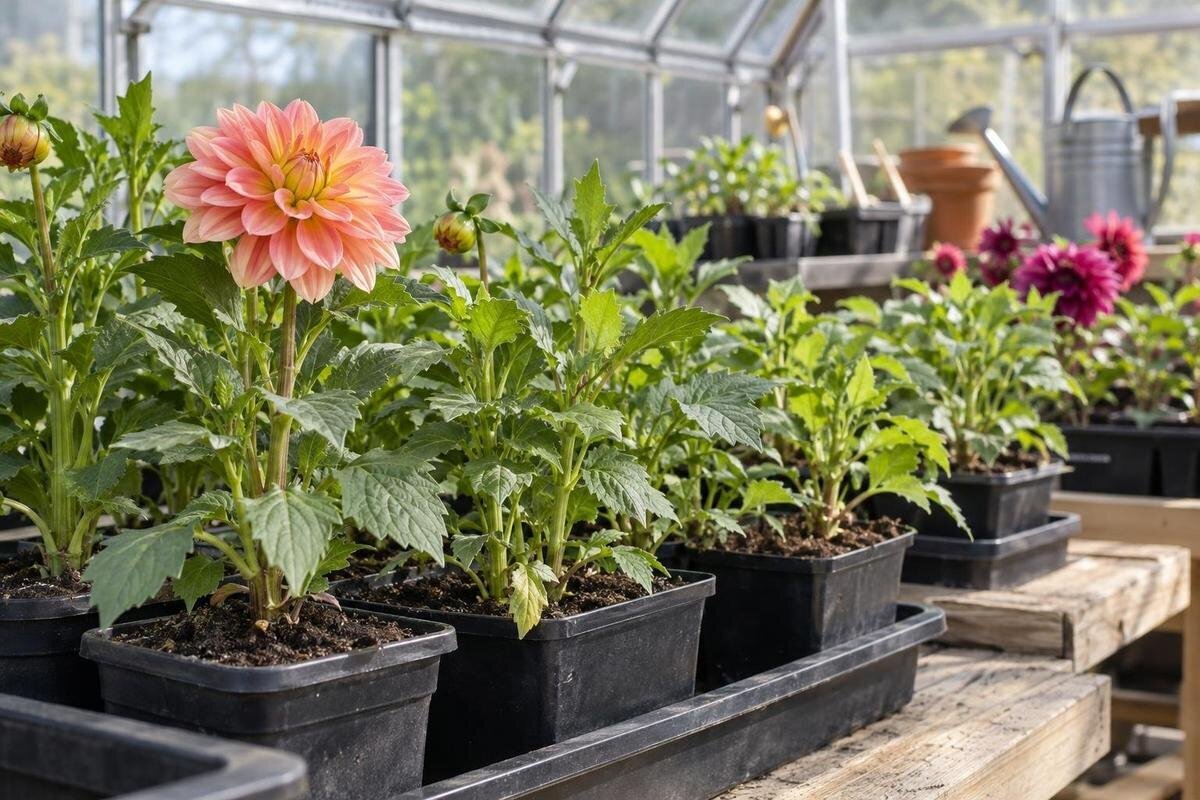
Dahlia growing guide
Starting dahlia tubers in a greenhouse can give them a head start before the garden is ready, but it does not remove the need to wait for frost-safe outdoor conditions. Potting tubers under cover lets you monitor each one, manage moisture and move established shoots gradually into outdoor weather. The useful window is usually only several weeks: start too early and plants can become leggy or crowded before planting time. Because Australian frost patterns and spring warmth differ from place to place, plan around local conditions rather than a single national date.

01
Why start dahlia tubers under cover?
Starting dahlias under cover is most useful when winter or early-spring soil is still cold, yet you want to know which tubers are growing before the garden bed is ready. A potted tuber can be checked and watered individually, and its first shoots can develop in a protected space. This can advance establishment compared with placing dormant tubers straight into cold ground, but it does not guarantee earlier flowers: cultivar, light, watering and the weather after planting all affect the result. Think of the greenhouse as a short nursery stage between dormancy and outdoor planting, not as a way to keep dahlias indoors for the whole season.
The greenhouse itself does not guarantee warmth at night. Sun can raise daytime temperatures quickly, while a cold night can cool pots again; an unheated structure is not automatically frost-free. If you are deciding whether to use a greenhouse, compare the usable growing area rather than relying on a model name. The Aluminium Greenhouses range covers 3.77 to 28.08 m², with space needed for paths and other plants as well as your dahlia pots. Consider the layout alongside your overnight conditions. If you cannot keep newly potted tubers protected from frost, wait for a milder period instead of assuming the enclosure will provide enough protection.
When should you pot dahlias in Australia?
Australia has no single dahlia planting date that suits every garden. Use local frost records, your own experience of the site and the coming forecast to estimate when you can safely plant outside. Shelter, exposure and the way a garden holds cold can change the risk, even between nearby properties. Consider the bed as well as the air: dahlias establish more readily when soil is no longer cold and waterlogged. Note a likely planting window, then revise it if a late cold spell or prolonged wet weather changes conditions. A warm greenhouse does not make cold outdoor soil ready for planting.
Potting roughly four to six weeks before that likely outdoor date is a practical starting point, not a deadline. This gives shoots time to emerge without asking them to wait in small pots for months. If spring remains cold, delay the start so plants do not become leggy or crowded before the bed is ready. Estimate how many pots you can keep in good light, ventilate and move, not just how many tubers you own. With options from 5.53 to 18.9 m², the Pyramid Greenhouse offers several sizes to compare. Choose around the number of plants you can manage through this short nursery stage, rather than treating floor area as a pot-capacity figure.
02
How to recognise a viable dahlia tuber
Dahlia tubers are storage roots attached to a crown, and the crown is where the growing eyes form. A healthy tuber may still look dormant; look for a firm, intact crown and any small buds rather than rejecting it simply because no green shoot is visible. A single smooth, root-like swelling separated from the crown may have no eye and is unlikely to grow on its own. Discard pieces that are soft, slimy, badly mouldy or clearly rotting. Slight surface dryness is different from rot, but badly shrivelled material may have lost the reserves needed to establish.
Before potting, identify each cultivar and keep its label with the tuber. If dividing a crowded clump, each division needs a piece of crown with at least one viable eye and an attached storage root; cutting off individual roots without an eye does not make new plants. Leave an intact clump together if the eyes are difficult to see or you are unsure how to divide it. Use a clean, sharp knife and avoid crushing the crown. Label each pot with both cultivar and potting date; keeping varieties separate makes it easier to track growth and use the spacing recommended for each one later.
Potting dahlia tubers in containers
Choose a stable container with drainage holes and enough width to lay the tuber naturally, with space for roots to develop. A pot that is disproportionately large holds more wet mix than a dormant tuber needs, while an undersized pot can be difficult to water and may need potting on quickly. Use a free-draining potting mix made for containers rather than heavy garden soil, which can compact in a pot. Lay the tuber horizontally, with the crown or visible eye towards the top, and cover it lightly. The eye should be close to the surface, not buried beneath a deep layer of mix.
Individual pots are convenient for labelling, watering and moving plants through the greenhouse. A low tray can hold several pots, but leave a gap between rims so air can move around them and leaves do not immediately tangle. Set them where you can reach the back row without lifting other plants, and avoid balancing pots at the edge of a crowded bench. The Bloomcabin Prestige Greenhouse range covers 3.77 to 28.08 m². When comparing layouts within that range, allow for the pot, its later foliage and the space needed to lift it off the bench. You should be able to carry each plant outside without catching its stems on neighbouring plants.

03
Light, warmth and ventilation for young dahlias
Give new shoots strong light as soon as they appear. Dahlias are sun-loving plants; about six hours of direct sun is a useful garden benchmark, though a very hot site may benefit from protection during the harshest afternoon sun. In a greenhouse, a dim corner, deep shade or the space below a crowded shelf can produce long, weak stems that lean towards the light. Place pots in the brightest suitable position and turn them occasionally if one side grows faster. Watch the leaves and shoots: stretched growth often points to inadequate light, while wilting in a hot enclosure can signal heat or dry mix, so check both before adding water.
Keep the tubers and young shoots frost-free and in moderate warmth; avoid deliberately heating the space to summer-like conditions. A min/max thermometer placed at pot height is more informative than judging warmth from the roof or a sunny afternoon, because temperatures can differ beside a wall or door. Dahlia shoots are frost-tender, so a minimum reading approaching 0°C is a reason to protect the pots or delay starting. On bright, mild days, ventilate the greenhouse to prevent heat building up. If comparing the T-Model Orangery Greenhouse, which has area options from 16.52 to 30 m², look at the ventilation in your intended configuration. Its floor area alone does not tell you how air will move around the pots.
Watering and feeding before planting out
After laying a dormant tuber in the mix, moisten the mix but do not soak it. The tuber has stored reserves; before roots and shoots develop, excess water around it is a greater risk than a brief interval on the dry side. Let extra water drain freely, and do not leave a pot standing in water. As shoots and leaves appear, increase watering gradually, checking each pot rather than following a fixed weekday schedule. Warm, sunny conditions dry containers faster than cool, cloudy weather, and a large pot behaves differently from a small one. Feel the mix below the surface and water when it begins to dry, then let it drain.
Feed only after active growth is established, and follow the directions for your potting mix and chosen fertiliser; a newly potted, dormant tuber does not need a strong feed to wake up. Extra fertiliser is not a substitute for adequate light or sound watering. Inspect shoots and leaf undersides regularly, remove dead plant material, and keep pots spaced so air can move between them. If foliage develops spots or the mix stays persistently wet, review drainage and ventilation before increasing feed. The greenhouse makes it easier to notice changes early; if one pot looks suspect, separate it from the others while you work out what is wrong.
04
How much greenhouse space do dahlia pots need?
Count the space needed by growing plants, not dormant tubers. Note the outside diameter of each pot, then allow room for stems to rise without pressing against neighbouring pots and for your hand to reach them for checking or watering. A tall cultivar can outgrow a low shelf; compact types may be easier to keep on benches, but height and mature spread vary, so use the cultivar label as your guide. Keep a clear route from the staging area to the door. If pots are tucked behind other plants, routine checks and carrying them out for hardening become awkward.
Draw a simple plan before filling the greenhouse: mark the bench or floor area, the pots at their expected size, equipment already there and the path you need to keep open. For a larger collection, the Spacious Greenhouse has listed options from 47 to 70 m². Use the specific plan to work out where each group of pots would go, rather than assuming all that space forms one continuous growing bench. Doors, storage and work zones divide the available area. Mark your actual pot dimensions, then leave a margin for leaves and stems as they develop. This also shows whether your planned batch would crowd plants already growing there. It is better to start fewer plants in good light than to overcrowd a full bench.
How to harden off greenhouse-grown dahlias
Begin hardening off when plants have sturdy shoots and several leaves, and when local outdoor conditions are suitable for gradual exposure. Over about a week to ten days, take pots outside for a few hours in a sheltered position, then extend the time and expose them to more light and air movement. Start with a protected spot rather than putting soft greenhouse growth straight into strong wind or hot afternoon sun. Bring pots back under cover if frost threatens or conditions turn sharply cold; hardening acclimatises leaves and stems, but it does not make a tender dahlia frost-proof.
Use the process to check how the garden site feels at different times of day. A place that is bright in the morning may be windy or intensely hot later, so adjust exposure rather than following a rigid timetable. Keep the potting mix from drying completely while plants are outside, but do not stand pots in water after rain. Moving pots in and out becomes a regular task during hardening off, so consider entrance access when choosing a structure. The Wall Greenhouse has listed area options from 3.69 to 14.34 m²; doorway clearance needs a separate check on the individual plan. Allow room to carry the pot and its foliage through the entrance without brushing against the frame.

05
Planting dahlias outdoors after frost
Plant out only after local frost risk has passed and the soil has warmed and drained; a frost forecast means waiting even if the greenhouse plants look ready. Dahlias need a sunny garden position for flowering, with soil that does not remain waterlogged. A soil temperature around 15°C is often used as a practical guide, rather than a universal rule; local frost risk, drainage and cultivar still matter. A soil thermometer can give a more useful reading than an air forecast alone. If conditions are not ready, keep plants in their pots for a short time, maintain light and airflow, and avoid letting roots become crowded.
Water the pot before transplanting if the mix is dry, then ease the root ball out without pulling on the stem. Set it so the surface of the potting mix sits level with the surrounding bed and firm soil gently around it; burying soft leafy growth deeply can slow establishment. Follow the cultivar label for spacing, and install support at planting for varieties that need it, so you do not spear a tuber later. Water in well, then check soil moisture during establishment rather than giving every plant the same amount on a fixed schedule. For a nursery setup such as the Limited Edition Aluminium Greenhouses, listed from 3.77 to 28.08 m², include the route to the garden in your layout planning. The final move needs clear access for established plants, not just the small pots you began with.
Clearing the greenhouse after planting out
Once the dahlias are outdoors, clear fallen leaves and spilled potting mix from the staging area, wash reusable pots and check labels before storing them. Keep a short record of the tuber, potting date, emergence and garden location; this helps distinguish a late sprouter from a failed tuber next season and makes it easier to match a cultivar to its performance. Inspect the garden plants after transplanting, especially after a cold night, strong wind or prolonged rain, and keep watering responsive to soil and weather. Do not leave unused pots blocking the bright area needed by the next batch of seedlings.
If the greenhouse also serves as a general garden workspace, separate propagation pots from stored supplies so labels, clean mix and watering tools remain easy to reach. The Limited Edition Aluminium Greenhouses with Storage range includes built-in storage and spans 5.52 to 28.08 m². Check the chosen plan to see how the storage and growing areas are arranged; storage space should not be counted as extra growing bench. After planting out, use that separation to organise the pots and labels you will need next season, while leaving the bright growing area available for other plants. Your notes on potting dates and emergence can stay with the cultivar records rather than being lost among empty containers.
Frequently asked questions
How far ahead should I start dahlia tubers?
As a starting point, pot them about four to six weeks before the likely safe outdoor planting date in your garden. Adjust that window to local frost history and spring conditions. An overly early start can leave shoots crowded, stretched or ready for the garden before the soil is warm enough.
Will an unheated greenhouse keep dahlia shoots safe from frost?
Not reliably. A greenhouse may warm up in the sun, but temperatures beside the pots can fall overnight. Monitor minimum temperatures at pot height and protect the plants or delay starting when frost threatens. Hardened-off dahlias are still frost-sensitive.
How much sun do greenhouse dahlias need?
Give them the brightest suitable position. About six hours of direct sun is a useful garden benchmark for dahlias, though a very hot site may need protection from the harshest afternoon sun. Ventilate on warm days so sunlight does not make the greenhouse excessively hot.
How should I position a dahlia tuber in its pot?
Lay it horizontally with the crown or visible eye towards the top, then cover it lightly with free-draining potting mix. Keep the growing point near the surface and use a pot with drainage holes. Avoid leaving a dormant tuber in saturated mix.
How long should I harden off pot-grown dahlias?
Allow roughly a week to ten days, increasing outdoor exposure gradually in sheltered conditions. Extend the process if plants are soft or the weather is windy, and bring them back under cover if frost is forecast. Plant out only when local frost risk has passed.
A successful greenhouse start comes down to sound tubers, a bright potting space protected from frost, and a garden ready to receive them. Give each pot enough light and room, manage moisture, and allow time for gradual hardening off. Keep a little flexibility in your planting window: shoots may be ready before the weather is. Records of emergence and planting dates will help you judge when to start next season, so the greenhouse remains a useful nursery rather than a crowded holding space.
