
Hard Green Shoulders on Greenhouse Tomatoes: Normal or a Problem?
Greenhouse crop guide
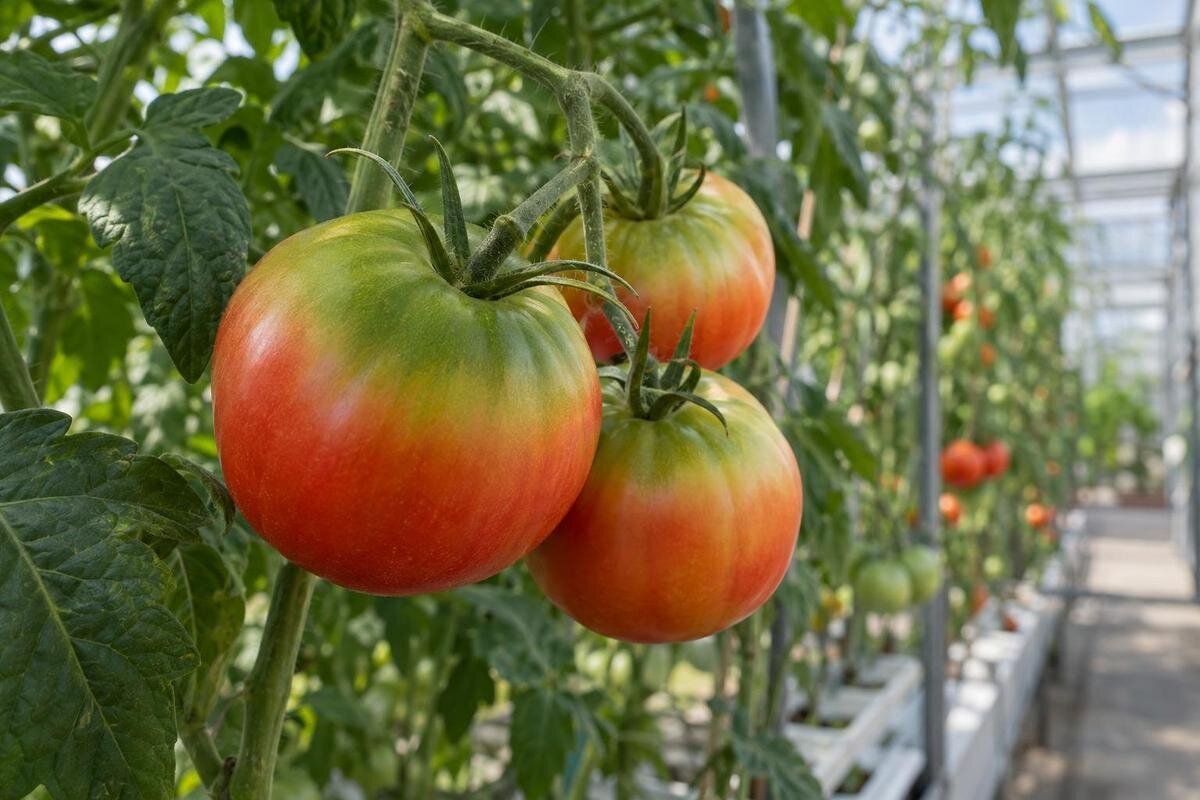
A tomato can colour across most of its skin while the stem end stays green and unusually firm. Sometimes this is a normal cultivar trait; sometimes heat or an imbalance in growing conditions is affecting ripening. The most useful clues are whether the same variety shows it repeatedly, where affected fruit sits in the greenhouse, and what the plant has experienced. This guide helps you weigh those clues without treating one green patch as proof of disease or as a reason to add fertiliser.

01
What a hard green shoulder looks like
The shoulder is the rounded area around the point where the stem joins the fruit. In this symptom, that area stays green and feels firmer than the rest while the tomato takes on the mature colour expected for its cultivar. The green zone may be a narrow band or a broader cap, with either a sharp or gradual boundary. These words describe a difference in colour and texture; they do not name a cause. On a red-fruited variety, distinguish a firm green patch around the stem from green colouring that still covers most of the tomato. Also note whether the cap surrounds the stem or appears mainly on one side.
Compare fruit at a similar stage of ripeness rather than judging one tomato on its own. Note whether the shoulder is simply firmer, or whether it is also sunken, soft, wet or breaking down; those are different observations. Check the rest of the plant too, because leaf colour, growth and other fruit can add context. A hard green cap by itself is not proof of infection, nutrient shortage or a greenhouse fault. Begin by recording what you can see, without cutting back foliage or changing the fertiliser.
Cultivar traits can keep the stem end green
Tomato cultivars differ in how they colour near the stem. As fruit ripens, green chlorophyll gives way to pigments associated with its mature colour, but the change does not always happen evenly. Some varieties retain a green shoulder even when the lower part of the fruit is ripe; others usually colour more uniformly. A seed packet or cultivar description is more useful than a general photograph of a different tomato. Green-when-ripe, striped and dark-fruited varieties may not follow the colour pattern you expect from a standard red tomato, so identify the variety before calling the patch abnormal.
Compare several fruits of the same cultivar at a similar stage. If a similar cap appears repeatedly while the rest of each tomato reaches its usual ripe colour, and the plant is otherwise growing normally, a cultivar trait becomes more likely. If the shoulder has appeared suddenly on a variety that usually colours evenly, or affects fruit formed during a hot spell, growing conditions deserve closer attention. Your own records from earlier harvests can provide a useful comparison: did the variety previously develop the same cap, and was the flesh beneath it similarly firm? If this is your first season with the variety, record the uncertainty rather than assuming that its appearance is either normal or abnormal. Cultivar and environment can overlap: a variety may be more prone to uneven colour under stress.
02
Compare affected fruit across the crop
Look for a pattern across plants, rows and clusters. Are all varieties affected, or only one? Is the green cap more noticeable on fruit facing the sun, growing high in the canopy or sitting in one part of the greenhouse? Compare fruit of similar size and maturity, and note which side of each fruit is affected. Where possible, compare the same variety in two positions and different varieties growing near each other. This helps separate a location pattern from a variety pattern without treating either as conclusive. If you grow only one plant of each variety, acknowledge that limit: variety and position are harder to distinguish. A group of affected tomatoes in one location points towards a local condition; the same feature on one variety across the greenhouse points more towards a cultivar trait.
Sketch the rows and mark affected plants, clusters and dates rather than relying on memory. Include unaffected plants so the map shows a comparison, not just a collection of problem spots. Note whether the symptom recurs near the same boundary or in one section of the structure. If you are also planning a new growing space, use this record to identify the rows and inspection access you want to accommodate. The Limited Edition Aluminium Greenhouses with Storage listing gives area options from 5.52 to 28.08 m². Compare those options with your proposed layout; the area range does not predict how fruit will ripen at your site.
Heat and sunlight can delay even colour
Red colour in tomatoes depends in part on pigments such as lycopene. When fruit stays very hot for a sustained period, the normal change from green chlorophyll to mature-colour pigments can slow or become uneven. The stem end may remain green or yellow and firm while the lower fruit colours. A greenhouse can intensify heat around exposed fruit, and the skin temperature may differ from the air temperature. Strong sun is a clue to investigate, not proof of the cause: fruit that is simply less mature can also be greener, and cultivars vary in how much colour they retain.
Compare fruit from sunny and more shaded positions, then relate the pattern to hot weather and the fruit's stage of development. Distinguish the position of the fruit from the position of the plant: a cluster facing the glazing may have different exposure from another cluster on the same plant. Note whether leaves covered the affected shoulder or whether it was exposed, rather than describing the entire row as sunny or shaded. If you are considering a different structure, the Prestige Greenhouse with Metal Base is listed in area options from 3.77 to 28.08 m². Keep the proposed position of the crop in your layout comparison. Measurements near the fruit remain more useful for investigating heat than assumptions based on a greenhouse's name or size.

03
Check greenhouse temperatures before changing ventilation
An enclosed growing space can accumulate heat, and its warmest area may not be where you expect. Air exchange, shade and how the greenhouse is operated can all affect conditions, but no single opening pattern suits every structure. On hot days, compare readings at fruit height in more than one position, then see whether the affected fruit follows a repeated pattern. A reading near the roof, wall or door may not reflect what a cluster experiences. Keep notes across several hot periods rather than treating one peak as the whole season.
If one area consistently runs hotter, review the existing ventilation and shading arrangements and observe how they are used. Record whether vents and doors were open when each reading was taken and whether shade was in place. Otherwise, two readings from the same spot may describe quite different operating conditions. Change one thing at a time and watch later fruit rather than making several adjustments at once. Avoid shading so heavily that useful light is lost. When comparing structures, look at how the proposed rows relate to the openings shown in each layout. The Spacious Greenhouse is listed from 47 to 70 m²; consider that area alongside the layout details rather than treating a larger footprint as evidence of more even temperatures.
Check nutrient balance before adding fertiliser
Potassium is important to tomato growth and fruit development, and an inadequate supply can contribute to uneven ripening. It is only one possibility, though: the same shoulder symptom does not reliably identify a shortage. Look for a broader pattern in the crop, including leaf condition, plant growth and the history of feeding. Very vigorous leafy growth can also change how much light reaches fruit, but that does not prove excess nitrogen is the cause. A single tomato is not a reliable guide to the balance of nutrients available to the whole plant.
Where possible, test the actual soil, bed or growing medium and review the result alongside fertiliser and watering records. Keep a note of the fertiliser used, its application rate and when it was applied, so a change in the crop can be compared with a clear feeding history. Distinguish between beds or containers that have received different treatments rather than treating the whole greenhouse as one growing medium. For footprint comparison, the Aluminium Classic Greenhouse is listed in sizes from 3.77 to 28.08 m², but nutrient decisions should be based on the bed or containers you actually fertilise. Avoid adding potassium as a trial: excess can upset the balance with other nutrients and will not correct a cultivar trait or heat stress.
04
Watering and foliage are useful context, not proof
Changes in water availability can add stress and complicate fruit development, but a hard green shoulder is not a reliable sign of a watering problem. Review whether the crop has been watered consistently for its growing system and whether hot weather has changed its needs. Dense foliage can also make fruit exposure uneven, so compare covered and exposed clusters. Do not remove a large amount of foliage simply to expose the fruit: sudden exposure to strong sunlight can cause a different fruit problem and make the original pattern harder to interpret.
Record changes in foliage cover as well as watering. If leaves were removed before the shoulder became noticeable, include the timing in your notes; that history is more useful than judging exposure from the plant's current appearance alone. For a future growing area, plan access that lets you inspect both covered and exposed clusters without repeatedly moving foliage out of the way. The Wall Greenhouse listing covers area options from 3.69 to 14.34 m². Sketch your intended beds or containers and the route between them when comparing those options. Include access to the far side of plants, where practical, so an inspection does not depend only on the fruit visible from the entrance. Assess the proposed site's sunlight separately from the product name.
Photograph the fruit and keep a growing record
Take a clear photograph of the whole plant or truss, then a closer view of the stem end and the side of the fruit. Include the date, cultivar and greenhouse position, and take later photos from a similar angle so the colour change is easier to compare. Give each photographed plant or cluster a simple label that also appears on your row map. This avoids confusing a later image of a different tomato with a change in the original fruit. If the shoulder's firmness or colour inside is unclear, cut one representative fruit and photograph the cross-section as well. Record its maturity and how the shoulder feels compared with the lower part; a photograph cannot convey firmness. Keep unedited images for comparison, since changing their colour would make the record less useful. A photo can document a pattern, but it cannot by itself confirm whether the cause is genetic, environmental or nutritional.
Bring the photographs together with notes on hot weather, temperatures near the crop, watering, fertiliser and any ventilation or shade adjustments. A short dated record is easier to interpret than separate notes with no clear sequence. Keep the observations distinct from your interpretation: record a firm green cap on an exposed cluster before labelling it heat-related. If you are also planning a new growing space, retain the row map and plant count for layout comparisons. Limited Edition Aluminium Greenhouses are listed from 3.77 to 28.08 m². Compare the available options with the space your current rows and access routes occupy, rather than estimating plant capacity from total area alone.

05
Distinguish green shoulders from other ripening problems
A shoulder symptom is localised around the stem end. A fruit that is green across most of its surface may simply be immature. Pale or whitish tissue on the side exposed to strong sun can point towards sunscald rather than a green stem-end cap. Blotchy ripening tends to look more irregular, with patches across the fruit rather than a distinct shoulder. If firmness or pale tissue extends inside when you cut a representative tomato, record that too. Blossom-end rot is a separate issue, usually seen at the end opposite the stem as a dark, sunken area.
Use the location, texture and spread of the symptom together, not colour alone. Photograph anything that is softening, spreading or appearing with unusual leaf or stem changes, and ask a local horticultural adviser or plant diagnostic service if the pattern is unclear. Keep these observations separate in your notes rather than grouping every discoloured tomato under green shoulders. For a separate greenhouse purchase comparison, the T-Model Orangery Greenhouse is listed in area options from 16.52 to 30 m². Use your crop map to consider inspection access in a proposed layout, while keeping the diagnosis focused on the fruit and plant symptoms.
Change one factor at a time
A practical order is to confirm the cultivar, compare fruit at the same stage, map where the symptom occurs, then review heat and fertiliser records. If the evidence points to a growing-condition issue, make one measured adjustment and assess later fruit rather than changing ventilation, shade and feeding together. Do not assume that fruit already showing a hard shoulder will colour evenly after a change. If the pattern repeats on one variety while the rest of the crop is healthy, continued observation may be more useful than treating every green patch as a problem.
Seek a horticultural assessment if many varieties are affected, the pattern is worsening, other parts of the plant are declining, or fruit is developing decay or unusual lesions. Share dated photos, cultivar details and your growing records so the adviser can consider more than one possible cause. Replacing a greenhouse is not a treatment for this symptom. If you are independently comparing structures, the Pyramid Greenhouse is listed from 5.53 to 18.9 m². Assess it against your planned crop layout and access requirements, keeping that purchase decision separate from the adjustments you are evaluating in the current crop.
Frequently asked questions
Are hard green shoulders on tomatoes normal?
They can be. Some cultivars retain green colour around the stem as the rest of the fruit ripens. If the same pattern appears on several fruits of one variety and the plants otherwise look healthy, a cultivar trait is plausible. Heat and other growing conditions can also affect colour.
Does a green shoulder mean the plant lacks potassium?
No. Low potassium is one possible contributor to uneven ripening, but a hard green shoulder is not a specific test for it. Check the whole plant, review your fertiliser history and test the soil or growing medium before adding potassium.
Can greenhouse heat affect tomato colour?
Sustained heat around the fruit can interfere with even colour development. Compare affected fruit with fruit in other greenhouse positions and record conditions near the crop. One warm day or one temperature reading does not establish the cause.
Will a green shoulder turn red after picking?
It may change if the fruit is mature enough to continue ripening, but an even colour change is not guaranteed. The shoulder may stay green if that is normal for the cultivar or if the fruit has developed unevenly. Compare it with the variety's usual mature appearance.
Should I add fertiliser to fix hard green shoulders?
Not without checking the likely cause. Extra fertiliser will not correct a cultivar trait or a heat-related issue, and adding potassium without evidence can upset nutrient balance. Check growing conditions and test the growing medium before changing your feeding routine.
A hard green cap at the stem is most reassuring when it repeats on the same cultivar and the rest of the fruit and plant develop normally. A pattern tied to hot, exposed positions, or accompanied by broader crop changes, deserves closer measurement and a review of nutrient balance. Compare like with like, keep dated records and change only what the evidence supports: green colour by itself is not a diagnosis.
