
Greenhouse Tomatoes Flowering but Not Fruiting: What to Check
TOMATO GROWING
Tomato flowers in a greenhouse can look promising, but an open flower is not proof that fruit has set. If blooms dry or drop without a small green tomato forming, check conditions in sequence rather than reaching straight for fertiliser. Start by confirming which flowers have had time to develop, then monitor temperature at flower height, assess pollen release, inspect the blooms and look for water, root, light or plant-health stress. The pattern across plants and trusses is more useful than one dropped flower.

Confirm whether the ovaries are swelling
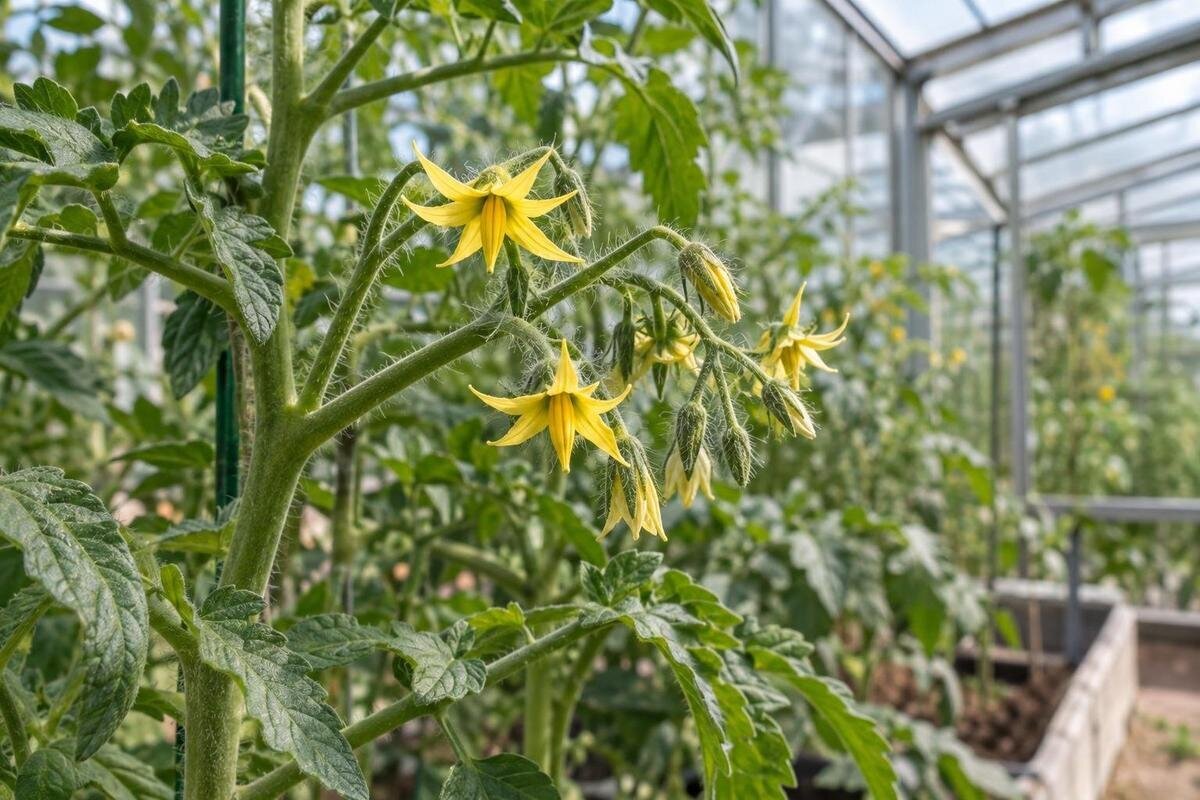
The small green ovary sits just behind the petals. After successful pollination and fertilisation, it begins to swell; the petals commonly wither as the young fruit develops. Follow a bloom for several days instead of judging it the moment it opens. A recently opened flower may not show a visible change yet, and a tiny swelling can be easy to miss among the flower parts. Mark a few trusses with a loose tag or take a close photo so you can compare the same flowers later. Flowers on one truss open at different times, so assess each bloom separately rather than calling the whole cluster a failure.
A bloom that dries and drops without an enlarging ovary is consistent with blossom drop, but its appearance does not identify the cause. Heat, cold, poor pollen release, physical injury and wider plant stress can lead to a similar outcome. Note whether one flower, one truss, one plant or the whole crop is affected, and whether other trusses have set fruit. Fruit on an older truss shows that set happened earlier; it does not rule out a later spell of unsuitable conditions. If an ovary starts swelling and then shrivels, record that separately from a flower that drops before any swelling.
Measure temperatures where flowers are forming
Place a min–max thermometer or data logger near the flowering trusses, out of direct sun and away from a hot wall or the glazing. Record the daytime high and overnight low over several days while new flowers open. A reading in the middle of the greenhouse, by the door or outside may not match conditions around the canopy. Keep the instrument in one representative position while collecting readings, and note the date and which trusses were flowering. An outside reading can add context, but it cannot replace a greenhouse measurement. Daily averages can hide a brief afternoon spike; if your device records readings at different times, note when the highest temperatures occur.
Tomato pollen and flower function can be affected by excessive heat and cold; warm nights can matter as well as a hot afternoon. On a bright day the greenhouse may become much warmer than the garden forecast suggests, while a cold snap can interrupt a flush of flowers. Conditions in the days before flowers open can also be relevant, so note earlier extremes where you can. Cultivars differ, so do not treat one temperature cut-off as universal; compare the log with reliable local advice for your variety. If these observations prompt you to compare growing spaces, assess the T-Model Orangery Greenhouse against your ventilation, glazing and site requirements. A model name alone does not establish the temperatures inside.
Check pollen release before hand-pollinating
Tomato flowers usually contain both male and female parts and can pollinate themselves, but pollen still has to be released and reach the stigma. Vibration helps loosen it; outdoors, wind and visiting insects can contribute. In a sheltered greenhouse, limited movement may make transfer less reliable. When the flower is dry and fully open, gently tap its supporting stem or give the truss a light shake. Handle the stem rather than the petals, and try a few flowers on different trusses. A firm pinch or repeated rubbing can damage a bloom and make a simple test harder to interpret.
You may not see a cloud of pollen: the grains are fine, and a lack of visible dust does not prove a flower is sterile. A gentle vibration is a useful check, not a cure for pollen damaged by temperature or a flower that is not fully open. If only some blooms respond, compare their age and condition rather than shaking harder. Some air movement or insect visits do not guarantee every blossom has transferred pollen. Access to the trusses is also worth considering in a future layout. When comparing the Pyramid Greenhouse, check its dimensions and openings against your planned rows, including whether you could reach the flowers for inspection and gentle tapping.
Inspect the flower and truss for damage
Look closely at several flowers, not just the dropped one. Check whether the petals and other flower parts are intact. At the base, the green ovary should remain and begin to enlarge as the petals fade if fruit set is progressing. Note whether it is firm and enlarging or shrinking, and whether the flower stalk stays green or turns yellow. Buds that shrivel before opening, damaged petals, or a whole truss that sheds blooms are useful observations, but none points to one cause. A flower can look normal and still fail to set after a period of heat or poor pollen release.
Check for obvious chewing, torn petals, distortion, mould-like growth or small insects inside the flowers, and photograph the bloom as well as the whole plant. A close view of the flower base and a wider view of its leaves and truss make comparison easier later. Photograph an affected bloom beside one that looks normal at a similar stage, and include the date. Some pests are hard to identify by eye, so do not spray on a guess: an incorrect treatment can add stress and will not correct temperature or pollen problems. If you are planning a layout with storage, review the Limited Edition Aluminium Greenhouses with Storage layout information with inspection access in mind. Allow for reaching flowering trusses as well as accessing stored items.

Check humidity alongside temperature
Humidity is part of the picture, not a stand-alone answer. When air is persistently humid, tomato pollen can become less free-flowing and may not shake loose easily. Condensation or wet flower surfaces are signs to note, although they do not tell you the exact humidity at the flower. A small humidity meter near the canopy can add context, but one reading is not a diagnosis. Humidity can shift between afternoon and night, so note conditions when flowers are open rather than relying on condensation seen the next morning. Very hot, dry conditions can also interfere with flower function, so trying to dry the greenhouse as much as possible is not a sound response.
Use the doors or vents already available to limit unnecessary heat and stagnant, damp air when outdoor conditions allow, while avoiding sudden exposure to cold air. Check that existing openings are not obstructed by foliage or stored items, and note when you change them. Ventilation can improve the growing environment, but it cannot restore pollen already damaged or compensate for a stressed root system. If repeated problems lead you to compare structures, examine the vent and door specifications for the Bloomcabin Prestige Greenhouse with Metal Base. Consider how those openings would work with your planting layout, rather than judging ventilation from the greenhouse’s overall appearance.
Check water and root-zone stress
Tomatoes can drop flowers when roots repeatedly swing between too dry and waterlogged. Check moisture below the surface of the bed or potting mix, not just the top layer, and notice whether plants wilt during the day or remain limp after conditions cool. A dry root ball can be missed if water runs down the side of a container; saturated soil can restrict roots even when the surface looks dry. Compare several pots or parts of the bed rather than assuming every plant receives the same amount. A dry container beside a moist bed may reveal uneven watering that a general greenhouse check misses. Keep watering reasonably consistent with weather and growing medium, and do not flood the root zone to compensate for a dry spell.
Look at drainage, container condition and recent watering changes; in-ground beds and pots dry at different rates, so use what the plant and medium show rather than a fixed calendar. Root stress may affect flowering before leaves show an obvious problem, while one wilted afternoon alone does not prove lasting damage. Note whether flower drop follows missed watering or a run of hot days, but treat the timing as a clue. For a future structure such as the Spacious Greenhouse, plan paths and watering access alongside the beds or containers. Check the proposed layout against the available dimensions so you can assess moisture throughout the crop, not only in the easiest places to reach.
Review feeding and overall plant growth
Consider feeding history alongside the plant’s appearance. Excess nitrogen can favour leafy growth over flowers and fruit, while a genuine nutrient imbalance or salty growing medium can stress plants; neither can be confirmed from missing fruit alone. Very lush, dark foliage may make excess nitrogen worth checking, but pale, curled or scorched leaves also have several possible causes. Compare leaf growth with the number of flower trusses and note recent fertiliser, compost or potting-mix changes. Record whether symptoms affect old leaves, new growth or the whole plant before making an adjustment.
Adding more fertiliser simply because flowers have dropped is unlikely to correct a pollination or temperature problem and may worsen an existing imbalance. Follow the label on any product you use, and consider a soil or growing-medium test if the problem persists. For containers, assess the potting mix; for beds, use an appropriate soil test rather than applying a treatment intended for a different medium. Keep these crop-care decisions separate from any structure purchase. If comparing the Aluminium Classic Greenhouse, assess how you would arrange growing beds or containers and drainage within it; choosing a greenhouse does not resolve an existing feeding imbalance.
Assess light, crowding and airflow
Check how much usable light reaches the leaves and trusses through the day. Dirty glazing, external shade, neighbouring plants or a very dense canopy can reduce the light available to the crop; heavy shade can weaken growth, but it does not by itself explain why a particular bloom failed. Note where direct sun falls in the morning and afternoon, whether flowers sit beneath thick foliage, and whether one side of the greenhouse performs differently. A quick morning impression is not enough because shade moves. If you use a shade screen, note when it is in place: reducing heat can also reduce light. Keep enough healthy foliage to support the plant, and avoid stripping leaves abruptly.
Crowded plants can trap humid air around the trusses and make flowers hard to inspect. Use the variety’s usual training and spacing guidance, keep paths and supports workable, and avoid major pruning changes while diagnosing the cause. For a wall-mounted option such as the Aluminium Lean-to Greenhouse, assess the proposed position as well as the structure. Check the wall orientation, nearby shade and hours of sun, then consider the space needed for your planting layout. The same model in a different position will not necessarily give the plants the same light conditions.

Compare varieties and flowering periods
Flowering time and variety matter. Check the seed packet or plant label to confirm the cultivar and any stated temperature preferences, then compare flowers on plants of the same type at the same stage. Early and late trusses may experience different night temperatures from the main flush, while a greenhouse can become very hot by day and does not guarantee warm nights. Do not assume all tomato varieties respond alike or use a general seasonal calendar as a substitute for conditions at your site. Compare like with like: flowers from different ages or cultivars cannot cleanly show whether a single change improved fruit set.
If one variety repeatedly drops flowers while another sets fruit beside it, that is a difference worth investigating, not proof that cultivar alone is responsible. Compare their position, irrigation, light and flowering dates first. A plant setting fruit outdoors but not under cover can point towards a greenhouse-specific condition, though it still does not identify which one. Before considering a replacement such as the Limited Edition Aluminium Greenhouse, use these comparisons to identify what you need to assess in another structure. Compare the available dimensions and ventilation specifications with your site and crop layout; a change of model alone is not evidence that fruit set will improve.
Keep a record and change one factor at a time
Keep one simple record for several flowering trusses: the date each bloom opens, greenhouse maximum and minimum, damp or very hot periods, any gentle pollination attempt, watering changes and recent feeding. A photo of the flower before it drops and the same truss a few days later is more useful than a picture of the greenhouse alone. Note the plant and its position, and roughly how many flowers set or fail; the aim is to find a pattern, not build a complicated data sheet. If possible, compare plants of the same cultivar in different spots.
Change one factor at a time where practical, then judge the next flowers rather than expecting already-dropped blooms to recover. If fruit sets after a cooler spell or improved pollen movement, that is a helpful clue, not proof of a single cause. If several plants continue to shed flowers despite stable care, or there are severe leaf changes, pests or rapid wilting, ask a local horticultural adviser or state agriculture service to review close-up photos, the cultivar and your notes. If one end of the greenhouse is consistently different, include its position; a local pattern may point to a different check from a crop-wide problem.
Frequently asked questions
Do greenhouse tomatoes need hand pollination?
Usually not. Tomato flowers are self-fertile, and normal movement from air or insects can help release pollen. In a still greenhouse, gently tapping the stem of a dry, fully open flower may help. It will not correct pollen damaged by heat or wider plant stress.
Which temperatures should I check?
Record both the daytime maximum and overnight minimum near the flowering trusses. An outdoor forecast is not a substitute for a greenhouse reading. Use guidance for your cultivar and local conditions rather than relying on one temperature cut-off for every tomato.
Should I add fertiliser when flowers drop?
Not without evidence of a nutrient problem. Extra fertiliser will not fix poor pollen release or unsuitable temperatures, and excess nitrogen can favour leafy growth. Note what you have applied and consider a soil or growing-medium test if the problem continues.
Why are flowers dropping when the leaves look healthy?
Healthy-looking leaves do not rule out a short spell of heat or cold, pollen problems or stress around the roots. Record conditions while new flowers are opening, then compare affected blooms with flowers on other trusses and plants.
How long should I wait before deciding a flower has failed?
Follow the green ovary at the base of the flower over several days. If it starts to enlarge while the petals fade, fruit is setting. There is no single reliable time limit for every cultivar and growing condition; record the flower’s progress rather than judging it as soon as it opens.
Fruit set depends on a healthy flower, viable pollen, pollen movement and conditions that let the young fruit develop. A temperature log, close inspection of the ovary and notes about plant stress will usually narrow the possibilities more reliably than extra fertiliser or a wholesale change in care. Follow new flowers, compare patterns across the crop and adjust one factor at a time; if the problem persists, take those observations to a local horticultural adviser.
