
Set Up Greenhouse Irrigation for a Two-Week Holiday
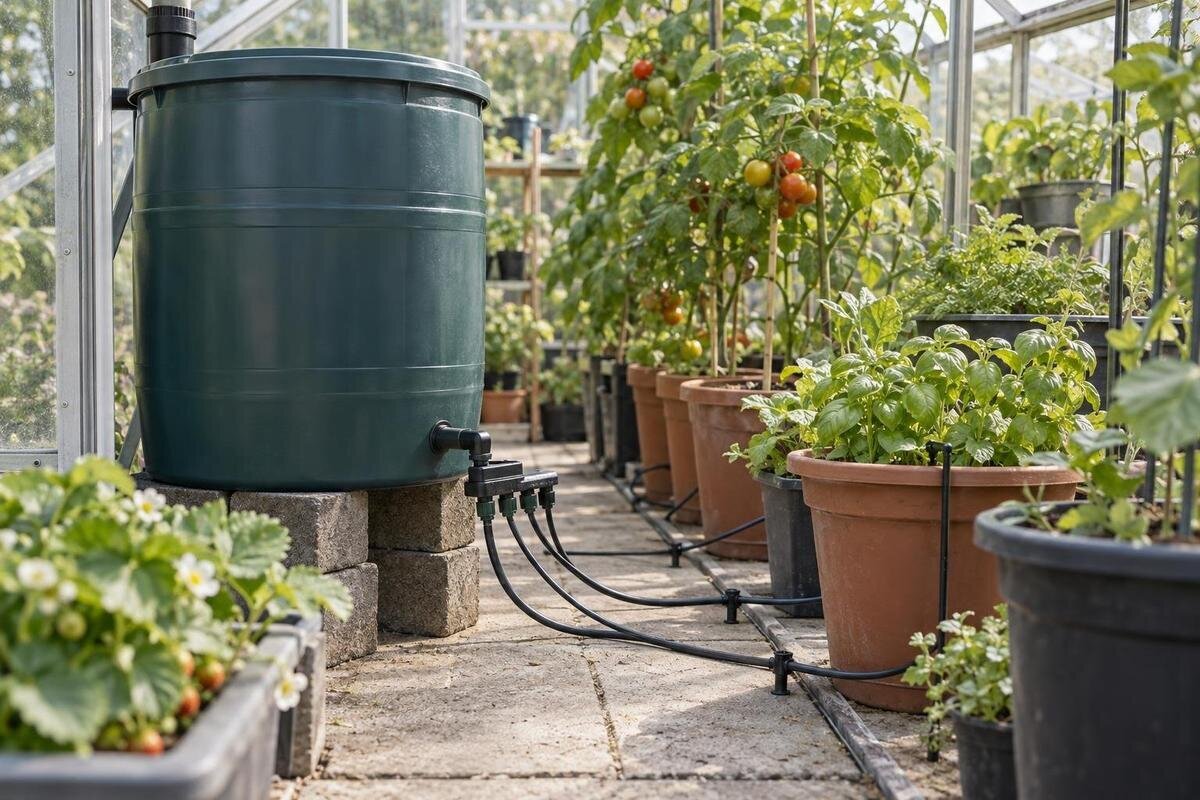
Greenhouse holiday watering
Two weeks is long enough for a small fault—a blocked outlet, an empty tank or a timer set to the wrong day—to create a serious watering gap. A dependable greenhouse holiday plan combines measured water use, enough usable stored water, a full-system trial, a way to hear about faults and a person who can check the plants. Build it before departure using the crops and conditions you expect, rather than trusting a new timer setting on its own.

01
Plant needs and holiday dates
Treat a two-week holiday as a reliability plan rather than a timer purchase. List the crops and where they grow: a garden bed, a large tub and a small pot can dry at different rates, even under the same roof. Record each group’s normal watering routine, how quickly its growing medium dries and which plants are least tolerant of a missed cycle. Note recent crop changes too; new seedlings or actively growing plants can alter demand. Shade, ventilation and the weather during your trial also matter. A change in pot size or plant density since last season can alter how quickly a group dries. These observations give you a baseline; a heavy soak on the last morning cannot show what will happen while you are away.
Set the departure and return dates, a primary visitor and a backup before changing the timer. Mark the water source, controller, zone names and any manual steps, then decide who responds if something fails. If choosing a structure as well, compare its exact size and planting layout: the T-Model Orangery Greenhouse listing spans 16.52–30 m². This range does not establish the planted area, water use or included irrigation equipment. Plan from the specific version and growing arrangement you will use. Use the same map for your system trial and the visitor’s instructions so each plant group has an identified water supply.
Measure water use in representative conditions
A timer’s run duration is not a daily-volume estimate. Measure the water actually drawn from the reservoir or supplied to the system over a known period, and record how much each zone uses. A marked tank, measured top-ups or a suitable water meter can help; keep the start and end readings rather than relying on memory. Collect observations across several ordinary cycles, ideally for one to two weeks and with some days close to the warmer conditions you expect. A cool, overcast trial can understate holiday use. Separate manual top-ups from the automatic system’s routine consumption so the figures describe what the timer will need to supply.
Keep a log with the date, weather, crop stage, scheduled run and tank reading before and after; note leaks or missed cycles. Compare representative warm days, not just the fortnight’s average, and use the highest repeatable consumption as your planning figure. If use changes sharply between zones, keep separate records rather than averaging their readings together. A single extra refill can otherwise hide a leak or a cycle that did not run as intended. When planning for a structure such as the Pyramid Greenhouse, listed at 5.53–18.9 m², count the beds and pots in your chosen layout. Measure their consumption once the system is installed rather than converting floor area directly into litres a day.
02
Calculate usable reservoir capacity for 14 days
For a shared reservoir, add the measured daily use of all zones. Multiply a conservative high-use day by 14, then add a reserve that reflects uncertainty in your readings, the weather and any refill option. For example, if your trial repeatedly shows 18 L a day, 18 × 14 gives 252 L before a buffer. That is an arithmetic illustration, not a recommended allowance for every greenhouse. If use could climb in hotter conditions, base the plan on a representative warm spell or arrange an extra check rather than treating a mild-week average as a guarantee. Write down the daily figure used so a visitor can see when conditions no longer match your estimate.
Compare the result with usable capacity, not only the tank’s stated volume. Some water may remain below a pump intake or otherwise be unavailable to the installed system; follow the equipment guidance for its minimum operating level. Check the starting fill, possible leakage and whether a refill source will be reliable while you are away. Do not count forecast rain as water already stored. Keep irrigation storage separate from greenhouse storage when comparing products. The Limited Edition Aluminium Greenhouses with Storage listing covers greenhouse sizes from 5.52 to 28.08 m², not reservoir capacity. Confirm the tank’s usable volume separately. If it has an automatic top-up, test its operation according to the maker’s instructions while you are present.
Separate crops that need different schedules
One schedule can be a poor compromise when pots, beds and differently sized containers dry at different rates. Group plants by their observed needs and the volume of growing medium around the roots, not by convenience alone. If the controller supports separate zones, use them for groups that genuinely need different timing. If it has only one output, be realistic about whether one setting suits every group. Avoid moving a thirsty group into a wetter schedule simply because it is easiest. The aim is to repeat a pattern already shown to keep each group appropriately moist, not to redesign the planting plan on departure day.
Record each zone’s name, start time, duration and measured output, along with the plants it serves. Run and inspect each zone separately so a working timer does not hide a closed valve, disconnected line or wrong setting elsewhere. A note beside the controller can prevent a helper from guessing which setting belongs to which bed. If comparing sizes in the Bloomcabin Prestige Greenhouse range, listed at 3.77–28.08 m², sketch the rows, pots and line routes for the version you intend to use. These details determine the watering groups; floor area alone does not establish how many zones you need. Keep the logged settings unchanged once testing is complete.

03
Place the tank and lines where they can be checked
Make the reservoir easy to read, refill and inspect without disturbing the plants or lines. Choose a position that remains accessible to the person checking it, with enough room to reach the valve and see the level. Protect stored water as the tank maker recommends, and keep the fill point distinct from any uncertain supply. A full water container is heavy, so do not assume a bench, shelf or greenhouse frame can support it. Check the tank and support instructions, and ask a qualified professional if the supporting arrangement is unclear. The holiday plan should not depend on an awkward lift or a shut-off that is difficult to find.
Trace the delivery lines from source to beds and note where they pass doors, paths or stored gear. A line can be kinked, crushed or disconnected during ordinary use, so keep it visible where practical and inspect its route during the trial. Leave room for the visitor to reach the controller and reservoir without moving heavy objects. When considering the Spacious Greenhouse, listed at 47–70 m², include these access routes in your layout sketch alongside the tank and plant groups. Check clearances for the chosen structure rather than assuming that its overall area guarantees convenient access to every part of the watering system.
Test delivery from the timer to the last plant
Test the whole chain, not just the timer display: water source, controller, each scheduled zone, lines and outlets. Start a complete cycle while you can watch it. Check that the intended zones start and stop at the programmed times, look for leaks, and confirm that water reaches representative plants near both ends of a line. Compare the tank reading with the planned draw. Follow the system maker’s instructions for cleaning or flushing, and do not alter pressure or pump settings by guesswork. If a powered component or pump needs installation or repair, use its instructions and a qualified professional where appropriate.
Begin testing well ahead of the trip, leaving time to correct a missed schedule or small leak and repeat the run. Several consecutive cycles reveal more than a one-off start; a longer trial, up to the full absence period if practical, also shows whether storage lasts as predicted. Check the growing medium and tank level during the trial, not only the controller. For a model from the Aluminium Greenhouses range, listed at 3.77–28.08 m², use a drawing of your chosen size and planting arrangement to mark the outlets you have checked. Record the tested settings, keep the test log available to your visitor and avoid an untested change just before departure.
04
Make fault alerts actionable
List plausible failures and decide which can actually be detected: an empty reservoir, interrupted supply, power loss, flat controller battery, blocked outlet or leak. A controller reporting that a program ran is not proof that water reached the roots. An alert can only report conditions its installed sensors or system can detect. If your setup has no low-water or flow monitoring, say so plainly in the plan rather than treating a quiet phone as an all-clear. For a pump or controller, check what it does after an interruption and whether it resumes the schedule; follow the maker’s directions rather than assuming it will restart correctly. Assign someone to act on each alert you rely on.
Use a built-in test function or a safe, manufacturer-approved simulation to check the alert, the phone or account receiving it and the person who will respond. Do not deliberately run a pump dry or create a leak to test a notification. Confirm the signal from the equipment’s actual position and check that the contact receives the alert with their usual phone settings; an alert that arrives late is little help. If planning a Wall Greenhouse, its listed size range of 3.69–14.34 m² provides no information about communication coverage at your site. Test the alert route after installation, and retain visitor checks for faults the system cannot identify.
Arrange a primary and backup visitor
Book a primary visitor who has agreed to the dates, plus a backup who can step in if plans change. Base the frequency of checks on measured tank depletion, plant sensitivity and how quickly a fault would need attention. A weekly visit may be too far apart for one setup and unnecessary for another. Set the interval so a person can intervene before the reserve is exhausted or plants become stressed. If heat is forecast or an alert arrives, make clear who contacts whom and how the next visit can be brought forward. Do not leave the helper to discover the plan by trial and error.
Write a short handover with a simple layout map, zone names, usual timer settings, the marked reserve level and what to do if the display or water level looks wrong. Ask the visitor to check the reservoir, visible leaks and representative pots or bed moisture, then send a dated photo or message. Specify which changes they may make and which need your approval; leave another contact’s name and number in case you cannot be reached. For the Limited Edition Aluminium Greenhouses, listed at 3.77–28.08 m², use a map of your own planted layout rather than a general product illustration. Label each zone clearly and give the backup visitor a copy of the handover too.

05
Allow for heat and forecast changes
Base the trial on conditions the plants are likely to face, then check the forecast shortly before leaving and during the absence if someone can update you. Hotter, sunnier or windier conditions may change how quickly growing media dry; cooler or cloudier periods may lower demand. A fixed programme that suited a mild week can therefore under-water in a hot spell or keep some areas too wet when conditions are cooler. Note the weather during your trial and compare it with the forecast rather than treating all 14 days as identical. Greenhouse conditions can differ from the headline forecast, so use your observations as well as the weather information.
Agree a trigger for extra help before you go: for example, a forecast outside the conditions you tested, a tank level below the marked reserve, or a visitor finding a dry group. Set the action in advance, such as a same-day check or using a measured reserve supply, instead of asking someone to lengthen every zone. The trigger should reflect your readings, not a universal temperature number. Keep spare water only if it is clean and accessible, and do not count rainfall that has not arrived or rely on an untested top-up arrangement.
Use a departure-day routine and a return check
Use departure day to verify, not to commission. Fill the reservoir to the level intended during the trial; check for leaks, an unobstructed water supply, the controller’s date and schedule, and the status of each zone. Confirm that any battery or power supply is in the state required by its instructions. Send a test notification and make sure the visitor has access and understands the handover. If possible, watch one complete normal watering cycle before leaving. Do not add an untested extra run or soak plants heavily to compensate for the time away; either can make the first day harder to assess.
On return, inspect the tank, controller and plants before resetting the routine. Look for a dry area, unexpectedly wet soil, a leak or a changed setting, then compare what you find with the visitor’s notes and any alert history. Water according to actual conditions rather than automatically doubling a missed run; your response depends on what the plants and growing medium show. If there was a fault, identify its cause and repeat the system test before relying on it for the next absence. Keep the consumption and visit log: it turns a successful fortnight into better evidence for the next one.
Frequently asked questions
Can I leave a greenhouse on an automatic timer for two weeks?
Not on the timer alone. A timer can repeat a tested schedule, but it cannot guarantee that the reservoir stays full, an outlet remains clear or a fault alert reaches you. Run the complete setup over several days, check how it responds to interruptions according to the manufacturer’s instructions, and arrange a person to inspect it at an interval suited to your measured water use and the plants’ needs.
How much water should I leave for 14 days?
Measure daily use in conditions similar to those expected while you are away, multiply a conservative figure by 14, then allow a reserve for uncertainty. Compare that total with usable tank capacity, not just the tank’s stated volume, and account for water the system cannot draw. Your own readings are more useful than a general litres-per-square-metre estimate.
Should I water heavily just before leaving?
Avoid an untested, unusually heavy soak as a substitute for a reliable schedule. It may leave some areas too wet while others still dry out before you return. Keep to a pattern you have already tested, and check the growing medium and tank as part of your final inspection.
Do phone alerts mean I do not need a visitor?
No. An alert only helps if the system can detect the problem, its notification reaches someone and that person can act. Test the full alert route before you go, and keep a visitor as a fallback for faults the system cannot identify or resolve.
How often should someone check the greenhouse?
There is no single interval that suits every setup. Use your trial to estimate how quickly the tank level falls and how long plants can go before a problem needs attention. Arrange checks with enough time to refill, inspect or call for help before the reserve is exhausted.
A holiday-ready irrigation system is one whose water use, usable capacity and likely failure points you understand. Keep the tested settings, leave a clear record and give a named person enough time and information to act. For a fortnight away, those layers of preparation matter more than adding complexity at the last moment.
