
Overwintering Geraniums in a Greenhouse
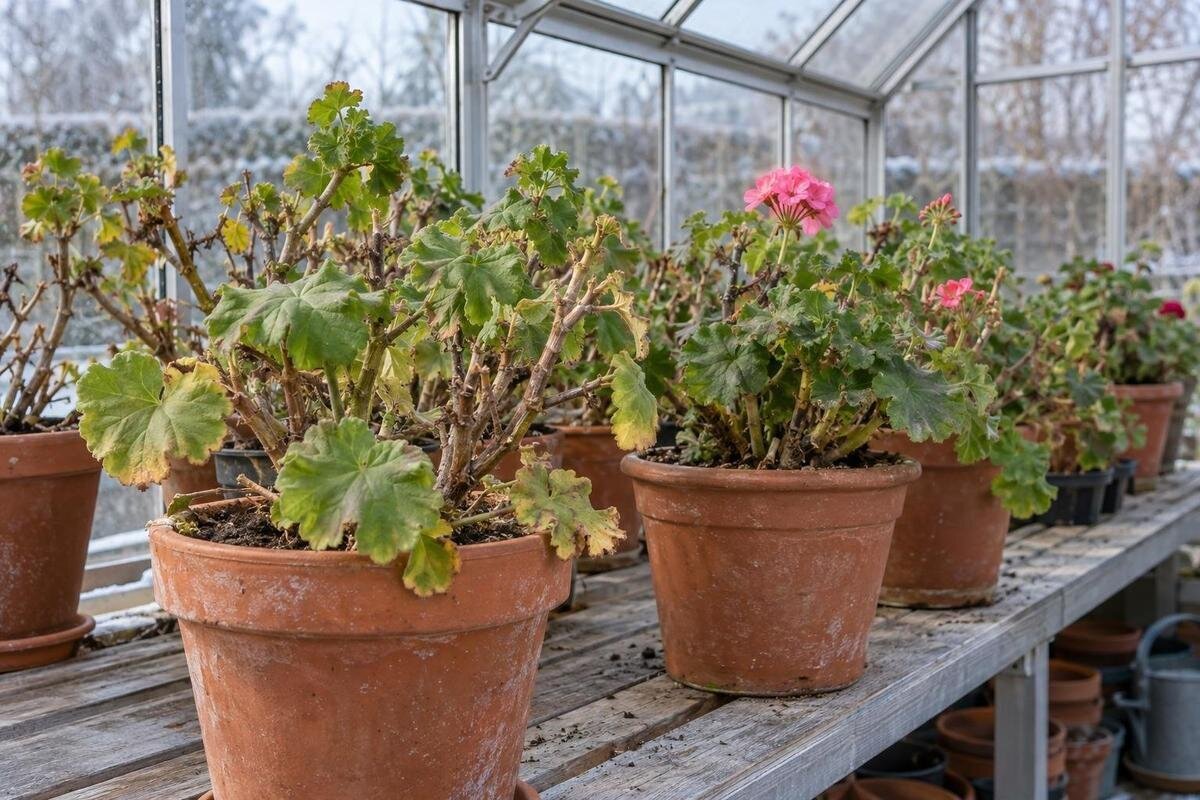
Greenhouse winter care
In cooler Australian districts, a greenhouse can help keep tender geraniums through winter, but a glazed structure is not automatically frost-free. First identify whether your plant is a Pelargonium, commonly sold as a geranium, or a hardy Geranium. Then choose between a cool, low-growth rest and maintaining active growth. Those approaches call for different temperatures, light and watering. The greenhouse’s measured overnight minimum and the plant’s identity matter more than a generic winter schedule.

Greenhouse features to compare 1
Check whether the plant is a Pelargonium or a hardy Geranium
Most plants sold under the everyday name geranium are Pelargoniums: zonal bedding types, trailing ivy-leaved forms, regal or Martha Washington types, and scented-leaf cultivars. Their labels may give names such as Pelargonium × hortorum or P. peltatum. A true Geranium, often called a cranesbill, belongs to a different genus; Geranium sanguineum is one familiar hardy perennial example. The distinction matters because common Pelargoniums are generally frost-sensitive, whereas many hardy cranesbills have a winter rest suited to outdoor cultivation in the right conditions. A common name alone is not enough to set the greenhouse temperature.
Look for the botanical name on the original nursery label, plant record or propagation tag, and keep it with the pot. Flower colour and leaf shape can help narrow down an identification, but they will not reliably distinguish every hybrid or species. If the tag says only geranium, check the supplier’s information before following advice written for Pelargoniums. A hardy Geranium in a pot may need attention to root exposure in a severe cold spell, but warming it through winter may be unnecessary and can disrupt its normal seasonal cycle. Use the plant’s identity and local conditions rather than moving every pot into a greenhouse.
Choose between a cool rest and winter growth
For a mature, healthy Pelargonium, a cool rest suits gardeners whose aim is to keep the plant until the next growing season rather than maintain winter flowers. Growth slows, the plant uses less water and its shape may be tidied to fit the available space. In a greenhouse, plants are often semi-dormant rather than completely dormant and leafless: some retain foliage and still need light. Active care aims to maintain foliage and support continued growth, but only where enough light is available. Neither method is automatically better; choose according to the plant’s health, the greenhouse conditions and the time you can spend checking it. Make that choice for each plant rather than assuming the whole collection needs the same winter treatment.
If your collection includes plants on both routines, plan to keep them apart and allow space for benches, access and different care. For a larger collection, the Spacious Greenhouse range lists floor areas from 47 to 70 m². That figure is a size reference, not a promise of separate temperature zones or a suitable winter minimum. Check how the specific structure can be ventilated and arranged, and base your choice on recorded site temperatures. The same principle applies to a smaller collection: reserve bright positions for active plants and do not put resting plants in an unmeasured cold corner.
Greenhouse features to compare 2
Measure overnight temperatures in the greenhouse
A greenhouse provides shelter, but an unheated one is not automatically frost-free. Overnight temperatures can approach those outside, and a reading near a door, vent or pane may differ from one among the plants. Solar gain can also create a warm midday spike followed by a sharp drop after sunset. A pleasant afternoon does not show that plants are safe overnight. Plan for both ends of the daily cycle, especially during a cold spell, rather than relying on the greenhouse label or a general climate average. Keep a simple record of the minimum and maximum readings, noting where the thermometer was placed. Comparing readings from the same position helps you judge the conditions a particular group of pots actually experiences, rather than relying on how warm the greenhouse feels when you visit.
Use a minimum–maximum thermometer at foliage height, and compare another position if the shelves and floor differ. Common zonal Pelargonium × hortorum and ivy-leaved P. peltatum are examples of tender bedding groups often kept in a cool, frost-free resting range of roughly 5–10°C. Treat that as a practical guide, not a guaranteed limit for every cultivar. Regal and scented-leaf types also need frost protection, but their seasonal response can differ, so check the plant’s own guidance. The Aluminium Classic range lists sizes from 3.77 to 28.08 m²; its floor area does not establish night temperatures or frost performance.
Match winter light to the plant’s growth cycle
A cool resting Pelargonium that retains leaves still needs daylight. Lower temperatures slow growth and water use; they do not make an evergreen plant safe in a dark cupboard. A fully leafless plant stored under a recognised dormant method may need less light, but follow advice for that plant rather than assuming every pot can be stored in darkness. Avoid deep positions behind opaque shelving, stacked pots or a wall. If the greenhouse is crowded, fewer well-lit plants may overwinter better than a collection pressed closely together.
Plants kept actively growing need the brightest practical winter position. Many common types can continue slowly in mild conditions around 10–15°C, but insufficient light can produce long, soft shoots; extra warmth alone will not correct that. Check how shade from nearby buildings and trees changes through the day. Some species have a different seasonal pattern: Pelargonium triste is a winter-growing, summer-dormant example, so it needs light while growing in winter rather than the dry winter rest used for summer bedding types. The Wall Greenhouse range spans 3.69 to 14.34 m²; compare its footprint with the light available at the proposed position.

Greenhouse features to compare 3
Allow room for pots, foliage and access
Plan usable space around the plants, not just the quoted floor area. Allow for each pot, the spread of its foliage, a gap for air movement and room to inspect it by hand. Trailing ivy-leaved forms can occupy more bench length than compact zonal plants, while large specimens need clearance above their crowns. Resting plants can sometimes be grouped more compactly than actively growing foliage, but neither group should be jammed against glazing or a doorway. Sketch the benches, floor pots and the route you need to carry water or remove a plant. Mark the foliage spread as well as the pot diameter: a layout based only on containers can overlook trailing stems and overlapping leaves. Check whether you could lift a pot from the back row without dragging it through neighbouring plants. Leave an accessible place for a plant that needs closer inspection, rather than filling every gap at the outset.
Measure the tallest pot-and-plant combination and check the clearance above any bench or shelf; floor area alone does not tell you whether plants will fit vertically or remain easy to reach. Allow for growth if the plants will stay active. The Limited Edition Aluminium Greenhouse range lists floor areas from 3.77 to 28.08 m². Use that as one sizing reference, then check the selected model’s dimensions and headroom in its specifications before settling on a bench layout.
Ventilate without chilling the plants
Winter watering and cool nights can leave a greenhouse humid. Condensation on glazing is not proof of disease by itself, but constantly wet foliage and stagnant, crowded corners can raise the risk of fungal problems such as botrytis. Space pots so leaves can dry, remove fallen petals and dead leaves, and avoid wetting the foliage when watering. On mild days, use available ventilation to exchange damp air. Reduce it before conditions become cold enough to chill tender plants, and pay attention to changes in weather rather than leaving openings in one position all winter.
Ventilation and access need to suit the bench layout and the plants’ height. An opening that is difficult to reach or blocked by shelving is less useful than one you can manage as conditions change. Do not assume that a model name or floor area guarantees a particular opening pattern. The T-Model Orangery Greenhouse range lists floor areas from 16.52 to 30 m². Compare the dimensions with your planned layout, then check the product specifications for vent positions and usable height rather than inferring them from the title.
Greenhouse features to compare 4
Water according to growth and potting-mix dryness
Check each pot instead of following a fixed weekly timetable. In a cool resting Pelargonium, the mix dries slowly; let the surface dry and the pot become noticeably lighter before adding a modest amount, then allow excess water to drain. Do not keep the rootball saturated, but do not leave it bone dry all winter either. Pot size, mix, temperature and light all affect how quickly it dries, so do not water a whole bench as if every pot needs the same amount. Check a little below the surface as well as looking at the top.
An actively growing plant in brighter, milder conditions will use water faster, especially as new leaves appear, but it still should not sit in water. Water the mix directly, empty saucers and keep drainage holes clear. Winter-growing species such as Pelargonium triste need a different routine while they are actively growing; do not give them the dry winter rest used for dormant bedding types. Feed only when growth has resumed and follow the fertiliser label. The Pyramid Greenhouse range lists 5.53 to 18.9 m²; compare the floor area with your pot layout and leave access for watering.
Keep plants on separate, labelled routines
Group plants by the care they need, and mark each pot with its botanical name or cultivar and whether it is resting or being grown actively. Add a note if a plant has shown cold damage or a pest problem. Without labels, it is easy to water a dormant row as often as an active one or feed plants that are not growing. Labels are especially useful when cuttings, hybrids and species Pelargoniums look similar, or when another person is helping to care for the collection. Keep care notes brief and specific: record the last watering and any change in growth or leaf condition, rather than simply writing ‘checked’. These notes provide context for the next inspection, not a timetable for the next watering. If someone else takes over for a few days, show them which groups are resting and explain that a check does not necessarily mean every pot needs water.
Choose positions for each group only after checking its light and temperature. A warmer shelf is not automatically better if it receives little daylight, and the coolest corner may be too cold. Leave room to lift pots for inspection and avoid placing foliage against the glazing. Check the groups again after a change in weather. If one plant develops rot or pests, move it away from the main collection and adjust its care separately rather than changing the routine for every pot.

Greenhouse features to compare 5
Inspect plants and keep the greenhouse clean
Before plants go into the greenhouse, inspect stems, leaf undersides, new growth, pot rims and drainage holes. Look for aphids, whitefly, scale, mealybugs, spider mites, sticky residue or fine webbing, and check established plants as well as new arrivals. Remove dead leaves and spent flowers, and clean pots and tools so plant debris does not build up on benches. Do not place a visibly infested plant straight into a crowded winter collection; catching a problem early makes it easier to keep it separate.
Keep new or suspect plants apart while you identify the issue. If treatment is needed, choose a product labelled for the pest and plant, and follow its directions rather than applying something by guesswork. Recheck foliage through winter, particularly after warm spells. Store clean labels, ties and tools away from plant debris. The Limited Edition greenhouse with built-in storage range lists 5.52 to 28.08 m²; its stated storage feature may help with organising supplies, but do not assume that storage space is a suitable climate-controlled place for live plants.
Restart growth gradually as conditions change
When days lengthen and new shoots appear, encourage growth gradually. For resting plants, increase their light exposure before increasing water substantially; then water as the mix begins to dry more quickly. Feed only after active new growth is visible. Remove dead or weak stems with clean secateurs, and check whether the roots fill the pot before repotting. Avoid a sudden move from cool shade to strong sun, or from a closed greenhouse to exposed outdoor conditions, which can stress tender foliage. Treat this as a transition for each plant, not a single date when the whole collection changes routine. A plant already producing new leaves and using water more quickly is at a different stage from one still resting beside it. Update its care label as its routine changes so the winter grouping does not become a reason to overlook new growth.
Keep checking overnight minimums before moving tender Pelargoniums outside; a spring date does not rule out a cold snap. Acclimatise plants gradually and return them to shelter when conditions are unsuitable for their type. Plants kept active all winter need less of a restart, but their water use still changes as light and growth change. The Prestige Greenhouse range lists floor areas from 3.77 to 28.08 m²; if plants will stay in the structure as they grow, compare the available area with their larger spring canopies and check headroom and ventilation in the specifications.
Frequently asked questions
Can I leave Pelargoniums in an unheated greenhouse over winter?
Only if the greenhouse stays within a safe range for the plant. An unheated structure is not automatically frost-free, so measure overnight temperatures at plant height during cold weather. Move tender Pelargoniums to a reliably frost-free place if the readings or forecast put them at risk.
How cold can Pelargoniums get?
There is no single safe minimum for every cultivar. Many zonal and ivy-leaved types are kept in a cool, frost-free resting range of roughly 5–10°C, but treat this as a guide rather than a survival guarantee. The plant’s identity, how long it is cold and how wet its potting mix is all matter.
How often should I water a dormant geranium?
Check each pot rather than following a weekly schedule. A resting Pelargonium uses little water in cool conditions, so let the mix dry between modest waterings and allow excess to drain. Do not leave the rootball saturated or bone dry. Winter-growing species need a different routine while they are actively growing.
Should I cut Pelargoniums back before winter?
There is no need to cut every plant back hard. Remove dead or damaged growth, and trim only as needed for the space or in line with advice for that group. A plant that is stressed or carrying pests should be assessed before pruning; keep its label so you can follow cultivar-specific guidance.
Do dormant Pelargoniums still need light?
Plants that retain leaves need daylight, even if cool conditions have slowed their growth. A fully leafless plant stored under a recognised dormant method may need less light, but do not assume that every Pelargonium can be kept in darkness. Check the requirements of the exact plant.
Successful overwintering starts with the right plant name and a clear choice between resting and continued growth. Keep common tender Pelargoniums frost-free, measure the conditions where the pots sit, and adjust water to both the plant’s growth cycle and how quickly its mix dries. A true hardy Geranium or a winter-growing species Pelargonium may need a different seasonal routine, so let the identified plant—not the common name—guide its care.
