
Can Greenhouses Combine a Glass Roof with Polycarbonate Sides?
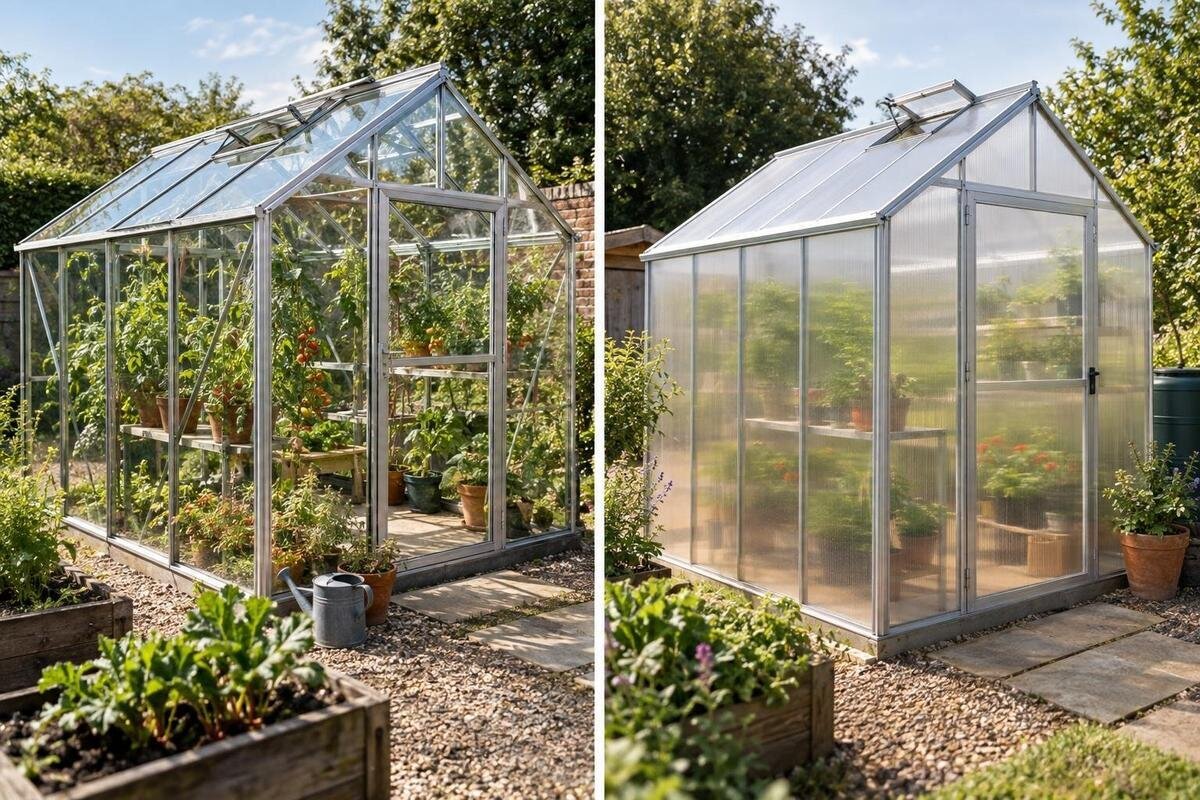
Greenhouse glazing
Yes, a greenhouse can combine a glass roof with polycarbonate sides when the manufacturer has designed and documented that exact arrangement. It is not enough that both materials appear in a catalogue, or that a panel seems to fit an opening: the frame, supports, seals, retaining parts and panel positions must suit the specified system. For a buyer, the decisive evidence is a model- and size-specific drawing or glazing schedule that names the roof and side materials. If the manufacturer does not list or approve the mix for the configuration you want, choose a documented glazing package rather than treating an unapproved swap as a simple upgrade.

Before you buy 1
A mixed glazing package must be manufacturer-approved
Yes, a greenhouse may be designed with glass overhead and polycarbonate in its sides. The important qualification is that this must be an offered or explicitly approved configuration for the exact frame, size and panel layout. A frame that appears to accept both materials is not proof that its grooves, retaining profiles, seals or supports suit the proposed combination. The product specification should name the roof material and the side material separately, rather than simply saying that the greenhouse is available in glass and polycarbonate. Those words may describe two separate options, not one mixed package. Check whether the mix applies to every side or only designated panels.
Treat a supplier's general statement that polycarbonate is an option as incomplete until you know where it goes. Request a drawing, schedule or written confirmation that marks each relevant roof and wall zone, names the product version and matches the selected size. A named page such as the Classic aluminium greenhouse listing can help identify a model on your shortlist, but its title alone does not establish its glazing. If the model has several sizes or panel layouts, the document should match the one you intend to order. A generic image is not a substitute for a version-specific specification.
Why choose glass above and polycarbonate at the sides?
Buyers may consider this mix to balance a clear view or appearance overhead with different properties at the sides. Glass often gives a crisp view through the roof, while polycarbonate sheets vary by construction and finish. Depending on the type, they can provide a different level of light diffusion or privacy, and buyers may favour them for handling or impact characteristics. These are broad material distinctions, not promises about a particular greenhouse. A clear sheet and a diffusing panel will not create the same view or light pattern, and the word polycarbonate alone does not identify what is included. Check the exact description on the quotation.
Begin with the reason you want the mix. If the aim is a clear view of the sky, ask which glass the manufacturer specifies and whether it has a coating. If you want to soften light entering through the sides or screen views, ask about the polycarbonate type, finish and panel locations. The Spacious Greenhouse range is listed from 47 to 70 m², but floor area alone does not tell you whether the glazing will meet those priorities. For a larger structure on your shortlist, use its roof-and-side schedule to see where the different materials would sit in relation to the plants and areas you intend to use.
Before you buy 2
The frame and panel details must match
Glazing is not simply a sheet laid into a frame. The design has to retain each panel correctly, seal the joints and allow for differences between the materials. Glass and polycarbonate are not identical in thickness, weight or thermal movement, and individual panel types vary too. Support bars, edge clearances, gaskets and other retaining parts need to match the manufacturer's chosen materials. Buyers do not need to calculate these details, but the manufacturer or a qualified installer should confirm that the combination works as a complete greenhouse. Do not leave compatibility to an on-site substitution based only on the appearance of an opening.
Check that the specification identifies each panel type, not just the broad material name, and shows where it is fitted. For a model such as the Bloomcabin Prestige Greenhouse, use the selected size and layout when asking about the frame and glazing details. Include any openings or accessories that affect panel positions, so the answer relates to the greenhouse you intend to order. If the supplier says the frame takes either material, clarify whether this means two separate glazing options or an approved mixed arrangement. Ask which retaining parts and seals belong to that arrangement, and make sure they are included in the quoted package.
How the mix changes the light entering the greenhouse
A glazed roof and polycarbonate walls create separate routes for daylight: overhead and lateral. The light reaching plants depends on more than the material names. Panel clarity or diffusion, any tint or coating, frame members, roof angle, orientation and surrounding shade can all matter. Polycarbonate may be clear or diffusing according to its specification, and glass options can also differ. The amount of framing affects the view through the structure too. Ask for published optical details, if available, rather than assuming a glass roof means maximum light or that polycarbonate sides always create shade.
Think about where plants will sit and which directions provide their daylight, then use those priorities to frame questions for the supplier. Ask whether the side panels are clear, tinted or diffusing, and whether every side uses the same type. A wall screened by a fence or building may contribute less daylight than an open side, regardless of its material. If the Pyramid Greenhouse is on your shortlist, use a drawing of the exact version to relate panel locations to your intended planting layout. Compare any stated coatings or surface treatments as well as the broad material; a catalogue photograph cannot resolve those differences.

Before you buy 3
Thermal performance and ventilation require separate checks
Do not use the material mix as a shortcut for predicting how warm or cool the greenhouse will be. Insulation and solar gain depend on the exact glass and polycarbonate construction, coatings, air spaces and the rest of the enclosure. Single-layer and multiwall polycarbonate, for example, are different specifications. Ask for published thermal and light data relevant to the chosen package, if those figures are available. A glass roof with polycarbonate sides is not automatically more insulated, less prone to overheating or suitable for a longer growing season than another option. Comparisons should use the same panel grades and model size.
Ventilation is a separate design question. Confirm which vents, doors or other openings are included in the chosen configuration, where they sit and whether the glazing schedule shows them correctly. Material alone does not show how air moves through the structure. When considering the Wall Greenhouse, ask about the openings offered for that exact model and how they fit into the selected panel layout. Also ask how condensation is managed at panel joints and within the specified polycarbonate construction; the answer may depend on the sheet and system details. Keep the ventilation options consistent across quotations so a difference in openings is not mistaken for a benefit of one glazing material.
Safety and maintenance differ between materials
Glass above head height makes the specified product and its intended use especially important. Ask the manufacturer or a qualified installer to identify the glass type and any applicable safety specification for the greenhouse as sold, and to confirm that the frame and retention system are designed for it. Do not infer the glass grade from a photograph, the word glazed or an unrelated product description. Panel size, support and fitting details belong to the approved design. If your site has particular exposure or access conditions, explain them and get a project-specific answer rather than choosing by material name alone.
Some buyers consider polycarbonate for its impact or handling characteristics, but that general comparison does not make every sheet suitable for every side panel. Ask which construction and surface protection are supplied, whether panel orientation matters and what care the manufacturer recommends. If you are considering the Limited Edition aluminium greenhouse with built-in storage, include both roof and side panels in your maintenance questions. Establish how each material should be cleaned and what replacement options are available for the specified configuration. Keep the guidance for the two materials distinct rather than assuming the same cleaning method, surface treatment or replacement parts apply throughout the greenhouse.
Before you buy 4
Why a later panel swap needs approval
Changing a greenhouse from all glass to a mixed package, or replacing a broken panel with another material, can affect more than the panel itself. The substituted sheet may not match the frame channel, retainers, seals, support spacing or allowance for movement. Its weight and dimensions may also differ from those in the original design. A panel that seems to sit in an opening is not necessarily secure or weather-tight under the conditions the greenhouse is designed to handle. Do not cut, drill, adapt or exchange glazing on the assumption that the materials are interchangeable. A general catalogue listing cannot approve a later change.
Before replacing a panel, give the manufacturer the model, size, panel location and original glazing specification, then ask for written advice for that opening. For a greenhouse from the Limited Edition Aluminium Greenhouses range, identify the version already on site rather than relying on the current listing alone. If another material is approved, confirm whether profiles or seals also need to change and whether the approval covers the full proposed combination, not just one panel. Keep the replacement specification with the original details so the change remains identifiable. If the structure is older or has been altered, have a qualified professional identify the system before any work begins.
What the glazing schedule should confirm
Ask for a manufacturer drawing or glazing schedule tied to the quotation. For the T-Model Orangery Greenhouse, as for any shortlisted model, it should identify the selected size and configuration rather than just the range name. It should label the roof and each side panel by material and, where relevant, type or finish. Doors, vents and any storage options that affect the layout should also be identifiable, so there is no ambiguity about where one material ends and another begins. Check that the quoted supply refers to this same version, rather than relying on a website image that may show several options.
Ask the supplier to state whether the combination is a standard option, a manufacturer-approved variant or not offered for that model. Request confirmation that the frame, panel-retention parts and supplied instructions correspond to it, and clarify which accessories shown in drawings are included. If you rely on a warranty, ask how the written terms apply to this configuration; do not assume coverage from a verbal assurance. Keep the drawing, product description and written answers together. If a document names a different model or shows another roof-and-side arrangement, resolve the discrepancy before ordering.

Before you buy 5
How to compare mixed-glazing quotes
For a fair comparison, hold the structure and scope as constant as possible: the same model and size, roof shape, openings, doors and accessories, with each glazing material identified by its actual type. Otherwise, apparent differences may come from different panel specifications or layouts rather than from the material choice. Ask what is included, what is optional and whether a pictured finish differs from the one supplied. Compare published information on light, thermal performance and maintenance only when it applies to the exact quoted package. A broad description such as glass roof, polycarbonate sides is a starting point, not enough to compare two quotations.
Use the drawings to mark the roof, each wall, doors, vents and any solid panels, then check that every quotation describes the same zones. If a supplier offers more than one polycarbonate type, ask which is included and whether substitutions are allowed. Note the recommended cleaning method and ask how replacement panels can be ordered, because different materials may call for different care or parts. Do not treat a clearer-looking photograph as a technical advantage; lighting, colour and image processing can disguise differences. Resolve unclear wording in writing so both quotations describe the same greenhouse.
When the combination is the right choice
A mixed package is worth considering when the manufacturer offers the exact roof-and-side arrangement, the specified materials meet your priorities, and the structure's maintenance and growing environment suit your plans. It may be a poor match if the manufacturer cannot provide a model-specific schedule, if the panel combination is not approved, or if the expected visual or thermal effect depends on details no one has specified. In those cases, compare complete standard glazing options or another greenhouse with a clearly documented configuration. Do not turn an attractive idea into an unapproved retrofit.
When more than one approved option is available, compare it against your main reason for mixing the materials. A clear view overhead, screened side views and a particular level of light diffusion are different priorities; the selected panel types need to address the one that matters to you. Consider the care requirements alongside the appearance, rather than treating them as a later detail. If the mixed package does not offer a clearly specified benefit for your intended use, there is little basis for preferring it over a complete standard option. Choose between the configurations actually offered, not an imagined combination of their best features.
Frequently asked questions
Can I replace glass side panels with polycarbonate after buying a greenhouse?
Only if the manufacturer approves that replacement for the exact model, panel location and frame. A sheet fitting the opening does not confirm it can be retained or sealed correctly. Ask for written advice and the specified parts; otherwise, keep the original glazing type.
Will a glass roof make the greenhouse brighter?
Not necessarily. Daylight also depends on the glass type or coating, frame, roof angle, orientation, surrounding shade and side-panel finish. Ask for information about the full configuration and compare like with like; a material label alone cannot predict how much light reaches plants.
Do polycarbonate sides make a greenhouse better insulated?
Not by themselves. Performance depends on the exact sheet construction, the glazing elsewhere and the rest of the enclosure. Ask for published data that applies to the quoted configuration. A glass-roof, polycarbonate-side description does not establish a particular insulation level or growing season.
Can I choose polycarbonate for only one side?
Only when the manufacturer offers or approves that layout for the exact model. A single different wall can change the panel schedule, fixing details and light distribution. Do not assume it is interchangeable with a full set of side panels; request a drawing that identifies the location and sheet type.
What should I request before ordering?
Request a model- and size-specific glazing schedule or drawing showing the glass roof and polycarbonate sides, including panel types, options and openings. Have the supplier confirm the complete combination is approved and that the quotation matches it. Keep that confirmation with the order.
A glass roof with polycarbonate sides can be a sound choice when it is specified as a complete greenhouse system. Confirm the panel types and locations, frame compatibility and exact approved configuration before weighing appearance, light or maintenance. If the manufacturer does not offer or approve the mix for the model you want, rely on a documented glazing option instead of modifying the structure.
