
Growing Okra in an Australian Greenhouse
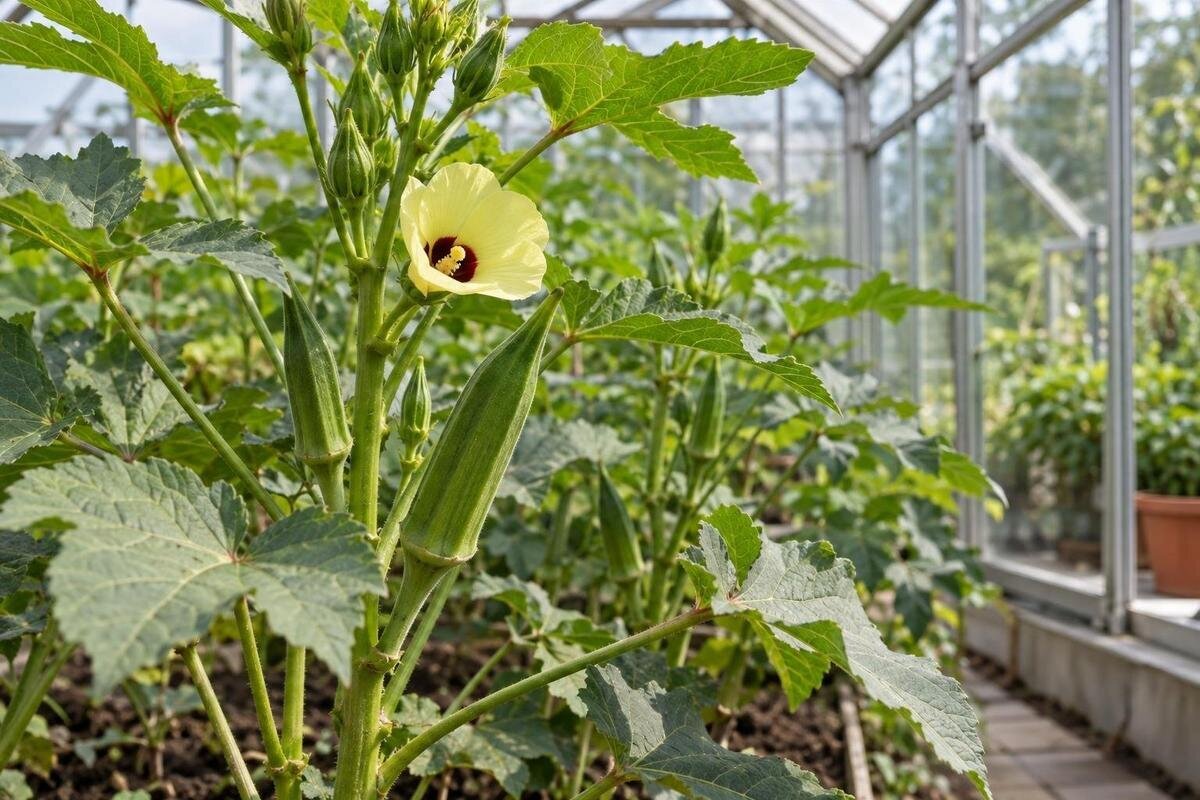
Australian greenhouse growing
Okra can be a productive greenhouse crop in Australia, but it needs a long spell of warmth rather than a few hot afternoons. Cold soil slows germination, cool nights hold plants back and frost can finish them. An unheated greenhouse may help in a warm district or bring the season forward, yet it will not reliably keep nights warm in every region. Plan around local soil and night temperatures, the length of the warm season, the plant’s mature size and how often you can pick pods. Supplementary heating is most plausible when it benefits several crops, not just a small okra planting.

Greenhouse planning checks 1
Okra needs sustained warmth
Okra is a frost-sensitive warm-season annual. It establishes best after the soil has warmed and nights are mild; cold conditions delay germination and hold seedlings back even if the greenhouse feels hot at midday. Frost can damage or kill plants, so a roof over the crop does not make an otherwise cold season suitable. Strong light matters as much as warmth: an enclosed but shaded corner will not compensate for poor sun. Think of okra as needing sustained warmth from sowing through flowering and pod development, rather than one short burst of high daytime heat.
Use soil temperature, not the air reading near the roof, to decide when to sow. As a practical guide, wait until the bed is about 21°C or warmer; in colder soil, emergence can be slow and uneven. If available, a soil thermometer helps distinguish a warm afternoon from a bed that has held warmth. Record overnight lows as well as daytime highs for a week or so in the intended spot. A rapid drop after sunset can stall young plants. Treat the temperature as a guide rather than a universal cut-off: local conditions and the seed packet for your variety still matter.
Daytime warmth does not guarantee warm nights
An unheated greenhouse can catch solar warmth during the day and shelter plants from wind, which may bring sowing forward or keep an autumn crop going longer. Its air still changes with sunshine, ventilation, construction and weather. Once the sun drops, heat escapes; how much is retained overnight varies with the structure and local conditions. Treat a greenhouse as a buffer, not a promise of tropical conditions. A warm afternoon reading cannot tell you whether okra will keep growing through the night, and a wall or floor should not be assumed to store enough warmth to carry the crop.
Check temperature at plant height at different times, including early morning; a min/max thermometer can show the range. Open doors or vents on sunny days if the air climbs too high, rather than sealing the house simply to hold warmth. A floor-area figure is useful for planning beds, but not for predicting night temperatures. The Classic aluminium greenhouse options are listed from 3.77 m² to 28.08 m²; use the plan for the selected size to map beds, paths and other crops, then check the specifications relevant to temperature separately.
Greenhouse planning checks 2
When to sow depends on your local season
Australia’s range of climates makes a calendar date less useful than local signals. In tropical and subtropical areas, a long warm period may give okra ample time, but persistently wet weather, soggy beds and still, humid air can complicate greenhouse growing. In cooler southern regions, elevated areas or inland sites, the window may be shorter: wait until cold nights have eased and the soil has warmed, then allow enough time for picking before autumn temperatures fall. Use frost dates as one reference; a frost-free week does not necessarily mean the soil is ready.
Read the seed packet’s days-to-first-harvest estimate, then allow some margin for slow emergence and cool spells. Many varieties begin cropping roughly 50–65 days after sowing in favourable warmth, followed by a picking period; timing varies by variety and conditions. A sunny strip against a wall might suit the site, but check its shadows: Lean-to wall greenhouse sizes are listed from 3.69 m² to 14.34 m², and those footprint figures do not reveal how much sun a particular wall receives. The crop still needs a long enough warm window, whatever the greenhouse’s size.
When supplementary heating is worthwhile
Supplementary heat can help if nights are too cool at the beginning or end of the growing period, but it must support a meaningful stretch of the crop’s life. Heating for a few cold nights may not justify the setup and running costs if the remaining warm period is still too short for a useful harvest or light levels are too low. For one or two plants, sowing in the naturally warm part of the year may be simpler. By contrast, a greenhouse already used for several warm-season crops may justify an extension that benefits them all. Compare the likely extra harvest with purchase, running and maintenance costs; warmth alone cannot guarantee a full crop.
Heating is a whole-structure decision. Local lows, exposure, ventilation and the chosen greenhouse all affect the amount of heat needed, so floor area alone is not a heating specification. The Limited Edition aluminium greenhouse range lists options from 3.77 m² to 28.08 m², but the selected model’s dimensions and construction still need checking. Ask a qualified professional about safe heater selection and installation, and obtain a realistic running-cost estimate before building a crop plan around extended-season warmth.

Greenhouse planning checks 3
Sunlight and ventilation in an Australian summer
Okra needs a sunny position; aim for at least six hours of direct sun where possible, with strong light through the day supporting this warm-season crop. Look at the greenhouse site at different times rather than judging it at midday only. Trees, fences and nearby walls can cast long shadows, especially outside midsummer. Keep okra where it can receive light without shading smaller crops. In hot Australian weather, a greenhouse can become hotter than the air outside; a thermometer helps you spot a heat spike before plants wilt. Ventilation should be available during sunny periods, even though night warmth remains important.
Airflow matters when leaves grow close together and humidity rises. Leave access to vents and doors, space plants for their mature size, and avoid a dense canopy that traps still air. Where a site receives intense summer sun, consider how you will moderate excess heat without sacrificing most of the light; shading is a trade-off, not a substitute for ventilation. The T-Model Orangery greenhouse options are listed from 16.52 m² to 30 m². Compare the chosen footprint with the sunlit area and clearances around it, rather than assuming a larger floor area solves poor positioning. A site that is bright in midsummer may be shaded in spring.
Spacing okra plants in a greenhouse
Okra’s footprint is easy to underestimate when seedlings are small. Depending on the variety, a mature plant can stand well over a metre and carry broad leaves that shade its neighbours. Use the seed-packet spacing as your guide; as a general starting point, allow about 30–45 cm between plants and 60–90 cm between rows, adding room for vigorous types. Include a path so you can reach the bed without brushing leaves or crushing pods. In a small greenhouse, one properly spaced row may be easier to manage than a crowded block. Compact varieties may need less space, so check their stated mature size.
Plan bed dimensions before counting how many plants will fit. Total floor area includes pathways and turning space, not just soil; plant height and door access matter too. The Pyramid greenhouse sizes are listed from 5.53 m² to 18.9 m², but the figure alone does not show the shape or width of a usable bed. Check the selected plan and mark the row, its mature spread and a route for picking. If you are also growing tomatoes or other tall crops, arrange the rows so one canopy does not shade another for much of the day. If a bed is accessible from only one side, keep it narrow enough to reach the plants comfortably.
Greenhouse planning checks 4
Sowing and transplanting young plants
Direct sowing into the final bed is straightforward once the soil is warm and spacing can be set accurately. Sow at the depth on the seed packet, keep the surface evenly moist while seeds germinate, then thin seedlings to the chosen spacing rather than letting them compete. If the season is short, starting indoors or in a protected spot can gain time, but raise plants individually so their roots are less disturbed. Okra forms a taproot and can sulk after rough transplanting; move seedlings while young, keep the root ball intact and avoid leaving them pot-bound.
Seedlings raised in trays need enough bright space and should be acclimatised before planting out. Do not move them into cold beds simply because the calendar says spring. If a greenhouse layout includes storage, account for it when assigning growing space; the Limited Edition greenhouse with built-in storage is listed in options from 5.52 m² to 28.08 m². Check the chosen plan to see how storage and propagation pots sit alongside the crop, and raise only the number of seedlings you can plant at proper spacing. This avoids having to squeeze extra plants into a bed once the weather warms.
Soil, watering and feeding for okra
Give okra a deep, loose, well-drained root zone. It does not suit waterlogged soil; work in mature compost to improve structure and fertility, but avoid making the bed excessively rich in nitrogen. A large pot can work if it is deep enough for roots and holds moisture between checks, but a small container dries quickly and can restrict growth. Choose a compact variety if the seed supplier describes one, and remember that container plants may need more frequent watering than plants in a larger bed. If leaves droop, check both soil moisture and drainage rather than watering by habit.
Rain may not reach a greenhouse bed, so check moisture below the surface instead of assuming the soil has been watered. Aim for even moisture during establishment, flowering and pod growth without leaving roots saturated. Base feeding on the condition of the soil and the variety’s requirements; excess nitrogen often produces abundant leaves at the expense of flowers and pods. Before deciding between beds and pots, compare the planting layout with the greenhouse’s exact base dimensions. The Prestige greenhouse with metal base is listed from 3.77 m² to 28.08 m²; confirm that the selected plan suits your bed or container arrangement, as total area does not specify usable soil depth.

Greenhouse planning checks 5
Pollination and picking young pods
Okra flowers have both male and female parts, and the crop is generally self-fertile; you do not need two plants solely for pollination. Flowers can set fruit without regular bee visits, although insects may visit. If flowers drop or pods fail to develop, first review temperature swings, water stress, excessive heat, crowding and plant health rather than assuming the flowers need hand pollination. Variety differences matter, so follow the seed packet if a named type has specific guidance. Keep good airflow, but avoid handling the flowers unnecessarily.
Once pods appear, inspect plants every day or two in warm weather, as they can lengthen quickly. Pick them young and tender; many varieties are best at roughly 5–8 cm, though the ideal size varies. Use clean snips to cut a pod from its stem rather than tugging at the branch. Fine hairs on some plants or pods can irritate skin, so gloves are sensible if you find them uncomfortable. Overgrown pods become tough and fibrous; remove them unless you are deliberately saving seed. Regular picking keeps pods at a useful eating stage and makes new ones easier to spot.
Choosing a greenhouse size for an okra crop
One row of okra does not require an oversized greenhouse. Estimate how many plants fit at their final spacing, add access, and allow for other crops or uses. A larger structure may make sense for a mixed edible collection, but it also adds area to manage and can change the heating economics. Choose according to the whole growing plan, not a single heat-loving crop. The Bloomcabin Orangerie options are listed from 47 m² to 70 m²; that substantial range is not a signal that okra needs a greenhouse of that scale.
Before selecting a model, draw the intended beds and path on the plan for the chosen size. Check the listed dimensions, usable width, doorway and ventilation details, along with specifications relevant to your climate; a model name or advertised area is not evidence that it will hold suitable night temperatures. If you plan to heat the greenhouse, consider how long it will run and whether other crops will use the space. A smaller unheated growing area during the naturally warm season can be a more straightforward trial than heating a large structure solely for okra. Let local conditions and your crop plan set the scale.
Frequently asked questions
Can I grow okra in an unheated greenhouse in Australia?
Possibly. It depends on how warm the soil and nights stay, and how long the local warm season lasts. An unheated greenhouse can add daytime warmth, but it does not guarantee mild nights. Wait until the soil is about 21°C or warmer and cold weather has passed.
When should I sow okra?
There is no single sowing month that suits every Australian region. Sow after frost risk has passed and the soil has warmed, using local conditions rather than the calendar alone. Check your seed packet for variety-specific timing.
How much space should I allow between okra plants?
Follow the spacing on the seed packet. As a general starting point, allow about 30–45 cm between plants and 60–90 cm between rows, with more room for vigorous varieties. Include a path so you can reach the plants to harvest.
Does okra need bees to set pods?
Usually not. Okra is generally self-fertile, so you do not need a second plant just for pollination. If flowers drop or pods do not develop, check temperature, watering and plant health before assuming pollinators are the problem.
When are okra pods ready to pick?
Pick them while they are young and tender. Many varieties are ready at roughly 5–8 cm long, but the best size varies, so check the seed packet and inspect plants every day or two in warm weather. Older pods become tough and fibrous.
Okra is a sensible greenhouse crop when a bright, warm stretch is already available; it is a tougher proposition where the structure would need to be heated regularly just to secure a short season. Time sowing to local soil and night temperatures, give plants room to mature, and pick pods while they are tender. The right greenhouse is the one whose position and layout support that plan, not simply the largest option.
