
Growing Pak Choi in an Australian Greenhouse
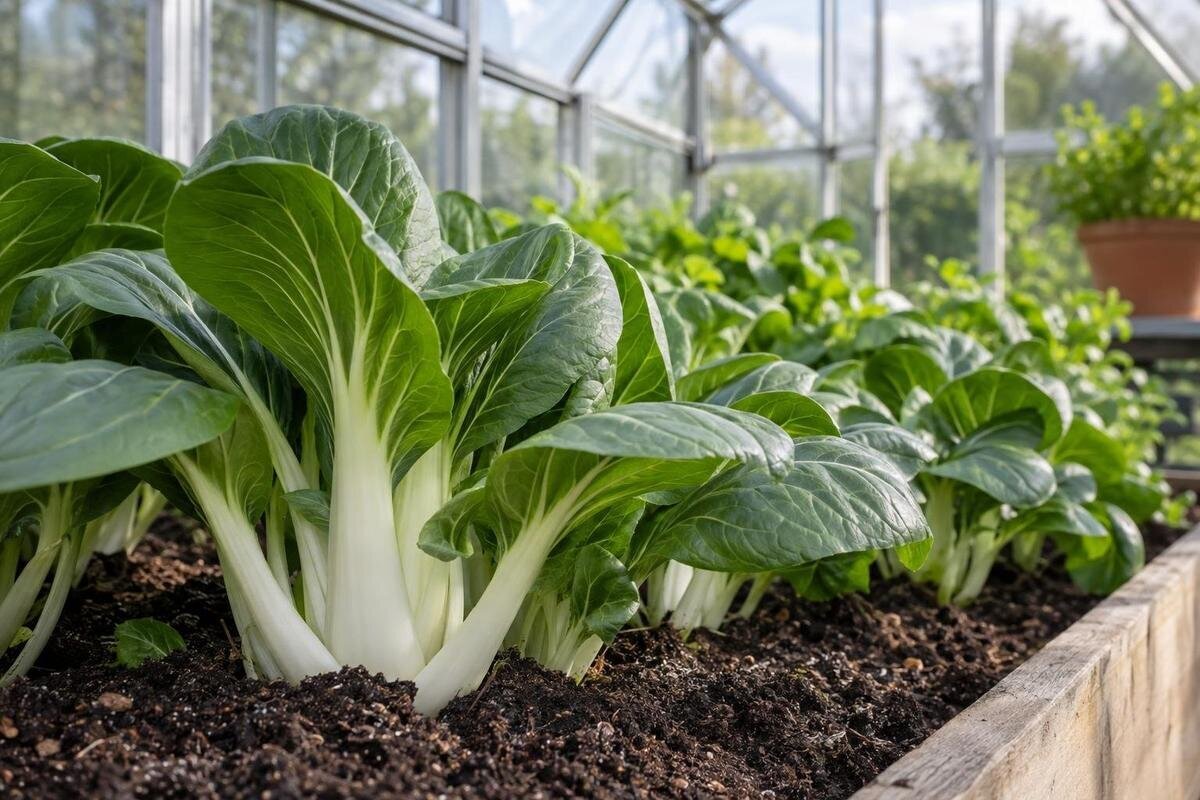
Greenhouse growing guide
Pak choi is a cool-season crop, so a greenhouse is most useful when it extends a mild growing window rather than trapping summer heat. In Australia, sowing dates depend on local conditions: manage bolting by avoiding prolonged cold at the seedling stage, sudden heat and uneven moisture, then harvest before flowering stems take over.

Why pak choi suits a cool-season greenhouse
Pak choi, also called bok choy, is a cool-season leafy brassica. It forms a rosette of tender leaves and crisp stalks, and the aim is to harvest it before a central flower stem takes over. A greenhouse can shield plants from some wind and heavy rain, and can make an early or late sowing easier to manage, but it does not turn pak choi into a summer crop. On clear days, air under the covering can warm quickly; after sunset an unheated structure may still become cold. Aim for a steady, mild growing window, not the warmest possible position. This matters where outdoor weather swings between chilly nights and strong daytime sun.
Pak choi also grows outdoors in suitable weather, so use cover where it solves a real problem, such as an exposed bed or a short extension to the cool season. If your garden has mild conditions, a small bed or a few containers may provide all the room this crop needs; consider the other crops you want to grow before assigning a whole greenhouse to it. The Limited Edition Aluminium Greenhouses range is listed from 3.77 m² to 28.08 m². Compare the selected footprint with bed space, paths and your wider growing plan: the listed area is not all planting space, and does not indicate temperature control.
Choose sowing times for your local Australian climate
Use your local climate, not a single Australian month-by-month chart, to choose a sowing window. In many temperate districts, pak choi suits autumn and the milder part of late winter or early spring. In subtropical areas, growers often target the cooler months; in tropical districts, the coolest part of the year, often the dry season, may be the best opportunity. Elevation, coastal influence, inland heat and local frost can shift these windows substantially. Treat these as starting points rather than fixed regional rules. A local vegetable-sowing calendar and the seed packet for your chosen variety can help narrow the timing for your site.
Check what the greenhouse actually does before sowing: record daytime highs and overnight lows at crop height for several days, particularly after clear sunny afternoons. A thermometer near the roof may not reflect conditions around the leaves. Aim for a spell when plants can keep growing without repeated heat spikes or prolonged cold, then adjust if the forecast changes. An unheated enclosure may shelter leaves yet offer little warmth overnight; extra floor area will not change that. The T-Model Orangery Greenhouse is listed from 16.52 m² to 30 m², so compare its footprint with your whole seasonal crop plan rather than assuming a larger structure will bring forward the pak choi calendar.
Bolting can follow both cold and heat stress
Bolting is the switch from making leaves to sending up a flowering stem. Warmth and lengthening days can speed the change, while some varieties may be predisposed to bolt after prolonged cold as young plants, particularly when cold is followed by warmer, longer days. The balance differs between varieties, so heat is not the only cause and the coldest possible sowing is not always the safest. Drying out, a root-bound seedling or a rough transplant can add stress. Once the central stem lengthens, growth shifts away from a compact rosette and the leaves may become tougher.
Choose a variety described as slow to bolt or suited to your growing season, where seed is labelled that way, and stay within the stated sowing window. Do not hold seedlings in small cells until they are crowded, or plant them out just before a severe cold or heat spell. Steady watering and timely ventilation reduce avoidable stress, but cannot guarantee that a plant will not flower. If comparing structures, the Pyramid Greenhouse is listed from 5.53 m² to 18.9 m²; that footprint range does not describe vent performance. Check the chosen configuration and monitor temperatures at plant height.
Use successive sowings for a steadier harvest
Sowing a whole packet at once can leave you with more plants than you can harvest at their best. During a suitable cool spell, sow a small batch, then repeat roughly every two to three weeks while the weather and day length remain favourable. Use the seed packet’s expected maturity as a guide, allowing for slower growth in low light or cool nights. Stop starting new batches before conditions are likely to turn hot or otherwise unsuitable. Regular sowing is not a reason to keep planting through the wrong season; it is a way to spread the harvest within a good one.
Label each sowing with its date and variety. A short record lets you compare how quickly batches develop in different conditions and adjust the interval between sowings. Use those notes alongside the plants’ progress to decide when to sow again, rather than following dates alone. Plan the bed so younger plants do not crowd those nearing harvest. The Limited Edition Aluminium Greenhouses with Storage range is listed from 5.52 m² to 28.08 m². With a storage option, check the chosen layout to see how much area is available for beds and paths. Pak choi successions need usable growing space, not just a large stated greenhouse area.

Choose between direct sowing and seedlings
Direct sowing works well when the greenhouse bed is ready and conditions are mild. Sow at the depth and rate on the packet, keep the surface evenly moist until seedlings establish, then thin them rather than letting them compete. Raising seedlings in plug trays can help you make use of a short or unpredictable sowing window, but transplant them while small and before roots become tightly packed. Water the modules before moving them, handle plants by the root ball, and avoid exposing them to a sudden change in conditions. Root disturbance is not always a problem, but a stressed transplant can stall or bolt.
Decide whether you want baby leaves or full rosettes before thinning. Baby-leaf rows can be closer; plants left to mature need the spacing stated for that variety so leaves can spread and air can move around them. Crowding also makes it harder to inspect leaf bases and can shade inner plants. The Bloomcabin Prestige Greenhouse range spans 3.77 m² to 28.08 m², but its listed area is not a bed plan. Allow for paths, access to water and the crop spacing on the seed packet before estimating how many plants will fit.
Prepare the bed and allow for crop rotation
Prepare a loose, fertile bed that retains moisture but drains freely. Work in mature compost if the soil needs organic matter, remove weeds and ease compaction before sowing. A persistently waterlogged bed is difficult to fix simply by reducing water after planting. In containers, use a suitable vegetable-growing mix and make sure excess water can drain. Containers can dry and heat faster than garden soil, so check them more often in sunny weather. Avoid placing fresh manure or concentrated fertiliser against young roots, which can damage them and lead to uneven establishment.
Pak choi belongs to the brassica group, so where bed space allows, avoid following cabbages, broccoli, kale or other brassicas with another close relative in the same spot every time. Rotating crops can help limit the build-up of brassica-specific soil problems. The Spacious Greenhouse is listed from 47 m² to 70 m². That is far more space than one pak choi succession needs; weigh such a footprint against your full crop plan, circulation space and the amount of soil you can keep in good condition, not this leafy crop alone.
Keep moisture even and feeding moderate
Keep the root zone evenly moist through germination and leaf growth. A dry spell followed by heavy watering can stress plants and produce less even growth; a saturated bed leaves roots short of air and can lead to plant decline. Check below the surface rather than judging by the top layer, which can dry quickly in a greenhouse. Water around the base of plants, preferably early in the day, and adjust for the weather, soil and container size. The right amount changes as plants grow, so a fixed daily schedule is less useful than regular checks. Try to avoid splashing soil onto the leaves when watering.
Pak choi needs fertility for leaf production, but heavy feeding is not a shortcut to a better crop. Start with prepared soil and, if growth needs support, use a balanced vegetable fertiliser according to its label. Avoid repeatedly applying a high-nitrogen feed, especially when plants are already lush; it will not correct erratic watering or a poorly timed sowing. If leaves are pale or growth stalls, check moisture, roots, light and temperature before adding more fertiliser. Marking sowing rows can help you apply compost or feed evenly without walking on the root zone.
Ventilate before the greenhouse heats up
Ventilation is central to keeping pak choi in a mild growing range. On sunny days, open available vents or doors before the air becomes hot, rather than waiting for plants to wilt. Let warm air escape, but avoid exposing plants to cold draughts on chilly days; readings at leaf height help you learn when the enclosure heats fastest. In hot spells, ventilation matters more than the greenhouse’s name or shape. Temporary shade can help if readings show persistent midday heat, but use it only when needed so plants still receive good light. Check again after applying shade, as conditions vary with the weather.
When comparing greenhouse options, distinguish footprint from airflow: the Aluminium Greenhouses listings cover 3.77 m² to 28.08 m², but those area figures say nothing about the vent arrangement of a particular size. Review the exact configuration and whether you can reach and operate its openings easily. If the house cannot be ventilated adequately in your local summer, reserve greenhouse pak choi for the milder months. An outdoor bed may also be suitable during those months if cover offers little benefit. Do not try to avoid greenhouse heat by sowing so early that young plants face prolonged cold, which can also trigger bolting.

Check for pests and keep plants accessible
Protected cultivation does not make pak choi pest-free. Aphids can settle in the folds and undersides of leaves; caterpillars, slugs and other chewing pests can also enter through doors or vents. Inspect the centre of each rosette and the leaf undersides at least weekly, and more often in warm weather. Remove small infestations promptly and clear damaged foliage rather than letting it decay among plants. Insect mesh over openings can reduce access, but it must not block the ventilation needed to avoid heat build-up. Keep weeds and old brassica debris out of the growing area as well.
Leave enough room to move around the crop and inspect each plant without brushing against neighbouring foliage. This is especially useful if the greenhouse sits close to a fence, wall or other obstruction, where the back of a bed may be awkward to reach. The Wall Greenhouse is listed from 3.69 m² to 14.34 m²; if comparing a wall-style option, assess the actual site for light, airflow and access to the crop rather than assuming a nearby wall will keep plants cool. Avoid closing openings to keep insects out if that traps warm, humid air.
Harvest while the rosette is still tender
Use the seed packet’s maturity information as a guide, then judge the plants themselves. Baby leaves can be picked young; for full rosettes, wait until plants are well formed but harvest before the centre elongates. Cut a whole plant at its base for a single harvest, or pick a few outer leaves while leaving the growing point undamaged. Regrowth varies with conditions, so do not rely on it for a continuous supply; a succession sowing is more predictable than repeatedly stripping one plant. If convenient, harvest during the cooler part of the day and move the leaves out of a hot greenhouse promptly.
Watch for the centre standing taller than the leaf stalks, followed by visible buds; that is a cue to harvest promptly rather than wait for a larger rosette. Bolting plants may still provide usable leaves, but quality often declines as the flower stem develops. Clear spent plants and fallen leaves, then review the sowing date, variety and temperature notes before replanting. If another suitable window is close, start a small new batch instead of filling the bed all at once.
Frequently asked questions
Can pak choi grow in an unheated greenhouse?
Yes, during a suitable cool-season window. An unheated greenhouse can shelter plants from some wind and rain, but it does not guarantee warm nights or protect against every cold spell. It can also heat up quickly in sunshine, so check conditions at crop height and ventilate when needed.
When should I sow pak choi in Australia?
Choose a mild period for your local climate rather than relying on one national calendar. Autumn and the milder part of late winter or early spring can suit many temperate areas; warmer regions usually aim for their coolest months. Local sowing advice and the seed packet can help refine the timing.
What makes pak choi bolt?
Bolting is influenced by variety and growing conditions. Warmth and lengthening days can speed flowering, while some varieties may be predisposed by prolonged cold when young. Dry soil, root-bound seedlings and transplant stress can add to the risk.
How often can I sow pak choi for successive harvests?
Try small batches roughly two to three weeks apart while conditions remain suitable. Keep a note of each sowing date and stop before the greenhouse is likely to become too hot or the young plants would face prolonged cold. Succession sowing does not mean planting continuously through unsuitable weather.
Can I harvest pak choi after it starts bolting?
You can harvest usable leaves promptly, but quality often declines as the flower stem develops. Clear the plant when flowering dominates or the leaves are no longer worth picking, then sow another small batch if a suitable growing window remains.
Pak choi rewards careful timing more than extra warmth. Choose a mild sowing window for your climate, keep young plants growing steadily and watch the greenhouse on sunny days as closely as you do on cold nights. Small successive sowings and prompt harvesting help you make the most of the cool season, while an outdoor bed may be the simpler choice when local conditions are already suitable.
