
Growing Turmeric in an Australian Greenhouse
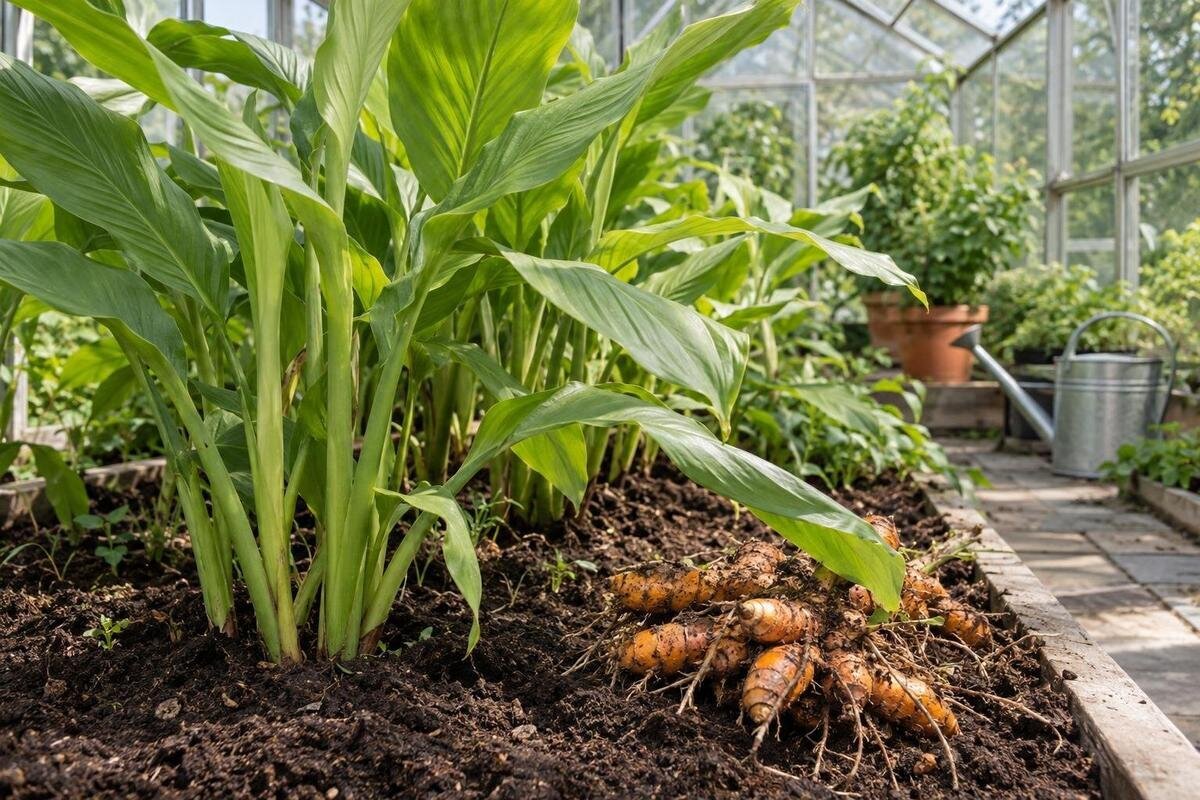
AUSTRALIAN GROWING GUIDE
Turmeric can be a rewarding greenhouse crop in Australia, but it is not a quick winter harvest. Curcuma longa develops its rhizomes during a long stretch of warmth. Growing under cover may help you start earlier or protect a pot at either end of the season, yet an unheated greenhouse does not create tropical conditions. The main decisions are when to plant, how to give the rhizome room in a free-draining container, and whether nights stay warm enough for months of growth. This guide sets out a practical pot-growing plan, what temperature readings tell you, and how to handle the crop as it enters dormancy.

01
When a greenhouse helps turmeric
Turmeric (Curcuma longa) is a tropical perennial grown for its underground rhizomes, not for a quick harvest of leaves. In an Australian garden, a greenhouse is most useful when it adds warmth or shelter at the margins of a naturally warm growing season. In a frost-free location, a pot may grow well outdoors, so a greenhouse is not automatically necessary. In a cooler or frost-prone site, cover can help you start earlier and keep foliage growing later, provided temperatures remain suitable. A greenhouse changes exposure to sun and wind; it does not remove the crop’s need for months of warmth.
The first test is the temperature the plant actually experiences, not the greenhouse label or how warm it feels at midday. An unheated structure may warm quickly in the sun and lose heat overnight, while bright sun can make it too hot by afternoon. Put a min–max thermometer near leaf height and check several day-and-night cycles before planting. For a structure beside a wall, the Wall Greenhouse size range is listed from 3.69 to 14.34 m². Compare the dimensions with the available space, but assess growing conditions separately: floor area does not establish night temperatures or ventilation.
Temperature and the limits of an unheated greenhouse
During active growth, turmeric prefers reliably warm conditions; around 20–30°C is a practical guide for the air and root zone. That range is not a setting to maintain at every hour: cultivar, light and stage of growth all affect the plant. Cool potting mix can delay sprouting even when daytime air feels warm, and frost can damage foliage and rhizomes. At the other extreme, a greenhouse can become excessively hot in bright weather. Wilting or scorched leaf edges may signal heat stress, but check the mix too before deciding on the cause; a dry pot can produce similar symptoms.
Record overnight lows as well as midday highs, especially in spring and autumn. Ventilate on sunny days using the available openings, and use shade if harsh direct sun is overheating the crop. If readings show that heating would be needed for months, weigh the likely harvest against energy use and the greenhouse’s other uses. The Limited Edition greenhouse sizes are listed from 3.77 to 28.08 m². When comparing options, consider how much space you intend to heat, rather than choosing a size for the turmeric crop alone. Ask a qualified professional about any heating system you plan to use.
02
Planting time for an Australian growing season
Plan backwards from harvest rather than planting as soon as a warm afternoon arrives. In most areas, spring is the practical planting window once frost risk has passed and the growing medium has warmed consistently—around 20°C is a useful reference if you can measure it. Local timing varies across Australia, so use your own recent night temperatures and soil warmth rather than a national calendar date. In a warm, frost-free district, planting may be possible earlier; in a cooler site, waiting can protect the rhizome from sitting cold and wet.
Allow roughly eight to ten months for rhizomes to bulk up, with weather and growing conditions affecting the actual time. A spring-planted pot may not be ready until late in the warm season or autumn, so make room for it before sowing short-lived crops in the same spot. A greenhouse can extend the season at either end only when it keeps the crop warm enough; simply moving planting forward does not guarantee an earlier harvest. If the season ends before the foliage has completed its cycle, expect smaller rhizomes rather than a harvest on a fixed date. Note the planting date and the first signs of natural yellowing.
Choosing healthy turmeric rhizomes
Start with firm, plump turmeric rhizomes showing one or more distinct buds or growing points. Avoid pieces that are soft, shrivelled, badly damaged or mouldy. Planting stock sold for growing is a reliable starting choice because its freshness and bud condition are easier to judge; a supermarket rhizome may sprout, but its storage history is unknown. If several pieces are available, choose a few healthy ones rather than trying to plant every small fragment. Check each piece before planting, including any damaged areas, and keep track of which ones sprout well. A visible bud is useful when selecting planting material, but it cannot guarantee a particular harvest.
Plant a whole rhizome or divide a large one into sections, ensuring each section has at least one sound bud. Lay it horizontally with the buds facing upwards, cover with about 5 cm of potting mix, and water lightly to settle the surface. Keep the mix slightly moist while shoots establish, never waterlogged; a cool, saturated pot can encourage decay before growth begins. If starting the rhizome somewhere warm ahead of the main season, avoid leaving the young shoot cramped for too long. Move it into its final container before the canopy expands and handle new roots gently.

03
Container size and potting mix
Give the rhizome horizontal room as well as depth. For one plant, a broad pot or tub roughly 35–45 cm across and around 30 cm deep is a practical starting point, not a guarantee of yield; use a larger vessel for several rhizome pieces. A small nursery pot can be used for sprouting, but it soon restricts the expanding rhizome and is awkward to keep evenly moist. Choose a stable container that can hold the mature leafy plant without tipping, and decide where it will sit before filling it, because wet potting mix makes a large tub heavy.
Drainage holes are essential, and the mix should hold moisture without staying soggy. Use a quality container potting mix with organic matter, rather than compacted garden soil; mature compost can improve the growing medium, but it should not make the mix dense. Set the pot on a level, firm surface where water can drain away, and avoid leaving it in a saucer of standing water. When planning where containers will sit, compare the T-Model Orangery Greenhouse range, listed from 16.52 to 30 m², with your intended layout. Mark out the pots and access route on the plan rather than treating the full footprint as planting space.
Watering and feeding during active growth
During active leaf growth, aim for consistent moisture. Water thoroughly when the upper mix begins to dry, then allow excess to drain; the right interval will change with pot size, weather, ventilation and the plant’s stage. A container can dry much faster on a bright greenhouse bench than in a cool corner, so a fixed calendar schedule is less useful than checking the mix. Do not let the root zone swing between bone-dry and saturated. If water repeatedly pools on top or the pot stays heavy and wet, check that the drainage holes are clear and the mix is not compacted.
Turmeric uses nutrients through its long warm season, so start with a fertile mix and follow the directions on any fertiliser intended for edible crops. Moderate, regular feeding during active growth is more sensible than adding extra fertiliser in response to a yellowing leaf; lush foliage by itself is not proof that rhizomes are developing well. Reduce feeding as the plant slows and do not feed a dormant pot. If a dedicated place for supplies is part of your plan, the Limited Edition Greenhouses with Storage listings include built-in storage and range from 5.52 to 28.08 m². Check how the storage layout fits your supplies and growing space.
04
Light, shade and ventilation
Give the plant bright light for strong leaf growth, while avoiding prolonged exposure to severe heat. In a cooler climate, a sunnier position can help make the most of a short warm season. In a hot Australian summer, a greenhouse in full sun can magnify heat, so some afternoon shade may be needed. Watch the leaves: scorched edges or repeated wilting in moist mix point to a need to reassess light and temperature. Turmeric can tolerate some shade, but very dim placement may produce a weaker canopy and less energy for rhizome growth. Adjust shade gradually rather than moving a stressed plant straight into deep shade.
Air movement matters because foliage can stay damp for too long in a warm, humid greenhouse. Space pots so leaves are not packed against each other or against glazing, and use available openings to let warm, still air escape. Ventilation is not a substitute for frost protection, and opening up in cold weather can also chill the crop; adjust ventilation to suit conditions rather than following a fixed rule. If considering the Pyramid Greenhouse size options, listed from 5.53 to 18.9 m², check the position and type of openings in the product details. Include space between mature plants in your layout so crowded foliage does not obstruct airflow.
Planning space for pots and access
A mature turmeric plant makes broad upright leaves that need clearance above the pot and room around the canopy. Map the pot, access path, door opening and any other crops before choosing where it will sit. Leave enough space to reach the plant for watering and inspection, and ensure that shading for turmeric will not block light from crops that need more sun. A greenhouse’s advertised floor area includes the whole footprint, not a guarantee that all of it will be usable for pots once you account for circulation, benches or storage. Keep the container accessible enough to move if the season turns cold.
For several crops or other planned uses, the Spacious Greenhouse range offers listed areas from 47 to 70 m². This is far more space than a single turmeric pot needs, so compare it with your whole growing plan rather than using turmeric as the reason to choose a large structure. Account for the other crops, benches and storage you intend to include, alongside clear access to each container. For a small crop, count pots and pathways first, then compare the dimensions shown for each option. The useful question is how much of the space you will use throughout the year.

05
Managing dormancy and winter cold
Turmeric’s foliage naturally yellows and dies back as the plant enters dormancy at the end of its growing cycle. That can be a normal seasonal signal, rather than proof that watering or feeding has failed. If leaves yellow early during warm weather, check the potting mix for both dryness and waterlogging, review recent cold nights and heat spikes, and look for damage before changing several things at once. Note whether the decline began gradually or after a sudden temperature change. Keeping records of minimum temperatures and watering can help distinguish seasonal dieback from a crop that stalled prematurely.
As growth stops, reduce watering so dormant rhizomes are not sitting in wet potting mix, and stop feeding. In frost-prone places, do not rely on an ordinary unheated greenhouse to keep a pot frost-free: harvest after dieback or move the pot to a reliably protected place. If lifting rhizomes for the next season, keep sound pieces in a cool, dry, frost-free place and check them periodically for shrivelling or rot. If winter storage is one of your planned uses, the Prestige Greenhouse size range runs from 3.77 to 28.08 m². Assess the intended storage position using your site’s winter temperatures before deciding to leave dormant pots there.
Harvesting and planning the next crop
Harvest when most leaves have yellowed and dried and the plant has completed its warm growing season, usually after the long eight-to-ten-month cycle rather than on a fixed calendar date. Loosen the mix around the edge of the pot and lift the clump gently to avoid snapping the rhizomes. Brush off loose mix and separate the fresh rhizomes. A plant that was started late or kept too cool may produce little; a generous canopy does not promise a large underground crop. Keep the best firm pieces aside for replanting if you want to grow again, and use the remainder fresh or set it aside for storage.
Treat the first pot as a trial: record planting date, container size, warm and cold spells, watering and what you actually harvest. That evidence is more useful for planning a second season than a greenhouse catalogue’s footprint or an optimistic yield estimate. If you decide to compare structures for a repeated crop, the Aluminium Greenhouses range is listed from 3.77 to 28.08 m²; compare the actual dimensions with all intended uses, not just one turmeric tub. In a warm spot, growing in a movable container may be enough. Heating a large space solely for one long-season crop deserves a careful cost-and-use check.
Frequently asked questions
Can I grow turmeric in an unheated greenhouse?
Yes, during a warm part of the year or in a mild location. But an unheated greenhouse cannot be assumed to keep turmeric warm overnight through a cool season. Check minimum and maximum temperatures near the plant over several nights, and pay attention to the potting mix as well as the air. If conditions stay cool for long stretches, growth may slow and the harvest may be smaller. A greenhouse is most useful when it adds enough warmth to extend the growing window.
When should I plant turmeric in Australia?
Spring is a useful broad guide, but wait until frost risk has passed and the potting mix is consistently warm—around 20°C is a practical reference if you can measure it. Local conditions vary, so recent overnight lows and soil warmth are more useful than a fixed national date. Allow roughly eight to ten months for rhizomes to develop. If you plant late, the crop may reach colder weather before it has completed its growth cycle.
How big should a turmeric pot be?
For one plant, a broad tub roughly 35–45 cm across and around 30 cm deep is a practical starting point. It needs drainage holes and room for the rhizome to spread; use a larger container for several pieces. These measurements do not guarantee a particular yield, but a cramped pot restricts growth and can dry quickly. Choose its final position before filling it, as a large container becomes heavy when wet.
How often should I water turmeric?
Keep the potting mix evenly moist during active growth. Water when the upper layer begins to dry, then let excess drain away. Check the container rather than following a fixed daily schedule: heat, sunlight, ventilation, pot size and the plant’s stage all affect how fast it dries. Do not leave the pot standing in water. As the leaves yellow and growth stops, reduce watering so dormant rhizomes are not kept in soggy mix.
Why are my turmeric leaves turning yellow?
Yellowing at the end of the warm growing season is often a normal sign of dormancy. If it starts early, check whether the pot is too dry or persistently wet, and consider recent cold nights or intense greenhouse heat. Look at the overall pattern, including whether the leaves are wilting or scorched and whether the plant is still actively growing, before changing several things at once. Keeping notes on temperature and watering can help identify the cause.
Growing turmeric under cover works best when you treat the greenhouse as a way to extend a warm growing season, not as a guarantee of tropical weather. Begin with one or two sound rhizome pieces, a roomy pot with drainage holes and a planting time based on local temperatures. Keep the potting mix evenly moist during active growth and watch both daytime heat and night-time lows. Harvest after natural dieback, save healthy pieces if desired, and use the results to decide whether another season is worthwhile in your climate, with or without extra heating.
