
Insulated or Single-Glazed Greenhouse: How to Decide
Greenhouse buying guide
An insulated greenhouse and a single-glazed greenhouse can both be useful; they suit different targets, budgets and ways of managing the space. The key question is not simply which one feels warmer. It is whether the complete structure can support the temperatures your plants need during the seasons you intend to grow, while still allowing enough light and ventilation. Greenhouse glazing is horticultural cladding, not automatically equivalent to the double-glazed windows in a house. Compare the panel build-up, frame, seals, openings and heating plan together, then judge any insulation claim against your own climate and growing routine.

Set a temperature target before comparing glazing
Begin with the plants and the months you want to grow, not a label such as “all-season”. For each crop or group, note the day and overnight conditions it needs, the minimum you are willing to accept, and whether you will actively heat the greenhouse. Check reliable horticultural guidance for crop-specific figures rather than relying on a general greenhouse claim. Shielding seedlings from cold wind and rain is different from keeping tender plants warm through cool nights; those are different jobs and can call for different specifications.
Put the target into a simple growing brief: crops, months, acceptable overnight minimum and whether heat will be absent, occasional or regular. If you already have a greenhouse, use a min–max thermometer or logger at plant height over a representative mix of clear, cloudy and cold weather. A warm reading at midday says little about the temperature before dawn, and a reading beside the door may differ from one near a bench. At a new site, combine local climate records with observations of shade and exposure. These checks provide a reference point, not a guarantee that another enclosure will match it.
Check what “insulated” and “single-glazed” actually mean
Single-glazed normally means one pane of glass, often horticultural glass. Greenhouses also use clear plastics and multiwall panels, so check whether a supplier is describing the material, the number of layers or a particular panel construction. “Insulated” is less precise: it might refer to two panes separated by a cavity, twin- or multiwall polycarbonate, an internal thermal screen, insulated opaque sections, or a combination. These approaches are not interchangeable, and a screen may be optional rather than included.
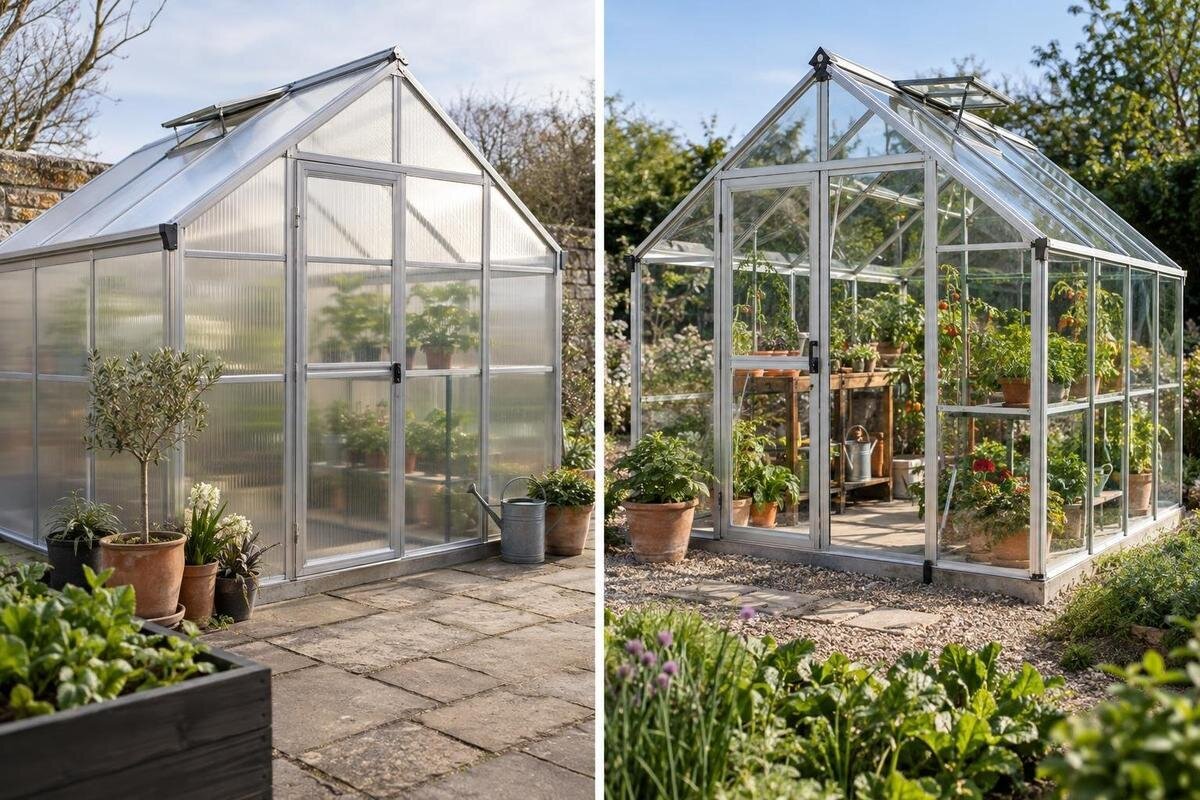
Ask for the build-up of the roof and wall panels, whether both use the same construction, and whether the insulation feature is included in the configuration you are considering. For the Limited Edition Aluminium Greenhouses, for example, identify the selected glazing before comparing it with another option. Keep the description specific: panel material, layer arrangement, any cavity and any separate screen. If the quotation offers alternatives, record each one separately rather than treating the range as a single specification. Also clarify whether a stated performance figure applies to the glazing alone or to the whole greenhouse. A photograph can help you assess appearance, but it cannot settle those questions. Separating the standard construction from optional additions also makes the comparison clearer: you can see whether a quoted price covers the insulating feature you want or whether you are comparing a basic enclosure with a more fully equipped version.
Understand what insulation can—and cannot—do
Insulation slows heat movement through a barrier; it does not generate heat. A greenhouse may warm in sunshine and cool after sunset, with the change affected by transmitted sunlight, outside conditions, wind exposure, shading, air leakage and the size and layout of the enclosure. An insulating layer can slow some heat loss through the part it covers, but it cannot promise a particular overnight minimum if the rest of the structure and the weather allow temperatures to fall.
If a U-value is supplied, check which component it describes and compare figures calculated on the same basis; a lower U-value generally indicates less heat transfer through that component under comparable conditions. It is not automatically a whole-building rating. A solar heat gain coefficient, often abbreviated to SHGC, describes a different aspect: how much solar heat passes through. Some suppliers may also give light-transmission data. Soil or water can absorb heat when conditions allow, but stored heat is not insulation and cannot guarantee warmth through a cold night.
Match the greenhouse to the season and local site
Decide whether your priority is starting seedlings earlier, protecting plants from weather, growing through cooler months or keeping sensitive plants over winter. If the greenhouse will be unheated and seasonal, a single layer may meet the brief when you can accept temperature swings. If you plan to maintain an overnight minimum or extend heated growing, verified insulation across the enclosure becomes more relevant. Neither label guarantees frost protection: an unheated insulated greenhouse still responds to outside conditions, while a single-glazed structure can be heated if the complete setup is planned for that use.
Conditions vary widely across Australia, and a sheltered backyard can behave differently from an exposed position nearby. Consider night-time lows, direct sun, shade from buildings or trees, and wind around the proposed site. When assessing an option such as the T-Model Orangery Greenhouse, relate those observations to the months in your growing brief rather than relying on a broad seasonal description. A simple calendar can distinguish the periods when you mainly want weather protection from those when maintaining an overnight temperature matters. Include any months when you expect to leave the greenhouse unused or grow only plants that tolerate the conditions. This keeps the purchase focused on the growing season you actually intend to manage. If two options appear suitable, compare them against the most demanding part of that season as well as typical days, using the selected glazing, ventilation and heating plan for each.

Plan ventilation alongside insulation
An insulated envelope can slow heat loss in cool weather, but it can also retain heat when the sun is strong. Insulation does not regulate temperature by itself, so consider how excess heat will leave the greenhouse and how you will manage moisture. Compare the actual opening locations and areas, whether they can be adjusted easily, and how air can move through the space. The number of vents alone does not describe their effect; placement and the rest of the opening arrangement matter too.
Think about who will open and close the vents, how often the greenhouse will be unattended, and whether your growing routine changes between seasons. When reviewing the Pyramid Greenhouse, use the opening arrangement for the configuration you are considering to work through that routine. Identify which openings you would use during the day, which need attention before nightfall and whether you can reach their controls with benches and plants in place. If a thermal screen is part of the proposal, establish whether it is included, how it is operated and how you will ventilate while using it. Include both the screen and the vents in your daily management plan rather than considering them as unrelated accessories. The useful comparison is not simply how many openings each option has, but whether their arrangement and operation fit the time you can give the greenhouse. A more insulating covering does not remove the need for summer heat management.
Compare the whole greenhouse, not just the panels
Heat can move through more than the transparent panels. The frame, joints, seals, doors, base and any opaque sections all contribute to the enclosure, while planned vents allow air exchange. A glazing figure on its own therefore gives an incomplete picture. Ask how the roof and sides are built, how the panels meet the frame, and whether the stated thermal information covers those connections. If wind exposure, hail or another site condition is important, verify the manufacturer’s stated suitability and seek qualified advice rather than inferring it from a panel description.
A greenhouse is designed for plants, with light and deliberate ventilation in mind; it is not simply a house fitted with garden glazing. Domestic double-glazing terminology or ratings do not describe the performance of a complete greenhouse. With a storage configuration such as the Limited Edition Aluminium Greenhouses with Storage, mark the growing area and storage area on the plan, then establish which parts of the construction the thermal information covers. Do not assume that a figure for one panel describes every enclosed area. This also helps you compare layouts fairly: the overall footprint and the area available for plants are different details worth recording. Note how you would move between storage, the entrance and the growing space, including which doors you would regularly use. Compare options with similar overall size, glazing, openings and operating assumptions, and keep any differences in the layout visible rather than attributing every difference in the proposal to insulation.
Weigh purchase and running costs together
The value of insulation depends partly on how the greenhouse will be used. If you will not heat it, there may be no heating bill to reduce; any value is more likely to come from moderating temperature changes or supporting a longer growing period. If you plan to heat it, energy use will also depend on the target temperature, hours of operation, local conditions, ventilation and the size of the enclosure. A generic claim about savings cannot substitute for those details.
Compare the complete setup rather than the glazing label alone: the selected greenhouse, any screens or other options, planned heating and expected use. For a shortlisted Bloomcabin Prestige Greenhouse, record the exact configuration and separate the initial purchase from estimated running expenses. Use the same categories for competing options so that an included item in one quotation is not overlooked as an extra in another. Keep optional equipment separate until you have decided whether your growing plan needs it. For heating estimates, use local energy prices and realistic operating hours, and make the temperature target explicit. If you are considering occasional heating as well as regular winter use, keep those estimates separate rather than presenting one annual figure as certain. Avoid assuming a payback period without figures for both the purchase and likely use. For fixed electrical heating, have equipment and installation requirements assessed by a qualified professional before treating the proposed setup as a complete budget.
Consider light, condensation and plant conditions
A second layer or a different panel can change how much light passes through and how it is distributed. More insulation does not automatically mean a better growing environment if the chosen cladding does not provide the light your crops need. Ask for light-transmission information for the specific panel where it is available, and consider how the plants will be positioned and shaded. Compare the actual glazing options rather than assuming that all clear panels transmit light in the same way.
Condensation depends on moisture in the air, surface temperatures and air movement; adding insulation does not remove moisture from a greenhouse. Think about watering, plant spacing, ventilation and how condensation is managed in the design. The Spacious Greenhouse is listed in sizes from 47 to 70 m², but floor area alone cannot describe light transmission or how temperatures vary between growing areas. Use a proposed planting layout to make the comparison practical: mark the benches, taller plants and places where you would monitor conditions. Consider the crops together with the selected panels rather than judging the covering in isolation. If your existing greenhouse has damp or poorly lit areas, note where and when those occur so that you can ask focused questions about a replacement. For any size, distinguish between the light-transmission information supplied for the panel and the conditions you will need to observe at plant level once the greenhouse is in use.

Build a like-for-like comparison from specifications
A useful comparison records the same details for each option: overall dimensions, roof and wall build-up, glazing or panel material, any U-value and the component it covers, light-transmission information, frame and seals, openings, and whether a thermal screen is included. Add the intended temperature target, months of use and heating plan beside the product data. This makes it easier to see when two offers use the same word—such as “insulated”—for different constructions or refer to different parts of the greenhouse.
Ask for drawings or technical details for the exact configuration, not just a general product description. When adding the Aluminium Classic Greenhouse to your comparison, give it a separate entry for each glazing option you are considering. Use consistent units and keep component figures clearly labelled: a glazing U-value belongs beside another glazing U-value, not an unexplained whole-building figure. If a supplier gives only a glazing value, ask whether it includes the frame and junctions before using it to compare whole-building performance. Leave unavailable information marked as unknown rather than filling the gap from photographs or material names. You can then distinguish a genuine specification difference from a difference in how the information is presented. Keep the date and configuration of each quotation with your notes, especially if you change the size, glazing or included options during the buying process. The comparison should describe the versions you might order, not a mixture of features from across each range.
Choose the approach that fits your growing plan
Single glazing may be a proportionate choice when you want seasonal protection, do not need to hold a narrow temperature range and can manage the greenhouse as conditions change. Consider an insulated system when reducing heat loss or supporting longer, heated use is important, but judge it against the stated performance of the full enclosure. If summer overheating is the main concern, ventilation and shading may deserve more attention than adding insulation. The best option is the one that fits your crops, site and routine—not simply the one with more layers.
Bring together your temperature brief, site observations, ventilation plan, light requirements and like-for-like specification before deciding. For a wall greenhouse such as the Aluminium Lean-to Greenhouse, clarify how the adjoining wall is treated in the overall thermal specification; do not assume that it provides the insulation needed to meet your growing brief. Assess the selected greenhouse and adjoining wall together where the design calls for it. Then separate your requirements from preferences. An acceptable overnight minimum may be essential, while a longer growing season may be desirable but flexible. Likewise, distinguish the daily management you can reliably provide from what you could do only occasionally. If an option depends on a heating or ventilation routine you cannot maintain, revisit that combination rather than choosing it on the glazing description alone. This gives you a clear reason for the purchase: the selected enclosure and operating plan fit your plants and circumstances, whether the result is single-glazed or insulated.
Frequently asked questions
Will an insulated greenhouse stay frost-free without heating?
Not necessarily. Insulation can slow heat loss, but it does not produce heat or guarantee a minimum temperature. Sunlight, outdoor conditions, ventilation and gaps all affect the result. Check actual overnight temperatures and the cold tolerance of the plants you intend to keep there.
Does double glazing always mean lower heating costs?
It can reduce heat transfer through the glazed part of the structure, but that alone does not determine energy use. The frame, seals, doors, base, ventilation, size and heating routine also matter. Compare the full specification and use local energy costs when estimating likely running expenses.
Is single glazing suitable for Australian conditions?
It can suit a seasonal growing plan where temperature swings are acceptable, but there is no single answer for every Australian site. Local overnight temperatures, sun, exposure, crops and whether you plan to heat the greenhouse all affect the choice.
Which matters more: insulation or ventilation?
They solve different problems, so neither replaces the other. Insulation slows heat loss, while ventilation helps manage excess heat and moisture. An insulated greenhouse can still become too hot in sunny weather, so compare the specified openings and how you will manage them.
Is greenhouse glazing the same as double-glazed house windows?
Not automatically. Greenhouse cladding is selected for a growing environment, where light and deliberate ventilation matter. A house-window rating does not describe the performance of the complete greenhouse, including its frame, joints, doors and openings.
A good choice starts with a clear overnight temperature target and a realistic plan for managing light and ventilation. Check the full greenhouse specification, then compare likely heating and upkeep against the way you will actually use the space. That makes either a seasonal single-layer structure or a more insulated, actively managed greenhouse an evidence-based choice for your particular site.
